A pepper plant in a pot can be one of the most generous things on a patio. Give it warmth, steady moisture, and enough root room, and it will keep setting glossy fruit long after some garden crops start to fade. That is why a good guide to growing peppers in pots matters so much – container peppers are simple once you understand what they need, but they do not forgive a few common mistakes.
The biggest one is treating peppers like they can “make do” in any container with any bag of soil. They really cannot. Peppers are productive plants, and in pots they depend on you for almost everything: water, nutrients, airflow, and space for roots. The upside is that you get a lot of control. You can move pots into better sun, protect plants from rough weather, and grow excellent peppers even if your growing space is just a driveway, balcony, or small back porch.
Why peppers do so well in containers
Peppers are a natural fit for container growing because they like warm soil and consistent care. In many home gardens, heavy clay soil or poor drainage can slow them down. A pot solves that quickly. You start with loose, healthy potting mix, and the root zone warms up faster in spring than in an in-ground bed.
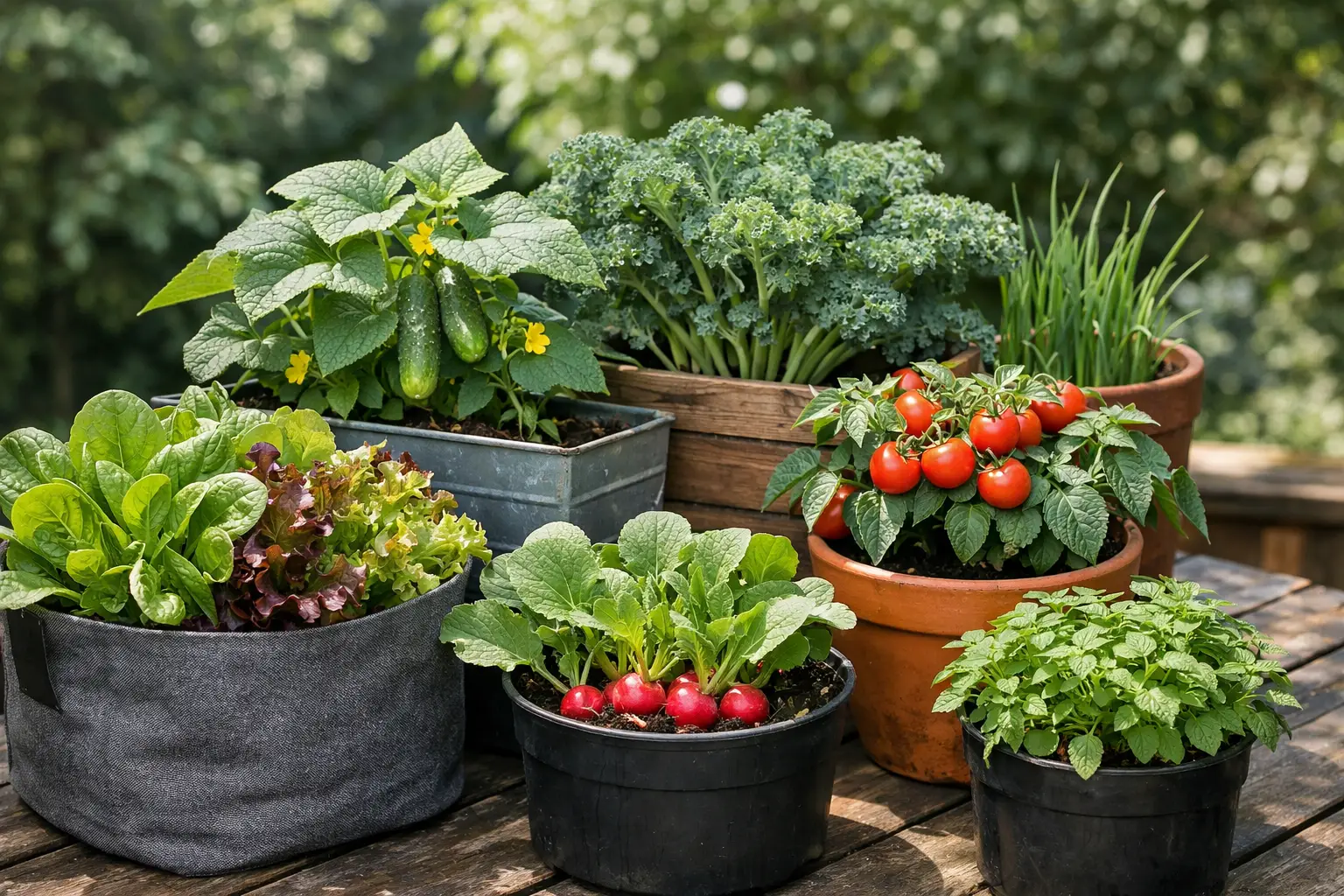
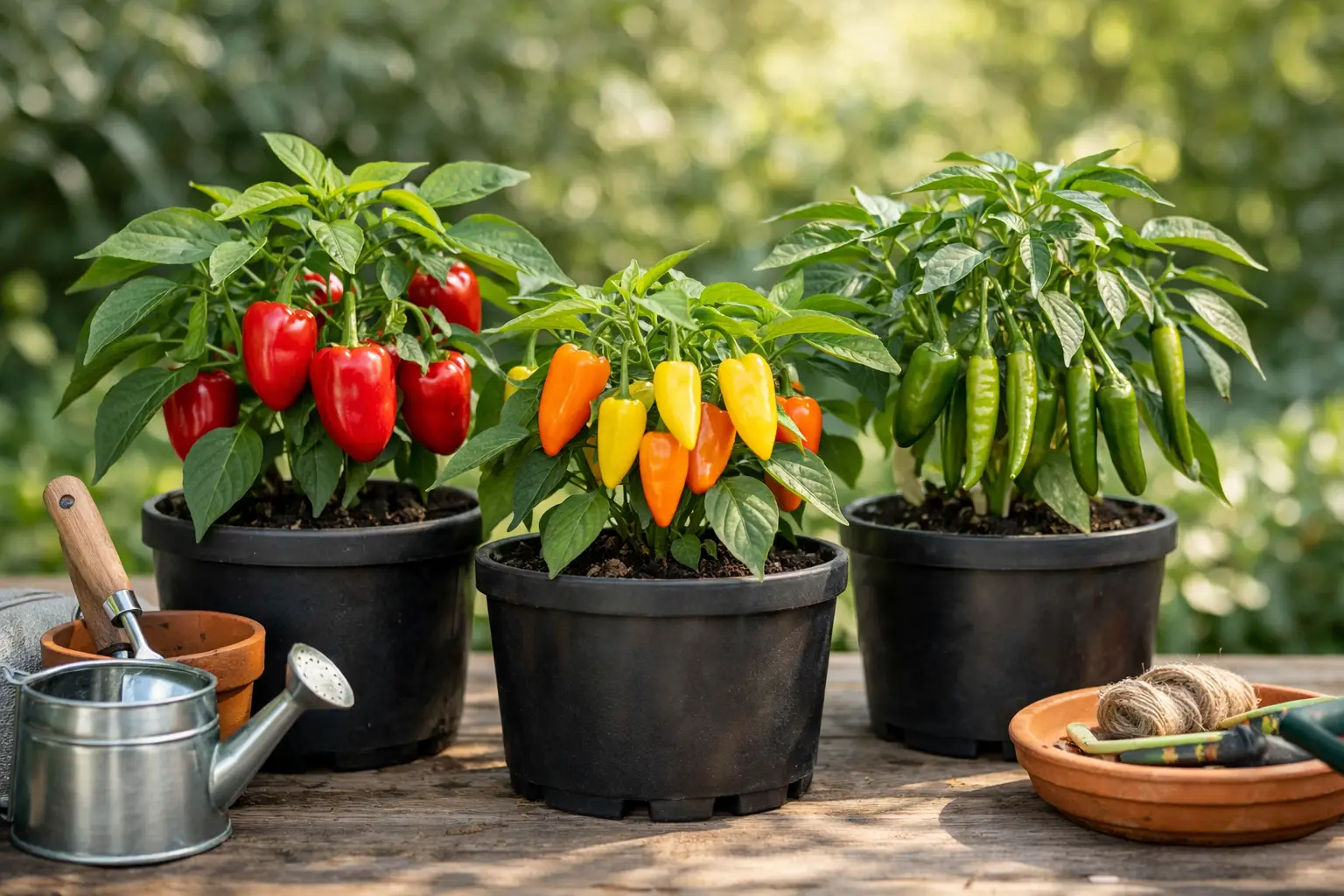
Containers also make it easier to match the plant to the space. A compact jalapeno on a sunny deck, a shishito by the kitchen door, or a colorful sweet pepper on the patio all work beautifully. You do need to pay closer attention in hot weather, though. Pots dry out faster than garden beds, especially in midsummer.
Choosing the right pot for peppers
If you want one place to get this right, start here. Pot size has a direct effect on how well peppers grow, how often you water, and how much fruit the plant can support.
Most pepper plants do best in a container that holds at least 5 gallons. Smaller pots can work for very compact or ornamental varieties, but they usually need more frequent watering and feeding, and the plant often stays smaller than it could. If you are growing bell peppers or any larger, heavy-bearing type, a 7-gallon pot gives better results and a little more breathing room.
Drainage matters just as much as size. A beautiful container without drainage holes is a bad home for peppers. Wet roots lead to stress, yellow leaves, and rot. Terra cotta breathes and looks great, but it dries quickly. Plastic and glazed pots hold moisture longer. Neither is automatically better. It depends on your climate and how often you can water.
The best soil mix for potted peppers
Garden soil is usually too dense for containers, even if it is lovely in a raised bed. For this guide to growing peppers in pots, the best choice is a high-quality organic potting mix that stays airy but still holds moisture.
A good mix should feel light in your hands, not sticky or compacted. Many gardeners like to blend in a little compost for biology and gentle nutrition, but do not overdo it. Too much compost can make the mix heavier and hold more water than peppers want. If your potting mix seems like it dries out too fast, a small amount of coco coir can help. If it stays soggy, add a bit more coarse material to improve airflow.
Peppers like a slightly rich but balanced root zone. Think steady support, not an overloaded pot full of amendments. In containers, simple usually works better.
Sun, warmth, and where to place your pots
Peppers want full sun, which means at least 6 to 8 hours a day. In most of the US, more sun usually means better flowering and fruiting. If your only spot gets morning sun and light afternoon shade, many pepper plants will still produce, just not as heavily.
Warmth matters almost as much as sunlight. Peppers sulk in cool weather. If nights are still chilly, wait before setting them outside for good. A plant that sits in cold soil often stalls for weeks. Once daytime temperatures warm up consistently, container peppers tend to catch on fast.
One benefit of pots is flexibility. If a concrete patio gets blazing hot in late afternoon, you can shift the container a little. If a cold snap threatens in spring, you can move plants closer to shelter. That mobility makes peppers much easier to manage naturally.
How to plant peppers in pots without slowing them down
When transplanting peppers, keep it gentle. Unlike tomatoes, peppers do not need deep planting along the stem. Set the transplant at about the same depth it was growing in its nursery pot. Firm the soil lightly and water well to settle the roots.
If the plant already has flowers when you bring it home, you can leave them on if the plant looks healthy and has a decent root system. If it is small and struggling, pinching off early flowers can help it put more energy into roots and leaves first. This is one of those it depends moments. A sturdy transplant can carry early fruit. A stressed one usually does better if you slow it down at first.
Mulching the top of the pot with a thin layer of shredded leaves or fine bark can help hold moisture and buffer the soil from heat. Just keep mulch a little back from the main stem.
Watering is where most potted peppers go wrong
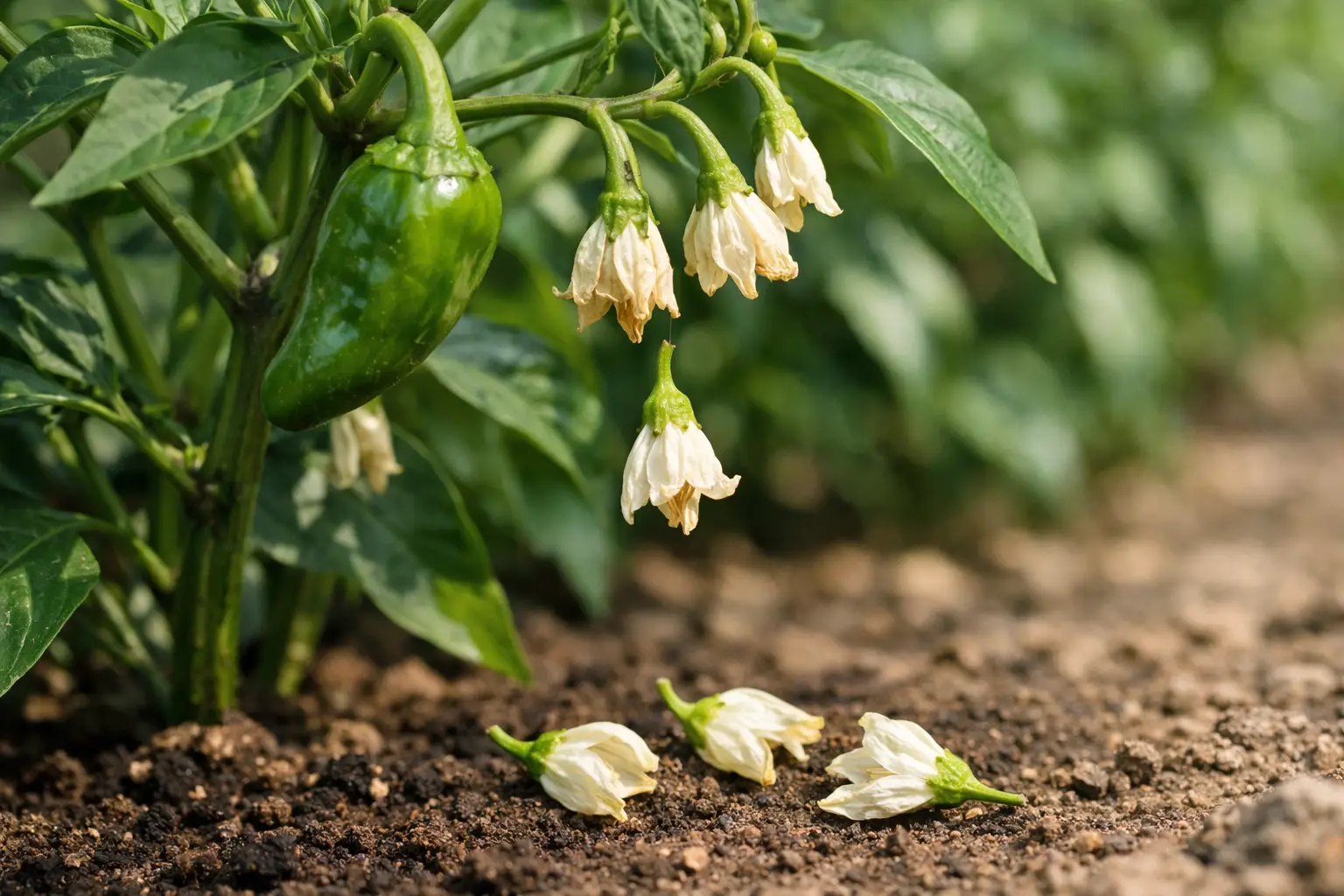
Pepper plants want consistent moisture, not constant wetness. That sounds simple, but in containers it takes a little practice. If the pot dries out hard one day and gets flooded the next, the plant gets stressed. That can lead to blossom drop, curled leaves, or small fruit.
The best habit is to check the soil with your finger rather than watering on a strict schedule. If the top inch feels dry, it is usually time to water. In spring that might mean every few days. In peak summer heat, especially with smaller containers, it may mean every day.
When you water, do it deeply until moisture runs through the drainage holes. A quick splash on the surface is rarely enough. Early morning is ideal because the plant starts the day hydrated, and leaves dry quickly if they get splashed.
If your peppers wilt in late afternoon heat but recover by evening, that does not always mean they need more water. Sometimes it is just heat stress. Check the soil before reaching for the hose.
Feeding peppers naturally for steady growth
Peppers in pots need regular feeding because each watering slowly washes nutrients out of the container. A rich potting mix helps at the start, but it will not carry the plant all season.
An organic fertilizer with a balanced profile works well early on while the plant is growing leaves and branches. Once flowering starts, many gardeners switch to something a little lower in nitrogen so the plant keeps setting fruit instead of getting overly leafy. You do not need a complicated feeding system. A steady schedule with a gentle organic fertilizer, plus occasional compost tea or a fish-based feed if you use it, is usually enough.
Watch the plant, not just the label. Deep green leaves and steady flowering are good signs. Lots of lush leaves with very few peppers can mean too much nitrogen. Pale growth and weak production often point to the opposite problem.
Common problems in a guide to growing peppers in pots
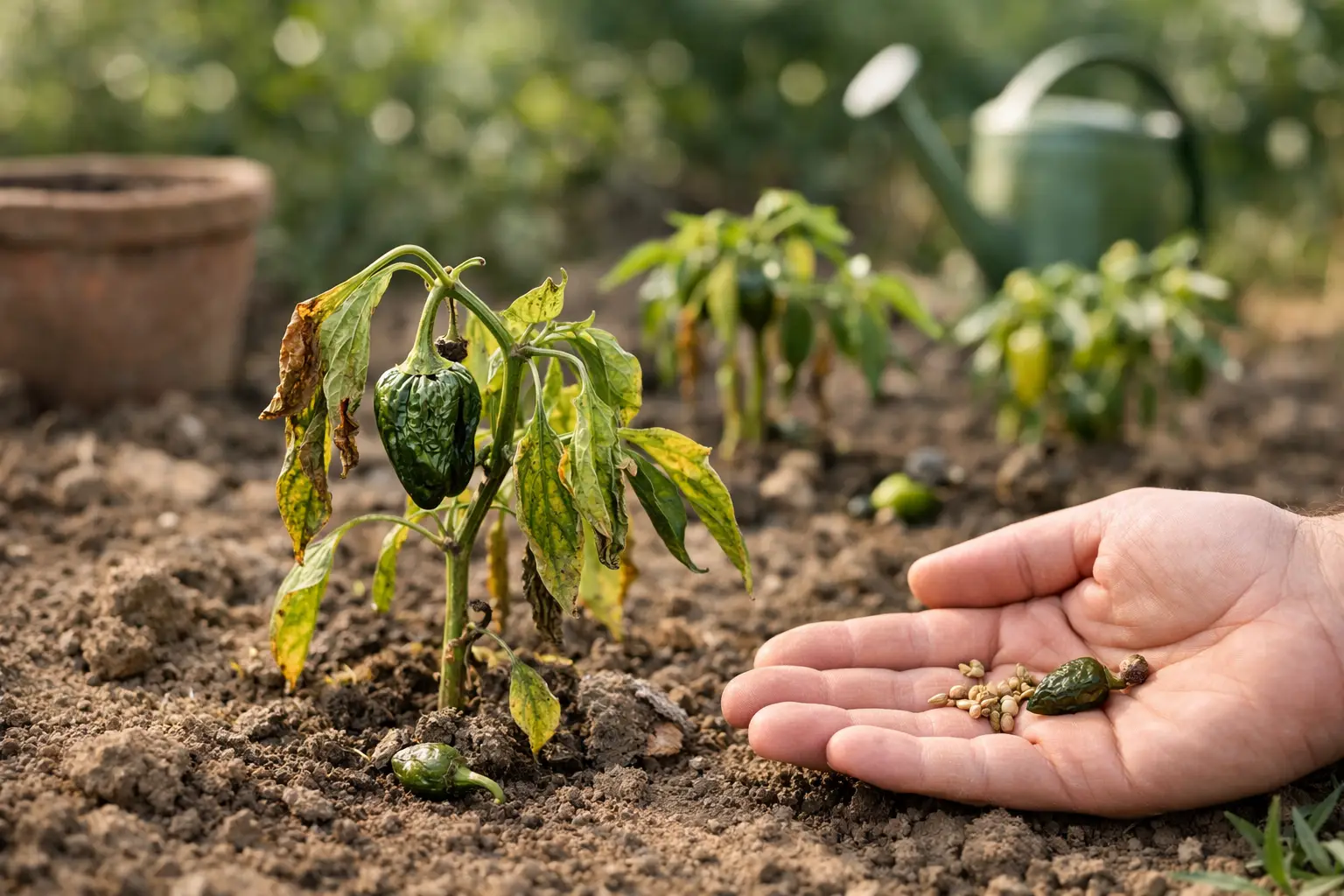
Most pepper trouble in containers comes down to stress. Aphids, spider mites, and flea beetles can show up, especially when plants are dry or crowded. The first line of defense is keeping the plant healthy. Good airflow, steady watering, and not overfeeding with nitrogen make a real difference.
If pests appear, start simple. A firm spray of water can knock off aphids. Insecticidal soap can help when populations build, but use it carefully and in cooler parts of the day. Hand-picking damaged leaves or removing heavily infested growth is often more effective than people expect.
Blossom end rot can show up on peppers too, causing a dark, sunken patch on the fruit bottom. It is often tied less to a lack of calcium in the soil and more to uneven watering that prevents the plant from using what is there. Consistency helps more than panic-buying another amendment.
Sunscald is another container issue. If fruits are suddenly exposed to harsh direct sun because leaves were pruned too hard or stressed off, they can develop pale, papery patches. A healthy leafy canopy protects the fruit.
Harvesting and keeping plants productive
You can harvest most peppers green or let them ripen to red, yellow, orange, chocolate, or whatever final color the variety reaches. Fully ripe peppers usually have more sweetness or deeper flavor, but picking some fruit earlier can keep the plant producing steadily.
Use scissors or pruners if the stems are tough. Tugging by hand can snap branches, especially when the plant is loaded. The more often you harvest, the more closely you notice what the plant needs next.
If your pepper looks tired in late summer, do not assume it is finished. A refresh can help. Trim off damaged leaves, feed lightly, and stay consistent with water. In many areas, peppers hit a second stride once the worst heat eases.
Container peppers teach patience better than almost any patio crop. They do not need fancy products or constant tinkering. They need enough sun, a pot that is truly big enough, and the kind of steady care that feels manageable in real life. Start there, keep it simple, and your next bowl of homegrown peppers may be closer than you think.