You usually notice slugs after the damage is done – ragged holes in lettuce, chewed seedlings, and that shiny trail across the soil like a calling card. If you’re wondering what kills slugs naturally, the good news is you do have effective options that don’t involve spraying harsh chemicals around your vegetables, pets, or family spaces.
The trick is knowing that no single method works perfectly on its own. Slugs love damp hiding spots, tender growth, and cool nighttime conditions, so the best natural control comes from combining a few simple tactics. Some methods kill slugs directly, others reduce their numbers over time, and a few make your garden less inviting in the first place.
What kills slugs naturally and actually works?
If your goal is to kill slugs naturally, the most reliable methods are hand-picking, iron phosphate bait, beer traps, and encouraging natural predators. Each one has strengths and limits.
Hand-picking is still one of the fastest ways to knock back a slug problem. It’s not glamorous, but it works, especially in small gardens, raised beds, and containers. Go out at dusk or early morning with gloves and a bucket of soapy water. Check under boards, mulch, pot rims, and the lower leaves of plants. If you stay consistent for several nights in a row, you can make a surprising dent in the population.
Iron phosphate bait is often the easiest natural-style option for gardeners who want something low effort. It’s widely accepted for organic gardening and works by causing slugs to stop feeding. They usually crawl away and die out of sight, which means you may not see dramatic evidence the next morning, but plant damage often drops quickly. This is a good example of a trade-off: it’s convenient and effective, but it’s still a purchased product rather than a homemade fix.
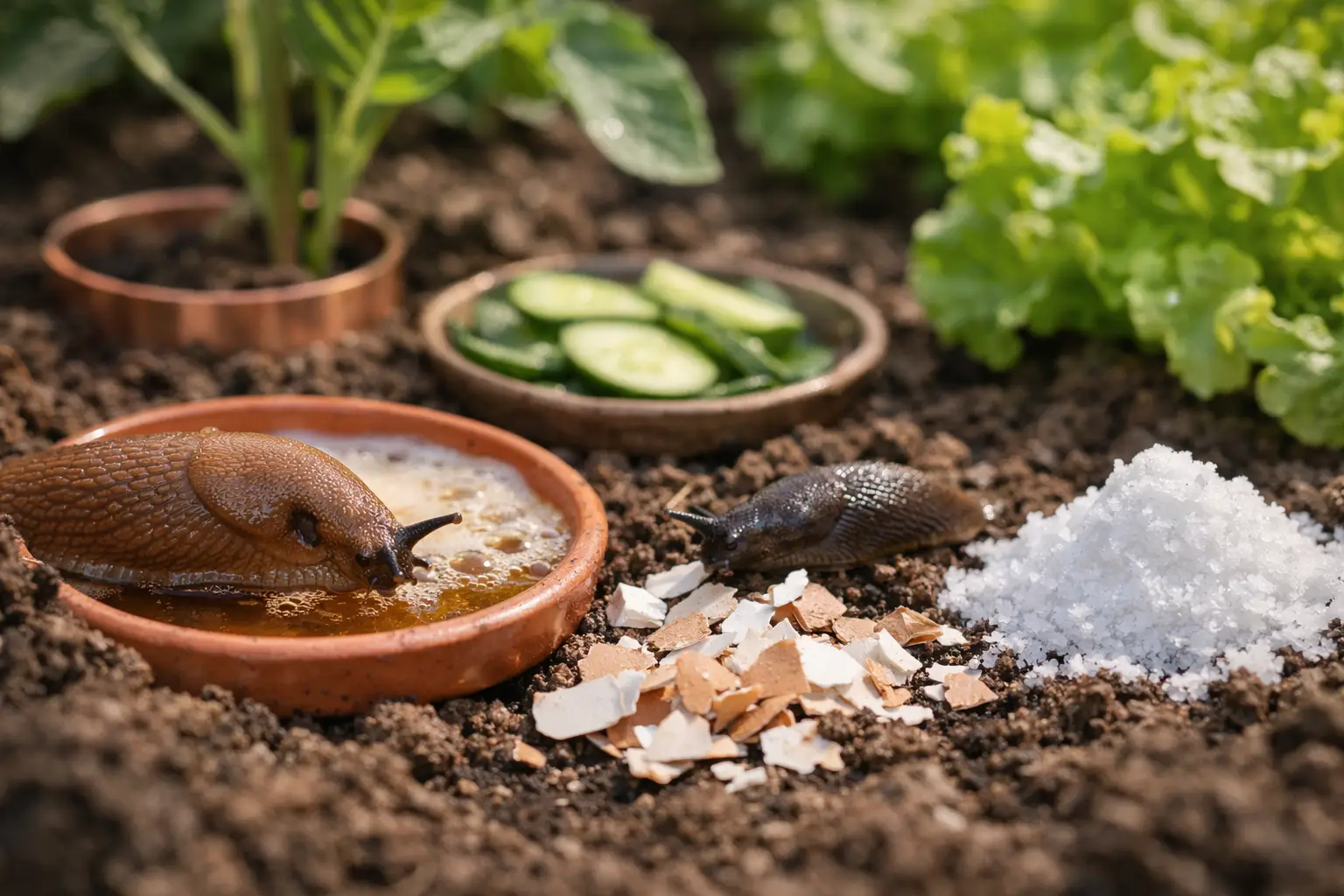
Beer traps can kill slugs too, because they’re attracted to the yeast smell and drown in the liquid. These are useful when placed near vulnerable crops, but they’re not magic. In very wet gardens or heavy infestations, beer traps alone usually won’t keep up. They also need regular emptying and refilling, which gets old fast if you use a lot of them.
Natural predators help over time rather than overnight. Toads, ground beetles, birds, turtles, and even some snakes feed on slugs. If your garden has some habitat diversity – low shelter, water access, native plant cover, and fewer pesticides – you’re more likely to get this kind of backup. That won’t solve a sudden seedling emergency by itself, but it can make your garden more balanced season after season.
The best natural slug killers for different situations
Not every garden has the same slug problem. A shady backyard bed behaves differently from a sunny patio container, so it helps to match the method to the space.
For raised beds and vegetable patches
Raised beds are easier to patrol, which makes hand-picking especially effective. If slugs are hammering lettuce, basil, marigolds, or bean seedlings, check after sunset for a few nights in a row. Follow that with iron phosphate bait tucked around the most vulnerable plants, not scattered carelessly everywhere.
This combination usually works well because you’re removing active adults while also catching the ones you miss. If the bed stays very moist, thin mulch away from plant crowns and water earlier in the day so the surface has time to dry before night.
For containers and patio gardens
Containers can become slug hotels if they’re crowded together in a shady corner. Check under saucers, along the base of pots, and around rolled rims where slugs hide during the day. Hand removal is simple here, and barriers can help too.
Copper tape is often used on pots and planters because slugs dislike crossing it. Results vary depending on moisture, dirt buildup, and how well it’s applied, but for a few prized containers it can be worth trying. It’s more of a deterrent than a killer, so think of it as part of the plan, not the whole plan.
For severe slug pressure
If you walk outside and everything looks shredded, skip the one-method approach. Use a layered response: remove hiding spots, hand-pick at night, place iron phosphate bait, and protect young plants temporarily with cloches or collars. In heavy infestations, speed matters. Small seedlings can disappear in a night or two.
Natural methods that help, but don’t always kill slugs
This is where a lot of gardeners get tripped up. Plenty of home remedies get passed around as if they’re guaranteed fixes, but some are better at discouraging slugs than killing them.
Crushed eggshells are a good example. They may slow slugs down a bit when they’re dry and applied thickly, but once they get damp or settle into the soil, they’re much less useful. Coffee grounds are similar. Some gardeners swear by them, others see little difference. They can be worth testing on a small scale, but I wouldn’t rely on them if your salad greens are already under attack.
Diatomaceous earth can injure soft-bodied pests when dry, but it loses effectiveness quickly after watering or rain. In dry spells it may help around specific plants, but in many gardens slug season comes with moisture, and that’s exactly when it underperforms.
Salt does kill slugs, but it’s a poor choice in the garden. It can damage soil and nearby plants, and it’s more of a harsh quick fix than a natural gardening method you want to build into your routine. The same goes for homemade sprays that sound clever but may harm leaves or upset the soil balance.
Why slug control works better when you change the habitat
If you only kill the slugs you see, more usually show up. That’s because the real attraction is the environment.
Slugs thrive in damp, protected places with easy access to tender food. Overwatered beds, dense ground cover, stacked pots, thick wet mulch, and debris near seedlings all make life easier for them. You don’t need to create a dry, bare garden, but trimming back those inviting hiding spots can lower pressure a lot.
Watering in the morning helps more than many gardeners expect. When beds stay wet overnight, slugs get ideal feeding conditions. Morning watering gives plants what they need while letting the soil surface dry somewhat by evening.
Mulch also depends on context. Mulch is wonderful for moisture retention and soil health, but if it’s packed tightly around lettuce crowns or tiny transplants during slug season, it can backfire. Pulling it back an inch or two from the stem can help without giving up the benefits entirely.
A simple natural slug-control routine
If you want a realistic plan instead of a dozen disconnected tips, keep it simple.
Start by checking the garden at dusk for three nights. Hand-pick every slug you find. While you’re out there, notice where they hide – under boards, around irrigation lines, beneath pots, or in thick mulch. The next day, clean up those damp shelters and water only in the morning.
Then place iron phosphate bait near the plants taking the worst damage. If you like, add a few beer traps in problem corners rather than all over the yard. Protect especially vulnerable seedlings until they put on enough growth to handle a little nibbling.
That routine is practical because it tackles the problem from several angles without turning slug control into a full-time job. Most home gardeners don’t need perfection. They just need enough protection for their vegetables to keep growing.
When natural slug control takes patience
One frustrating part of slug damage is how fast it happens compared with how gradually control can work. A heavy infestation built up over time, especially in rainy stretches or lush spring weather. Natural methods often reduce the problem steadily rather than all at once.
That doesn’t mean they aren’t working. If new growth starts looking cleaner, bait is disappearing, and nighttime slug sightings drop, you’re moving in the right direction. Gardens are living systems, and pest control usually works best as pressure management, not total elimination.
If you’ve tried one remedy and it disappointed you, that’s normal. Slug control is full of it depends moments – your climate, watering habits, plant choices, and garden layout all matter. What works beautifully in a dry container garden may barely make a dent in a shady bed after a week of rain.
The good news is that once you learn where slugs hide and when they feed, they become much easier to manage. A few small changes, done consistently, can protect a lot of tender plants without bringing harsh chemicals into the garden. Sometimes the most natural approach is also the most practical one: remove what you can, make the space less inviting, and give your vegetables a better chance to outgrow the damage.