When I first started growing tomatoes, I thought fertilizer was the key to everything.
So I bought a few products, followed the instructions… and honestly, the results were average at best.
It took me a while to understand this simple truth: it’s not about using more fertilizer, it’s about using the right kind.
If you’re looking for the best organic fertilizers for tomatoes, this guide will help you keep things simple and actually get results.
Why organic fertilizers work better for tomatoes
At first, organic fertilizers can feel slower compared to synthetic ones.
But over time, I noticed something important.
Organic fertilizers don’t just feed the plant, they feed the soil.
And once your soil is healthy, your tomato plants become stronger, more productive, and much easier to manage.
You also avoid the common problems that come with chemical fertilizers, like weak growth or nutrient imbalances.
If your goal is long-term success, organic is the way to go.
What tomatoes really need to grow well
Before choosing a fertilizer, it helps to understand what tomato plants actually need.
Tomatoes rely on three main nutrients:
Nitrogen for leaf growth
Phosphorus for root development
Potassium for fruit production
Too much nitrogen can lead to big leafy plants with very few tomatoes.
That’s why balance is more important than quantity.
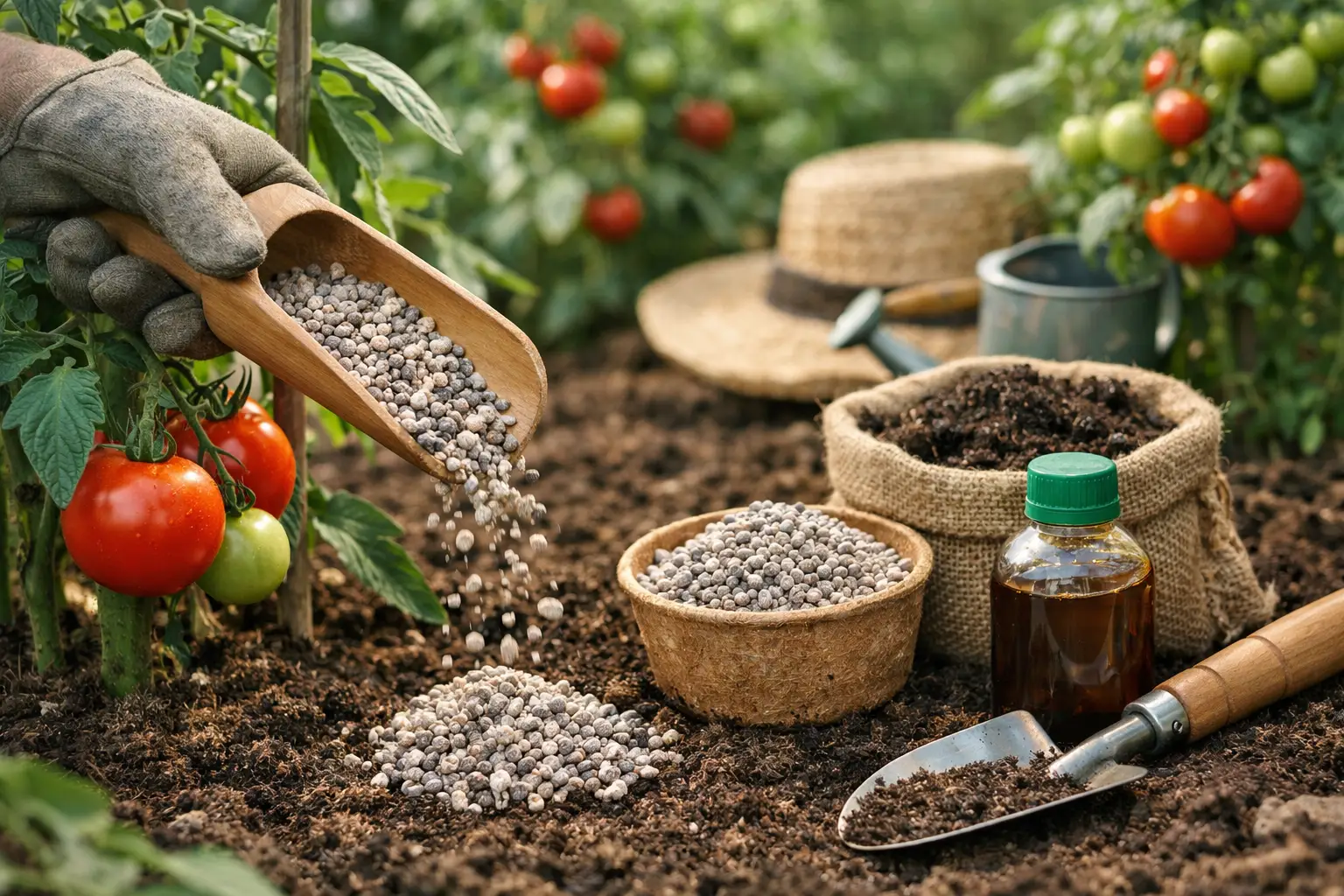
Compost is still the best place to start
If I had to choose only one organic fertilizer, it would be compost.
It’s simple, natural, and incredibly effective.
I usually add compost before planting and then again during the growing season.
It improves soil structure, adds nutrients slowly, and supports beneficial microorganisms.
For most home gardens, compost alone can make a huge difference.
Worm castings for steady growth
Worm castings are one of the easiest ways to boost plant health.
They are rich in nutrients but gentle, which means you don’t risk overfeeding your plants.
I like to mix a small amount into the soil or add it around the base of the plant every few weeks.
It’s a simple addition, but it helps keep plants strong and consistent.
Liquid fertilizers for a quick boost
Sometimes plants need a little extra help, especially during the fruiting stage.
That’s where liquid organic fertilizers come in.
Options like compost tea or fish emulsion work well because they are absorbed quickly.
I use them occasionally when plants look a bit slow or need a boost.
But I don’t rely on them as the main source of nutrients.
Banana peels and simple homemade options
You don’t always need to buy fertilizers.
Some of the best organic options are already in your kitchen.
Banana peels, for example, are rich in potassium, which helps with fruit development.
You can chop them and add them to the soil or compost.
It’s not a miracle solution, but it’s a good way to recycle nutrients naturally.
How often should you fertilize tomatoes
This is where it’s easy to overdo things.
More fertilizer does not mean better results.
I usually follow a simple rhythm:
Add compost before planting
Feed lightly every two to three weeks during the growing season
The key is consistency, not excess.
If your soil is already rich, you may need even less.
Signs your tomatoes need more nutrients
Plants usually tell you when something is missing.
Some common signs include pale leaves, slow growth, or poor fruit production.
Instead of reacting immediately with strong fertilizers, I prefer to start with gentle organic options and adjust gradually.
Common fertilizer mistakes to avoid
There are a few mistakes I made early on that are worth avoiding.
Using too much fertilizer, especially nitrogen-heavy ones, can reduce fruit production.
Relying only on liquid fertilizers without improving the soil is another common issue.
And finally, feeding plants without paying attention to watering and soil quality often leads to disappointing results.
Fertilizer works best when everything else is already in place.
How fertilizer fits into organic tomato growing
Fertilizer is just one part of the bigger system.
Healthy soil, proper watering, and good sunlight all work together.
If your soil is poor, fertilizer alone won’t fix the problem.
But when everything is balanced, even simple organic fertilizers can produce great results.
Final thoughts
Finding the best organic fertilizer for tomatoes is not about choosing a perfect product.
It’s about building a system that supports your plants over time.
Start with compost, add simple natural boosters when needed, and avoid overcomplicating things.
In most cases, doing less but doing it consistently gives better results.