A packet of seeds can make a garden feel full of possibility, but scattering them into a bed and hoping for the best often leads to patchy rows, crowded seedlings, and a lot of mystery sprouts. This direct sowing guide will help you plant seeds right where they will grow, using simple organic methods that give young plants a fair start.
Direct sowing is one of the most satisfying ways to grow food. There are no pots to wash, no indoor grow lights to manage, and no transplant shock to work around. It is also a budget-friendly way to fill a raised bed, backyard plot, or even a roomy container with vegetables, herbs, and flowers.
What Direct Sowing Means
Direct sowing simply means planting seeds directly into outdoor garden soil rather than starting them indoors and moving seedlings later. Many crops prefer it this way. Root vegetables such as carrots, radishes, beets, and turnips can develop misshapen roots after transplanting. Beans, peas, corn, squash, cucumbers, and many annual flowers also grow quickly enough from seed that indoor starting is often unnecessary.
That said, direct sowing is not automatically the best choice for every crop. Tomatoes, peppers, eggplants, and long-season flowers usually need a head start in much of the US, especially where summers are short. A good rule is to direct sow crops that grow fast, dislike root disturbance, or tolerate the temperatures outside when you want to plant them.
Direct Sowing Guide: Start With the Right Timing
Timing matters more than nearly any other detail. Seeds may be alive and ready to grow, but cold, soggy soil can keep them dormant or cause them to rot before they ever sprout.
Cool-season crops can go out in early spring, once the soil is workable and no longer muddy. Think lettuce, spinach, peas, kale, cilantro, radishes, and carrots. These plants often germinate best in cool conditions and can handle a light frost after they emerge.
Warm-season crops need warmer soil, not just warmer daytime air. Beans, cucumbers, squash, corn, basil, and sunflowers should wait until the danger of frost has passed and the soil has begun to warm. If you plant beans into chilly spring soil, they may sit for weeks, then disappear. Waiting another week or two can produce a faster, healthier crop.
Your seed packet is a useful starting point, but pay attention to your own garden too. A south-facing raised bed warms earlier than an in-ground bed shaded by a fence. After a wet spring, the soil may stay cold longer than expected. Gardening gets easier when you use both the calendar and your observations.
Prepare Soil Without Overworking It
Seeds need close contact with soil, steady moisture, and enough air around them to grow roots. They do not need a deeply tilled, perfectly bare bed.
Start by pulling larger weeds and removing old plant debris that could shade seedlings. Loosen the top few inches of soil with a hand fork or garden fork, breaking up large clumps as you go. If your soil is dry and crumbly, this may take only a few minutes. If it is wet enough to stick in a heavy ball, leave it alone for a few days. Working wet soil can damage its structure and create hard clods later.
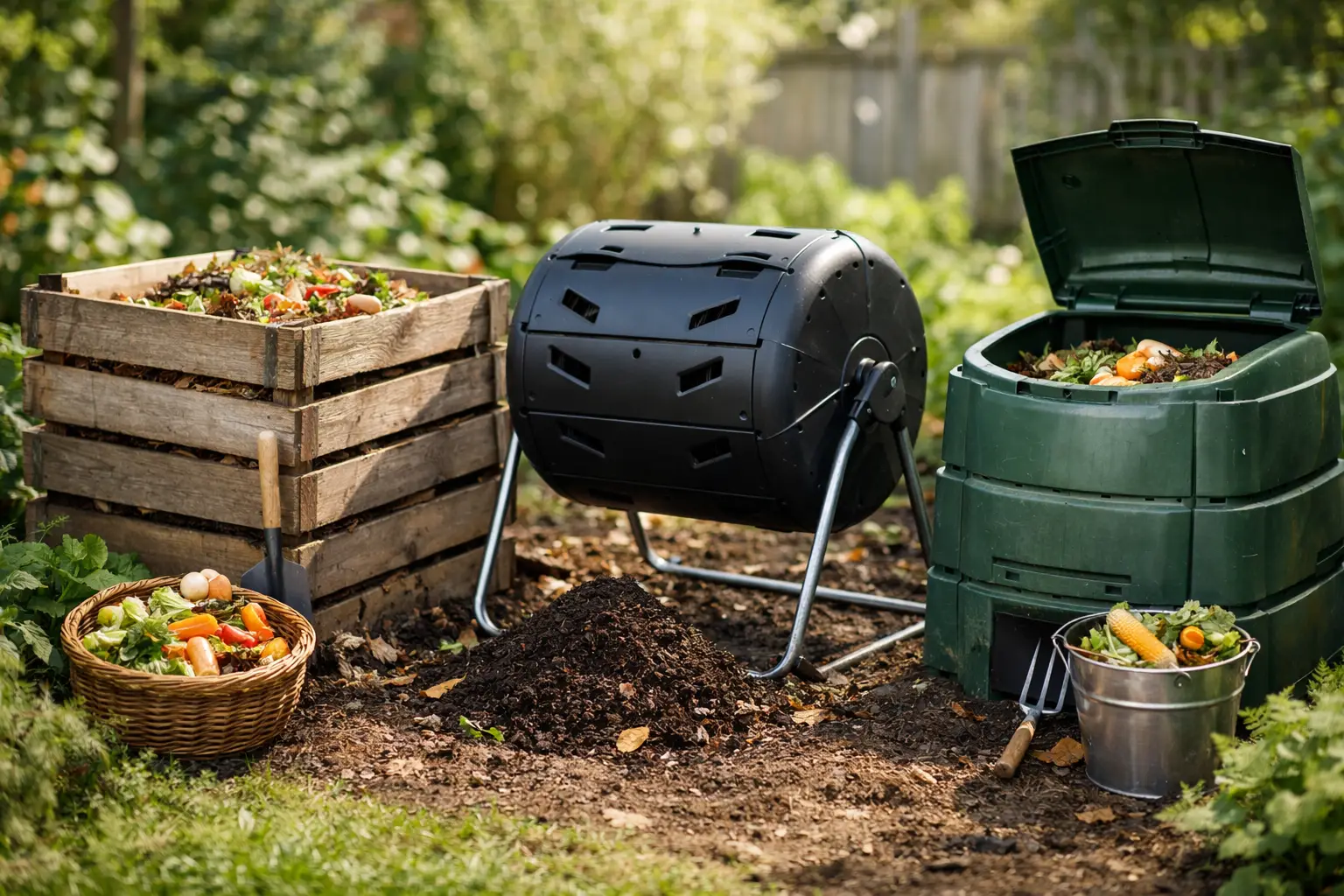
Before planting, spread a thin layer of finished compost and gently mix it into the surface. Compost feeds soil life, improves moisture balance, and gives seedlings a mild, steady source of nutrients. Skip strong fertilizers at sowing time, especially for small seeds. Too much nitrogen can encourage leafy growth later, but it will not fix poor germination now.
Rake the bed level. This small step makes a real difference because seeds planted in dips can become waterlogged, while seeds on high spots dry out too quickly.
Make Furrows and Plant at the Right Depth
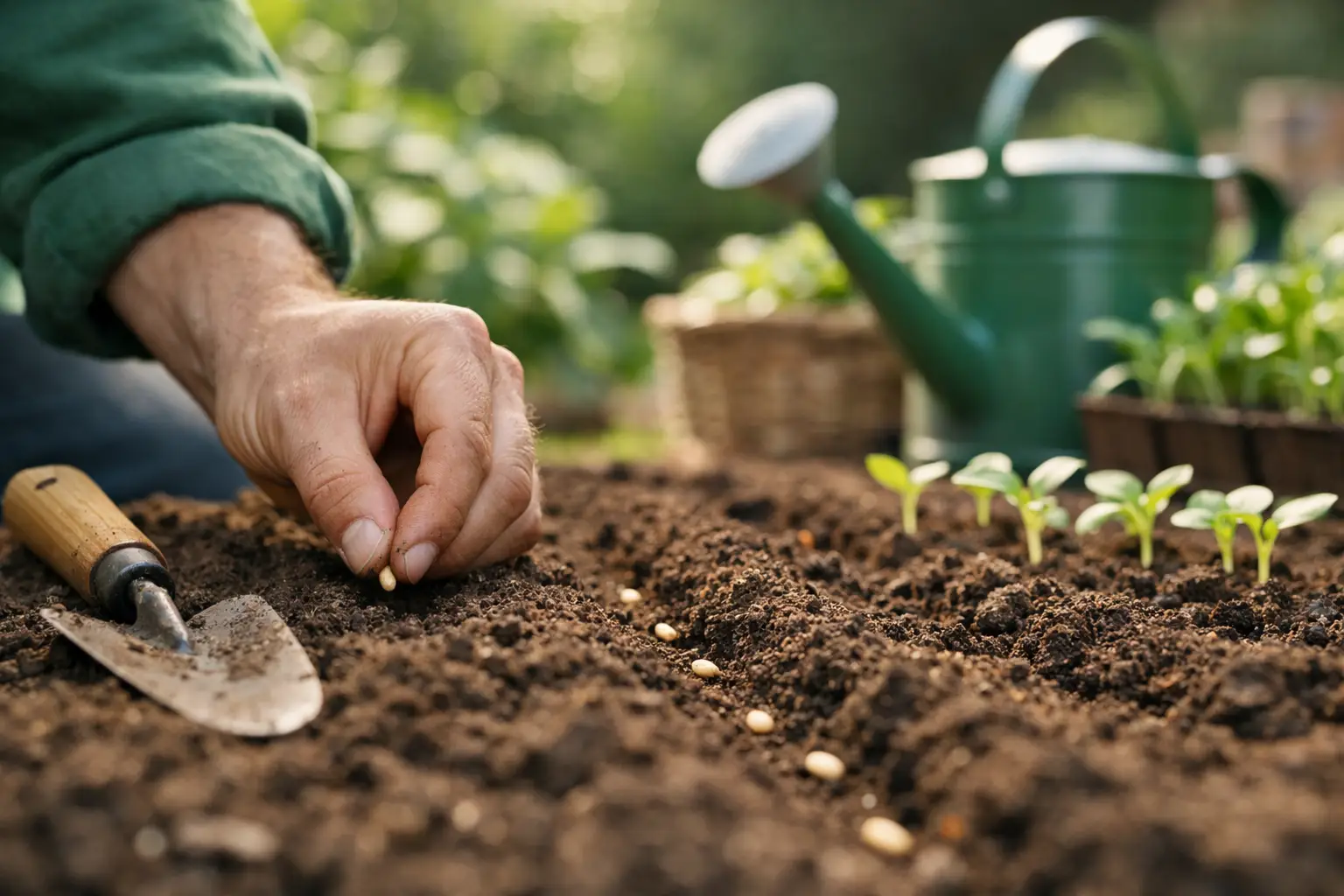
Most seeds should be planted about two to three times as deep as the seed is wide. Tiny lettuce and poppy seeds need only a dusting of soil or a gentle press into the surface. Larger bean and pea seeds can go about an inch deep. Squash and cucumber seeds are often planted around an inch deep as well.
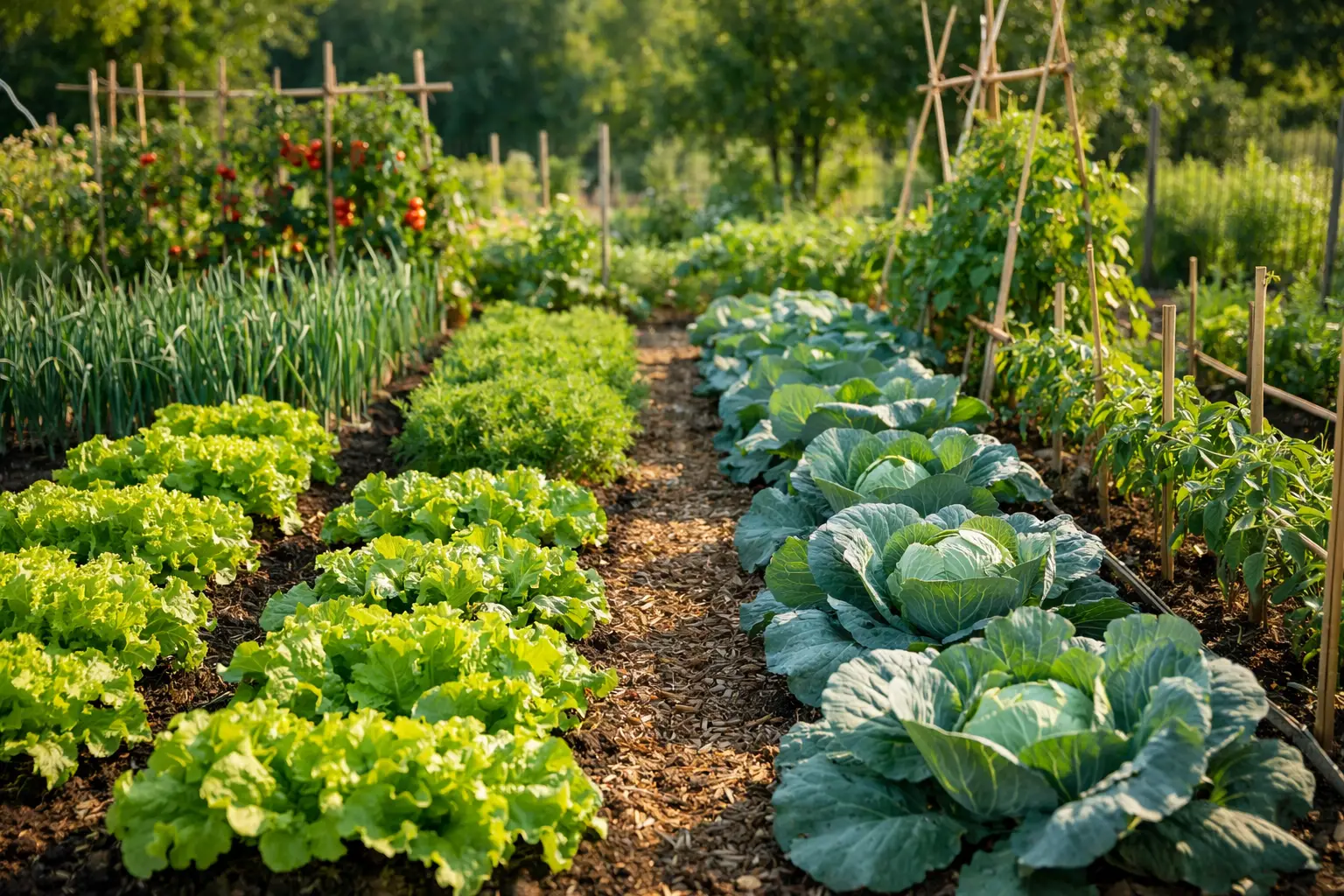
Use a stick, your finger, or the edge of a hand trowel to make a shallow furrow. Planting in a straight row makes weeding easier, but rows do not need to be ruler-straight. In small beds, you can sow in short blocks instead. This works especially well for lettuce, beets, radishes, and bush beans.
Cover seeds gently and firm the soil with the flat of your hand. The goal is contact, not compression. Soil packed hard as a sidewalk can make it difficult for delicate sprouts to push through.
Water for Germination, Not Just for Appearance
A newly planted bed may look damp on top while the seeds below are dry. Until seeds sprout, moisture needs to reach the planting depth consistently.
Water slowly with a gentle shower setting so seeds do not wash out of place. Check the soil every day in warm or windy weather. If the top half-inch feels dry, water again. Tiny seeds are particularly vulnerable to drying out because they are planted so close to the surface.
Once seedlings emerge, begin watering less often but more deeply. This encourages roots to travel down into the soil instead of staying near the surface. The exact schedule depends on rainfall, heat, soil type, and whether you garden in containers or beds. Sandy soil dries quickly; clay soil holds water longer. Rather than watering by the clock, feel the soil.
Thin Seedlings Early and Without Guilt
This is the part that feels wasteful at first. You carefully plant seeds, celebrate when they sprout, then have to remove some of them. But thinning is what gives the remaining plants room for light, airflow, nutrients, and mature roots.
Seed packets list spacing for a reason. Carrots planted too close stay skinny. Crowded lettuce is more likely to rot in humid weather. Overpacked beet seedlings compete until none of them reaches their potential.
Wait until seedlings have their first true leaves, then snip extras at soil level with clean scissors. Pulling them can disturb the roots of nearby seedlings, particularly with carrots and other root crops. For lettuce, kale, and some herbs, the tiny thinnings are edible and make a lovely addition to a salad.
Protect Young Sprouts Naturally
The first few weeks are when direct-sown plants are most vulnerable. Slugs, birds, rabbits, and hungry insects can erase a row overnight. The best protection depends on what is visiting your garden.
For birds that pull up corn, peas, or sunflower seeds, lay lightweight garden netting over hoops or supports until seedlings are established. For rabbits, a simple fence is more reliable than sprays or scent-based tricks. Keep mulch pulled back from very young seedlings if slugs are a problem, since thick, damp mulch gives them a daytime hiding place.
Insect damage needs a closer look before you act. Flea beetles may pepper radish or kale leaves with small holes, but established plants often outgrow the damage. Floating row cover is a gentle option when pressure is heavy, especially for brassicas. Remove it when crops need pollination, such as squash and cucumbers.
Weeds deserve attention too. They compete fiercely while seedlings are small. Spend a few quiet minutes every few days pulling weeds when they are tiny. A stirrup hoe used carefully between rows can save a great deal of work later.
Common Direct Sowing Problems
If nothing comes up, do not assume you have a bad seed packet. Seeds commonly fail because soil was too cold, too dry, too wet, planted too deeply, or disturbed by pests. Dig carefully in one small area. A swollen seed may need more time, while a soft or missing seed points to moisture or pest trouble.
If seedlings emerge but look stretched, pale, or weak, they may be competing with weeds, growing in too much shade, or planted too densely. Give them space and steady moisture before reaching for fertilizer. Young plants often recover quickly when the basic conditions improve.
For a more dependable harvest, sow small amounts every two to three weeks rather than planting one large block at once. This succession sowing works beautifully for lettuce, radishes, cilantro, beans, and beets. If one planting struggles in a heat wave or gets nibbled by pests, the next one is already on its way.
Direct sowing asks you to trust a process you cannot see for a little while. Keep the soil gently moist, protect the new growth, and give seedlings the room they need. Soon, those plain rows of soil will turn into the kind of garden that makes you stop on your way past just to check what came up overnight.