If you’ve ever filled a tray with whatever bag of soil was already in the garage and wondered why your seedlings stalled out, you’re not alone. The question of seed starting mix vs potting soil comes up every spring, usually right after a batch of lettuce or tomatoes sprouts unevenly, tips over, or stays tiny far longer than it should.
This is one of those small gardening choices that makes a big difference early on. The good news is that you do not need fancy equipment or complicated formulas to get it right. You just need to know what each material is designed to do, and where each one helps or hurts.
Seed starting mix vs potting soil: what’s the difference?
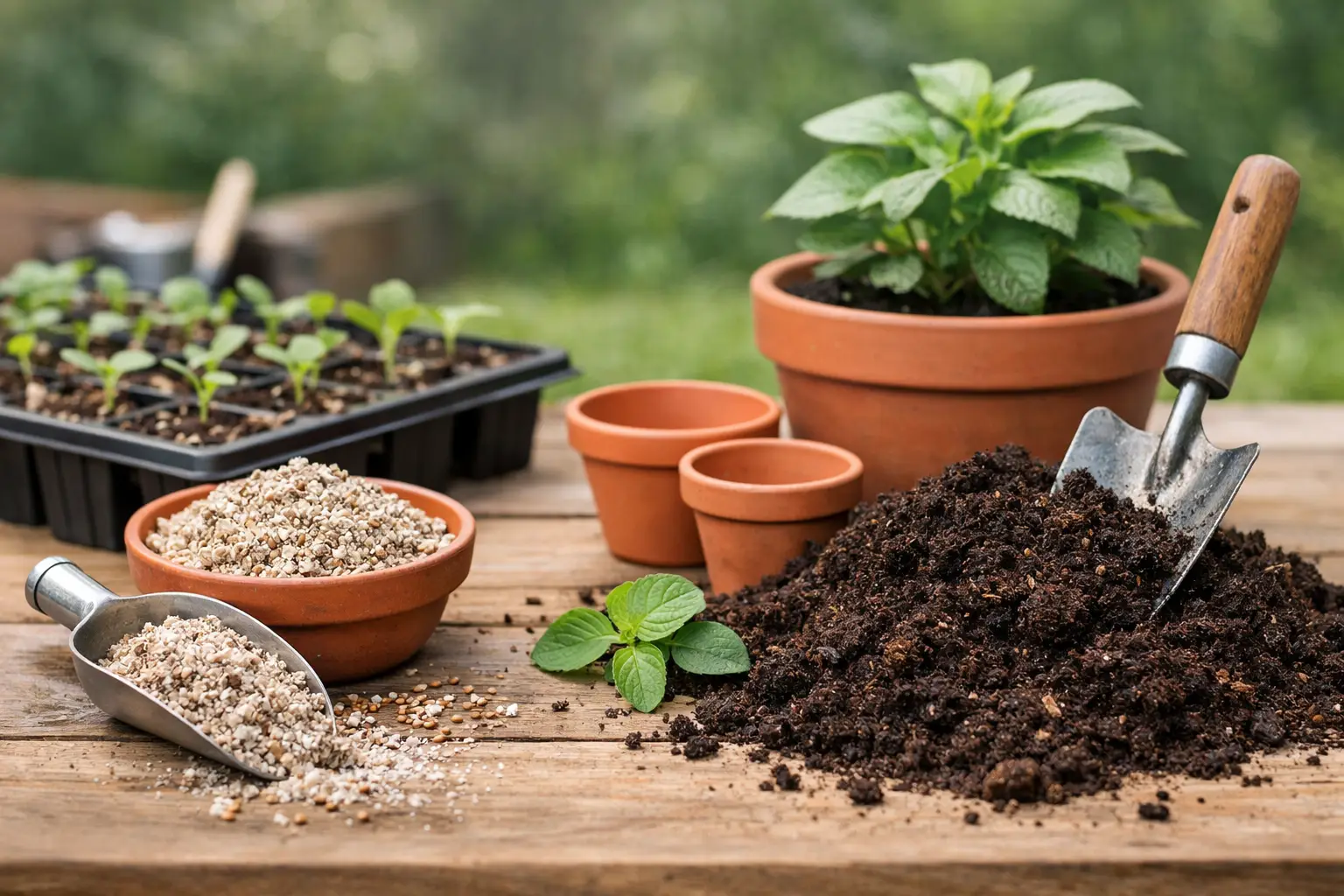
Seed starting mix is made for germination and very young seedlings. It is usually light, fine-textured, and low in nutrients. Most blends contain ingredients like coco coir or peat moss, plus perlite or vermiculite to hold moisture and keep air around those tiny new roots.
Potting soil, despite the name, often is not actual garden soil either. It is a heavier growing medium meant for established plants in containers. It may include compost, aged bark, forest products, coir or peat, perlite, and sometimes added organic fertilizer. It is built to support plants for longer than a seed tray stage.
That difference matters because seeds and mature plants have different needs. A seed needs even moisture, good airflow, and very little resistance as its first root pushes downward. A larger plant needs more structure, more nutrition, and a medium that can anchor a bigger root system.
Why seed starting mix usually works better for seeds
When you plant into a seed tray, you are creating a tiny, controlled environment. A light seed starting mix makes that easier to manage because it holds moisture without packing down too tightly. That helps prevent one of the most common beginner problems – soggy conditions around delicate roots.
The fine texture also helps with contact between the seed and the mix. Small seeds especially benefit from that. Carrots, basil, lettuce, and many flowers can struggle in chunky potting soil because large bark pieces and uneven texture create air gaps and inconsistent moisture.
There is another quiet advantage. Seed starting mixes are often lower in nutrients, and that is not a flaw. Seeds carry the first bit of energy they need to sprout. Too much fertility too soon can be hard on young roots, especially in mixes that stay wet. Gentle conditions tend to produce sturdier starts.
If you have ever seen seedlings come up fast and then suddenly collapse at the base, that can be related to excess moisture, poor airflow, or disease pressure. A lighter mix will not solve every problem, but it can reduce the odds by draining better and giving roots more oxygen.
When potting soil is the better choice
Potting soil comes into its own after the seedling stage. Once a plant has true leaves and a root system with some strength behind it, it usually wants more than a seed starting mix can provide.
That is because seed starting mix is intentionally sparse. It is excellent for germination, but it does not feed a growing tomato, pepper, cucumber, or zinnia for very long. Potting soil gives those young transplants a richer home with more water-holding capacity, more structure, and often some nutrients already mixed in.
This is especially helpful if you are potting up seedlings into 3-inch or 4-inch containers before moving them outside. In that stage, a plant needs room to grow, and a heavier potting mix supports that growth better than a very airy seed mix alone.
For container gardening, potting soil is also the right long-term choice. If you are filling patio pots, grow bags, window boxes, or a large planter for herbs and vegetables, use potting soil rather than seed starting mix. The lighter mix dries out too quickly and breaks down too fast for full-season growing.
Can you start seeds in potting soil?
Yes, sometimes. But it depends on the crop, the texture of the potting soil, and how patient you are willing to be.
If your potting soil is fine-textured, well-screened, and not overly woody, many larger seeds can do just fine in it. Beans, squash, cucumbers, and nasturtiums are often forgiving. These seeds are larger, more vigorous, and less fussy about perfect conditions.
Where gardeners run into trouble is using a coarse potting mix for tiny or slow-germinating seeds. Big chunks dry unevenly, seedlings can emerge crooked or weak, and watering becomes harder to get right. Some potting soils also stay too wet in seed trays, especially if they contain a lot of compost or moisture-retentive material.
If potting soil is what you have on hand, you can improve your odds by sifting out large chunks and mixing in a little extra perlite or vermiculite. That will not make it identical to seed starting mix, but it can make it much more seed-friendly.
Can you use seed starting mix for mature plants?
Only for a short window. Seed starting mix is great for sprouting and the earliest stage of root growth, but by itself it is usually too light and low in nutrients for mature plants.
A tomato seedling may look happy in it for a while, but once it starts growing in earnest, you will need to either transplant it into potting soil or begin a gentle feeding routine. Otherwise, growth can slow, leaves may pale, and the plant may never really catch up.
That is one reason many gardeners use a two-step system. Start seeds in seed starting mix, then move the seedlings into potting soil once they have a couple sets of true leaves. It is simple, effective, and works well for vegetables, herbs, and flowers.
How to choose the right one without overthinking it
If your goal is germination in trays, cell packs, or soil blocks, choose seed starting mix. If your goal is growing a plant in a container for weeks or months, choose potting soil.
If you are doing both, use each one at the stage where it fits best. This is not about buying more products than you need. It is about matching the material to the job.
For home gardeners trying to keep things natural and low-fuss, that usually means buying one bag of seed starting mix for spring sowing and one good-quality organic potting soil for potting up and container planting. You do not need a shelf full of specialty blends.
A few natural gardening tips that help either mix perform better
No matter which medium you use, avoid compacting it into trays or pots. A gentle fill is enough. Pressing too hard squeezes out air pockets that roots need.
Watering matters just as much as the mix itself. Seed trays should stay evenly moist, not soaked. Potting soil in larger containers should be watered deeply, then allowed to approach dryness near the surface before the next round, depending on the crop and weather.
It also helps to use clean containers and fresh mix when starting seeds. Reusing old material can sometimes bring along fungus gnats, disease spores, or poor structure from previous seasons. If you do reuse potting soil, refresh it with compost and aeration materials, and save it for established plants rather than brand-new seedlings.
If you prefer organic gardening methods, read the bag ingredients. Some potting soils contain synthetic wetting agents or fertilizers you may want to avoid. A simple ingredient list is often a good sign.
The most practical answer for everyday gardeners
When people ask seed starting mix vs potting soil, they are often hoping one product can do everything. Sometimes it can get close, but most of the time the best results come from using seed starting mix for starting and potting soil for growing on.
That is not a marketing trick. It reflects what young roots actually need at different stages. A sprouting seed wants softness, air, and steady moisture. A growing plant wants food, support, and a root zone that can carry it further.
If you are a beginner, this is a good place to keep things simple rather than perfect. Start small. Use seed starting mix for your trays, pot up when seedlings are ready, and pay attention to how fast your containers dry and how your plants respond. Gardening gets easier when you stop trying to force one material to do every job.
A lot of healthy gardens start with a small adjustment like this. Get the roots off to a good start, and the rest of the season usually feels a whole lot friendlier.