A garden usually tells you the truth about your watering routine before anything else does. Crispy lettuce, split tomatoes, droopy containers, and mildew on the lower leaves often trace back to the same issue – not just how much water you give, but how you deliver it. That is why choosing the best watering tools for gardens matters more than many gardeners expect.
The right tool can save water, protect plant health, and make it much easier to stay consistent in summer. The wrong one can compact soil, splash disease onto leaves, or leave half a bed dry while the other half gets soaked. If you grow vegetables, herbs, flowers, or containers at home, a few smart watering tools can make daily care feel much simpler.
How to choose the best watering tools for gardens
The best setup depends on the kind of space you have and how you actually garden. A few patio pots need something different from four raised beds and a row of tomatoes. If you travel often, watering efficiency matters even more. If you hand-water because you enjoy checking on plants every evening, comfort and control matter just as much.
It also helps to think in terms of plant health, not just convenience. Most garden plants do best with slower, deeper watering at the soil line. Wet leaves are sometimes unavoidable, but they should not be the default, especially for vegetables prone to fungal issues. That one shift in thinking narrows the field quickly.
1. A watering wand for gentle hand watering
If I had to recommend one tool for the widest range of home gardens, it would be a watering wand with a gentle shower head. It gives you better control than a bare hose and is much kinder to seedlings, shallow roots, and freshly planted starts.
A good wand lets you reach the back of beds without stepping into the soil, which helps prevent compaction. It is also easier on hanging baskets and large containers that dry out fast in hot weather. Look for a comfortable grip and a shut-off valve near the handle so you do not have to walk back to the spigot every time.
The trade-off is that hand watering still takes time. For small gardens, that can be part of the pleasure. For larger spaces, it can become one more evening task you miss when life gets busy.
2. A metal watering can for containers and seedlings
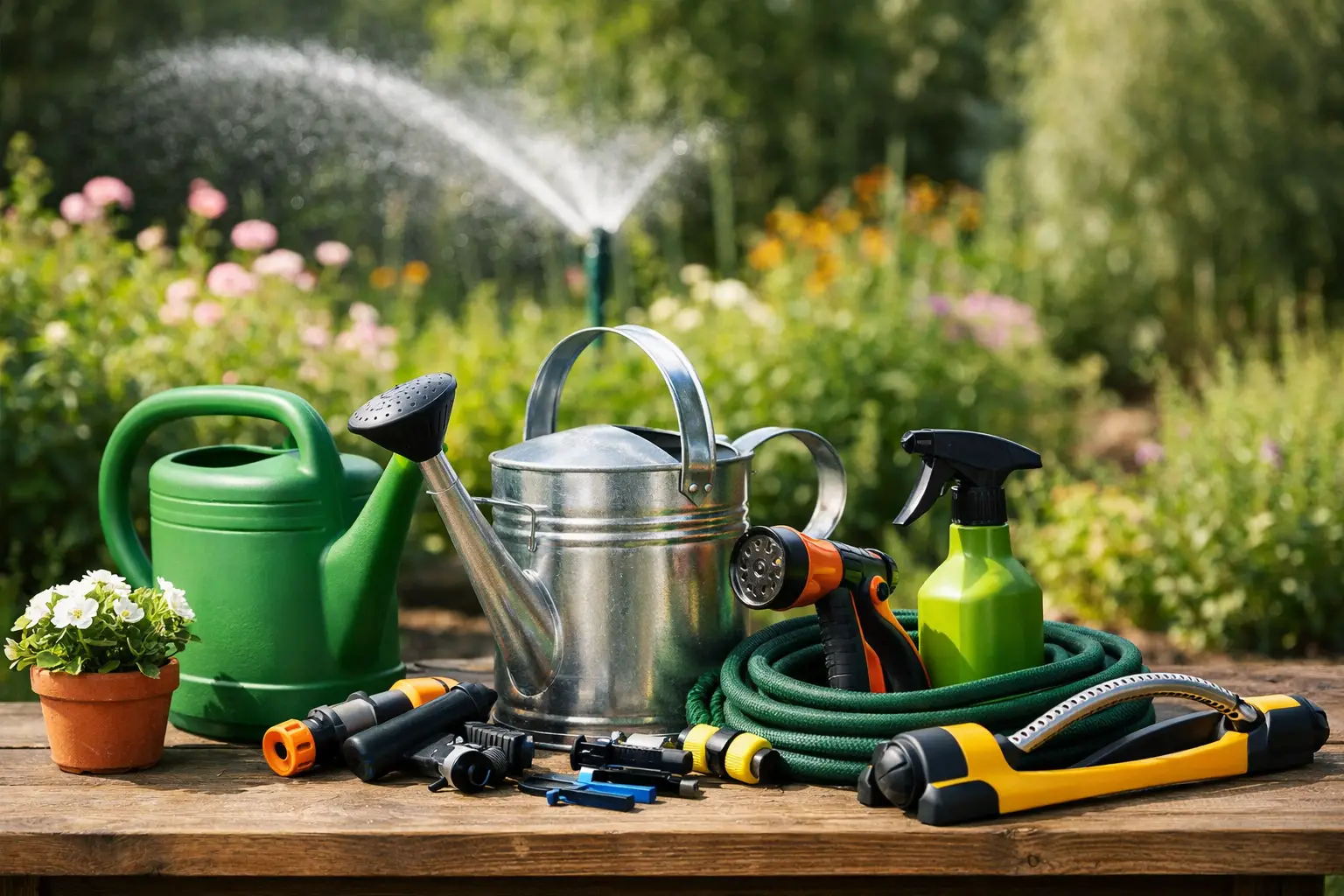
A watering can may seem basic, but it is still one of the best watering tools for gardens when precision matters. It shines in container gardens, seed-starting areas, and spots where a hose is awkward or too forceful.
For outdoor use, a metal can tends to last longer than lightweight plastic, especially if it lives in the sun. A removable rose, the perforated spout head, helps create a softer flow for young plants. Without it, you can use the can for more targeted watering around mature plants.
The obvious downside is capacity. Carrying water back and forth gets old quickly if you have a big growing space. Still, for balcony pots, porch herbs, and newly seeded patches, a watering can remains hard to beat.
3. Soaker hoses for raised beds and vegetable rows
If your goal is healthier plants with less waste, soaker hoses are one of the smartest choices you can make. They release water slowly along the length of the hose, which helps moisture soak into the root zone instead of running off the surface.
This is especially useful in raised beds, where soil can dry faster than in-ground plots. Soaker hoses also keep foliage drier than overhead watering, which is helpful for tomatoes, squash, cucumbers, and beans. Once laid in place and covered lightly with mulch, they work quietly in the background.
They are not perfect for every layout. Oddly shaped beds can be tricky, and very long runs may water unevenly if your pressure is low. But for straightforward vegetable beds, they are often the most water-wise option available to home gardeners.
4. Drip irrigation kits for efficient, low-fuss watering
For gardeners ready to spend a little time setting up a system, drip irrigation is often the best long-term answer. A basic kit uses tubing and emitters to deliver water slowly and directly where plants need it.
Drip works beautifully in raised beds, in-ground vegetable gardens, and even larger container collections. It cuts down on evaporation, reduces leaf wetness, and helps keep moisture levels more consistent. That consistency matters because many common garden problems, from bitter cucumbers to cracked tomatoes, get worse when watering swings from bone-dry to soaking wet.
The setup can feel intimidating at first, especially for beginners. But once installed, it usually saves a lot of effort. If you are trying to garden more sustainably and use less water overall, this tool deserves serious consideration.
5. Hose nozzles with adjustable spray patterns
Not every garden needs a full irrigation system. Sometimes a quality hose nozzle is enough, especially if you like to stay hands-on. The key is choosing one with multiple patterns and reliable flow control, not the flimsy kind that leaks after a month.
A softer shower setting works for general watering, while a more focused stream can rinse tools or fill a watering can. What you want to avoid is blasting plants with a hard jet, which can erode soil and stress tender stems.
This is a practical middle-ground tool. It is more flexible than a fixed system, but it still relies on your time and attention. For gardeners who enjoy being outside daily, that may be exactly right.
6. Timers that make watering more consistent
A timer is not glamorous, but it can quietly improve your garden more than another gadget ever will. Even a simple hose-end timer helps keep watering regular, which is one of the biggest challenges in summer.
Timers pair especially well with soaker hoses and drip systems. You can water early in the morning when plants benefit most and evaporation is lower. That means less guesswork, fewer missed days, and a better chance of deep, steady moisture.
The caution here is that timers are only as smart as the schedule you give them. If you set one and forget it during a rainy week, you can easily overwater. It still helps to check your soil with your finger before assuming the system got it right.
7. Ollas and clay watering spikes for low-tech watering
If you like simple, low-energy tools, clay-based watering methods are worth a look. Ollas are porous clay vessels buried in the soil and filled with water. They slowly release moisture to nearby roots as the soil dries.
They are especially useful in raised beds, dry climates, and gardens where you want to conserve water without setting up tubing. Clay spikes can do something similar with bottles, though they are usually better for containers than large beds.
These tools are wonderfully low-tech, but they cover a limited area. Think of them as helpful additions, not a whole-yard solution. They are best where steady root moisture matters and daily watering is hard to keep up with.
8. Rain barrels for a more eco-friendly water supply
A rain barrel is not a delivery tool in the same way a wand or hose is, but it absolutely belongs in this conversation. Collecting rainwater can lower your water use and give you a backup source during dry stretches.
Gardeners who focus on natural methods often appreciate that rainwater is free of chlorine and generally gentle on plants. It is especially handy for container gardens and hand watering with a can.
The limitation is pressure. Most rain barrels do not provide enough force for typical sprinkler use unless you add a pump. Even so, as part of a practical, eco-conscious setup, a rain barrel makes a lot of sense.
9. Moisture meters for smarter watering decisions
Sometimes the best watering tool is the one that stops you from watering. A simple moisture meter can help take the guesswork out of garden care, especially for beginners who are still learning what dry soil actually feels like below the surface.
This is useful in containers, raised beds, and around plants that dislike soggy roots. It can also keep well-meaning gardeners from overwatering, which is often just as damaging as underwatering.
Meters are not perfect, and I would not trust one over common sense and a quick soil check every time. But as a training tool, they can be surprisingly helpful.
Which watering tools are best for your garden?
If you have a few containers and like daily care, start with a watering wand or watering can. If you grow vegetables in raised beds, soaker hoses or drip irrigation will usually give you better results with less waste. If your schedule is unpredictable, add a timer. If sustainability is a big priority, pair your setup with a rain barrel or clay watering method.
You do not need every tool on this list. In fact, most home gardeners do best with one primary watering method and one backup. A simple combination like a soaker hose plus a watering can, or a drip kit plus a wand for spot watering, is often more useful than a shed full of gear.
The real goal is not to collect tools. It is to make watering easy enough that you do it well, often enough that plants stay steady, and gently enough that your garden responds with healthy roots, strong growth, and fewer avoidable problems.
A good watering tool should make your garden feel calmer, not more complicated. When you find the setup that fits your space and your habits, watering becomes less of a chore and more of a steady rhythm your plants can count on.