Tomatoes have a way of making gardeners impatient. One warm afternoon in spring and suddenly those little seedlings on the windowsill look ready for the big world outside. But when to transplant tomato seedlings is less about the calendar and more about timing a few key signals well. Get it right, and they settle in fast. Move them too soon, and even healthy plants can stall, turn purple, or collapse from cold stress.
The tricky part is that tomatoes often look bigger and tougher than they really are. A tall seedling with bright green leaves can still be too tender for chilly nights, harsh wind, or cold soil. That is why the best transplant timing comes from watching both the plant and the weather.
When to transplant tomato seedlings outdoors
In most gardens, tomato seedlings are ready to move outdoors about 1 to 2 weeks after your last expected spring frost. That window matters because tomatoes are warm-season plants. They do not just dislike frost – they sulk in cool conditions long before frost ever shows up.
A good rule is to wait until nighttime temperatures are consistently above 50 degrees Fahrenheit, with 55 degrees being even better. Daytime warmth helps, but cold nights are what usually set tomatoes back. If your soil is still cool and damp from spring rains, waiting a few extra days often pays off.
If you want a simple checkpoint, look for these signs together rather than relying on just one. Seedlings should be 6 to 10 inches tall, have a sturdy stem, and carry at least 2 to 3 sets of true leaves. They should also be hardened off before transplanting. That means they have spent about a week gradually adjusting to sun, wind, and outdoor temperatures.
The signs your tomato seedlings are actually ready
Height alone can be misleading. Some seedlings get leggy indoors because they did not get enough light, and those plants may look mature even when they are not especially strong. What you want is a stocky, healthy plant with a stem that feels firm, not floppy.
Leaves can tell you a lot here. Healthy transplants should have good color, no major yellowing, and no signs of pests or disease. A seedling that is rootbound, pale, or struggling in its pot may still transplant successfully, but it needs a gentler hand and often a bit more recovery time.
Root development matters too. If you slide the plant out of its container and see white roots holding the soil together without circling heavily around the pot, that is a sweet spot. If roots are tightly wrapped around the bottom, the plant has waited a little too long. If the soil falls apart and there are barely any roots, it is probably a little early.
Why weather matters more than the date
Every gardener wants a clean date on the calendar, but tomatoes do not care much about dates. They care about temperature, light, and soil conditions. In one year, late April may be perfect. In another, early May is still too cold.
This is especially true across the US, where spring can mean very different things depending on your region. A gardener in Texas may be transplanting while someone in the upper Midwest still has frozen ground. Even within the same town, a sheltered backyard can warm up faster than an exposed raised bed.
Soil temperature is the quiet factor many gardeners overlook. Tomatoes grow best when the soil is at least 60 degrees Fahrenheit. Colder soil does not always kill them, but it slows root growth and leaves plants vulnerable to stress. If the forecast looks decent but the ground still feels cold to the touch in the morning, hold off.
Hardening off makes all the difference
If you started seedlings indoors, they need a transition period before planting day. This step is easy to rush and easy to regret. Indoor-grown plants are protected from direct sun, drying wind, and temperature swings. Put them straight into the garden and they can scorch or wilt in a single afternoon.
Hardening off simply means introducing seedlings to outdoor conditions bit by bit over 7 to 10 days. Start with a couple of hours in shade or filtered light, then slowly increase sun exposure and time outside each day. Bring them in if nights are too cold or if strong wind is expected.
This process toughens the leaves and stems, and it usually leads to faster establishment after transplanting. Skipping it does not always kill a tomato plant, but it often causes a setback that takes a week or two to overcome. In spring, that lost time can feel long.
How to transplant without stressing the plant
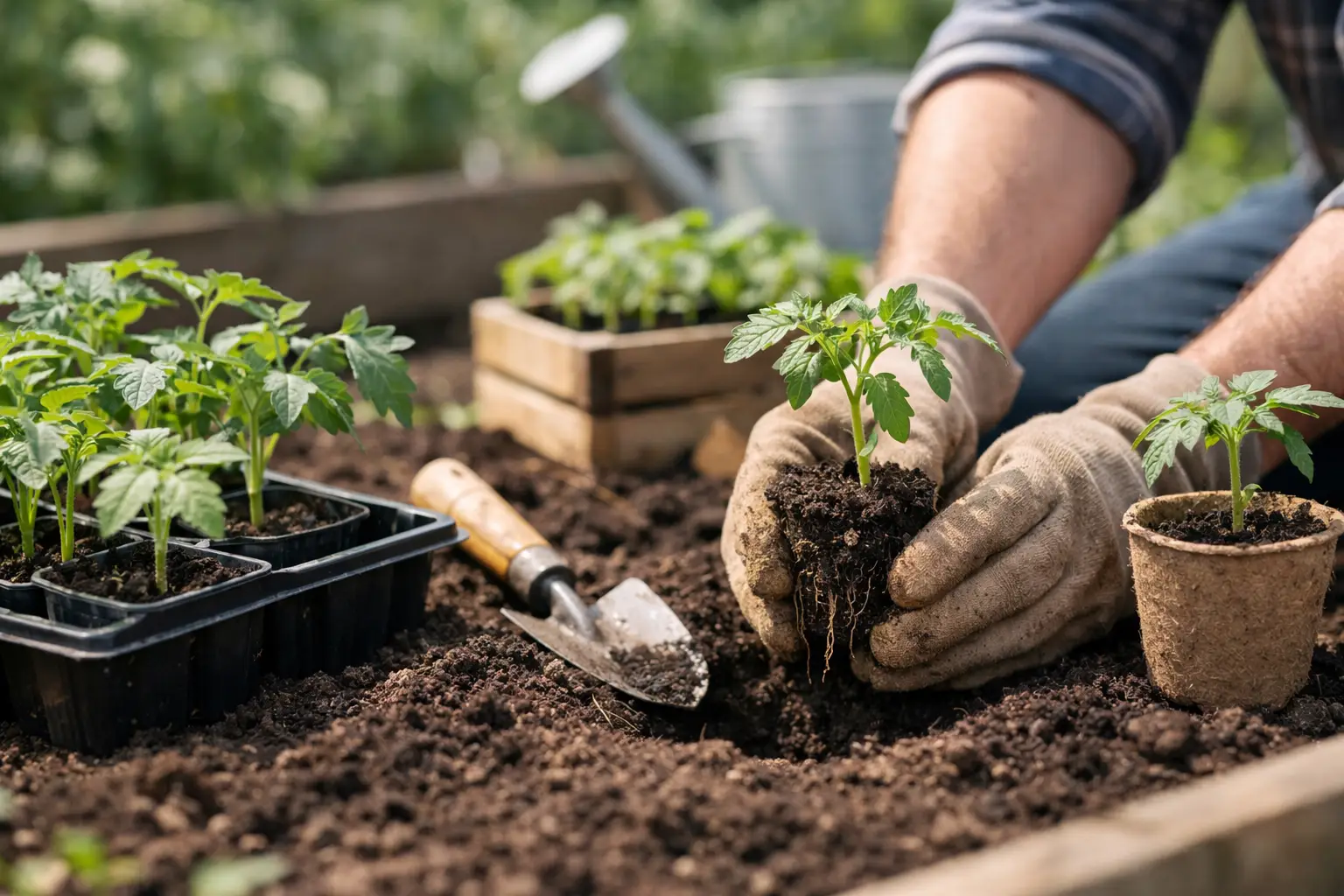
Once you know when to transplant tomato seedlings, the next step is making the move as smooth as possible. Choose a mild day if you can, or transplant in the late afternoon so plants have the evening to settle in before facing full sun.
Water the seedlings a few hours ahead of time so the root ball is moist but not soggy. Prepare the planting hole before taking plants out of their pots. Tomatoes are one of the few vegetables that benefit from deep planting. If your seedlings are tall or a little leggy, bury part of the stem. Tomatoes can form roots along buried stems, which helps create a stronger plant.
Mix in compost if your soil needs organic matter, but do not overdo rich amendments right at the hole. Too much quick nitrogen can push leafy growth before the plant has rooted in well. After planting, water deeply to settle the soil around the roots.
A light mulch can help conserve moisture once the soil has warmed, but if your spring weather is still cool, wait a bit before mulching heavily. Bare soil warms faster, and that extra warmth can help young tomato roots get moving.
Common timing mistakes to avoid
The most common mistake is transplanting too early because the seedlings look ready and the weather feels nice for a day or two. Tomatoes need steady warmth, not one teasing weekend of sunshine followed by three cold nights.
Another mistake is waiting too long indoors. Seedlings kept in small pots for too long can become rootbound and stressed, especially if they start flowering before planting. If weather is not cooperating, potting them up into a larger container can buy you time without pushing them into decline.
There is also the temptation to fertilize heavily right after transplanting. A gentle organic approach works better here. Compost, a balanced organic fertilizer, and steady watering usually do more than a blast of fast nutrients. Stressed plants need stable conditions more than they need force.
What if a cold snap is coming?
Spring has a habit of changing its mind. If you have already transplanted and a cold night is in the forecast, protect young plants rather than assuming they will tough it out. Row covers, cloches, buckets, or even overturned pots can help for a night or two, as long as you uncover them in the morning.
If temperatures are expected to dip into the low 40s or below for several nights, newly set tomatoes may struggle even with light protection. In that case, it is reasonable to wait before planting the rest. A little patience is often more effective than heroic rescue efforts later.
Container gardeners have one advantage here. Pots can be moved into a garage, onto a covered porch, or against a warmer wall during cold weather. That flexibility can make early-season tomato growing much less stressful.
After transplanting, watch for adjustment not perfection
Even well-timed transplants often pause for a few days. A little drooping, especially on the first sunny afternoon, is not unusual. The goal is not instant growth. The goal is a plant that starts putting energy into new roots, then resumes steady top growth once it feels secure.
Keep the soil evenly moist but not constantly wet. Water deeply rather than sprinkling lightly every day. If leaves stay yellow, purple, or tightly curled after a week or more, step back and look at the basics: night temperatures, watering, sunlight, and soil warmth usually tell the story.
Gardening gets easier when you stop asking, “Is it time yet?” and start asking, “Are the conditions right?” Tomatoes reward that kind of patience. Wait for warm nights, warm soil, and sturdy seedlings, and you give your plants a much better start than any fertilizer or gadget can offer. Sometimes the best thing you can do for a tomato is simply let spring catch up first.