Tomatoes have a way of making gardeners doubt themselves. One week the plants look lush and promising, and the next you spot curled leaves, split fruit, or yellowing stems and start wondering what went wrong. If you have ever felt that way, this guide to organic tomato care is meant to bring things back to simple, steady basics that actually work in a home garden.
The good news is that organic tomato growing does not need to feel complicated. Tomatoes are heavy feeders, a little dramatic about water, and attractive to plenty of pests, but they also respond quickly when their needs are met. Healthy soil, consistent moisture, good airflow, and a few timely interventions will solve most of the trouble before it turns into a season-long headache.
Start organic tomato care with the soil
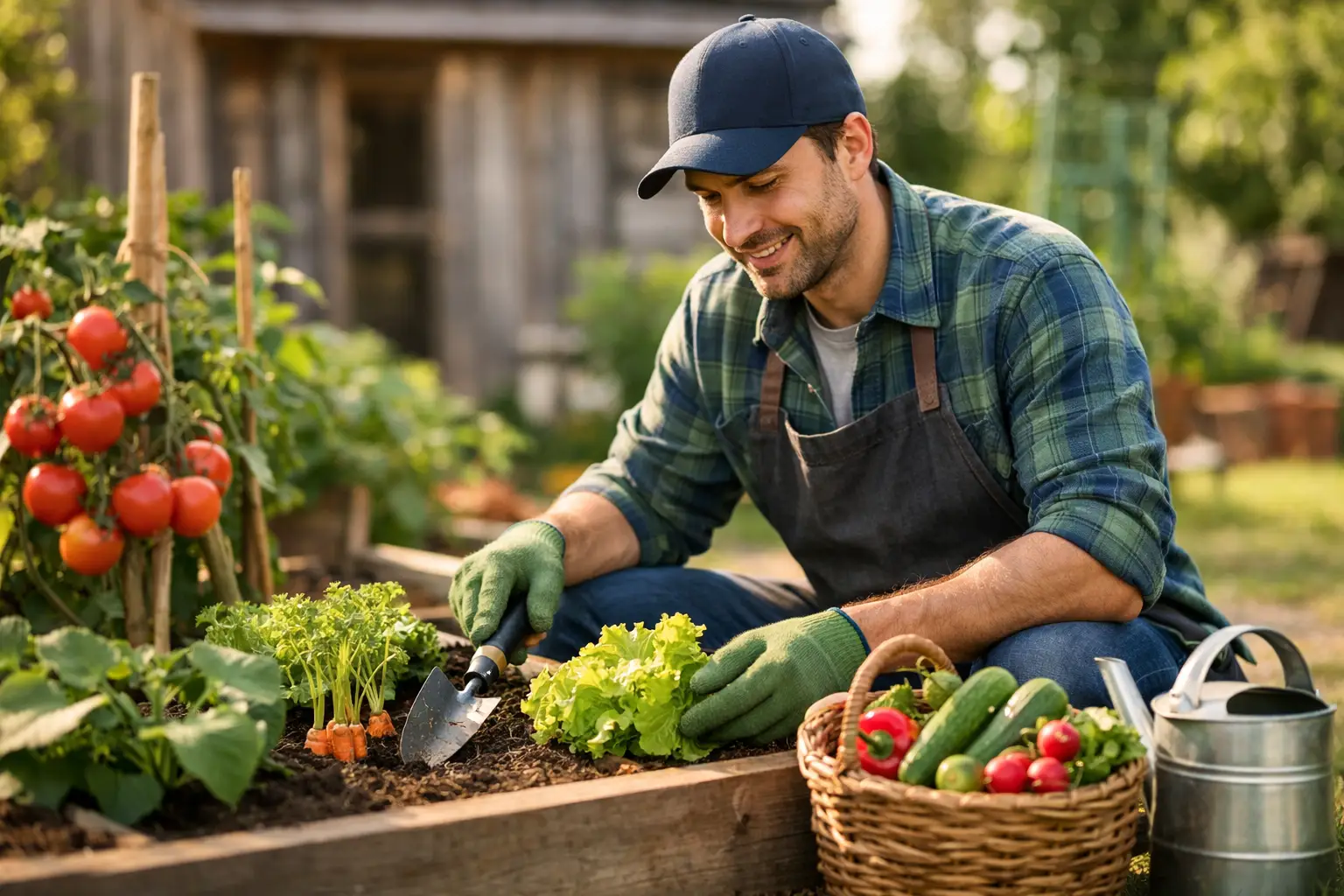
If tomato plants struggle early, the problem often starts below ground. Tomatoes want loose, well-draining soil with plenty of organic matter. In a raised bed or in-ground garden, that usually means mixing in finished compost before planting. In containers, it means starting with a quality potting mix rather than garden soil, which tends to compact and drain poorly in pots.
Rich soil matters, but balance matters too. A bed loaded with fresh manure or high-nitrogen amendments can give you huge leafy plants with fewer tomatoes. What you want is steady nutrition, not a growth spurt. Compost, worm castings, and a balanced organic fertilizer are usually a better fit than anything overly strong.
Soil pH also plays a part. Tomatoes generally do best in slightly acidic soil, around 6.0 to 6.8. You do not need to obsess over the numbers if your plants are growing well, but if you keep seeing weak growth or nutrient issues despite regular care, a soil test can save a lot of guessing.
Planting tips that prevent problems later
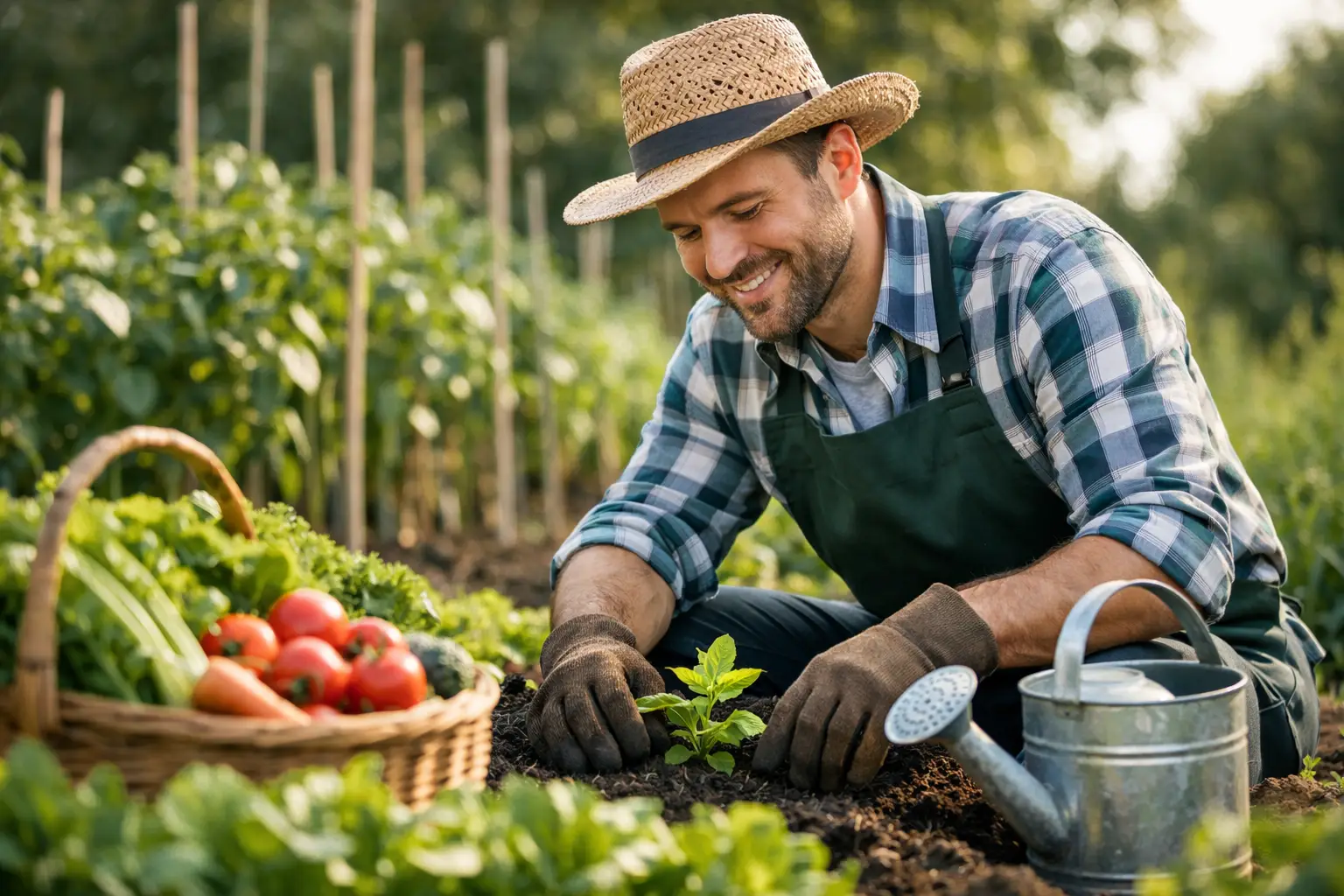
Tomatoes reward a strong start. Plant them deep, burying part of the stem if the transplant is leggy. Those buried stems will produce extra roots, which helps the plant handle summer heat and inconsistent weather. It is one of the easiest ways to build resilience from day one.
Spacing is another place where small choices matter. It is tempting to tuck plants close together, especially in a small garden, but crowded tomatoes stay wetter, get less airflow, and are more likely to develop fungal problems. Give each plant enough room for light and air to move through. The exact distance depends on the variety and whether you prune, but more space almost always pays off.
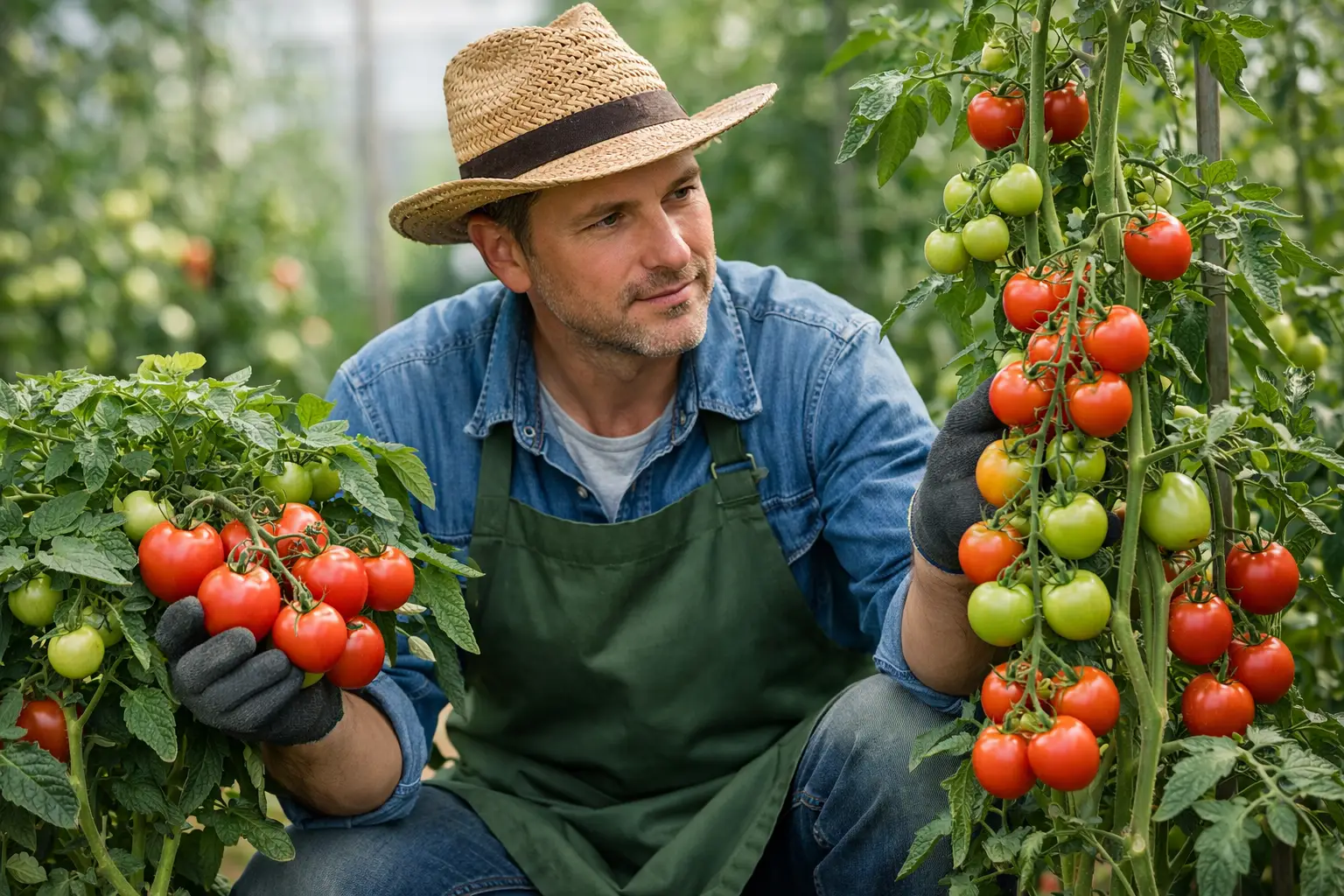
Add support at planting time, not after the plant starts sprawling. Cages, stakes, or a trellis all work. The best option depends on the type of tomato you are growing. Determinate tomatoes stay more compact, while indeterminate tomatoes keep growing and usually need stronger, taller support all season.
Watering is where tomato care usually goes sideways
Most tomato problems look different, but many trace back to uneven watering. Cracked fruit, blossom end rot, stress, and bland tomatoes often show up when the soil swings between bone dry and soaked. Organic gardening is not just about what you feed plants. It is also about creating consistent conditions.
Tomatoes prefer a deep soak rather than a daily sprinkle. Water at the base of the plant so the roots grow downward and the leaves stay drier. In hot weather, container tomatoes may need water every day, while in-ground plants can often go longer. It depends on your soil, weather, mulch, and plant size.
A simple layer of mulch helps more than many gardeners expect. Straw, shredded leaves, or untreated grass clippings can keep moisture in the soil, reduce splash-up from rain, and slow weed growth. That one step makes organic tomato care easier because it stabilizes the root zone and lowers stress.
Feeding tomatoes without overdoing it
Tomatoes are hungry plants, but too much fertilizer can create as many issues as too little. Early in the season, they need enough nitrogen to build healthy stems and leaves. Once they begin flowering and setting fruit, they benefit from a fertilizer that supports blooming and fruit development without pushing excessive leafy growth.
This is where many gardeners get tripped up by labels and promises. You do not need a shelf full of products. A balanced organic vegetable fertilizer, compost, and possibly a fish or seaweed-based feed during active growth are usually enough. If plants are dark green and leafy but not setting much fruit, back off on feeding and look at sunlight, temperature, and variety instead.
Yellow lower leaves do not always mean disaster. Sometimes older leaves fade naturally as the plant matures. But if yellowing spreads quickly or affects the whole plant, check moisture first, then nutrition, then disease. Organic care works best when you treat the actual cause rather than tossing random products at the problem.
A practical guide to organic tomato care for pests
Tomatoes attract the usual garden crowd – aphids, hornworms, flea beetles, stink bugs, and whiteflies, depending on where you live. The organic approach is not to pretend pests will never show up. It is to catch them early and respond in ways that protect the bigger garden ecosystem.
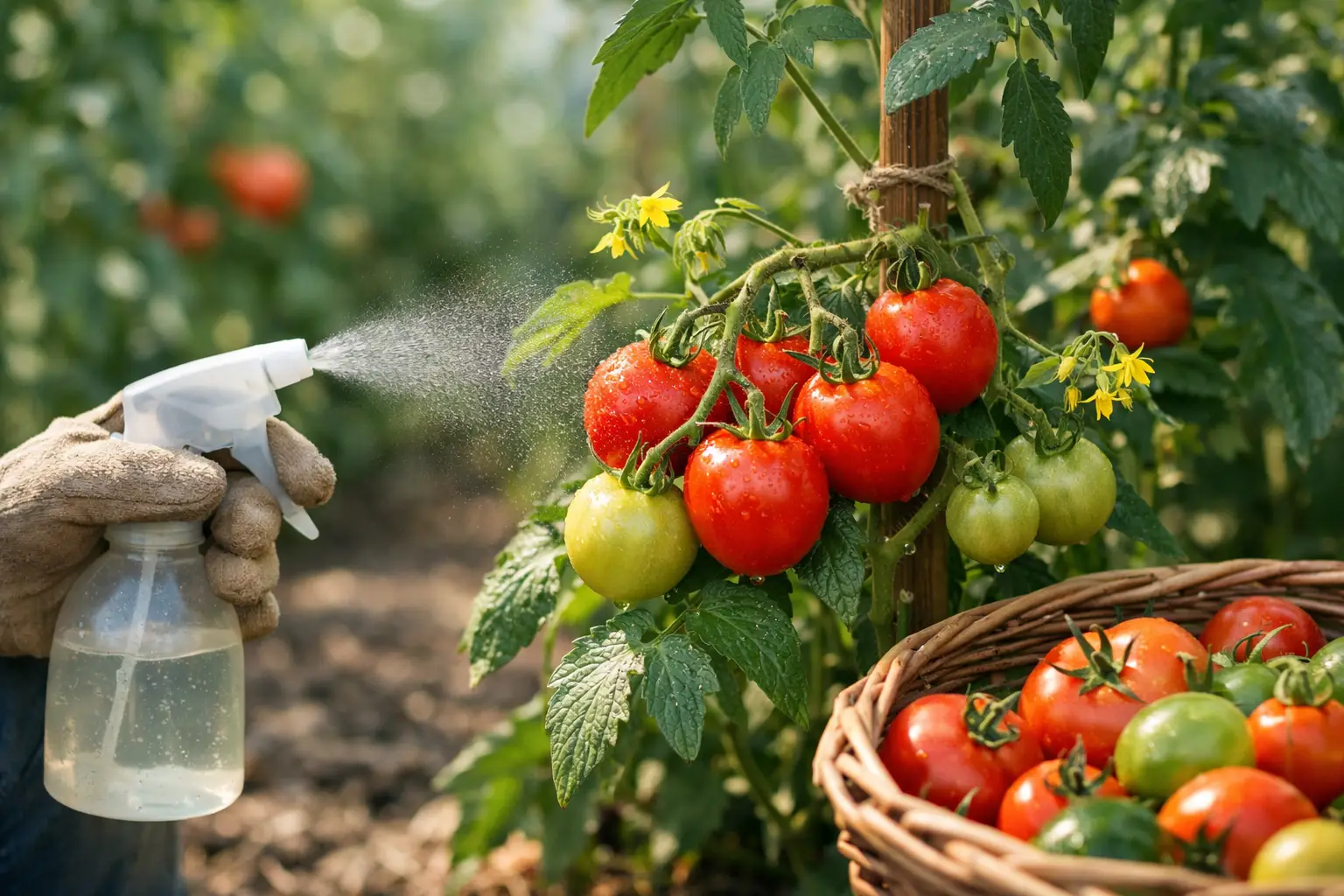
Start by checking your plants a few times each week. Look under leaves, along stems, and around flowers. Hand-picking hornworms is still one of the most effective controls, unpleasant as it may be. A strong spray of water can knock off aphids. Insecticidal soap and neem can help in some cases, but they are best used carefully and only when needed, especially around pollinators.
You will usually get better long-term results by making the garden more balanced. Flowers that attract beneficial insects, good airflow, healthy soil, and clean plant spacing all reduce pressure over time. Organic pest control is often less about one miracle fix and more about stacking several simple habits together.
Disease prevention matters more than treatment
Once tomato diseases take hold, there is only so much you can do. That is why prevention deserves most of your attention. Many fungal and bacterial problems spread through wet leaves, poor airflow, and soil splashing onto lower foliage.
Watering at the base, mulching, spacing properly, and pruning the lowest leaves are all useful preventive steps. If a leaf looks badly spotted, yellow, or diseased, remove it promptly and dispose of it rather than composting it if you are unsure what caused the issue. Clean tools between plants if you are trimming a lot.
Crop rotation helps too, especially if you grow tomatoes in the ground every year. If possible, avoid planting tomatoes, peppers, eggplants, or potatoes in the same spot season after season. In small gardens that is not always realistic, so do what you can and lean harder on soil-building and sanitation.
Pruning, suckers, and what actually matters
Tomato pruning gets overcomplicated fast. The short version is this: prune to improve airflow and manage the plant, not because every sucker is a problem. Indeterminate tomatoes benefit the most from selective pruning. Removing some suckers can keep the plant more open and easier to support.
Determinate tomatoes are different. Heavy pruning can reduce your harvest because these plants produce much of their fruit in a shorter window. If you are not sure what type you have, start lightly. Remove damaged leaves, any foliage touching the soil, and dense growth that blocks airflow.
If your tomatoes are in cages and doing fine, you do not need to turn pruning into a weekly project. Healthy plants with enough sun and room often do perfectly well with minimal fuss.
Containers need the same basics, just faster
Patio tomatoes and container plants can be incredibly productive, but they dry out and run through nutrients faster than garden beds. That means your guide to organic tomato care changes a bit when roots are confined to a pot.
Choose the biggest container you can reasonably manage, ideally one with excellent drainage. Small pots lead to constant watering stress and uneven growth. Use fresh potting mix each season or refresh it well with compost and organic amendments.
Expect to water more often, feed a bit more regularly, and keep a closer eye on heat stress. In peak summer, a container tomato can go from fine to wilted by afternoon. That does not mean you failed. It just means container gardening asks for more consistency.
When tomatoes look bad but are still salvageable
A rough-looking tomato plant is not always a lost cause. If the stem is still firm, new growth is appearing, and disease is not racing through the plant, there is often time to recover. Trim off the worst leaves, correct the watering pattern, add mulch, and give the plant a balanced feeding if it has clearly been depleted.
I have seen plenty of tomatoes limp through a hard stretch and still produce well once the basics were corrected. That is part of why organic gardening is so satisfying. You are not forcing the plant with harsh inputs. You are getting the growing conditions back into balance and letting the plant respond.
Tomatoes ask for attention, but they also teach patience. If you focus on soil, consistency, and early observation instead of quick fixes, you will usually get better fruit and fewer problems. And when a plant finally hands you that first sun-warm tomato, the whole season feels a lot more forgiving.