The little pile of damp grounds left in the morning coffee filter feels like it ought to do something useful. And it can. But are coffee grounds good fertilizer? Not quite in the way many gardeners hope. They are better thought of as a helpful compost ingredient or a light soil amendment, not a complete plant food you can scatter around every tomato and expect a bigger harvest.
Used thoughtfully, coffee grounds keep a useful household waste out of the trash and add organic material to the garden. Used too heavily, especially in containers or around young plants, they can create a few frustrating problems. The good news is that using them well is simple.
Are coffee grounds good fertilizer on their own?
Coffee grounds contain some nitrogen, along with small amounts of phosphorus, potassium, and micronutrients. That sounds like fertilizer, and technically they do contribute nutrients. The catch is that the nutrients are modest and are not always immediately available to plants.
A bagged organic fertilizer is formulated to feed plants in predictable amounts. Coffee grounds are not. Their nutrient content varies by coffee type and brewing method, and they do not provide the balanced nutrition that heavy-feeding vegetables such as tomatoes, peppers, squash, and corn need through a growing season.
Think of grounds as an ingredient, not the whole meal. They can support healthier soil over time, particularly when they are composted with leaves, grass clippings, and kitchen scraps. For an established vegetable bed, that long-term soil-building work is every bit as valuable as a quick nutrient boost.
The pH myth: are coffee grounds acidic?
Many gardeners save coffee grounds for blueberries, hydrangeas, and other acid-loving plants because coffee tastes acidic. It is an understandable idea, but brewed coffee grounds are usually close to neutral in pH. Most of the acid ends up in your cup, not in the grounds.
That means grounds will not reliably turn ordinary garden soil acidic. They may cause a small, temporary change at the soil surface, but they are not a dependable way to adjust pH. If your blueberries are struggling because the soil is too alkaline, a soil test and an appropriate amendment will give you a much clearer path forward.
This is one of those gardening tips that sounds wonderfully simple but can lead people in circles. Coffee grounds are still useful around acid-loving plants as compost or mulch mixed with other materials. Just do not count on them to solve a pH problem.
The best way to use coffee grounds: add them to compost
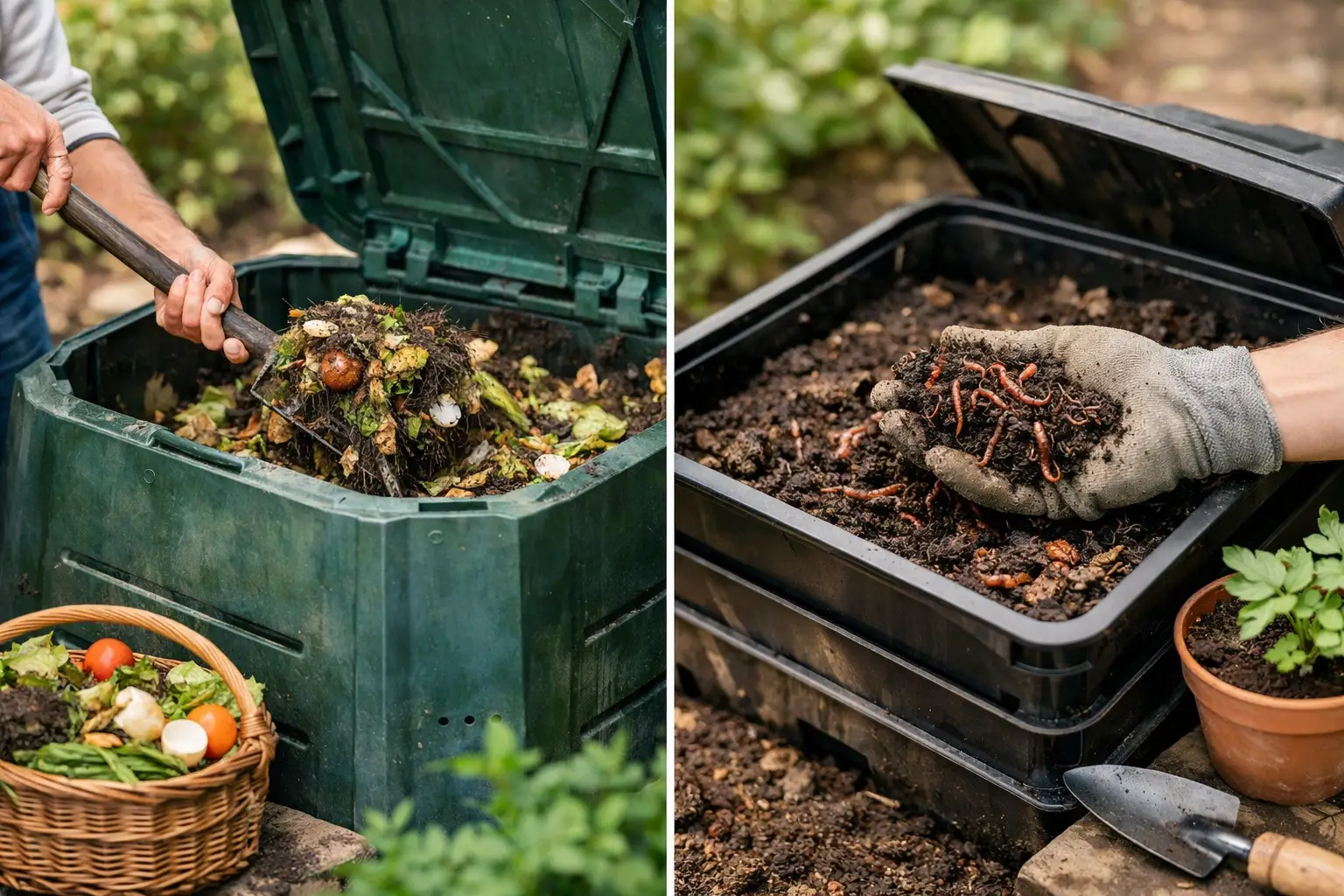
The easiest, safest use for coffee grounds is the compost pile. Grounds are considered a nitrogen-rich, or “green,” material even though they are brown in color. Mix them with carbon-rich “brown” materials such as dry leaves, shredded paper, straw, or small amounts of untreated wood chips.
A good rule is to avoid letting grounds dominate the pile. If you add a bucket of grounds, add a generous layer of dry leaves or other browns with it. This balance helps the pile heat up, reduces odor, and keeps the compost from becoming dense and soggy.
Paper coffee filters can usually go into the compost too, as long as they are plain paper and free from plastic coatings. Skip flavored coffee grounds or anything mixed with cream, syrup, or sugar. Those extras can attract pests and do not belong in a backyard compost pile.
Once the compost has broken down into dark, crumbly material with an earthy smell, spread it over garden beds or mix it into container soil. At that point, the grounds have become part of a far more balanced amendment that improves moisture retention, soil structure, and microbial life.
Can you put coffee grounds directly in the garden?
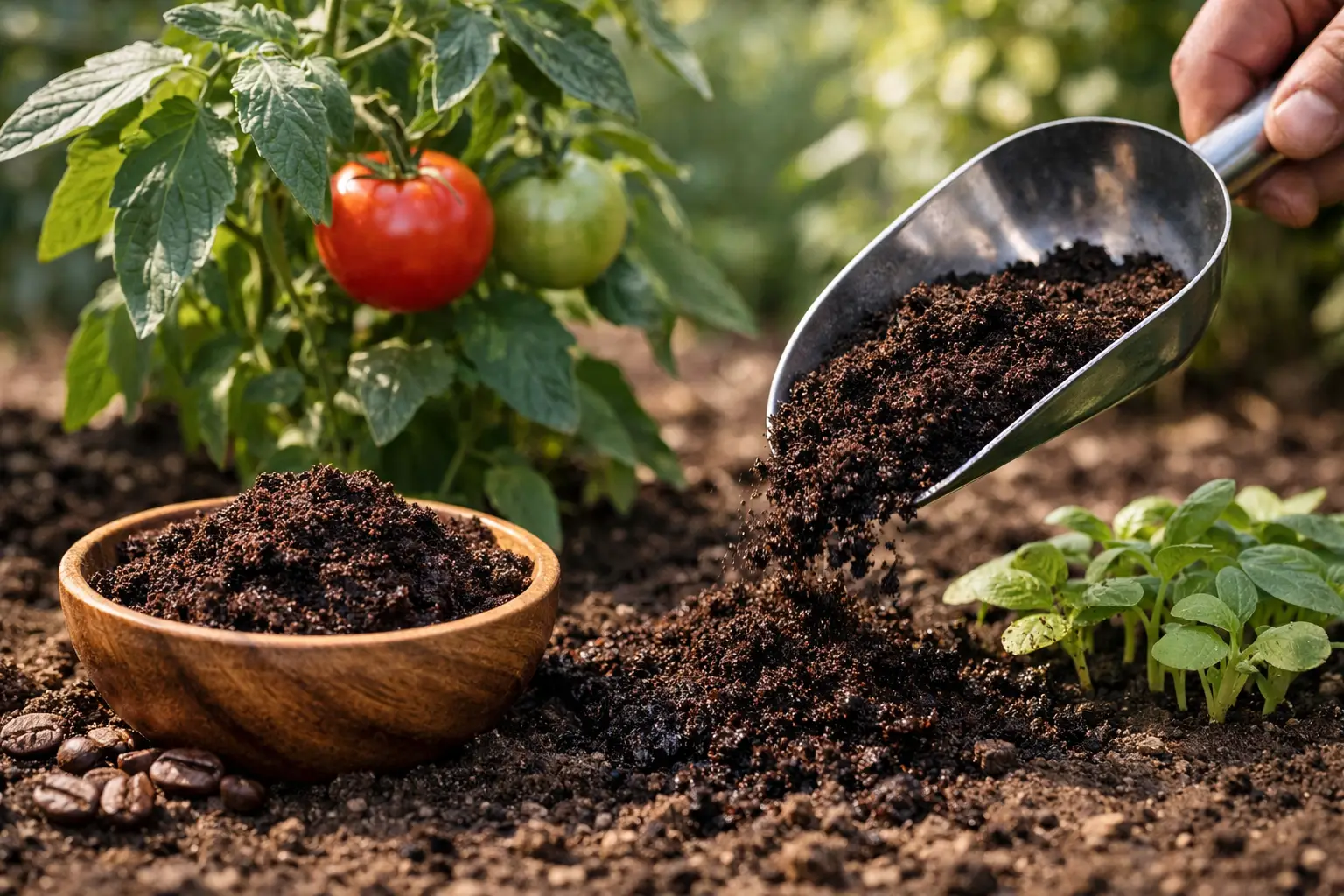
Yes, but use a light hand. A thin scattering of grounds worked gently into the top inch of soil can be fine in an established bed. You can also mix small amounts into mulch or combine them with finished compost before applying them around plants.
The trouble starts when grounds are piled in a thick layer. Fine coffee particles can pack together and form a crust that sheds water rather than letting it soak in. In a raised bed or patio container, where roots have limited room to recover, that crust can make watering uneven and leave plants stressed.
I have seen this happen most often around tomatoes. A gardener is trying to give a plant a natural boost, adds a thick ring of grounds at the base, and then wonders why water seems to sit on top of the soil. The fix is usually simple: pull the grounds back, loosen the surface gently, and add compost or a looser mulch instead.
For direct use, keep coffee grounds to a light dusting rather than a blanket. Mix them with shredded leaves, pine straw, or other mulch so air and water can still move freely. If you have more than a few cups of grounds each week, composting is the better destination.
What about mold on coffee grounds?
A fuzzy white or bluish growth on saved grounds is usually a harmless fungus beginning the decomposition process. It is not a reason to panic or throw everything away. Still, if the grounds smell sour, are slimy, or have been sitting in a sealed container for weeks, add them to an active compost pile rather than spreading them near plants.
Where coffee grounds can cause problems
Fresh grounds still contain some caffeine and other compounds that may interfere with seed germination and very young plant growth. Research and garden experience both point to the same practical lesson: do not use fresh grounds heavily where you are sowing seeds.
Avoid mixing large amounts into seed-starting mix, adding them to a row before planting carrots or lettuce, or piling them around new transplants. Seedlings need a loose, evenly moist growing medium, and coffee grounds are too fine and unpredictable for that job.
Containers deserve extra caution. Potting mix needs plenty of air space, and dense organic materials can make it compact quickly. If you want to use grounds in a container garden, add them only after composting, or use a small amount blended into a larger batch of finished compost.
Coffee grounds are also not a reliable pest repellent. You may hear that they stop slugs, ants, cats, or deer. In practice, the results are inconsistent. Dry grounds may be mildly unpleasant for a slug to cross, but rain quickly changes that. It is better to choose pest controls that match the actual pest instead of relying on a ring of coffee grounds to protect a whole garden.
A simple coffee-ground routine for home gardeners
If your household makes coffee daily, keep a small covered container near the kitchen. Empty it into the compost pile every few days, adding dry leaves or shredded paper as you go. If you do not compost yet, collect the grounds in a breathable container and mix a small amount into your regular mulch or soil surface once in a while.
A useful limit is to let grounds make up no more than about one-fifth of the materials you add to compost over time. You do not need to measure with laboratory precision. Just make sure every addition of wet, heavy grounds is balanced by a larger handful or layer of dry, fibrous material.
For gardeners buying grounds from a local café, ask how much you can realistically use before bringing home a large bag. Free materials are only a bargain if they fit your garden. A few pounds added gradually to compost is helpful. Fifty pounds sitting wet in the garage is a moldy chore waiting to happen.
Give your soil more than one good thing
Coffee grounds have earned their place in a natural garden, but they are not a miracle fertilizer. Your plants will get better results from the steady basics: finished compost, mulch, adequate sunlight, consistent watering, and an organic fertilizer when a crop needs extra nutrition.
So enjoy your coffee, save the grounds, and let them become part of a larger rhythm of caring for the soil. A garden rarely needs one magic ingredient. It thrives when small, sensible choices add up week after week.