A raised bed kit can feel like the fast track to a productive vegetable garden: open the box, assemble the frame, add soil, and plant. That promise is appealing, especially after one too many seasons wrestling with compacted ground or disappointing patio pots. But in a raised garden bed kit review, the box itself matters less than what it will look like after three summers of rain, watering, soil pressure, and enthusiastic tomato roots.
The best kit is not necessarily the tallest, priciest, or most stylish one. It is the one that fits your space, protects your soil investment, and makes growing food feel easier rather than more complicated. For most home gardeners, that means choosing a durable material, a practical depth, and a size you can reach across without stepping on the soil.
What a Raised Garden Bed Kit Review Should Tell You
A useful raised garden bed kit review should look beyond a pretty product photo. Raised beds hold a surprising amount of weight once they are filled with moist soil, compost, mulch, and mature plants. A four-by-eight-foot bed that is 12 inches deep can contain well over a thousand pounds of growing mix. Thin panels, weak corner brackets, and undersized hardware tend to reveal themselves quickly under that pressure.
Start by looking at the material and how the pieces connect. A kit with solid corner posts, sturdy bolts, and clearly labeled parts usually saves frustration on assembly day. If the kit relies on flimsy snap-together panels, it may be fine for flowers or a temporary setup, but it is less reassuring for a permanent vegetable bed.
Also consider what is not included. Many kits provide only the frame. You may still need cardboard for weed suppression, hardware cloth if burrowing pests are a problem, a level base, soil, compost, mulch, and possibly a drip irrigation setup. None of those are reasons to skip a kit, but they do affect the real cost and the time required before planting.
Raised Garden Bed Kit Review: Material Matters Most
For an organic garden, the bed material should support a healthy growing space without creating a maintenance headache. There is no single right choice, but each common option comes with a clear trade-off.
Galvanized steel kits
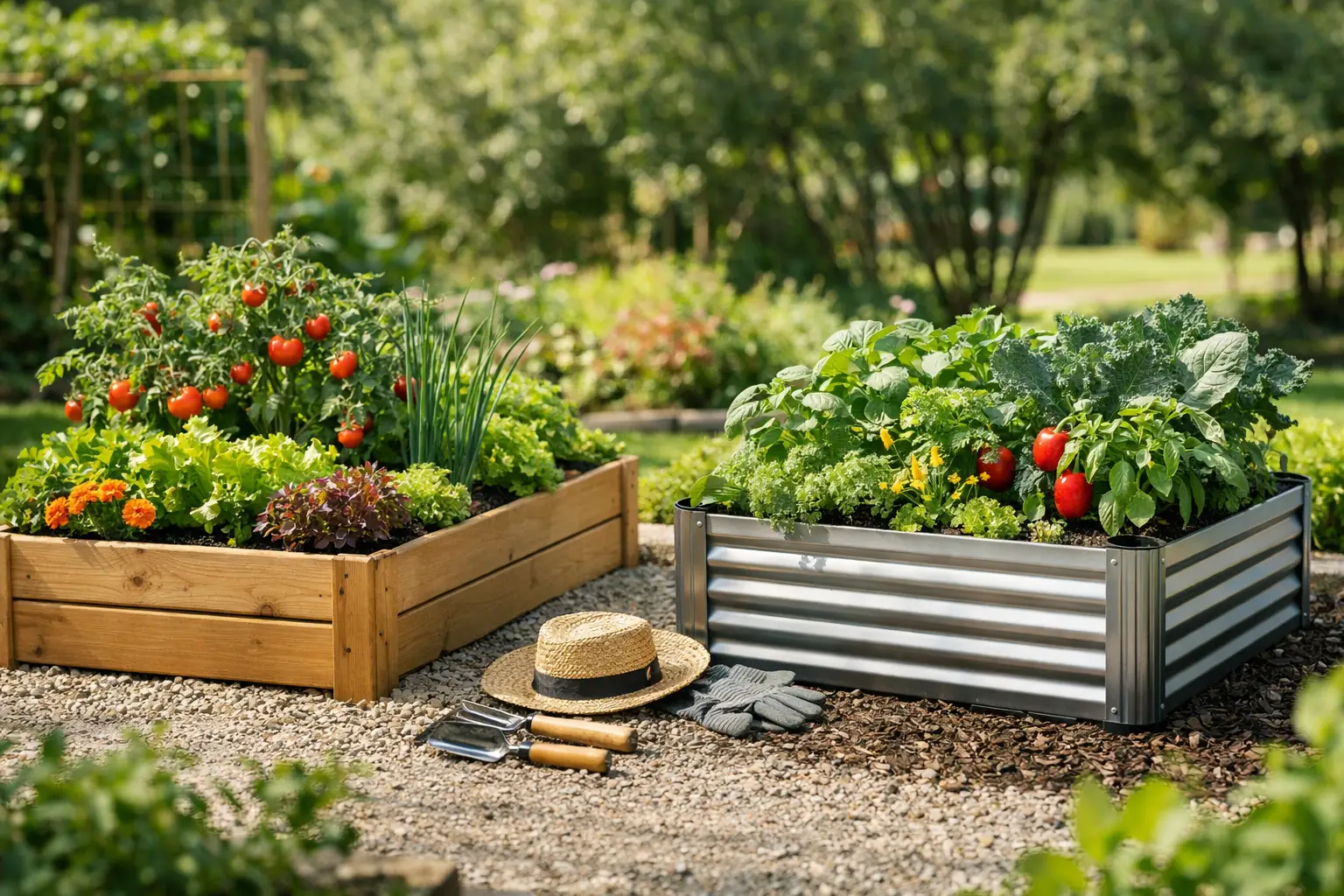
Galvanized steel beds are popular for good reason. They are generally long-lasting, resist rot, and do not need staining or sealing. Their clean look also works nicely in small yards and patios where the garden is part of the landscape. Quality metal kits often have rolled edges and reinforced corners, which makes them safer and more stable than bargain versions with sharp, thin panels.
The main concern gardeners raise is heat. Metal can warm up in full sun, though the soil mass inside a properly filled bed changes temperature more slowly than the surface of the frame. In very hot regions, a layer of mulch and consistent watering help protect roots. Steel kits can also cost more up front, but their long life often makes that price easier to justify.
Cedar and untreated wood kits
Cedar is the classic raised-bed material. It looks natural, is easy to modify, and holds up better than many other woods because it has some natural rot resistance. A well-built cedar kit feels at home in a backyard vegetable garden, and it can be a particularly good choice if you want to attach trellises, hoops, or side supports later.
Still, wood is not maintenance-free. Even cedar will gradually weather, split, and decay where it stays damp against the soil. Look for thick boards and substantial corner supports, not thin decorative slats. Avoid kits made from pressure-treated lumber if you prefer to keep material choices as simple and natural as possible around edible crops. Untreated cedar costs more than basic lumber, but it is often a sensible middle ground between appearance, longevity, and ease of repair.
Composite and plastic kits
Composite or recycled-plastic kits appeal to gardeners who want a low-maintenance, rot-proof option. They can last a long time and may include attractive modular designs. The downside is that some feel less rigid than wood or steel, especially in long beds, and quality varies widely. Check whether the system includes internal bracing and whether replacement parts are available.
Fabric raised beds are worth mentioning here, even though they are a different category. They are lightweight, affordable, and useful for renters or gardeners testing a new location. They do not offer the same tidy, permanent structure as a framed kit, and they dry out faster in summer. For potatoes, herbs, or a first-season experiment, though, they can be a perfectly practical choice.
Choose Depth and Size for the Crops You Grow
A shallow bed can grow lettuce, radishes, bush beans, and many herbs beautifully. For a mixed vegetable garden, 12 inches of soil depth is a reliable starting point. It gives roots room to explore and makes it easier to create loose, fertile soil from the beginning. Beds 17 to 24 inches tall are especially comfortable for gardeners who prefer less bending or have mobility concerns, but they require much more soil to fill.
Think carefully before buying the largest kit that fits on paper. A bed should be no more than about four feet wide if you can reach it from both sides. Anything wider invites you to lean heavily on the soil or step into the bed, both of which compact the growing area you worked hard to improve. A two-by-eight or four-by-eight bed is often more useful than one oversized rectangle because paths and access stay manageable.
Length is flexible, but long beds need support. If you choose an eight-foot or longer kit, look for center bracing or strong side panels. Bowing sides are one of the most common problems with inexpensive kits, especially after wet spring weather adds extra pressure to the soil.
Assembly Is Part of the Value
A kit earns its keep when assembly is straightforward enough that you can spend the afternoon gardening, not hunting for a missing bolt. Clear instructions, pre-drilled holes, labeled hardware, and a simple tool list make a genuine difference. If a kit requires two people to hold panels in place, that is not a deal-breaker, but it is useful to know before delivery day.
Prepare the site before opening the package. Pick a spot with at least six to eight hours of sun for fruiting vegetables like tomatoes, peppers, cucumbers, and squash. Remove persistent weeds, level the ground as much as practical, and place plain cardboard beneath the bed if grass or weeds are likely to push upward. Skip landscape fabric under an open-bottom raised bed. It can interfere with earthworms and root movement over time.
If voles, gophers, or other digging pests are common in your area, hardware cloth on the bottom is worth the extra effort. It is far easier to install before the bed is filled than to solve a tunneling problem later.
Do Not Let the Soil Cost Surprise You
The kit may be the visible purchase, but soil is where your garden succeeds or struggles. Avoid filling a raised bed with bagged topsoil alone. It often becomes dense and drains poorly. A better approach is a blend of quality topsoil, finished compost, and other organic material suited to your local conditions.
For a new bed, aim for soil that feels loose and crumbly when damp, not sticky like clay or dusty like dry sand. Add a two- to three-inch layer of compost each season and keep the surface mulched with shredded leaves, untreated straw, or another natural mulch. This protects soil life, reduces evaporation, and makes weeds less eager to move in.
Who Should Buy a Raised Bed Kit?
A kit is a strong choice for beginners who want a clear, contained place to start growing, as well as gardeners who value a polished look without measuring and cutting lumber. It also works well for patios, rental homes, and small yards where a permanent in-ground garden is not realistic.
Building from scratch may be the better route if you have tools, access to affordable local lumber, or a very specific shape in mind. You can often save money that way, particularly on large installations. But saving money only counts if you enjoy the project and have time to do it well. A thoughtfully designed kit removes enough friction that many gardeners are more likely to plant, water, and keep going through the season.
Our Practical Verdict
The best raised garden bed kits are sturdy, open-bottomed, appropriately sized, and made from materials you are comfortable having around your food garden. Favor solid construction over extra accessories, and resist choosing a bed solely because it is inexpensive. Replacing a failed frame and refilling spilled soil is rarely a bargain.
Once your bed is in place, start small and grow something you genuinely like to eat. A few basil plants, cherry tomatoes, lettuce, and bush beans can turn a new frame into a garden that teaches you far more than any product box ever could.