A cucumber vine sprawled across a garden bed can look healthy right up until you try to find the fruit. Leaves overlap, stems wander into the path, and perfectly good cucumbers hide until they become baseball bats. Learning how to grow cucumbers vertically changes that familiar scene. With a sturdy support and a few simple habits, you can grow cleaner fruit, improve airflow, and make far better use of a small bed or patio.
Vertical growing is especially helpful in raised beds, narrow side yards, and containers, but it is not just a space-saving trick. Getting vines off the soil can reduce disease pressure and make harvesting a pleasant two-minute garden walk instead of a daily search party.
Why grow cucumbers up instead of out?
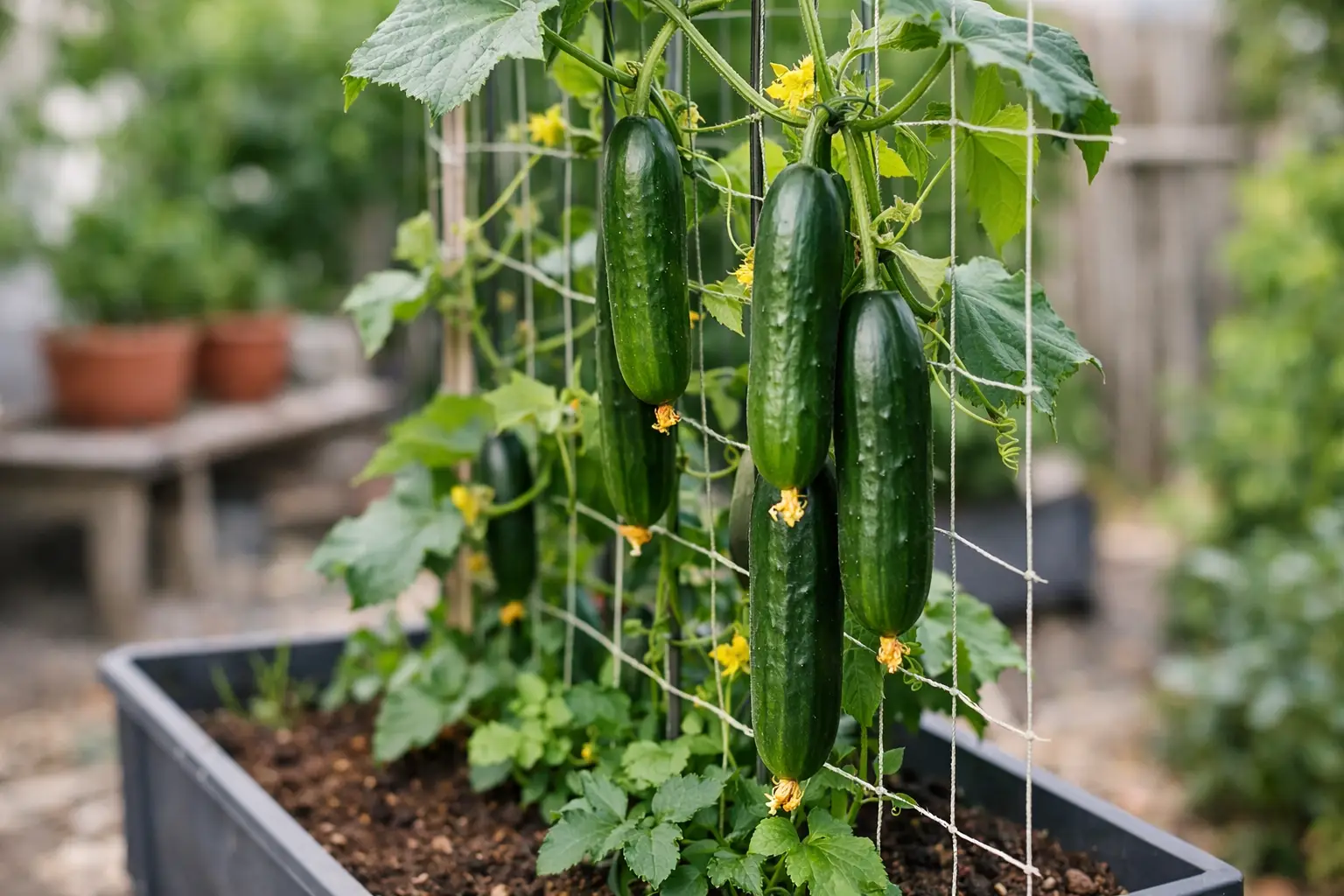
Cucumbers naturally climb. Their curly tendrils are built to grab nearby stems, branches, and anything else within reach. When we give them a trellis, they do much of the work themselves.
The biggest benefit is airflow. Dense cucumber leaves that sit close to damp soil stay wet longer after rain or watering, creating friendly conditions for powdery mildew and other fungal troubles. A vertical plant dries more quickly and lets you spot yellowing leaves, pests, and developing fruit before a small issue becomes a big one.
Keeping cucumbers off the ground also helps the fruit stay cleaner and less vulnerable to slugs, sowbugs, and rot. Straight-growing varieties often produce more evenly shaped fruit when they can hang freely. You will still need to check for pests, but it is much easier to inspect a vine when you can see where every stem is headed.
There is one trade-off: vertical plants are more exposed to wind and can dry out faster, especially in containers. The answer is not constant watering. It is choosing a strong support, using mulch, and watering deeply at the root zone.
Choose a cucumber that likes to climb
For vertical growing, start with a vining cucumber rather than a bush type. Seed packets and plant tags usually say whether a variety is bush or vining. Bush cucumbers stay compact and can be a good fit for large containers, but they do not make the most of a trellis.
Vining slicers are great if you want crisp cucumbers for salads and sandwiches. Pickling types tend to be productive and are often easy to train up a trellis, even if you are not planning to make pickles. If powdery mildew has been a repeat visitor in your garden, look for varieties described as disease resistant.
A common beginner mistake is planting one cucumber and expecting a steady bowlful all summer. Cucumbers can be very productive, but they also have a limited peak. Planting a second small round of seeds two to three weeks after the first can stretch your harvest, provided your growing season is long enough.
Pick a support before you plant
The best trellis is the one that fits your space and stays upright when the vines are loaded with fruit. Put it in place before planting or while seedlings are very small. Trying to push stakes into the bed later can damage shallow cucumber roots.
A simple A-frame trellis made from untreated wood or metal panels works well in raised beds. The vines grow up one or both sides, and the cucumbers hang inside or outside the frame where they are easy to reach. A cattle panel arched between two beds makes a beautiful tunnel, though it needs secure anchoring and enough room for gardeners to walk beneath it.
For one or two plants in a container, a tall tomato cage can work if it is firmly secured. A wood or metal obelisk is another good choice. Trellis netting attached to solid posts is useful along a fence, but do not rely on lightweight plastic mesh alone for a vigorous variety. By midsummer, cucumber vines can be surprisingly heavy.
Aim for a support at least 5 to 6 feet tall for most vining varieties. If your plants are beside a wall or fence, leave some breathing room behind the trellis so air can circulate and you can reach the plants if needed.
Make the trellis sturdy, not fancy
You do not need a picture-perfect structure. You do need one that will not lean over after a summer thunderstorm. Push posts deeply into the soil, use zip ties or garden twine to secure panels, and test the structure with both hands before planting. A little wobble in spring can become a collapsed trellis in July.
Choose untreated lumber where vines will touch it, and reuse materials when possible. Old metal fencing panels, sturdy branches, and salvaged wood can all make useful supports. Avoid treated materials if you are unsure what they contain, particularly in a food garden.
How to grow cucumbers vertically, step by step
Cucumbers need warmth. Wait until the soil has warmed and nighttime temperatures are reliably above 50°F before planting outdoors. Cold, soggy soil slows them down and can lead to seedlings that sulk for weeks.
Plant seeds about 1 inch deep, or set transplants at the same depth they were growing in their pots. Space plants according to the variety, usually around 12 to 18 inches apart along a trellis. Crowding may look efficient at planting time, but cucumber leaves fill in quickly. A little space now means better airflow later.
Give plants full sun, ideally six to eight hours daily. In very hot climates, a spot with light afternoon shade can help prevent stress, but too much shade usually means fewer cucumbers. Work finished compost into the bed before planting, and use a layer of shredded leaves, straw, or untreated grass clippings as mulch once seedlings are established. Keep mulch a couple of inches away from the stems.
Water deeply and consistently. Cucumbers are mostly water, so uneven moisture can lead to bitter fruit, poor growth, or oddly shaped cucumbers. Check the soil with a finger rather than watering by the calendar. When the top inch feels dry, water the soil thoroughly at the base of the plant. Morning is ideal because leaves have time to dry.
As vines begin to climb, guide the main stem toward the trellis. Young tendrils usually grab on without help. If a stem keeps slipping, loosely tie it with soft cloth strips, plant tape, or twine. Do not cinch ties tightly. Stems thicken quickly, and a tight tie can pinch them.
Feed gently and watch the leaves
Rich soil and compost usually carry cucumbers through their early growth. Once flowering begins, a light application of an organic vegetable fertilizer can support fruit production. Follow the label rate rather than assuming more fertilizer will mean more cucumbers.
Too much nitrogen creates a gorgeous wall of leaves with fewer flowers and fruit. If your plant looks dark green and vigorous but is not producing, ease off fertilizer and make sure it is getting enough sun. Flowers also need pollinators. Avoid broad-spectrum insect sprays, even organic ones, when bees are active.
A few yellowing leaves near the base of an older plant are normal. Yellow leaves spreading rapidly, white powdery patches, or leaf edges that look chewed deserve a closer look. Hand-pick cucumber beetles when you see them, check leaf undersides for eggs, and remove badly diseased leaves with clean pruners. Keeping the area weeded and the foliage dry goes a long way toward preventing trouble.
Harvest often for a longer season
The best cucumber is usually picked a little earlier than you think. Check plants every day or two once fruit starts forming. Harvest slicers when they are firm, evenly colored, and the size recommended for the variety. Pickling cucumbers are best when small and crisp.
Use scissors or pruners rather than twisting fruit off the vine. Frequent harvesting tells the plant to keep producing. Missed oversized cucumbers signal that the plant has done its job, and production can slow down.
Vertical cucumbers make this habit wonderfully simple: lift a leaf, look along the hanging vines, and bring a bowl. Start with a solid trellis, water steadily, and let the plant do what it was designed to do. Before long, even a small garden can feel surprisingly abundant.