The first time you find a tomato hornworm the size of your finger, it is tempting to reach for the strongest spray on the shelf. But reliable organic pest control results usually come from a calmer approach: identify what is happening, act early, and make your garden a place where pests have a harder time getting comfortable.
That does not mean accepting holes in every leaf or handing your kale over to caterpillars. Natural pest control can be very effective, especially in a home garden where you can notice small changes before they become a full-blown problem. The key is setting realistic expectations. Organic methods are not always instant, and they work best as a system rather than a single product.
What Good Organic Pest Control Results Look Like
A healthy garden will never be completely free of insects. In fact, a garden with bees, lady beetles, tiny wasps, spiders, and other beneficial creatures is often doing something right. The goal is not to kill every bug. It is to prevent enough damage that your plants keep growing, producing, and recovering well.
Good results might mean you hand-pick a few hornworms before they strip a tomato plant. It might mean using row cover to keep cabbage moths away from young broccoli, rather than trying to rescue leaves already full of caterpillars. Sometimes it means accepting a little cosmetic damage on flowers or mature greens because the plant is still healthy.
This is one of the most useful mindset shifts for new organic gardeners: visible pest activity does not automatically mean failure. Look at the whole plant. Is it putting out new growth? Are flowers forming? Is the damage spreading quickly? The answers tell you whether to watch, intervene gently, or take faster action.
Start With the Problem, Not the Spray
Natural products can be helpful, but they are only effective when they match the pest. Spraying an aphid treatment on leaves chewed by beetles will not solve anything. Before doing anything else, spend a few minutes inspecting the plant.
Check the undersides of leaves, stems near the soil line, and the newest growth. Look for actual insects, sticky residue, webbing, tiny eggs, droppings, or the telltale pattern of damage. Chewed holes, curled leaves, pale stippling, and missing seedlings each point to different culprits.
If you see aphids clustered on tender stems, a strong stream of water may knock down a large part of the population. If you find cabbage worms, hand-picking is often the quickest answer in a small bed. If slugs are eating seedlings overnight, reducing damp hiding places and using an appropriate barrier or trap can make a noticeable difference.
Identification saves time, plants, and beneficial insects. A little patience here is usually more useful than a cabinet full of sprays.
Know When Damage Is Worth Treating
Treat when a pest is multiplying quickly, young plants are being set back, or edible crops are losing the leaves, flowers, or fruit they need to produce. A few Japanese beetle bites on a sturdy bean plant may be annoying but manageable. Flea beetles turning newly planted arugula into lace deserve quicker attention.
Young plants have less room for error. A mature zucchini can often outgrow minor chewing, while a seedling with half its leaves gone may not recover. Your response should fit the plant’s age, the pest pressure, and the amount of damage you are seeing.
The Habits That Make Natural Control Work
The most dependable organic pest control begins before you notice a pest. Strong plants are not pest-proof, but they handle stress better and are less likely to be overwhelmed.
Start with the basics: give each crop enough sun, avoid crowding, water consistently, and build soil with compost or other gentle organic matter. A plant stressed by drought, poor drainage, or too much high-nitrogen fertilizer often attracts trouble. Tender, overly lush growth can be especially appealing to aphids and other sap-feeding pests.
Regular garden walks matter more than most people expect. Two or three short checks each week are enough to spot eggs, early chewing, or clusters of insects while the problem is still small. Look closely at brassicas, squash, cucumbers, beans, and tomatoes, since these crops often draw repeat visitors.
Crop rotation helps in larger beds, especially with pests that overwinter in soil or plant debris. Avoid putting the same crop family in the exact same spot year after year when you can. Clean up heavily infested plant material at the end of the season, but do not strip every bit of habitat from your garden. Beneficial insects also need places to shelter.
Use Physical Controls Before Sprays
For many backyard gardens, a barrier or a quick hands-on fix gives better results than spraying anything at all. Row covers are especially useful for keeping flea beetles, cabbage moths, squash bugs, and cucumber beetles off vulnerable crops. Put them on early, before pests arrive, and secure the edges so insects cannot crawl underneath.
You do need to remove covers from crops that require pollination once they begin flowering, such as squash and cucumbers. Brassicas, lettuce, radishes, and many leafy greens can stay covered much longer because you are harvesting leaves, stems, or roots rather than waiting for pollinated fruit.
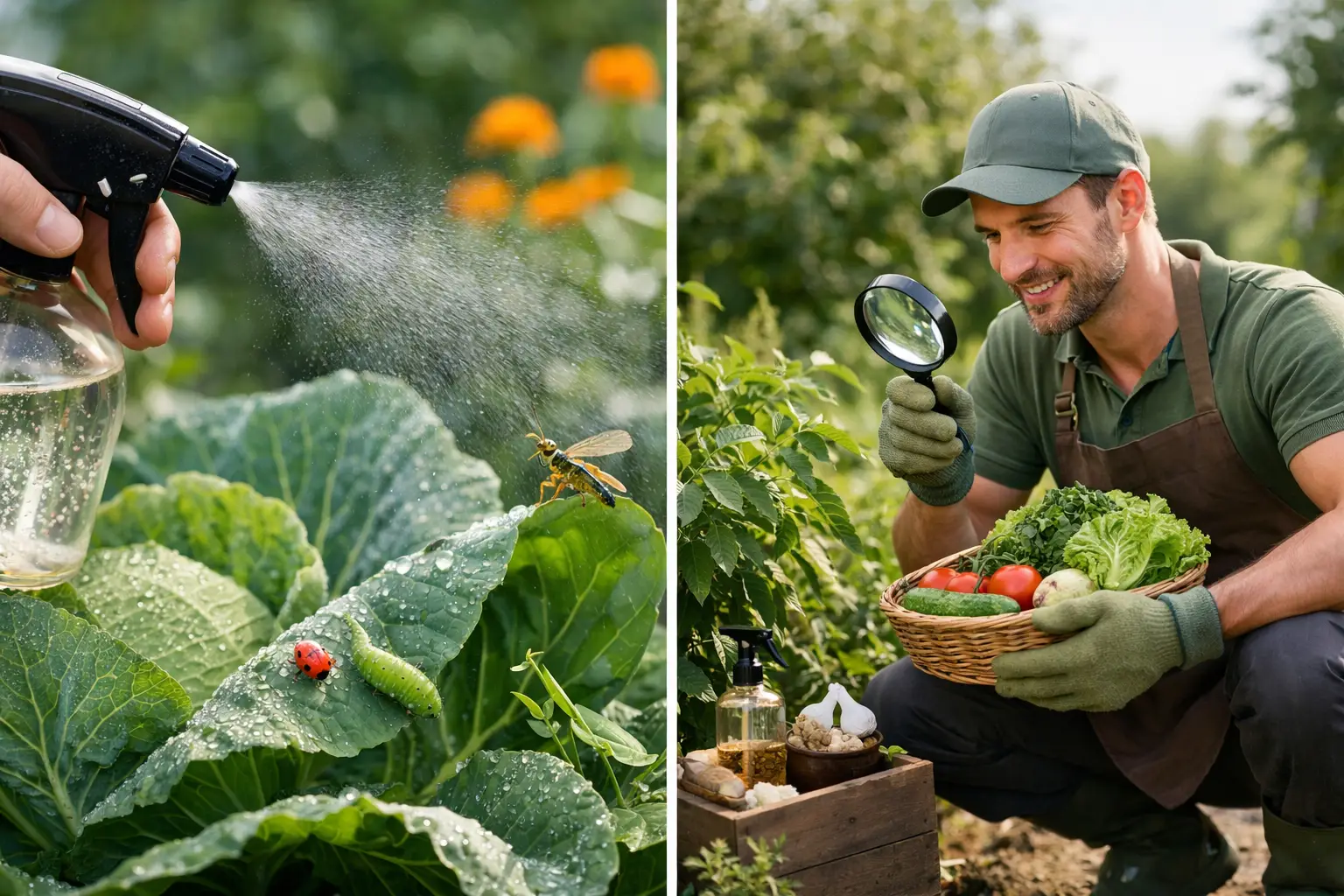
Hand-picking works surprisingly well when you make it part of your routine. Drop caterpillars, beetles, squash bug eggs, and hornworms into a container of soapy water. It is not glamorous, but it is targeted, inexpensive, and safe around pollinators.
For larger pests, protect ripening fruit with netting or harvest promptly. If squirrels keep sampling every tomato just as it colors up, picking tomatoes at the first blush and finishing them indoors can save a crop without turning the yard into a battleground.
When Organic Sprays Make Sense
There is a place for organic sprays, but they are best treated as a tool, not a default. Insecticidal soap can help with soft-bodied pests such as aphids, whiteflies, and spider mites when it contacts them directly. Horticultural oils can also be useful, particularly for certain scale insects and mites.
Bt products are highly targeted for caterpillars, including cabbage worms, but they must be eaten by the larvae to work. Spinosad can control a broader range of pests, yet it can harm beneficial insects if used carelessly. Even products approved for organic gardening deserve the same thoughtful handling as any other pesticide.
Apply sprays in the early morning or evening, never when bees are actively working flowers. Follow the label exactly, test a small area first, and avoid spraying during heat stress. Some plants are sensitive to soaps and oils, and a treatment meant to help can scorch foliage when temperatures are high.
Most importantly, do not keep reapplying because you are frustrated. Check whether the treatment matches the pest and whether the population is actually changing. If not, switch strategies rather than escalating.
Invite More Helpers Into the Garden
Beneficial insects are not a magic fix, but they become a real advantage when your garden offers food and shelter throughout the season. Small-flowered plants such as alyssum, dill, cilantro, calendula, yarrow, and native flowering plants can provide nectar and pollen for predatory insects.
Let a few herbs flower if you have the space. A blooming dill plant may look a little wild, but it can bring in hoverflies and tiny parasitic wasps whose larvae help with aphids and caterpillars. A shallow water source with stones for landing can help too.
Avoid broad-spectrum treatments whenever possible. They may knock back the pest you can see, but they also remove the creatures that would have helped keep the next wave under control. This is why gardens sometimes seem to rebound with even more pests after frequent spraying.
Be Patient, but Do Not Wait Too Long
Organic gardening asks you to observe, not ignore. A small aphid colony may disappear after lady beetles arrive. A squash bug infestation left unchecked can become much harder to manage in a week. The sweet spot is early, specific action.
Keep a simple note of what shows up and when. If cucumber beetles appear every June, have row cover ready before planting time. If slugs are always worst in a damp corner, adjust watering and clear their daytime hiding spots before seedlings go in. After a season or two, your garden starts teaching you its patterns.
The best natural pest control plan is not the one with the most products. It is the one you can realistically keep up with: healthy soil, frequent checks, physical protection, careful treatment when needed, and enough patience to let your garden’s natural balance do some of the work.