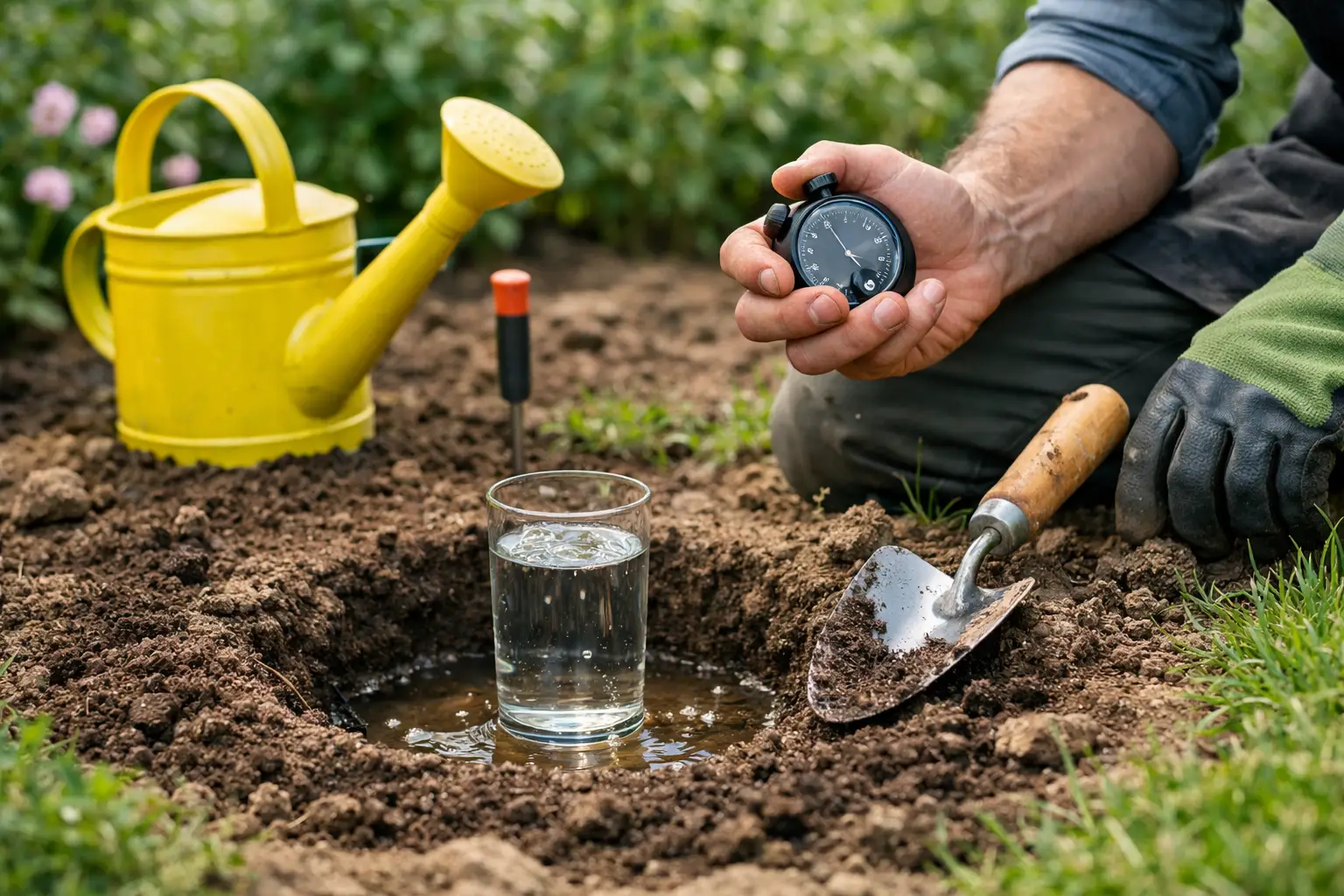
A garden can look perfectly fine on a sunny afternoon and still hold enough water below the surface to rot a tomato’s roots. That is why learning how to test garden drainage before you plant is one of the most useful bits of garden detective work you can do. It takes very little equipment, costs nothing, and can save you from blaming the wrong thing when plants later turn yellow, wilt, or simply refuse to grow.
Poor drainage is not always obvious. A puddle after a hard rain is a clear clue, but many garden beds drain slowly underneath while their surface looks dry within a day. The good news is that you do not need a technical soil lab to get a helpful answer. A shovel, water, and a little observation will tell you a great deal.
Why drainage matters more than gardeners expect
Plant roots need water, but they also need air. In well-drained soil, water moves through the larger pore spaces after rain or watering, allowing oxygen back in. In saturated soil, those spaces stay filled with water. Roots cannot breathe well, beneficial soil life slows down, and diseases that thrive in wet conditions become more likely.
This is especially tough on vegetables such as tomatoes, peppers, squash, beans, and many herbs. They may look thirsty because their damaged roots cannot take up water properly, so it is easy to make the problem worse by watering again. On the other hand, a naturally moist area is not automatically a failed garden site. It may simply be better suited to moisture-loving plants, or it may need a small adjustment rather than a major overhaul.
How to test garden drainage with a hole test
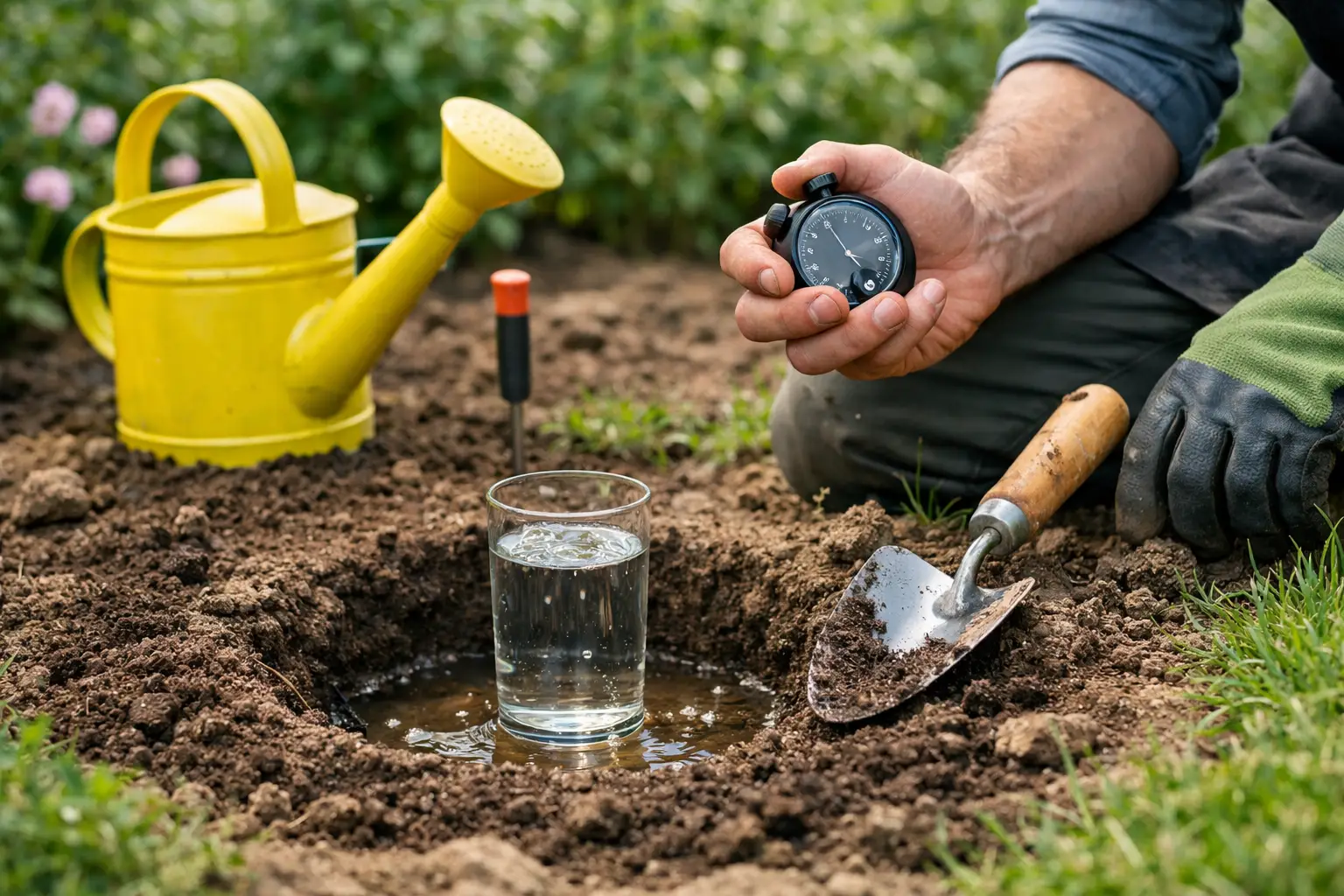
The simplest and most reliable home test is often called a percolation test. It measures how quickly water moves through your soil at root level, not just across the surface.
Choose a spot where you plan to grow plants and dig a hole about 12 inches deep and 12 inches wide. That depth matters because it reaches the zone where many vegetable roots will be working. If your garden has noticeably different areas, test more than one location. A low corner near a fence may behave very differently from a raised section in full sun.
Fill the hole with water and let it drain completely. This first fill moistens the surrounding soil, which makes the second measurement more realistic. Once it has emptied, fill it again to the top and note the time. Measure the water depth every hour, or check how long it takes for the hole to empty.
As a general rule, soil that drains around 1 to 2 inches per hour is in a comfortable range for most garden plants. If water disappears much faster than that, your soil may be very sandy and prone to drying out. If it drains more slowly than 1 inch per hour, drainage may be limited. A hole still holding water after 24 hours is a strong sign that you need to rethink that spot before planting plants that dislike wet feet.
Do this test when the soil is not frozen and after a reasonably normal weather period. Testing immediately after days of heavy rain can show you the worst-case scenario, which is useful, but it may not represent the bed’s everyday condition. If you are deciding where to plant a valuable crop, test once after rain and once during a more typical week.
Do not test bone-dry soil only once
Very dry clay soil can crack and briefly pull water down faster than usual. That does not mean it will drain well once the soil is fully wet. Pre-filling the hole helps prevent this misleading result, which is why the second fill is the one to watch.
Likewise, do not judge drainage by a hole you just dug in loose compost or recently amended topsoil. Water can move quickly through that fluffy layer and then hit dense soil beneath it. A 12-inch-deep hole gives you a more honest picture.
Watch your garden after rain
The hole test is valuable, but your garden also gives you clues during real weather. Walk outside a few hours after a soaking rain, then again the next morning. Notice where water pools, where it runs off, and where soil stays dark and slick long after nearby areas begin to dry.
Look for these patterns:
- Puddles that remain for more than a day
- Moss, algae, or a green film on bare soil
- A sour, swampy smell when you dig
- Yellowing lower leaves despite regular watering
- Soil that smears into a shiny paste rather than crumbling
- Plants that stay stunted while plants in nearby beds grow normally
One clue alone does not prove a drainage problem. Yellow leaves, for example, can also come from nutrient shortages, cold weather, or insect damage. Several signs together are more convincing, especially if they show up in the same low-lying part of the yard.
Check for a compacted layer
Sometimes the issue is not the whole soil profile. It is a dense layer beneath the surface that acts like a shallow bowl. This can happen in new construction yards where heavy equipment compressed the ground, or in garden beds that have been repeatedly walked on.
Push a metal rod, a long screwdriver, or even a sturdy stake into moist soil. If it slides down easily for several inches and then suddenly stops at the same depth across the bed, compaction may be slowing drainage. Digging a small soil profile can confirm it. You may find loose, dark topsoil sitting above pale, hard, tightly packed ground.
Avoid trying to solve this by turning wet soil aggressively. Working clay when it is sticky can create hard clods that last for years. Wait until it is moist but crumbly, then loosen the soil deeply with a garden fork or broadfork. Lift and wiggle the soil rather than flipping layers upside down. This opens channels for air and water while protecting the helpful organisms already living there.
Match the fix to the problem
The best drainage solution depends on why water is lingering. If water flows into the bed from a roof, driveway, or slope, improving the soil alone will not solve it. Redirecting runoff or creating a gentle swale away from the growing area may be the practical answer. Keep water moving away from a house foundation as well.
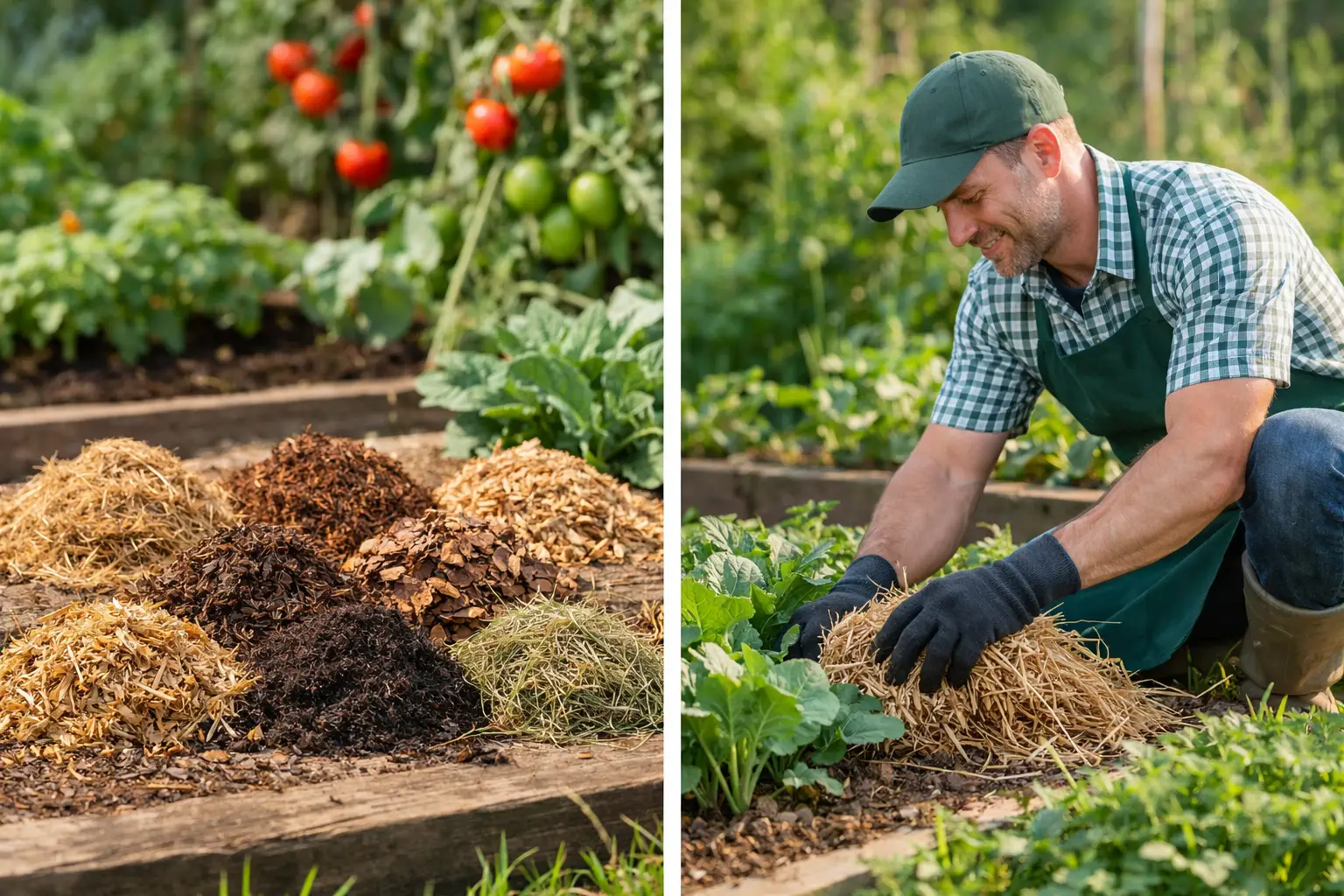
For heavy clay or compacted garden soil, regular additions of finished compost are one of the most natural long-term improvements. Compost helps clay form crumbly aggregates, creating spaces for water and air. Spread 1 to 2 inches over the bed once or twice a year and let worms and soil life draw it down, or mix it lightly into the upper few inches when preparing a new bed.
Avoid adding a little sand to clay in hopes of making it drain. Unless you add a very large amount and blend it thoroughly, the result can become dense and concrete-like. Compost, shredded leaves, aged leaf mold, and fine pine bark are gentler choices for building better soil structure over time.
If your test shows very slow drainage and you want to grow vegetables this season, raised beds can be a sensible shortcut. Even a bed raised 8 to 12 inches gives roots a deeper layer of loose, oxygen-rich soil. Fill it with a balanced mix of quality topsoil and compost rather than pure compost, which can settle quickly and may hold too much water on its own.
For a persistently wet low spot, consider working with the site instead of fighting it. Native moisture-tolerant perennials, certain ferns, iris, and some shrubs can turn an awkward patch into a useful habitat area. This approach often takes less water, less digging, and less frustration than forcing sun-loving vegetables into ground that stays saturated.
Drainage can be too fast, too
A hole that empties in minutes is not necessarily ideal. Sandy soil may drain so quickly that roots do not have time to use the water or nutrients you provide. The fix is similar in spirit but different in purpose: add organic matter steadily to improve water-holding capacity. Compost, leaf mold, and a layer of organic mulch help slow evaporation and keep moisture more even.
Aim for soil that feels like a wrung-out sponge after watering – moist, airy, and never soupy. That middle ground is where most edible plants are happiest.
Test again before making a big investment
After loosening compaction, adding compost over a season, or building a raised bed, repeat the drainage test. Soil improvement is gradual, and retesting shows whether your changes are actually helping. It also keeps you from spending money on a drain or major landscaping work when a simpler solution would do.
A few minutes with a shovel can give you the confidence to plant in the right place, choose crops that fit your conditions, and make small changes before water becomes a bigger problem. Healthy soil is not supposed to drain like a bathtub. It should hold enough moisture to nourish roots, then let the excess go.