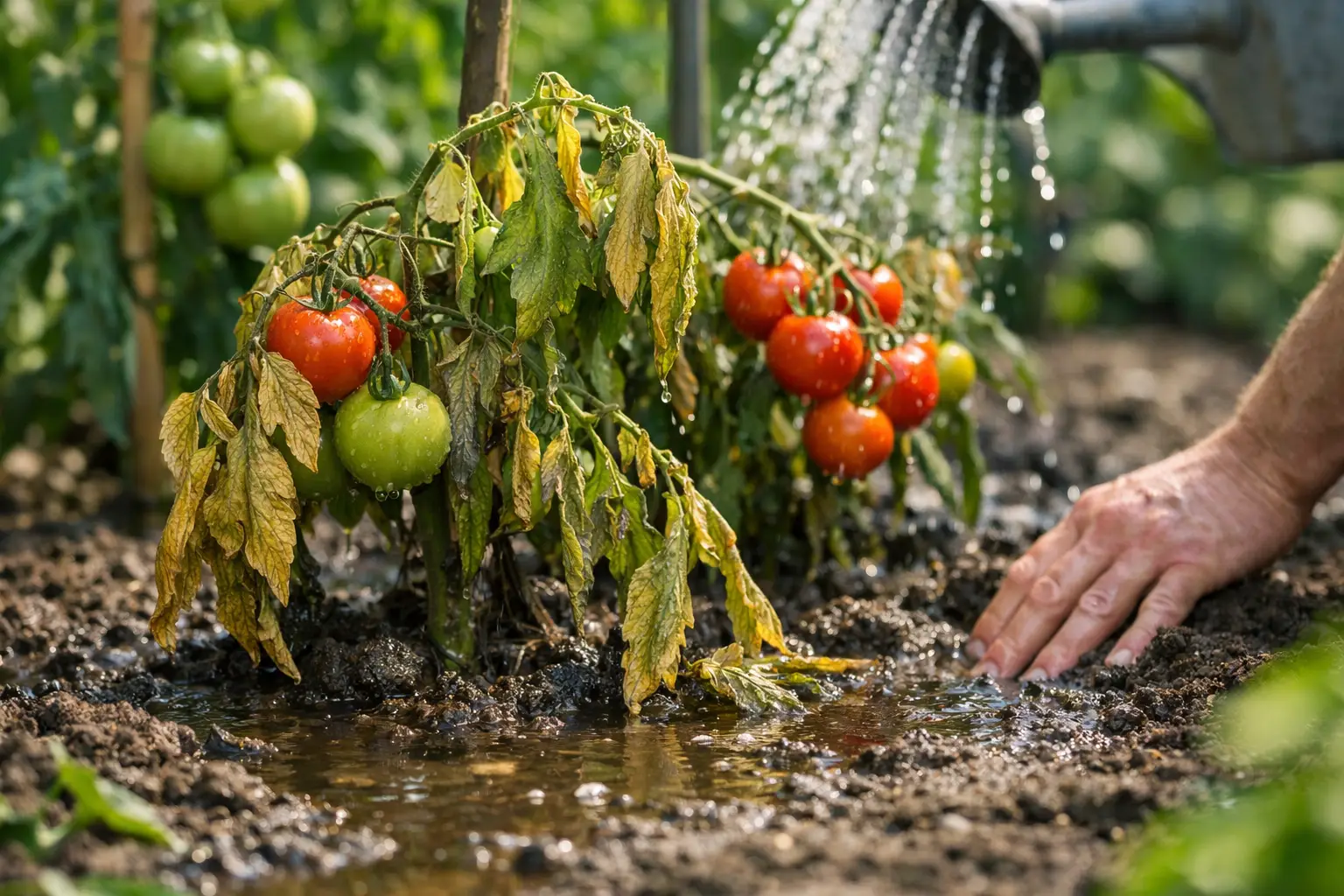
A tomato plant can look thirsty even when its roots are sitting in water. That is the frustrating part. The leaves droop, so you reach for the hose, only to make the problem worse. Can you overwater tomato plants? Absolutely – especially young plants, tomatoes in containers, and plants growing in heavy or poorly drained soil.
Tomatoes need consistent moisture to make juicy, crack-free fruit, but their roots also need air. When soil stays soaked for too long, tiny air pockets fill with water. Roots struggle to breathe, take up nutrients, and stay healthy. The good news is that most overwatering problems can be corrected early with a few simple changes.
Can You Overwater Tomato Plants? Yes, and Here’s Why
Tomatoes are not desert plants, but they do not want wet feet. A deep watering followed by a little drying time is much better than frequent, shallow watering that keeps the root zone constantly soggy.
Overwatering is not always caused by a gardener with an enthusiastic hose. Rainy spells, compacted ground, clogged container drainage holes, oversized pots, and dense potting mixes can all leave a tomato plant sitting in too much moisture. This is why a fixed schedule, such as watering every day at 7 a.m., often creates more trouble than it prevents.
The goal is not dry soil. It is evenly moist soil with enough drainage and air for roots to work properly. That balance shifts with heat, wind, rainfall, plant size, and whether your tomatoes are growing in the ground, a raised bed, or a patio container.
The Early Signs of an Overwatered Tomato Plant
Overwatering and underwatering can look surprisingly alike at first. In both cases, leaves may wilt because the plant cannot move enough water where it needs to go. Before you water a wilted tomato, check the soil instead of guessing.
An overwatered plant often has lower leaves that turn yellow first. They may feel soft rather than dry and crisp. New growth can look pale, and the whole plant may seem stalled even though the soil is clearly wet.
Watch for these clues together:
- Soil that remains wet two or three inches below the surface for days
- Yellowing lower leaves or leaves with soft brown spots
- Wilting in the morning, before the heat of the day arrives
- Slow growth, weak stems, or fruit that is more likely to crack
- A sour, swampy smell from a container or planting hole
No one symptom proves overwatering. Yellow leaves can also come from natural aging, nutrient shortages, pests, or disease. But soggy soil plus yellow, droopy leaves is a strong signal to pause the watering can.
Check moisture the simple way
Use your finger, a small hand trowel, or a plain wooden chopstick to check below the surface. Push it about two inches into the soil for a small plant and three to four inches for a larger one. If the soil clings to your finger, feels cool and muddy, or leaves the chopstick dark and damp, wait.
For tomatoes planted in the ground, check close to the root zone but avoid digging hard against the stem. In containers, lift the pot if you can. A pot that feels unexpectedly heavy usually has plenty of water left inside.
A moisture meter can be helpful, but it should not replace looking at the soil and plant. Meters can give odd readings in very dry, salty, or compacted soil. Your hands and a little observation are still excellent gardening tools.
What Too Much Water Does to Tomato Roots
Healthy tomato roots are pale, firm, and busy taking in water and nutrients. In saturated soil, oxygen becomes scarce. Roots weaken, and soil-borne problems such as root rot can move in more easily.
As roots falter, the plant may show what looks like a fertilizer deficiency. Leaves can become yellow because damaged roots cannot take up nutrients well, even if the soil contains plenty of compost or organic fertilizer. Adding more fertilizer at this point is rarely the answer. It can stress already struggling roots and create a buildup of salts in container soil.
Too much water can also contribute to fruit problems. Tomato skins split when plants go through big swings in moisture, such as a dry period followed by soaking rain or heavy watering. Consistent moisture helps, but consistency does not mean constant wetness.
How to Help an Overwatered Tomato Recover
First, stop watering until the soil begins to dry at the proper depth. Do not try to fix the problem by adding fertilizer, pesticides, or homemade remedies. Roots need air and a chance to recover.
If your tomato is in a container, make sure water can escape freely. Check the drainage holes for roots, old potting soil, mulch, or a saucer full of standing water. Empty the saucer after a rainstorm or watering. Decorative cachepots are especially sneaky because they can hold water around the bottom of the growing pot.
For tomatoes in garden beds, gently pull mulch a few inches away from the base of the plant while the soil dries. Mulch is wonderful for conserving moisture and preventing soil splash, but during a long wet spell it can slow drying more than you want. Put it back once conditions return to normal.
Avoid cultivating deeply around a wet tomato plant. It is tempting to loosen muddy soil, but digging can damage stressed roots. Instead, let sun, airflow, and time do their work. Remove only leaves that are fully yellow, badly spotted, or touching the soil. Leaving healthy leaves in place helps the plant keep making energy.
If the plant stays wilted after the soil has had time to dry, slide a container-grown tomato carefully from its pot and inspect the roots. Dark, mushy, foul-smelling roots suggest rot. Trim only clearly dead roots with clean scissors, then repot into fresh, high-quality potting mix in a container with open drainage holes. A plant with extensive root rot may not recover, but catching it early gives it a fair chance.
Watering Tomatoes Without Creating Soggy Soil
The best watering routine responds to conditions rather than a calendar. In summer, a large, fruiting tomato in a container may need water every day. A tomato growing in a mulched raised bed may need a deep drink only once or twice a week. After steady rain, neither may need your help at all.
Water slowly at the base of the plant, ideally in the morning. This gives foliage time to dry if it gets splashed and lets the plant face afternoon heat with moisture available in the root zone. A soaker hose or drip line works beautifully because it delivers water gradually where it is needed instead of wetting every leaf.
For in-ground tomatoes, water long enough to moisten the soil several inches deep, then allow the upper layer to dry somewhat before watering again. Shallow daily sprinkles encourage shallow roots, which makes plants less resilient when heat arrives.
Container tomatoes need a slightly different approach. Potting mix dries from the sides and bottom, often faster than gardeners expect. Water until a little runs from the drainage holes, then check again before the next watering. If the mix stays drenched for more than a day or two in warm weather, improve drainage rather than simply watering less.
Build better drainage before planting
A few choices at planting time prevent many watering headaches later. Use a loose potting mix made for containers, not soil dug from the yard. Choose pots with several drainage holes, and do not line the bottom with rocks. Rocks create a perched water layer above them instead of improving drainage.
In garden beds, work compost into soil over time to improve structure. Compost helps sandy soil hold moisture more evenly and helps heavy soil form better air spaces. If your site stays wet after every rain, raised beds or large containers may be a more reliable home for tomatoes than a low, soggy patch of ground.
When Wilting Is Not an Overwatering Problem
Tomato leaves commonly droop during intense afternoon heat, even when the plant is well watered. This temporary wilt is the plant protecting itself from moisture loss. Check again in the evening or early morning. If it perks up and the soil is moderately moist, leave it alone.
Underwatered tomatoes usually have dry soil below the surface, and their leaves may feel thin or papery. Overwatered leaves often feel softer, while the soil stays wet. This small distinction can save you from watering the wrong problem.
A little patience goes a long way with tomatoes. Instead of reacting to every drooping leaf, check the root zone, notice the weather, and adjust one habit at a time. Healthy tomatoes do not need perfect conditions – just steady care, breathable soil, and a gardener willing to put the hose down when the soil says it has had enough.