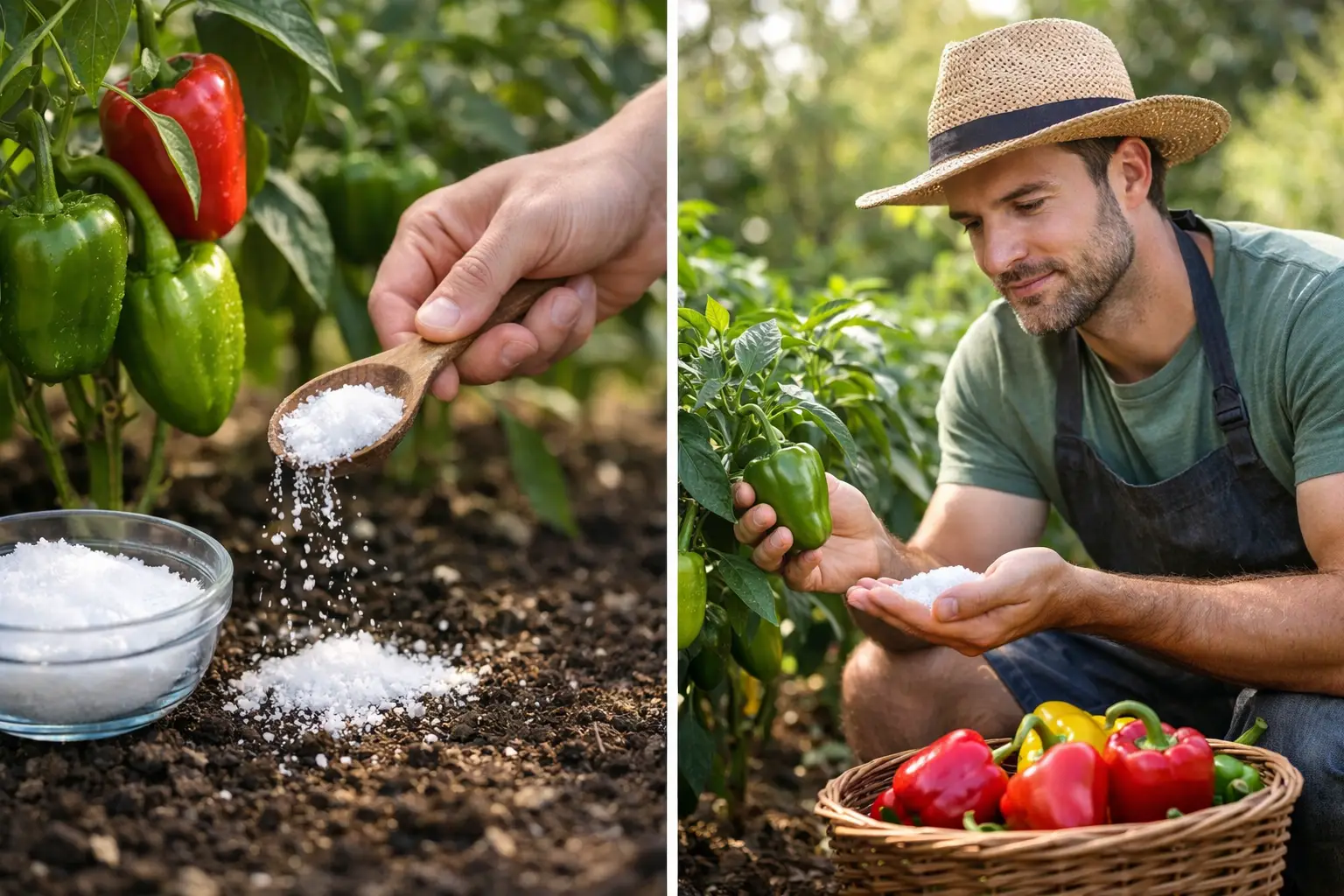
A pepper plant with pale leaves can make any gardener reach for a quick fix. Epsom salt is inexpensive, natural-sounding, and often recommended in gardening groups. But is epsom salt good for peppers? Sometimes – when a plant truly needs magnesium. More often, it is used for problems it cannot solve, such as inconsistent watering, compacted soil, or a lack of calcium.
The best approach is a little less exciting than sprinkling crystals around the bed, but it is much more likely to give you healthy plants and a better pepper harvest: look at the whole growing situation first. Peppers are productive, hungry plants, yet they do not need every possible supplement. They need the right nutrients in balance.
Is Epsom Salt Good for Peppers? Only in One Situation
Epsom salt is magnesium sulfate. It supplies magnesium, a nutrient plants use to make chlorophyll, along with sulfur. Magnesium is essential, but that does not mean every pepper plant is short on it.
If your soil already has adequate magnesium, adding Epsom salt will not make peppers sweeter, hotter, larger, or more productive. It can actually create a new imbalance. Too much magnesium may interfere with a plant’s ability to take up calcium and potassium, two nutrients peppers need in meaningful amounts. In garden soil, excessive magnesium can also contribute to poorer structure over time, especially in clay-heavy beds.
Think of Epsom salt as a targeted amendment, not a routine pepper fertilizer. It is useful when there is a confirmed deficiency or a strong reason to suspect one. It is not a replacement for compost, a balanced organic vegetable fertilizer, or steady watering.
How to Tell Whether Your Pepper Needs Magnesium
Magnesium deficiency has a fairly recognizable pattern. Because magnesium can move from older leaves to support new growth, the symptoms usually begin on the lower, older leaves. You may see yellowing between the leaf veins while the veins themselves stay green. As the issue worsens, leaves can develop reddish-purple or brown patches and may eventually drop.
That pattern is different from simple nitrogen deficiency, which tends to turn an entire older leaf evenly pale or yellow. It is also different from iron deficiency, which usually shows up first on the youngest leaves.
Even so, leaf color alone is not a perfect diagnosis. Cold, soggy soil can temporarily limit nutrient uptake. Roots damaged by overwatering, root rot, or a container that has become root-bound can leave plants looking hungry even when nutrients are present. Before treating the plant, check whether the soil is staying wet for days, whether the pot drains freely, and whether the pepper is getting at least six to eight hours of direct sun.
A soil test is the most reliable way to know what your garden needs. Many county extension offices and soil-testing labs offer affordable tests. This is especially worthwhile if you have added Epsom salt, lime, wood ash, or multiple fertilizers over the years. Those well-meant additions can gradually push soil nutrients out of balance.
Problems Epsom Salt Will Not Fix
One of the most common reasons gardeners give peppers Epsom salt is blossom end rot. Those dark, sunken patches on the bottom of a developing pepper are frustrating, but they are usually related to calcium not reaching the fruit consistently. The soil may contain plenty of calcium. The problem is often uneven moisture.
A plant that repeatedly dries out and is then heavily watered struggles to move calcium where it is needed. Epsom salt adds magnesium, not calcium, so it does not address the cause. In fact, using it heavily may make calcium uptake harder.
For blossom end rot, focus on watering deeply and consistently, mulching the soil with untreated leaves, straw, or shredded bark, and avoiding damage to roots. Do not overfertilize with high-nitrogen products, either. Fast, lush leaf growth can make fruit problems more likely.
Epsom salt also will not solve poor flowering, dropped blossoms during heat waves, pest damage, or slow growth caused by chilly nights. Pepper blossoms often drop when temperatures climb above about 90°F during the day or stay warm overnight. That is a weather response, not a magnesium emergency.
A Careful Way to Use Epsom Salt on Peppers
If a soil test shows low magnesium, or your pepper has classic symptoms and the growing conditions otherwise look good, Epsom salt can be used sparingly as a short-term correction. It dissolves readily in water, which makes it fast acting but also easy to overapply.
For an established pepper plant, dissolve 1 tablespoon of plain, unscented Epsom salt in 1 gallon of water. Apply the solution slowly to the soil around the root zone, not directly onto the leaves or stem. One gallon is enough for several smaller plants or one or two large, established plants, depending on soil moisture and plant size. Use it once, then give the plant two to three weeks to respond.
Do not make this a weekly ritual. If the yellowing continues, do not keep increasing the dose. Recheck the diagnosis instead. A persistent problem may point to poor drainage, low soil temperature, root stress, incorrect pH, or another nutrient issue.
Foliar spraying is sometimes suggested because leaves can absorb magnesium. It can help in a genuine deficiency, but it carries more risk of leaf burn, particularly in hot sun. For most home gardeners, a light soil drench is simpler and gentler. If you choose to spray, use a very dilute solution, test it on a few leaves first, and apply early in the morning on a cool day.
Never use scented bath salts or products with oils, dyes, or added ingredients in the garden. Only plain magnesium sulfate is appropriate.
Give Peppers a Better Foundation First
Healthy pepper plants usually begin with healthy soil, not a shelf full of amendments. Work finished compost into the planting area before the season begins, then use a balanced organic fertilizer according to its label if your soil test or plant growth calls for it. Compost improves moisture retention, feeds soil life, and supports gradual nutrient availability without forcing rapid growth.
Peppers also appreciate warm soil, room for their roots, and steady moisture. In raised beds, aim to water deeply when the top inch or two of soil has dried rather than giving a shallow sprinkle every day. In containers, check more often because potting mix dries quickly in summer. A container with drainage holes and a high-quality potting mix makes a larger difference than Epsom salt ever will.
Mulch is one of the simplest natural tools for preventing pepper stress. A 2- to 3-inch layer around plants helps keep roots cooler, slows evaporation, and reduces the wet-dry swings that lead to many fruit issues. Keep mulch a couple of inches away from the stems so moisture does not collect there.
Pay attention to pH, too. Peppers generally grow best in slightly acidic soil, roughly pH 6.0 to 6.8. When pH is far outside that range, nutrients may be in the soil but unavailable to the roots. Adding more fertilizer or Epsom salt will not correct a pH problem.
The Bottom Line for an Organic Pepper Garden
Epsom salt is not harmful when used once and with a clear reason, but it is not a pepper-growing secret. Save it for a likely or confirmed magnesium deficiency, and use a small amount rather than treating every yellow leaf as a call for more minerals.
Your peppers will respond best to the less flashy habits: rich soil, adequate sun, consistent watering, mulch, and patience while plants settle into warm weather. When a problem appears, pause before adding anything. That small moment of observation is often what turns a struggling pepper patch into a productive one.