A tomato plant can look hungry even when the soil is full of life. That is where the fish emulsion vs compost tea question gets confusing: both are natural, both come in a watering can or sprayer, and both are often sold as a quick fix. But they do very different jobs in the garden.
Fish emulsion is mainly a fertilizer. Compost tea is primarily a way to apply the soluble nutrients and microbes washed from finished compost. One is usually better when a plant needs a meal; the other may support soil biology and plant health when used thoughtfully. Knowing that difference can save you money, prevent overfeeding, and help you choose the simpler option when your garden is asking for help.
Fish Emulsion vs Compost Tea: The Main Difference
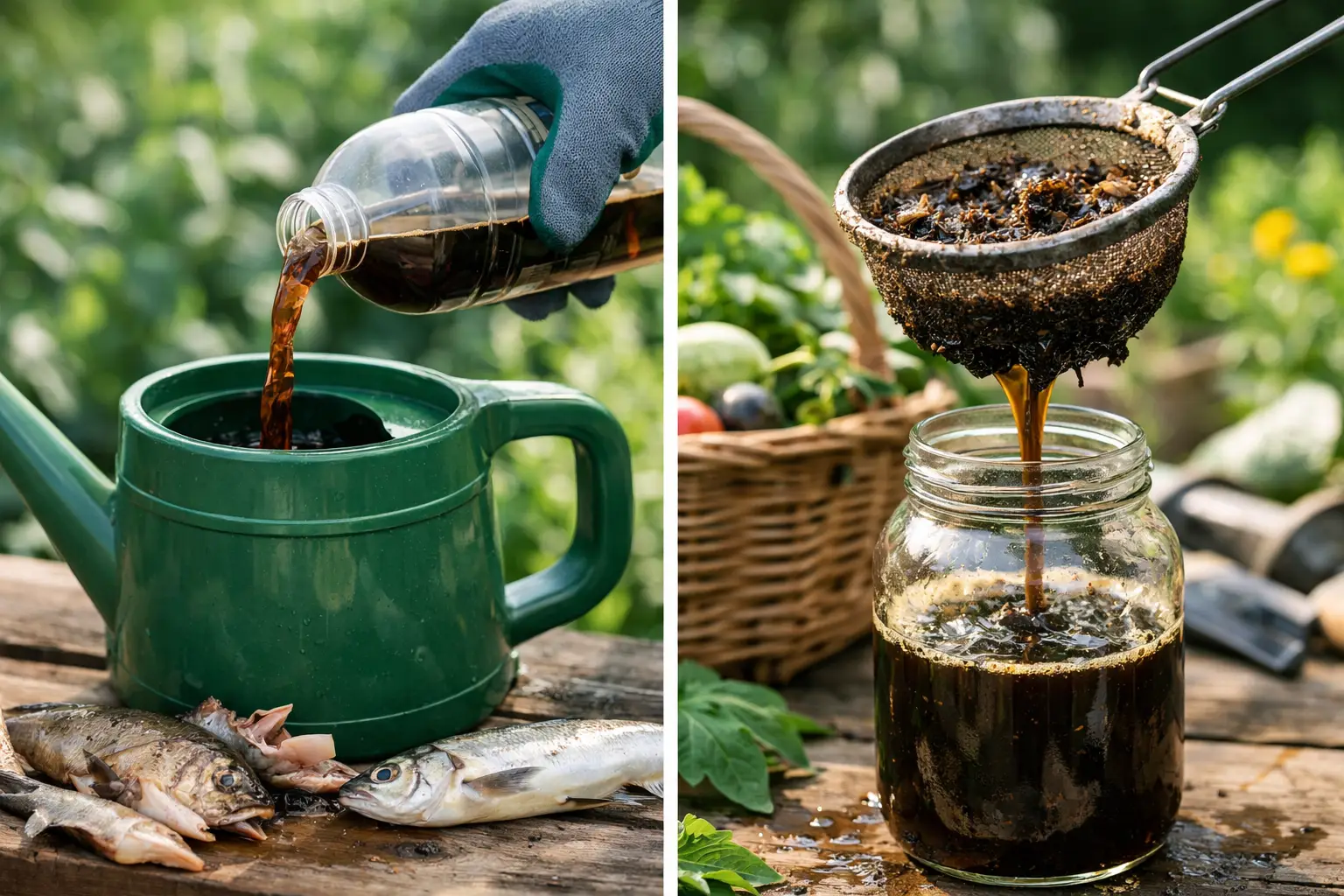
Think of fish emulsion as a pantry staple for hungry plants. It is made from processed fish and is commonly sold as a concentrated liquid fertilizer. Most products provide nitrogen, along with smaller amounts of phosphorus, potassium, and trace minerals. The exact analysis varies by brand, so check the label before assuming every bottle is the same.
Compost tea begins with high-quality, finished compost steeped in water. Depending on the method, gardeners may aerate it with a pump or simply make a short-lived compost extract by mixing compost with water and straining it. The liquid can contain some nutrients, but it is generally not concentrated enough to replace fertilizer for demanding vegetables.
That distinction matters most in raised beds and containers. A heavy-feeding tomato, cucumber, squash, or leafy green may need a reliable nutrient source during active growth. Fish emulsion can provide it. Compost tea may be a nice addition to a healthy soil routine, but it is not a dependable answer to a clear nitrogen deficiency.
When Fish Emulsion Is the Better Choice
Fish emulsion is especially useful when plants are growing fast and need a gentle, quick-acting boost. I reach for it when seedlings have settled into the garden, young transplants need help finding their footing, or leafy greens are pale and growing slowly. Used at the label rate, it gives plants available nutrition without the harshness of many synthetic fertilizers.
It works well as a soil drench around the root zone. For most home gardens, diluting the concentrate in water and applying it to already-moist soil is the easiest approach. Watering first helps prevent roots from taking up a strong dose too quickly and keeps the fertilizer where plants can use it.
Fish emulsion also makes sense for container gardens. Pots have a limited supply of nutrients, and regular watering gradually washes them away. A diluted feeding every few weeks during the active season can help, especially for herbs, peppers, and flowers that look healthy but have slowed down.
There are trade-offs. The smell is real, particularly on warm days, and curious dogs or raccoons may investigate a freshly fed bed. It can also burn plants or create lots of soft, leafy growth if you use too much. More nitrogen is not always better. Tomatoes that receive heavy nitrogen late in the season may grow beautiful leaves while taking their sweet time making fruit.
Use fish emulsion as a supplement, not a substitute for building good soil. Compost, leaf mulch, and organic matter are still doing the long-term work beneath your plants.
A simple fish emulsion routine
For a new vegetable bed enriched with compost, feed lightly after transplanting and again when plants begin active growth. For containers, follow the product label and watch how plants respond over two or three weeks. If foliage is deep green, growth is steady, and the plant is flowering or fruiting normally, there is no prize for feeding again.
Avoid applying fish emulsion to bone-dry soil, stressed plants during the hottest part of the day, or seedlings that are still tiny and tender. A weak dilution is safer than an enthusiastic splash.
When Compost Tea Can Be Useful
Compost tea is best viewed as a supporting player. If you make it from mature, earthy-smelling compost, it can be a gentle way to apply organic matter-derived compounds and beneficial organisms to the soil. Gardeners often use it around established perennials, shrubs, flowers, and vegetables as part of a broader soil-care routine.
It can be especially satisfying when you have homemade compost that is dark, crumbly, and finished. Instead of treating compost tea like a miracle tonic, treat it as another way to put the value of that compost to work.
A simple compost extract is often enough for a home garden. Stir a shovel of finished compost into a bucket of clean water, let it sit briefly, stir again, and strain the liquid before applying it around the soil. This method is less fussy than brewing elaborate teas, and it avoids the idea that every garden needs pumps, molasses, timers, and a science-lab setup.
The big limitation is consistency. Compost tea nutrient levels vary wildly with the compost, the water, the brewing method, and how long it sits. If your peppers are yellow because they need nitrogen, compost tea may not change much. If your soil is compacted, depleted, or lacking organic matter, spreading finished compost and adding mulch will do more lasting good.
Be cautious about spraying homemade compost tea directly on leaves of crops you will eat raw, especially lettuce, kale, herbs, and strawberries. Good compost should be made from appropriate materials and fully finished, but home brewing and handling can introduce unnecessary food-safety questions. Applying it to the soil is the lower-fuss choice.
Choosing Between Fish Emulsion and Compost Tea
Start with the problem, not the product. A plant with pale lower leaves, slow growth, and no obvious pest or watering issue may benefit from a light fish emulsion feeding. A bed that dries out quickly, crusts over, or seems lifeless year after year needs compost, mulch, and gentler soil management more than any liquid treatment.
If you are growing heavy feeders in containers or newly planted raised beds, fish emulsion is usually the more practical purchase. It offers measurable nutrition, is easy to dilute, and helps fill the gap while your soil improves. If you already make excellent compost and enjoy using every part of it, compost extract can be a useful occasional soil drench.
You can use both, but do not feel obligated to. A simple organic routine often works best: add compost before planting, keep the soil covered with mulch, water consistently, and use a labeled organic fertilizer only when plants need a boost. That is a lot more effective than rotating through bottles and brews because the garden aisle made them sound essential.
Common Mistakes to Avoid
The most common mistake with fish emulsion is treating it like plant medicine for every problem. Yellow leaves can come from overwatering, cold soil, root damage, pests, or a nutrient shortage. Check the basics before feeding. If the soil is soggy and the roots are struggling, fertilizer will not solve the problem.
With compost tea, the biggest mistake is expecting dramatic results. Healthy soil biology is valuable, but it is built over seasons through compost, roots, mulch, and minimal disturbance. A single bucket of tea cannot repair soil that has been neglected for years.
Another easy misstep is using unfinished compost. If the pile still smells sour, contains recognizable scraps, or feels hot in the middle, let it mature. Finished compost smells like a forest floor, not a garbage bin. That is what belongs around food crops and in any compost-based liquid you plan to use.
The Best Choice for Most Home Gardens
For most gardeners, fish emulsion is the clearer choice when plants need a quick, gentle nutrient boost. Compost tea is optional, not essential, and its greatest value comes from starting with truly good compost. If choosing only one, invest first in compost for the soil and keep fish emulsion on hand for hungry plants.
Your garden does not need a complicated feeding program to thrive. Pay attention to how plants grow, feed lightly when there is a real need, and keep building the soil beneath them. Those steady habits are where healthy gardens begin.