The last tomato vine can look surprisingly cheerful right up until the first hard frost turns it limp overnight. That is the moment many gardeners want to shut the gate and deal with everything in spring. But a little fall attention makes a dramatic difference. This guide to winterizing raised beds will help you protect the living soil you have worked so hard to build, reduce next year’s pest problems, and give spring vegetables a much better starting point.
The good news is that winterizing does not mean stripping your beds bare or buying a stack of specialty products. In most home gardens, it comes down to cleaning up thoughtfully, feeding the soil, keeping it covered, and making a few decisions based on your local winter weather.
Start with a thoughtful fall cleanup
Pull spent annual vegetables once they are truly finished. Tomatoes, cucumbers, squash, beans, basil, and other tender summer crops will not recover after a killing frost, and leaving collapsed plants in place can create a cozy hiding spot for pests and disease.
Do not treat every plant the same, though. Healthy, disease-free leaves and small plant pieces can go into an active compost pile. They are valuable organic matter, and there is no need to send them away simply because the season is over. Chop thick stems into smaller pieces first so they break down faster.
Plants with obvious disease deserve a different approach. If your tomatoes had early blight, powdery mildew covered your squash, or you saw heavy leaf spot, remove those materials from the bed. Home compost piles do not always heat up enough to kill disease organisms. The same goes for plants badly covered in insect eggs or infested with pests such as squash bugs.
A common mistake is pulling up every bit of greenery, including the roots. For most healthy annual crops, it is fine to cut plants off at soil level and leave the roots behind. As they decompose, they create tiny channels that improve soil structure and feed soil life. Pull larger roots only when you need to clear space for a fall crop or when the plant was diseased.
Check what is still growing before you clear the bed
Raised beds often keep producing longer than in-ground gardens because the soil drains well and can stay a little warmer. Cool-season crops such as kale, carrots, beets, spinach, and many lettuces may continue through light frosts. Kale and carrots often taste sweeter after cool weather arrives.
If you planted garlic, leave it alone except for adding mulch. Garlic needs winter chilling and will be ready to take off when temperatures begin to rise. Perennial herbs such as thyme, sage, and chives can also stay put, although they benefit from a light cleanup around their bases.
In warmer parts of the US, winter can be an active growing season rather than a garden shutdown. You may be planting lettuce, broccoli, peas, or cover crops while northern gardeners are tucking beds in for snow. The basic goal stays the same: keep soil protected and growing whenever conditions allow.
Feed the soil, but do not overdo it
Once the old crop is cleared, spread a layer of finished compost across the bed. About one to two inches is plenty for most raised vegetable beds. This slow, steady addition replaces organic matter used by summer crops and supports earthworms, fungi, and beneficial microbes over winter.
Finished compost should look dark and crumbly, with an earthy smell and no recognizable kitchen scraps. If your compost is still hot, sour-smelling, or full of undecomposed material, let it finish elsewhere rather than digging it into the bed.
Avoid the urge to add a heavy dose of fertilizer just because the bed looks tired. Most fertilizers are designed to feed actively growing plants, and nutrients can wash away during wet winter weather. Compost is the better all-purpose choice for fall. If a soil test has shown a specific deficiency, follow those results, but otherwise keep the approach simple.
You can gently rake compost into the top inch or two of soil, but there is no need to turn the bed deeply. Deep digging disrupts soil structure and the network of organisms beneath the surface. A broadfork or garden fork can be useful if soil is compacted, but raised beds usually need less tilling than we think.
Mulch is the winter blanket your bed needs
Bare soil is vulnerable soil. Winter rain can compact the surface, wash nutrients downward, and encourage weeds to claim open space. Mulch softens those impacts while helping soil hold moisture and moderate temperature swings.
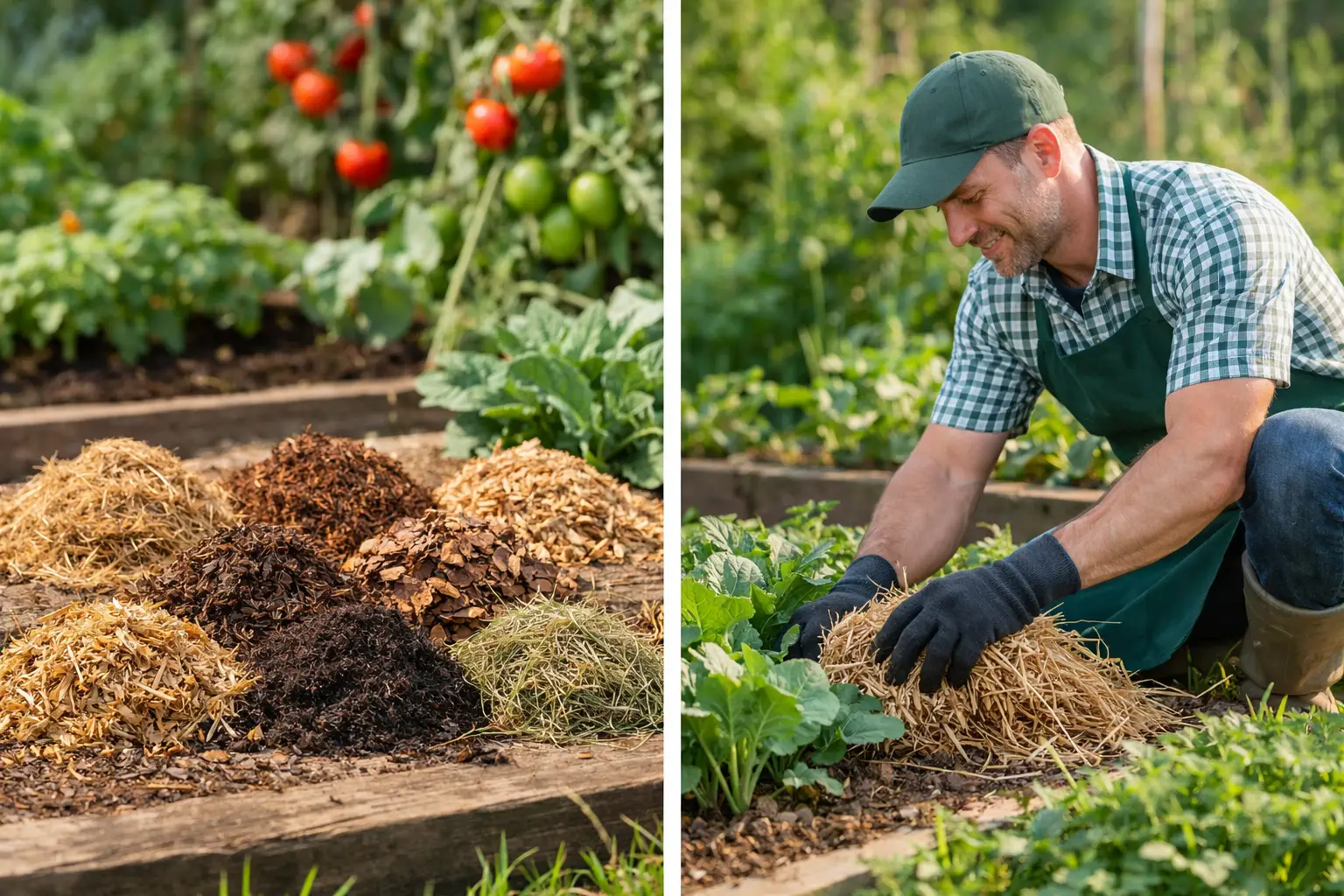
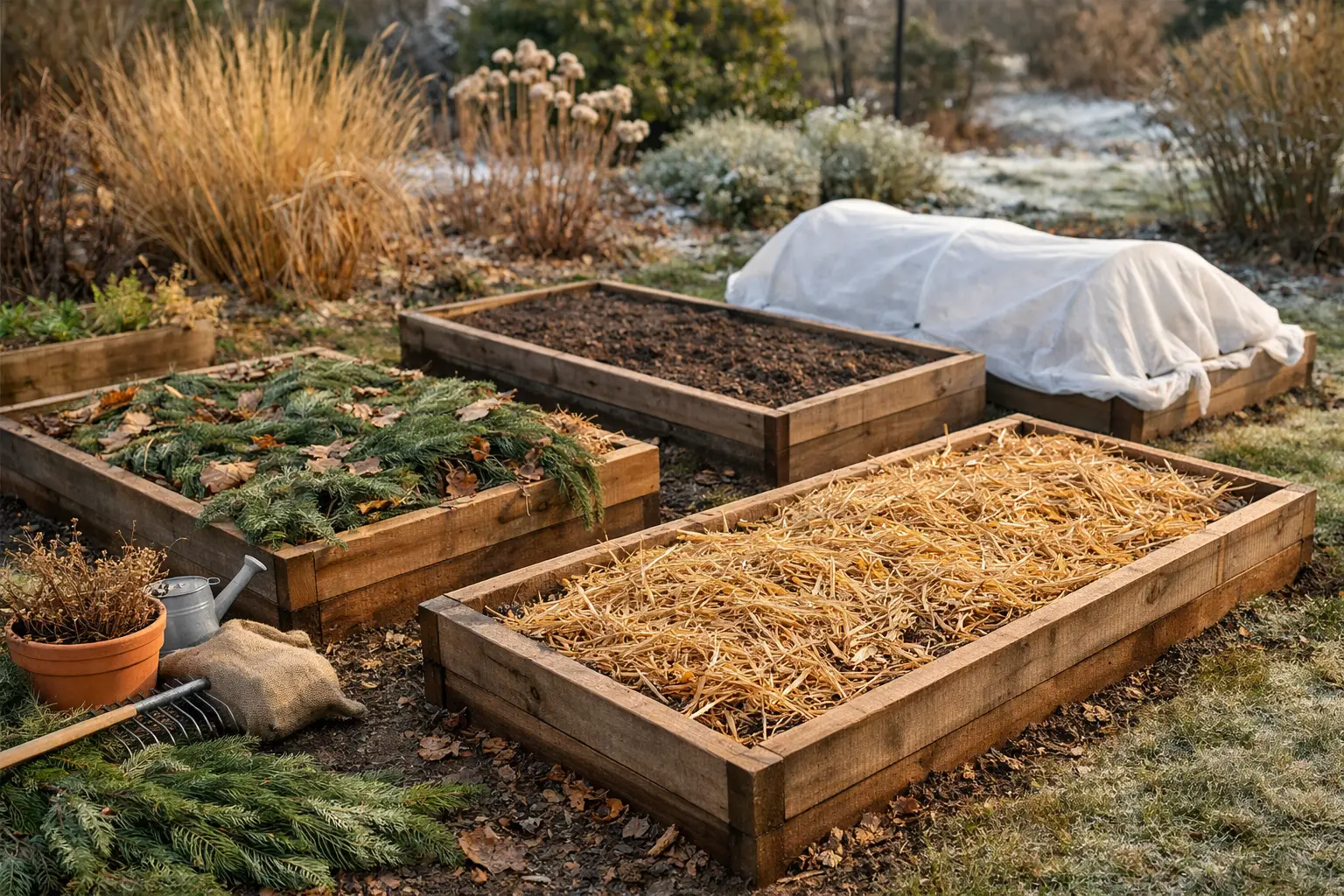
For empty beds, apply two to four inches of clean organic mulch after adding compost. Shredded leaves are a favorite because they are free, easy to find, and break down into wonderful soil food. Run dry leaves over with a mower or shred them with a leaf shredder first. Whole leaves can mat together, especially in rainy climates, and may keep water from reaching the soil.
Other useful options include straw, untreated weed-free grass clippings, pine needles, or a combination of leaves and straw. Skip hay when possible. It often carries seeds that can turn a peaceful spring bed into a weeding project.
Keep mulch a little away from the crowns of perennial herbs and any overwintering plants. Piling damp material directly against stems can encourage rot. In areas with mild, rainy winters, use a lighter layer and check occasionally that the soil is not staying soggy. In cold regions with repeated freezing and thawing, a thicker layer offers more protection.
Choose cover crops when your beds are truly empty
A cover crop is another excellent option in a guide to winterizing raised beds, especially if you have several beds and want to improve soil naturally. Instead of leaving a bed empty under mulch, you sow plants that hold the soil in place, crowd out weeds, and add organic matter later.
Oats are a beginner-friendly choice in colder climates because winter cold usually kills them, leaving an easy-to-manage mat in spring. Winter rye is tough and useful for erosion control, but it needs to be cut down early in spring before it becomes tall and difficult to handle. Crimson clover and hairy vetch can add nitrogen, although they need time to establish and are best planted early enough in fall.
Cover crops are not automatically better than mulch. If you need that bed for very early spring planting, a thick leaf mulch may be easier to move aside. If your soil is compacted, weedy, or left empty for months, a cover crop can be worth the extra planning. Choose the option that fits your calendar, not the one that sounds most ambitious.
Protect the bed frame and manage winter moisture
Raised-bed soil can dry out during winter, especially under a roof overhang or in regions with cold, dry winds. Check the moisture level during long dry spells. The soil should feel lightly damp a few inches down, not dusty and not waterlogged. Water on a day when the ground is not frozen if it has been unusually dry.
Inspect the bed frame while plants are out of the way. Tighten loose screws, replace cracked boards, and make sure the corners are holding square. If you use wood beds, avoid treating them with products that are not rated safe for vegetable gardens. Cedar and untreated rot-resistant wood are often practical choices, while metal beds may need a quick check for shifted panels after storms.
Remove old stakes, tomato cages, and trellises from the bed if possible. Brush off soil, rinse them, and store them dry. This simple habit keeps plant diseases from hitching a ride into next season and gives you a clearer workspace in spring.
Do not forget the helpful creatures
A very tidy garden is not always the healthiest garden. Beneficial insects, spiders, and pollinators use leaf litter, hollow stems, and nearby plant cover for shelter. You can protect raised-bed soil without creating a sterile landscape.
If you have space, move some healthy stems and leaves to a loose pile at the edge of the yard rather than bagging everything. Leave a few native plant stems standing in a nearby flower border until spring. Just keep heavily diseased vegetable debris out of these habitats.
It is also wise to avoid covering beds with plastic for the entire winter. Plastic can trap too much moisture, limit air exchange, and leave soil oddly compacted. A breathable mulch layer is usually kinder to soil life. Frost cloth or low tunnels have their place for protecting crops you are still growing, but they are not necessary for an empty bed.
Make spring easier for yourself
Before you put the tools away, take a quick look at each bed and make a note of what grew where. Crop rotation does not have to be complicated. Simply avoid planting tomatoes, peppers, eggplants, or potatoes in the exact same bed year after year when you can. Moving plant families around helps reduce the buildup of certain pests and soil-borne diseases.
Label garlic, perennials, and late crops so they are not accidentally disturbed during an eager early-spring cleanup. Then put away hoses after draining them, clean your hand tools, and store leftover seeds in a cool, dry place. These small chores are much more pleasant now than during the first frantic warm weekend of spring.
Winterizing is not about making the garden look perfect. It is about leaving it protected, fed, and ready to come back to life. On a cold day in late winter, pull aside a little mulch and look at the soil underneath. If it is dark, crumbly, and full of earthworm activity, you will know your raised beds have been quietly working for you all along.