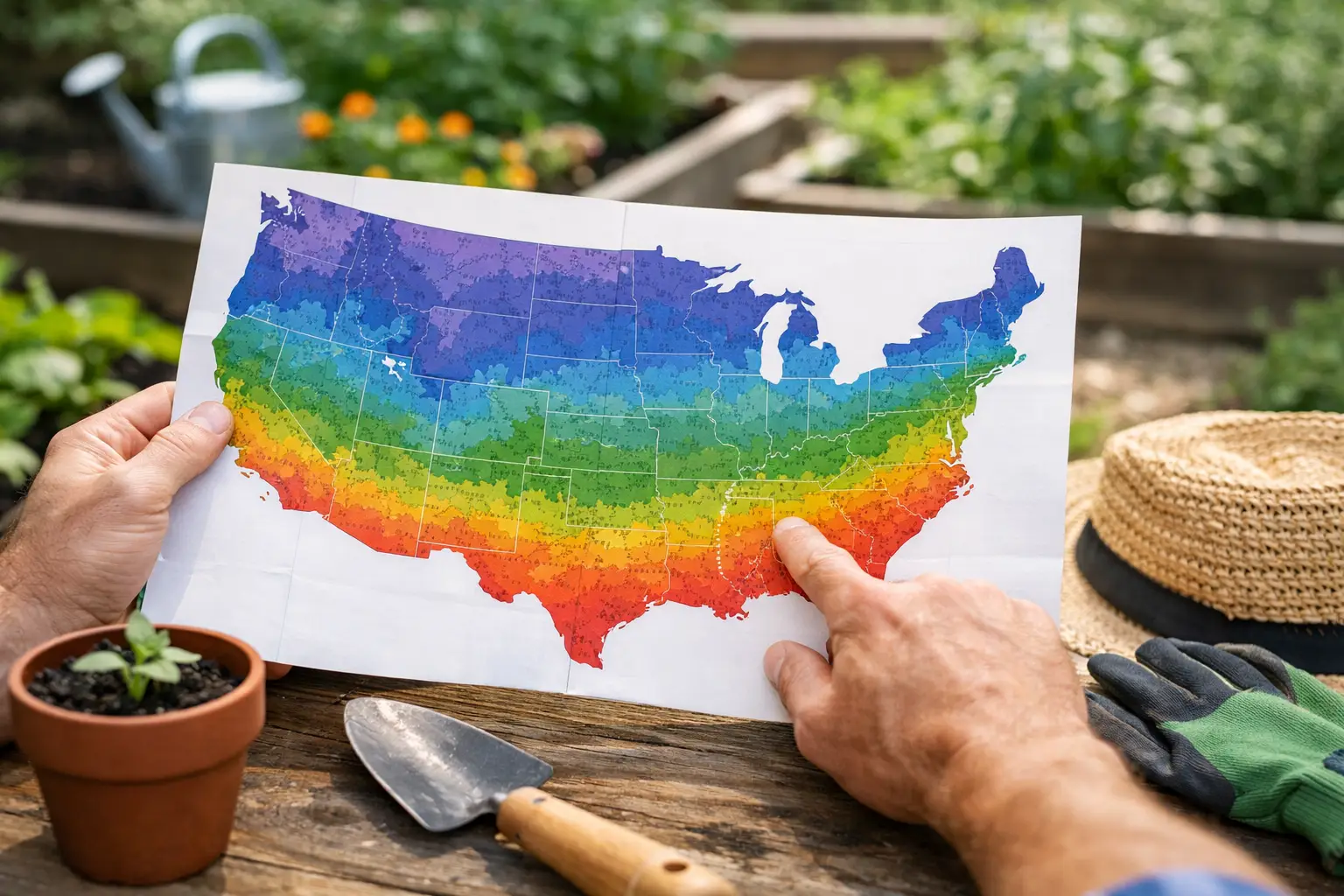
That little zone number on a plant tag can save you a season of frustration – or set you up for it. If you have ever brought home a beautiful perennial, planted it with high hopes, and watched it disappear after one hard winter, a usa planting zones map usually explains why.
For home gardeners, planting zones are one of the easiest tools to use and one of the easiest to misunderstand. They can help you choose trees, shrubs, herbs, flowers, and perennials that can survive your winter temperatures. What they do not do is tell you everything about your climate, soil, rainfall, or summer heat. Once you understand that difference, the map becomes much more useful.
What a USA planting zones map actually tells you
A planting zone map divides the country into areas based on average annual extreme minimum winter temperatures. In plain terms, it tells you how cold it usually gets in winter where you live. Each zone represents a 10-degree Fahrenheit range, and each zone is split into a and b sections for finer detail.
That matters because many plants fail not in summer, but in winter. A rosemary plant may look great in October, then die back after a freeze it was never built to handle. A fig tree may thrive in one neighborhood and struggle in another just a few miles away if winter lows are different enough.
So when a label says a plant is hardy to Zone 8, it means that plant can usually survive winter in Zone 8 and warmer. If you garden in Zone 6, that same plant might still grow for a season, but it may not come back after a cold snap.
How to read the zones without overthinking them
Most gardeners only need two pieces of information from the map – their zone number and whether they are in the warmer or cooler half of that zone.
If your area is listed as 7b, your average extreme winter low is warmer than 7a but colder than 8a. That may sound minor, yet those few degrees matter for borderline plants like citrus, lavender, gardenias, and some salvias.
The easiest way to use the map is to compare your zone with the plant’s hardiness range. If the plant is rated for Zones 5 to 9 and you live in Zone 7, you are comfortably within range. If it is rated for Zones 8 to 10 and you live in 7b, you are right on the edge. That does not always mean no, but it does mean you should expect some risk.
Why planting zones are helpful for organic home gardeners
When you garden naturally, plant choice matters even more. A plant that is well-suited to your climate usually needs less babying, less rescue work, and fewer inputs overall. It often needs less supplemental water once established, suffers less stress, and is better able to resist pests and disease.
That is one reason experienced gardeners lean so heavily on climate fit. If you keep choosing plants that are marginal for your zone, you may end up relying on covers, emergency pruning, frequent replacement, or constant troubleshooting. Sometimes that effort is worth it for a favorite plant. Often, it is easier and more eco-friendly to choose varieties that already want to live where you garden.
What the USA planting zones map does not tell you
This is where many gardeners get tripped up. A zone map tells you about winter cold, not your full growing conditions.
It does not tell you whether your summer is humid or dry. It does not tell you if your soil drains quickly or stays soggy after rain. It does not tell you how intense your afternoon sun is, how long your growing season lasts, or whether your spring weather swings from warm to freezing in a week.
That is why two gardeners in the same zone can get very different results. One may have heavy clay and blazing afternoon heat. Another may have sandy soil, tree shade, and strong winter wind. The zone is still useful, but it is only the starting point.
Common mistakes people make with planting zones
The biggest mistake is treating the map like a full instruction manual. It is not. It is one piece of the decision.
Another common mistake is using the zone map for annual vegetables the same way you would for perennial shrubs. Planting zones matter most for plants that need to survive winter from year to year. Tomatoes, basil, cucumbers, and zinnias are usually grown as annuals, so your frost dates matter more than your hardiness zone for those.
Gardeners also get into trouble when they ignore microclimates. A sheltered courtyard, a south-facing brick wall, or a raised bed near the house can all create a slightly warmer pocket. Low spots that collect cold air can be noticeably colder than the rest of the yard. If you have ever seen frost hit one corner of the garden first, you have seen a microclimate in action.
How to use a usa planting zones map in real life
Start with your zone, then zoom in to your actual garden conditions. Think of it as a two-step check.
First, ask whether the plant is hardy in your zone. If the answer is no, decide whether you are willing to grow it as an annual, protect it in winter, or keep it in a container you can move.
Second, ask whether the plant fits your site. Does it want full sun or filtered light? Does it need excellent drainage? Will it handle your summer humidity? This is where your on-the-ground experience matters more than any map.
For example, if you live in a warm zone and want lavender, the zone may say yes. But if your soil stays wet, the plant can still fail. If you live in a slightly cooler zone and want rosemary, planting it in a pot near a protected wall may work better than putting it out in an exposed bed.
Zone map tips for vegetables, herbs, and edible gardens
For food gardeners, the zone map is most useful for perennial edibles and long-term planning. Blueberries, asparagus, rhubarb, fruit trees, blackberries, grapes, and many herbs all benefit from zone-aware choices.
If you are choosing an apple tree, for instance, the zone helps you avoid varieties that cannot handle your winter. If you are planting perennial herbs like thyme, oregano, sage, or rosemary, the map gives you a realistic sense of what can stay outside year-round and what may need protection.
For annual vegetables, focus more on last frost, first frost, and soil temperature. A gardener in Zone 8 and a gardener in Zone 9 may both grow tomatoes, but their planting dates can still vary depending on local weather patterns. The zone helps set the climate backdrop, but the calendar is often more important for annual crops.
When it makes sense to push your zone
Every gardener eventually falls for a plant that is a little out of range. Sometimes that gamble is fine.
If a plant is only half a zone tender, you might succeed by planting it in a protected spot, mulching the roots well, or covering it during severe cold. Containers also give you flexibility because you can move plants under cover during freezes. This is often the simplest way to grow tender herbs, citrus, or ornamentals without fighting your climate full-time.
The trade-off is maintenance. Pushing your zone usually means more watchfulness and a higher chance of loss during unusual weather. If you love experimenting, that can be part of the fun. If you want a low-fuss garden, staying comfortably within your zone is usually the better path.
A better way to think about plant labels
Instead of asking, Will this grow here, ask two better questions. Can it survive my winter, and will it actually be happy in my conditions?
That small shift saves a lot of disappointment. A plant can survive and still struggle. It can also thrive in a pot for one season even if it is not winter hardy in your yard. Gardening gets easier when you stop expecting one label or one map to answer every question.
The best gardens are built on observation as much as information. Use the zone map to narrow your choices, then let your sunlight, soil, drainage, and seasonal patterns guide the final call. That is how you end up with plants that not only live, but settle in and grow like they belong there.
The more you work with your climate instead of against it, the more generous your garden becomes – and that is a much nicer feeling than trying to rescue the wrong plant year after year.