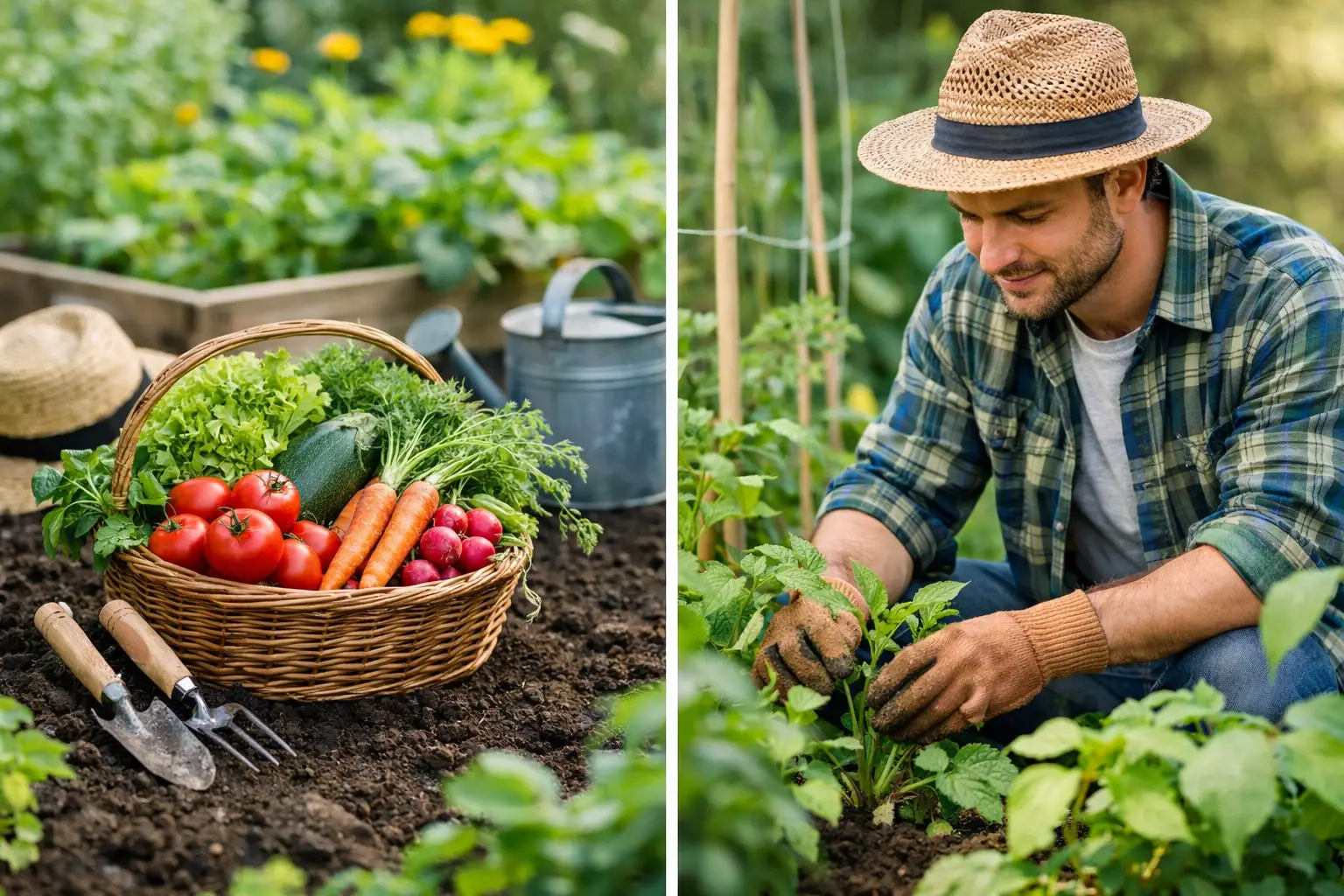
A productive garden does not need a big yard, matching raised beds, or an elaborate irrigation system. This small backyard food garden example uses a sunny 10-by-12-foot patch to grow fresh vegetables, herbs, and flowers with simple organic habits. It is the kind of setup that can supply regular salads, summer tomatoes, snipping herbs, and a few satisfying harvest baskets without taking over your weekends.
The key is not cramming in the most plants possible. It is choosing crops you actually eat, giving each one enough room and sunlight, and making watering and harvesting easy enough to keep up with.
A Small Backyard Food Garden Example for Everyday Harvests
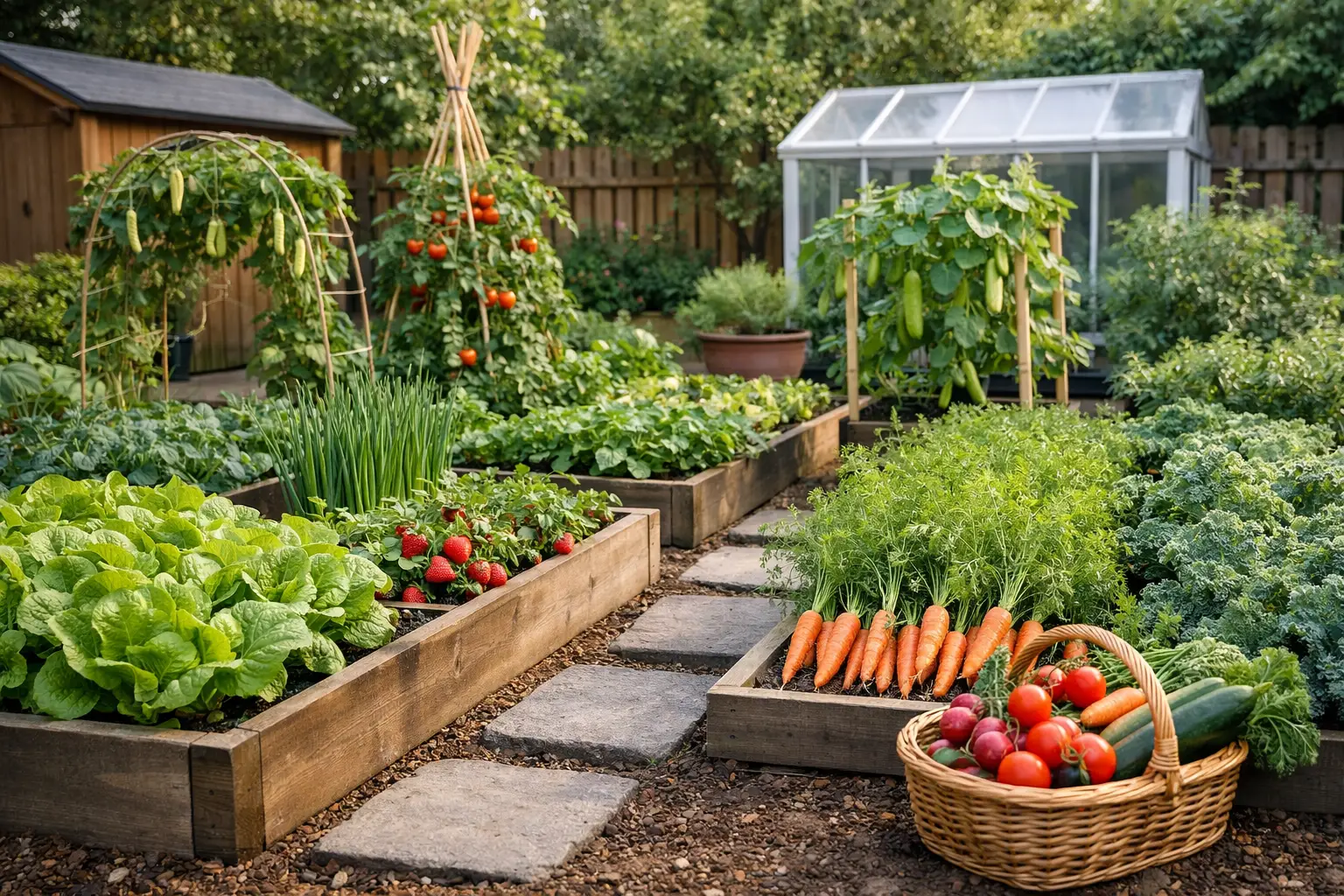
Picture a rectangular 10-by-12-foot growing area with the longest side facing south. It contains two 4-by-8-foot raised beds with a 2-foot path between them, plus a narrow strip or several containers along the sunny edge. You could build the beds, but you do not have to. The same plan works with in-ground rows if your soil drains reasonably well.
Place the tallest crops on the north side so they do not shade smaller plants. In this example, tomatoes grow on a trellis at the north end of one bed. Bush beans, peppers, greens, roots, herbs, and flowers fill the remaining space. A small compost bin or covered bucket sits nearby, because hauling kitchen scraps across the whole yard is a good way to stop composting after a week.
This garden has a job for every area. The beds produce the bulk of the food, containers hold herbs that need frequent picking, and flowers bring in pollinators and beneficial insects. It feels less like a tiny farm and more like a useful extension of the kitchen.
The Simple Layout
Bed one: summer favorites
Use the first 4-by-8-foot bed for warm-season crops. Along the north side, plant two indeterminate tomato plants about 2 1/2 to 3 feet apart and support them with sturdy stakes, cages, or a trellis. Tomatoes are generous, but they need airflow. Planting too closely is one of the fastest ways to invite leaf disease and create a tangled mess by July.
In front of the tomatoes, grow two peppers. Choose sweet peppers if your household uses them often, or add one hot pepper plant if that is more your style. Along the front edge, sow a short row of basil after the weather has warmed. Basil and tomatoes are convenient kitchen companions, though the real reason to pair them is that they like similar heat, sun, and watering conditions.
If you have room after planting, tuck in a few marigolds or calendula at the corners. They will not magically eliminate every pest, but their blooms support pollinators and beneficial insects while making the bed feel cheerful rather than strictly practical.
Bed two: quick crops and steady picking
The second bed carries crops that earn their space by producing often or maturing quickly. Start with a block of bush beans in the back half. Bush beans do not need a tall trellis, and a few plants can provide enough for several meals when picked every couple of days.
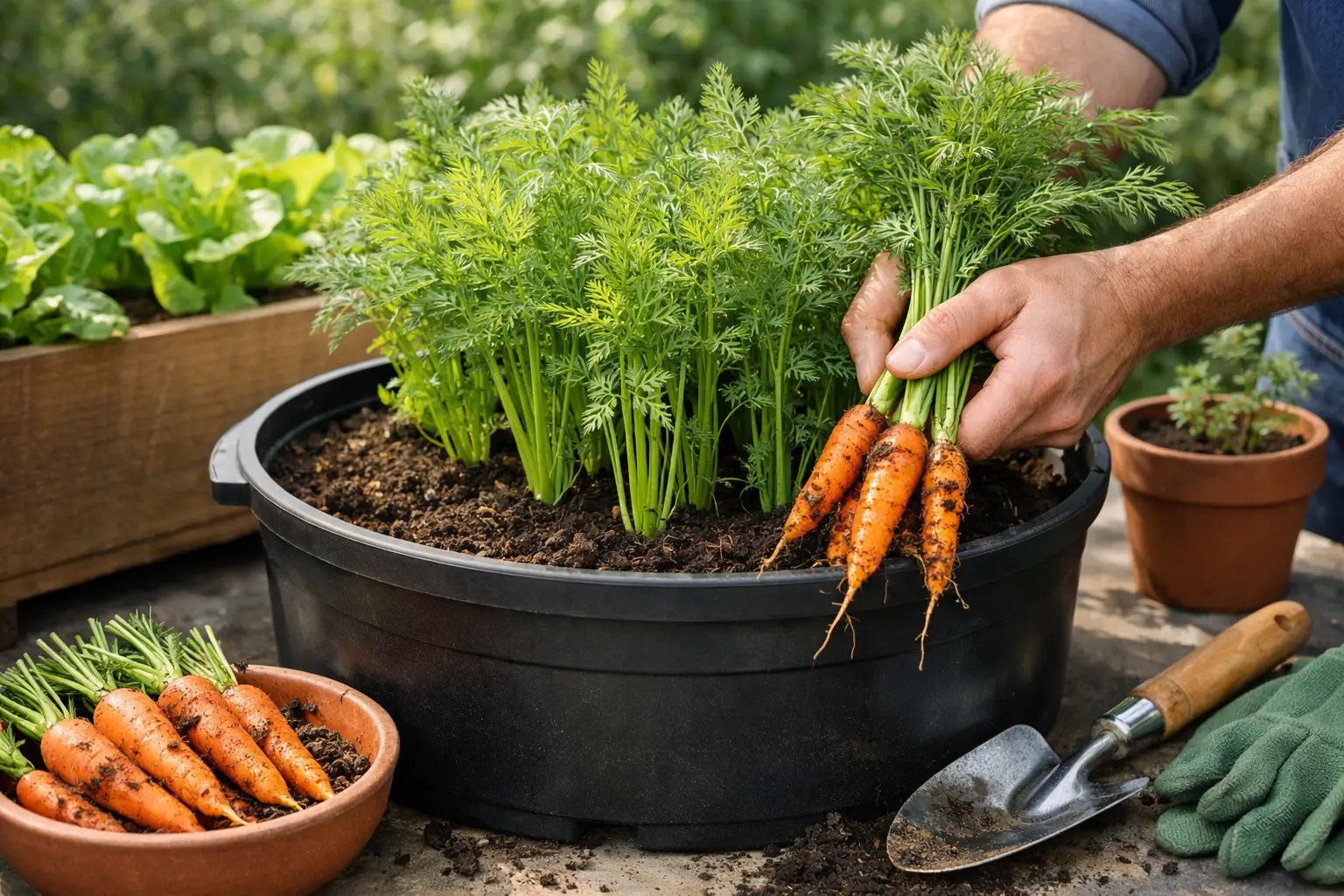
In the front half, plant leaf lettuce, arugula, radishes, and carrots. Lettuce and arugula can be harvested leaf by leaf, which stretches the season and avoids the all-at-once harvest that sometimes overwhelms new gardeners. Radishes are ready fast, often in about a month, and make a nice confidence-building crop for children or first-time growers.
As spring greens fade in summer heat, replace them with a second planting of beans, a compact cucumber on a trellis, or more basil. This is succession planting in its most useful form: you are simply reusing an empty space instead of letting it grow weeds.
Containers: the high-use extras
Set two or three pots near the back door with parsley, chives, thyme, oregano, or mint. Keep mint in its own container. It is wonderfully useful for tea, salads, and summer drinks, but it spreads enthusiastically when planted in a bed.
Containers are also a practical place for a patio tomato, strawberries, or a pepper if your beds are full. Their trade-off is watering. Pots dry out much faster than garden soil, especially during hot, windy weather, so they work best when they are close to a hose or where you will notice them every day.
Start With Soil, Not Fertilizer
A small garden can be surprisingly productive when the soil is cared for. Before planting, spread 1 to 2 inches of finished compost over each bed and mix it gently into the top few inches. Compost improves soil structure, helps it hold moisture, and feeds soil life gradually.
You do not need to chase a different fertilizer for every crop. If plants are pale or slow after the soil has warmed, a balanced organic vegetable fertilizer can help. Follow the label and resist the urge to add extra. Overfertilized tomatoes often grow lots of leaves and fewer fruits, while excess nutrients can wash away with rain.
Mulch is another small effort that pays you back. Once seedlings are established and the ground is warm, add untreated straw, shredded leaves, or chemical-free grass clippings around plants. Keep mulch a couple of inches away from stems. It shades weed seeds, slows evaporation, and makes the bed look cared for even when life gets busy.
Water for Roots, Not for the Clock
A common small-garden mistake is giving plants a quick sprinkle every evening. That wets the surface but may not reach the roots, encouraging plants to stay shallow and needy. Instead, water deeply when the top inch or two of soil feels dry, then let the soil breathe before watering again.
In a raised bed during a hot spell, that may mean watering every day. In cooler weather or an in-ground garden with good soil, it may mean two or three times a week. There is no perfect calendar because rainfall, soil type, mulch, and plant size all matter.
A soaker hose or drip line keeps leaves drier and saves time, but a watering wand works fine for a garden this size. Water near the soil, ideally in the morning. Check containers separately because they will nearly always need water first.
Keep Pests in Perspective
A few chewed leaves are not a gardening emergency. Before reaching for any spray, look closely at what is happening. Aphids can often be knocked off with a firm stream of water. Handpick tomato hornworms when you find them. Row cover can protect young greens from insect damage, though it needs to be removed from flowering crops that require pollination.
Encourage balance instead of trying to make the garden insect-free. Flowers such as calendula, alyssum, zinnias, and native blooms nearby can provide nectar for beneficial insects. Avoid broad-spectrum pesticides, including many products labeled as natural, unless you know the specific pest and the product’s effect on pollinators.
The best pest control is often a weekly five-minute walk through the garden. Turn over a leaf, inspect new growth, pick ripe vegetables, and catch small issues before they become a frustrating project.
A Realistic Seasonal Rhythm
This small backyard food garden example is easiest when it follows the seasons rather than fighting them. In early spring, plant lettuce, radishes, carrots, parsley, and peas if you enjoy them. After your area’s last frost date, add tomatoes, peppers, basil, beans, and cucumbers.
By midsummer, keep harvesting and replace spent spring crops. In late summer, sow another round of lettuce, arugula, kale, or radishes for fall. After the final harvest, remove diseased plant material, leave healthy roots in place when possible, and cover bare soil with leaves, compost, or a cover crop.
You do not have to grow every crop every year. If tomatoes struggle because your yard gets only six hours of sun, focus on greens, herbs, beans, and root vegetables instead. If deer visit nightly, containers near the house or simple fencing may be more useful than adding another bed. A garden plan should fit your conditions, not someone else’s perfect photo.
Start with the crops that make you happiest to bring inside. The first warm tomato, handful of basil, or bowl of crisp lettuce from a small space has a way of changing how you see the whole backyard – and it gives you a reason to plant again next season.