A tomato plant can look perfectly manageable in June, then turn into a heavy, sprawling tangle by July. That is why a useful tomato cage review has to look beyond how a support appears when it is new. The real question is whether it can hold up a fruit-loaded plant through summer storms, regular harvesting, and the inevitable moment when growth gets ahead of your plans.
After watching too many flimsy wire cones tip over with the first serious crop, I have learned that tomato supports are worth choosing carefully. The right cage keeps leaves and fruit off the soil, improves airflow, and makes it much easier to spot hornworms or harvest ripe tomatoes before they split. The wrong one becomes another garden chore.
Tomato Cage Review: Which Type Works Best?
There is no single best cage for every tomato. A compact patio cherry tomato has very different needs from a vigorous indeterminate slicer growing in rich garden soil. Your growing space, tomato variety, wind exposure, and willingness to prune all matter.
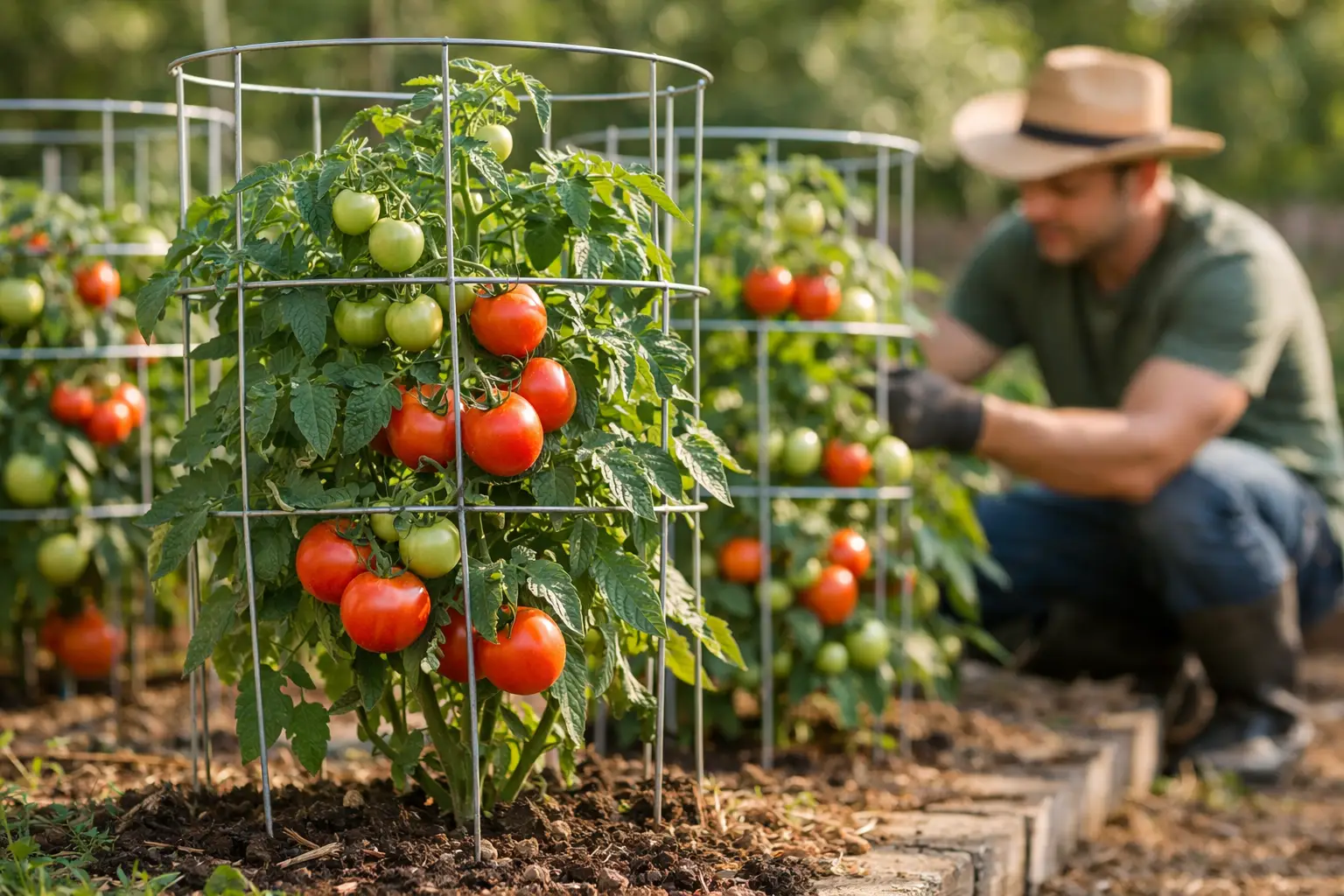
For most home gardeners, the most dependable choice is a tall, sturdy cage made from heavy-gauge galvanized steel. Square or wide-panel cages tend to outperform the familiar cone-shaped cages sold in bundles at big-box stores. They cost more at first, but they can last for many seasons and usually save you from midseason rescue work.
Heavy-gauge square cages
These are the workhorses for indeterminate tomatoes, which keep growing and setting fruit until frost. A good square cage is at least 48 inches tall, though 54 to 60 inches is even better for vigorous varieties. Its wide base is harder to topple, and its large openings let you reach through to prune, tie stems, and pick fruit.
The biggest advantage is stability. When the plant becomes top-heavy, the cage has enough structure to keep branches supported rather than bent against a thin ring of wire. Look for thick steel rods, welded joints, and legs long enough to sink well into the soil.
The trade-off is storage. Large cages take up room in a shed or garage unless they fold flat. They may also feel like more support than a small determinate tomato needs. Still, for gardeners who grow beefsteak, heirloom, or other large-fruited tomatoes, this is usually the most practical long-term option.
Folding panel cages
Folding cages are a smart middle ground for raised beds and gardeners short on storage space. They are often made of sturdy galvanized panels connected by hinges, allowing them to open into a square or triangle and fold nearly flat after the season.
A quality folding cage gives you many of the benefits of a rigid square cage: good airflow, easy harvesting, and a stable shape. Check the connection points before buying. Thin hinges and lightweight wire can fail when branches are loaded with fruit, especially after a windy rainstorm.
These cages work especially well when you use one plant per cage and give each tomato enough elbow room. Crowding tomatoes may seem efficient in spring, but it makes fungal problems and harvesting much harder later on.
Classic cone-shaped wire cages
The inexpensive tapered wire cone is easy to find, easy to store, and perfectly fine for some plants. It can support compact determinate tomatoes, small peppers, eggplants, and young perennials. If you grow a bush-type tomato that reaches only three or four feet, a sturdy cone may be all you need.
Its weakness shows up with large indeterminate tomatoes. Many are too short, too narrow at the top, and too light to resist a sprawling plant. Once stems spill over the sides, the cage can lean or pull loose from the soil. You can improve it by pushing the legs deeply into the ground and adding a bamboo stake or wooden post beside it, but that extra effort often cancels out the convenience.
If you choose this style, avoid the very thin, shiny wire versions. They bend easily and rarely last more than a season or two.
DIY cages made from concrete remesh
For gardeners who want a durable, low-waste solution, homemade remesh cages are hard to beat. Concrete reinforcing mesh can be cut into wide cylinders and secured with wire or metal clips. The openings are large enough for a hand to fit through, which makes picking tomatoes far less frustrating than it is with tight wire grids.
A remesh cage can be customized to the height and width your tomatoes actually need. It is also strong enough for heavy vines when anchored well. The upfront work is greater, and cut wire ends must be handled carefully, but a properly made cage can last for years.
Choose galvanized remesh when possible, or store plain steel mesh dry over winter to slow rusting. Reusing materials is a wonderfully practical part of an eco-friendly garden, but only if the material is safe, stable, and easy to manage.
What Makes a Tomato Cage Worth Buying?
The label matters less than a few practical details. Before bringing home a cage, check its height, width, material, leg length, and opening size.
Height is the first thing most gardeners underestimate. Determinate tomatoes usually stay more compact and can do well with a three- to four-foot cage. Indeterminate varieties often need five feet or more of support, particularly in fertile soil. Remember that several inches of the legs will be underground.
Width matters just as much. A narrow cage pinches stems together and prevents air from moving through the plant. A cage about 18 to 24 inches wide gives most tomatoes room to grow naturally. Large heirlooms may appreciate even more space.
Material affects both durability and sustainability. Galvanized steel holds up well outdoors and is a better long-term choice than disposable plastic supports. Powder-coated steel can also last nicely, but inspect it for chips that could expose the metal beneath. Natural bamboo stakes are renewable and useful for lighter plants, though they usually need replacing more often than metal cages.
Finally, make sure you can reach the fruit. Small holes may look tidy in a store, but they are frustrating once a tomato plant fills in. Generous openings let you harvest without breaking branches or rummaging through foliage.
Set Up Cages Before the Plant Gets Big
The easiest time to install a cage is on planting day. Place it around the tomato while the seedling is small, then press the legs deeply into moist soil. Trying to force a cage over a two-foot plant later often snaps stems and disturbs roots.
In a raised bed, push the legs down as far as the bed allows. For tall cages in windy areas, add a sturdy stake outside the cage and tie the frame to it with soft garden twine. This is not overkill. A mature tomato plant can be surprisingly heavy after rain.
As the plant grows, guide wandering stems inside the cage rather than tightly tying every branch. If one main stem escapes, use a loose fabric tie or jute twine to bring it back toward the frame. Leave enough space for the stem to thicken. Tight ties can rub the plant and create an opening for disease.
A cage is not a substitute for basic tomato care. Water at the soil level, mulch with shredded leaves or clean straw, and avoid packing plants too closely together. Good support helps foliage dry faster after rain, but airflow starts with sensible spacing.
When a Cage Is Not the Best Support
Cages are wonderfully low-maintenance, but they are not always the best answer. Tomatoes grown in grow bags or narrow containers may be easier to manage with one strong stake and a few soft ties. A Florida weave system, made with stakes and twine, can be more efficient for a long row of determinate tomatoes.
Very vigorous indeterminate tomatoes can also outgrow a standard cage. In that case, use a tall cage plus a central stake, or choose a trellis system designed for vertical growth. Pruning to one or two main stems can help, but only if you are growing an indeterminate variety and are comfortable keeping up with weekly maintenance.
The best support is the one that matches your plant and makes gardening feel easier, not fussier. Set up a sturdy cage early, give your tomato room to breathe, and by late summer you will be picking fruit instead of trying to untangle it from the ground.