If you’ve ever tucked a few flowers into a vegetable bed and noticed more bees, fewer pest headaches, or just a garden that felt more alive, you’ve already seen why the best flowers for vegetable gardens earn their space. Flowers are not filler. In an organic garden, they can help bring in pollinators, support beneficial insects, confuse or distract certain pests, and make the whole space easier to enjoy and care for.
The trick is choosing flowers that do more than look pretty. Some are workhorses. Some are mainly useful for pollinators. A few are famous in companion planting circles but don’t always live up to every claim. If you want a vegetable garden that looks good and pulls its weight, here are the flowers worth planting and how to use them well.
What makes the best flowers for vegetable gardens?
The best choices do at least one useful job and preferably two or three. In most home gardens, that means attracting pollinators, feeding beneficial insects like hoverflies and parasitic wasps, acting as a trap crop, or filling gaps with long bloom periods that support the garden through the season.
It also helps if the flower is easygoing. Vegetables already ask for regular watering, harvesting, feeding, and pest checks. Flowers that need constant pampering usually end up being more trouble than they’re worth. The sweet spot is a plant that handles ordinary garden conditions, blooms generously, and plays nicely with food crops.
1. Marigolds
Marigolds are usually the first answer people hear, and for good reason. They’re cheerful, easy to grow, and bloom for a long stretch. They also attract pollinators and beneficial insects, especially when planted in groups rather than as one lonely plant at the edge of the bed.
There’s a lot of hype around marigolds repelling every possible pest, and that’s where it helps to be realistic. They’re useful, but they’re not magic. Some French marigolds may help reduce certain soil nematode problems over time, and their scent can confuse some pests, but you should still think of them as part of a healthy garden system, not your only line of defense.
They fit especially well near tomatoes, peppers, beans, and squash. Keep taller varieties where they won’t shade smaller crops.
2. Nasturtiums
If I had to choose one flower for a vegetable garden that earns its keep fast, nasturtiums would be near the top. They attract pollinators, their blooms are edible, and they’re often used as a trap crop for aphids. Pests may head for the nasturtiums instead of your beans, kale, or cucumbers, which is a win if you’re paying attention and managing the problem there.
They also spill beautifully over raised beds and container edges, softening the look of a working garden. In hot climates, they can slow down in peak summer, so placement matters. A little afternoon shade can help them last longer.
3. Calendula
Calendula has that same practical charm as marigolds, but with a softer look and a cooler-season advantage. It blooms in shades of gold and orange, attracts pollinators, and can bring in beneficial insects that help with aphids and other soft-bodied pests.
It’s especially nice in spring and fall vegetable gardens when summer flowers are not yet going strong or are starting to fade. In mild areas, it may bloom for months. It also self-seeds gently in many gardens, which feels like a gift once you’ve grown it once.
4. Alyssum
Sweet alyssum is one of the most useful low-growing flowers you can plant around vegetables. The tiny blooms don’t look dramatic from across the yard, but beneficial insects love them. Hoverflies in particular are drawn to alyssum, and their larvae are excellent aphid eaters.
This is a smart flower to weave between lettuce, brassicas, peppers, or any crop where you want a low border that won’t compete heavily. It works well in raised beds because it stays compact and fills empty corners neatly. In cooler weather it thrives, while in intense summer heat it may need a trim and a little patience.
5. Borage
Borage has a slightly wild look, and that’s part of its charm. The star-shaped blue flowers are a magnet for bees, and once bees find borage, they tend to return. That makes it especially helpful near crops that benefit from strong pollinator activity, like squash, cucumbers, melons, and strawberries.
It’s also one of those flowers that can make the whole garden feel more active. The trade-off is size. Borage can get bigger than people expect, and it reseeds readily. If you have a small bed, give it a planned spot instead of tucking it in as an afterthought.
6. Zinnias
Zinnias are one of the easiest ways to add color and pollinator traffic at the same time. Bees and butterflies visit them constantly, and the taller varieties can create a lovely backdrop behind tomatoes, trellised beans, or peppers.
They don’t have the same reputation for pest control as some other companion flowers, but they more than make up for it by feeding pollinators over a long season. Cut-and-come-again varieties are especially useful because the more you harvest, the more they bloom. Just make sure they have good airflow, since crowded zinnias can struggle with mildew.
7. Sunflowers
Sunflowers bring height, pollen, and a lot of life into a vegetable garden. Bees love them, birds later enjoy the seeds, and they can create summer shade in the right spot. For larger gardens, they’re a natural fit.
The caution here is simple: placement matters. A sunflower planted on the south side of a bed can cast more shade than you intended. In small spaces, choose branching or shorter varieties and place them where they won’t block sun-loving crops. They’re wonderful near corn, cucumbers, or along the back edge of a garden fence.
8. Cosmos
Cosmos are generous plants. They bloom for a long time, attract bees and beneficial insects, and handle lean soil better than many flowers. That last point makes them useful in vegetable gardens where you don’t want every companion plant demanding rich feeding.
They’re especially nice in beds that need vertical softness without a lot of maintenance. The feathery foliage also gives the garden a lighter feel when tomatoes, squash, and beans start to look heavy and dense.
9. Bee balm
Bee balm is a strong choice if your main goal is pollinator support. Bees, butterflies, and hummingbirds all love it, and it brings a native-garden feel into edible spaces. If you’re growing crops that depend on pollination, adding a few clumps nearby can help increase activity.
It does spread, and in humid conditions it can get powdery mildew. That doesn’t always ruin the plant, but it can make it look rough by late summer. Give it breathing room and don’t crowd it into a packed raised bed.
10. Dill and fennel flowers
These are technically herbs, but once they flower, they become some of the best insect-support plants in the garden. Their umbrella-shaped blooms attract parasitic wasps, hoverflies, and other beneficial insects that help keep pest populations in check naturally.
This is one of the most practical examples of letting a useful plant do double duty. You can harvest some foliage early, then allow a few plants to bloom near cabbage, kale, broccoli, or lettuce. Just remember that fennel can be a poor neighbor for some crops, so it’s often better planted at the edge rather than right in the middle of the bed.
11. Chamomile
Chamomile is gentle, pretty, and more useful than people expect. Its small daisy-like flowers attract pollinators and beneficial insects, and it fits well into a relaxed, natural planting style. In a kitchen garden, it pairs nicely with greens, onions, and herbs.
It’s not the most dramatic performer, but that’s also part of its appeal. It fills in without taking over, and it supports the kind of balanced garden that tends to have fewer pest explosions.
How to plant flowers in a vegetable garden without creating a mess
This is where good intentions can turn into crowding. It’s tempting to scatter flowers everywhere, but vegetables still need airflow, sunlight, and easy access for harvest. The best results usually come from repeating a few flower types throughout the garden instead of treating flowers like random decoration.
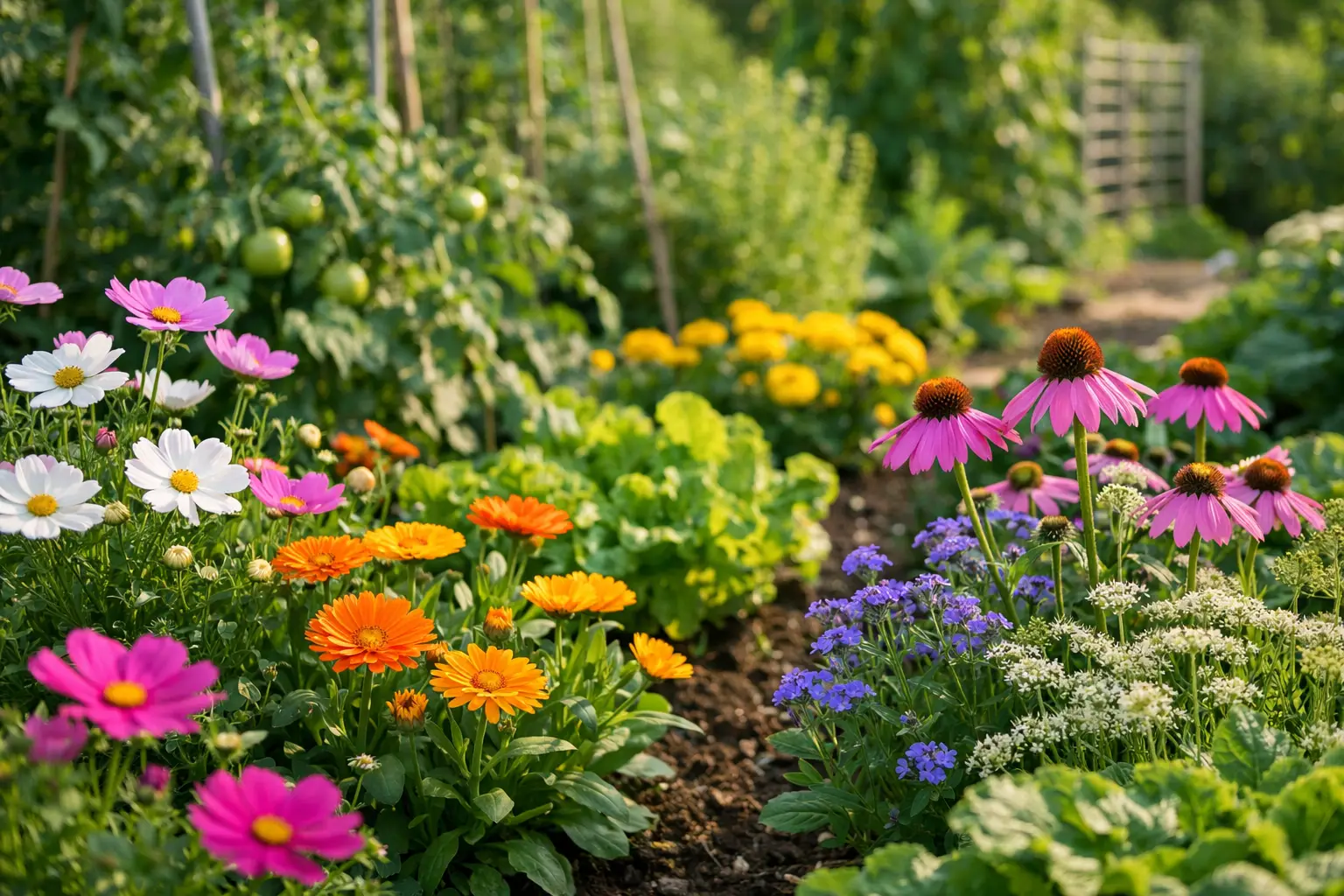
Tuck low growers like alyssum or calendula along bed edges. Use medium flowers like marigolds and nasturtiums between larger crops with enough spacing. Put taller plants like sunflowers, cosmos, or zinnias on the north side of beds in most US gardens so they don’t shade vegetables.
Try to keep bloom times staggered too. A garden that has flowers opening from spring into fall does a better job supporting pollinators and beneficial insects than one with a single flush of color in early summer.
A few flower choices that depend on your garden
Not every great flower belongs in every bed. Borage and sunflowers can overwhelm a tiny raised bed. Nasturtiums may struggle in extreme heat. Bee balm can spread more than expected. Marigolds are easy, but if you only plant one or two, you may not get much benefit beyond the looks.
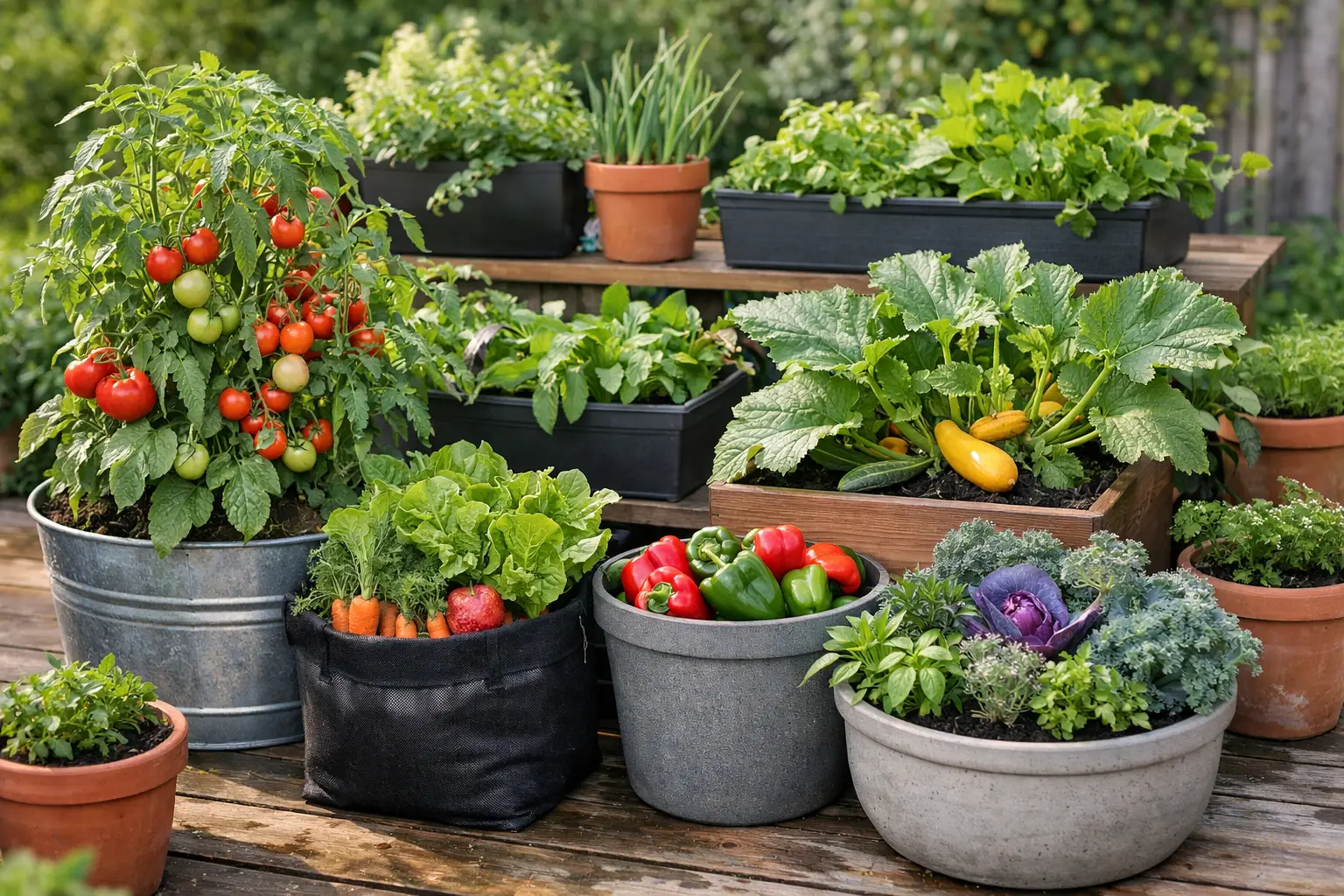
That’s why the best flowers for vegetable gardens depend a little on your space, your climate, and what you’re growing. If you have containers or a patio garden, compact marigolds, alyssum, and nasturtiums are excellent starters. If you have a larger backyard plot, you can make room for borage, zinnias, cosmos, and sunflowers without sacrificing valuable vegetable space.
If you’re gardening organically, flowers are one of the simplest ways to build a healthier system without reaching for sprays every time something chews a leaf. A few well-chosen blooms can shift the whole garden in a better direction, and that’s a small change with a very satisfying payoff.