Carrots have a way of humbling gardeners. You sow tiny seeds, wait patiently, and then pull up roots that look more like little twists and forks than the long, straight carrots on the seed packet. The good news is that learning how to grow carrots in containers is often easier than growing them in the ground, especially if your garden soil is heavy, rocky, or packed hard.
Containers give you control, and carrots love that. When you can choose a loose soil mix, keep moisture more even, and avoid buried rocks or clumps of clay, you remove most of the reasons carrots struggle. For small-space gardeners, patio growers, and anyone who wants fresh carrots without wrestling with less-than-perfect soil, a pot can be the better option.
Why carrots do so well in pots
Carrots are root crops, so the part you want to harvest depends on what is happening below the surface. In a garden bed with compacted soil, fresh manure, stones, or inconsistent watering, roots often split, fork, or stall out. In a container, you start with clean, light growing mix and a defined space that is easier to manage.
That does not mean every container carrot crop is perfect. Pots dry out faster, and shallow containers can limit root size. But if you match the container depth to the type of carrot you are growing, you can get a very reliable harvest with less guesswork.
Choosing the right container
The container matters more than people think. Width is helpful because it lets you grow more carrots in one pot, but depth is what really determines success. For shorter or round varieties, a container that is at least 8 to 10 inches deep can work. For standard baby or medium-length carrots, aim for 10 to 12 inches. If you want longer types, go deeper.
A window box, fabric grow bag, deep planter, or large nursery pot can all work well as long as there are drainage holes. Good drainage is non-negotiable. Carrots need moisture, but soggy soil invites rot and weak growth.
If you are gardening on a hot patio, fabric pots can dry quickly in midsummer. They are still a good option, but you will likely need to water more often than you would with a plastic or glazed container.
The best soil for container carrots
If there is one place not to cut corners, it is the soil mix. Carrots need loose, fine-textured soil so roots can grow straight down without hitting resistance. Dense potting soil, heavy topsoil, or compost that is too chunky can all cause misshapen roots.
Use a high-quality organic potting mix as your base, then make sure it feels light and crumbly. If it seems heavy, blend in a little coconut coir or sifted compost. The goal is a mix that holds moisture but still stays airy. Avoid adding fresh manure or too much high-nitrogen fertilizer. That tends to encourage lush tops at the expense of good roots, and it can also lead to forking.
Before sowing, moisten the mix evenly and fill the container almost to the top. A full container gives roots maximum depth and makes watering easier.
Best carrot varieties for containers
If you want an easy win, start with varieties bred for shorter roots. This is one of those small choices that saves a lot of frustration.
Round and stump-rooted carrots such as Parisian, Thumbelina, or Oxheart are especially good for shallow pots. Nantes types also do very well in containers because many are medium length, sweet, and reliable. You can grow longer Imperator-style carrots in a deep container, but they leave less room for error. If your pot is not deep enough or your soil mix is even a little compacted, they are more likely to disappoint.
For beginners, short or half-long carrots are usually the sweet spot.
How to grow carrots in containers from seed
Carrots do best when direct sown. They do not like transplanting because disturbing the root early on can lead to bent or stunted carrots. Sow the seeds right where they will grow.
Scatter the seed thinly across the surface, then cover it with about a quarter inch of fine potting mix or screened compost. Press gently so the seeds make good contact with the soil, then water carefully with a gentle spray.
This early stage is where many carrot crops fail. Carrot seed can be slow and uneven to germinate, especially in warm or windy weather. The top layer of soil needs to stay consistently moist until the seedlings are up. Not soaked, just never allowed to dry out completely.
If that sounds fussy, it is a little fussy. A light covering of burlap or a board placed loosely over the pot can help hold moisture until germination starts, but check daily and remove it as soon as seedlings appear.
Thinning is annoying, but it works
Once the seedlings are a couple of inches tall, thin them so each carrot has room to size up. Crowded carrots stay skinny, and pulling mature roots from a packed container is much harder.
It is tempting to skip thinning because the seedlings look so tiny. Most of us have tried that at least once. Usually, it ends with a dense tuft of carrot tops and very little underneath. Thin to about 1 to 2 inches apart, depending on the variety. If you hate pulling seedlings, snip extras at soil level with scissors instead.
Watering and feeding container carrots
Consistent moisture is what gives you sweet, tender roots. If the soil swings from bone dry to soaked, carrots can crack or turn woody. In containers, that means checking them often, especially once the weather warms up.
Water deeply enough to moisten the full root zone, then let the surface dry slightly before watering again. The exact schedule depends on your container size, weather, and pot material. A large glazed pot may stay moist for days, while a fabric bag in full sun may need water every day.
Feeding should stay gentle. If your potting mix includes compost and a starter fertilizer, that may be enough for a short-season crop. If growth seems pale or slow, use a diluted organic liquid fertilizer with lower nitrogen once or twice during the season. Too much nitrogen gives you big leafy tops and underwhelming roots.
Sun, temperature, and seasonal timing
Carrots grow best in full sun, though in hotter parts of the US they often appreciate a little afternoon shade once summer kicks in. Six hours of direct sun is a good baseline.
They also prefer cooler growing conditions. Spring and fall are usually the best seasons for container carrots. In very hot weather, germination can be spotty and roots may become stronger in flavor. If you want a summer crop, keep the soil evenly moist and try giving containers a break from intense late-day heat.
One nice thing about pots is flexibility. If a heat wave rolls in, you can shift the container to a spot with morning sun and light afternoon shade.
Common problems and how to avoid them
Most carrot issues come back to three things: soil texture, spacing, and moisture. Forked roots usually point to compacted soil, chunks in the mix, or root disturbance. Tiny roots often mean overcrowding or too much shade. Cracked carrots usually show up after uneven watering.
Pests are often lighter in containers than in in-ground beds, but not always. If you notice chewed foliage, check for caterpillars or other leaf-feeding insects and handpick when possible. Healthy, unstressed plants are also less likely to struggle, which is one reason simple organic care goes a long way.
If carrot shoulders begin to push above the soil line, add a little more potting mix around the tops. Sun exposure can turn the shoulders green and slightly bitter.
When to harvest carrots in containers
Harvest timing depends on the variety, but most container carrots are ready in about 55 to 75 days. The shoulders of the root usually start to show at the soil surface, which gives you a clue about size.
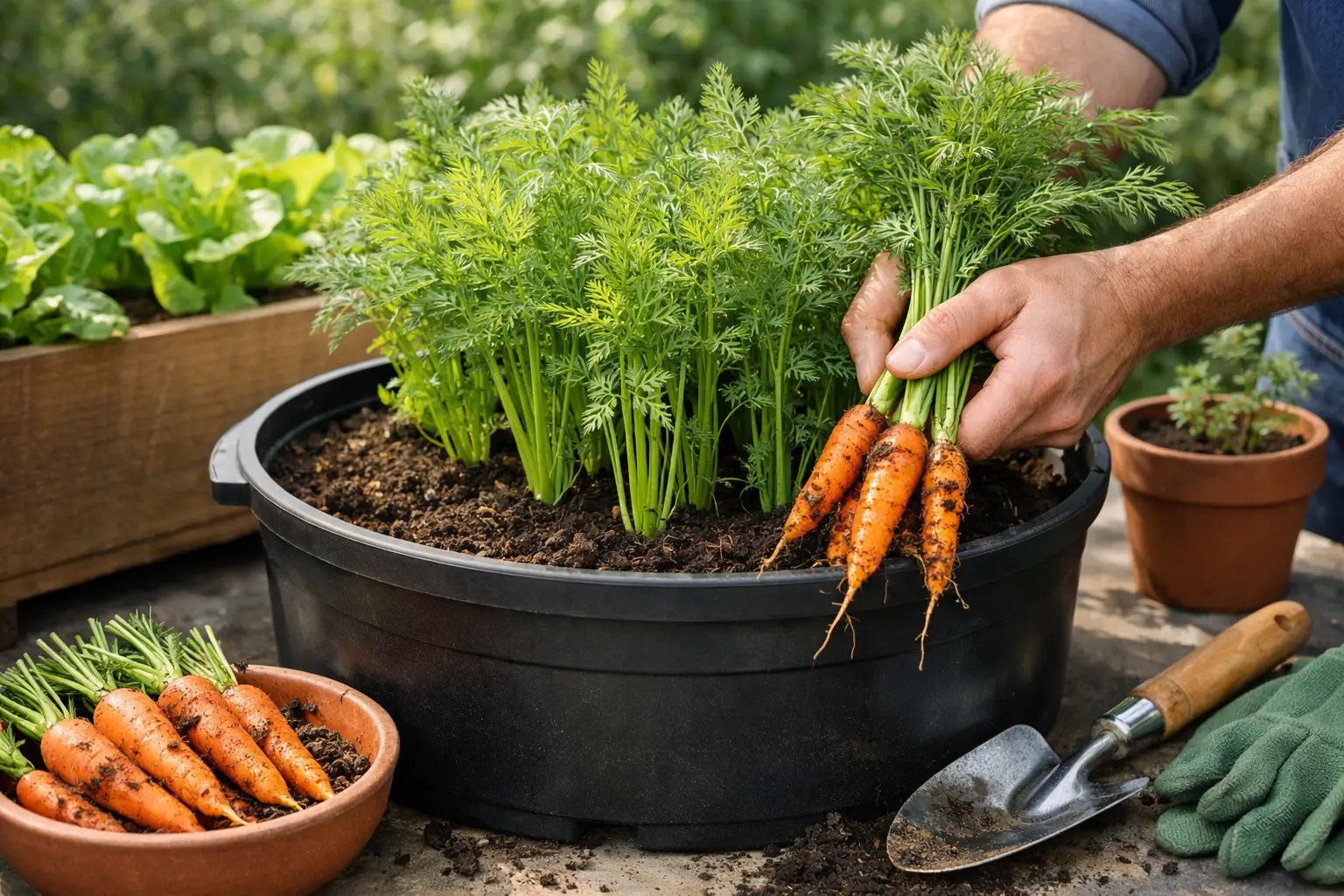
You do not have to pull the whole pot at once. One of the pleasures of growing carrots in containers is harvesting as needed. Loosen the soil a bit if necessary, then pull gently from the base of the greens. If the tops snap off, use a hand trowel or your fingers to lift the root.
Smaller carrots are often sweeter and more tender, so there is no prize for waiting too long. If the weather is still cool, you can leave them a little longer for size. If heat is building, it is usually better to harvest sooner.
A simple way to get better results every time
If you want the easiest path to success, keep it simple. Choose a short carrot variety, use a deep container with loose organic potting mix, sow directly, thin properly, and stay steady with watering. That is really the formula.
Carrots are one of those crops that reward small adjustments. A better soil mix here, a little more thinning there, a more even watering routine, and suddenly the next harvest looks completely different from the last one. If you have struggled before, do not write carrots off. Sometimes the best fix is just moving the whole project into a pot and giving the roots the soft, workable home they were asking for all along.