Raised beds can fool you. They look tidy, the soil seems rich, and plants often take off fast in spring. Then summer hits, and suddenly the bed that looked perfect yesterday is dry two inches down, lettuce is wilting by noon, and tomatoes are splitting after a deep soak. If you have been wondering how to water raised beds without constantly guessing, the good news is that it gets much easier once you understand how raised beds hold and lose moisture.
Raised beds dry out faster than in-ground gardens because the soil is exposed on more sides and usually drains more freely. That is part of what makes them so pleasant to garden in, but it also means watering has to be a little more intentional. The goal is not to keep the soil wet all the time. It is to keep moisture steady enough that roots grow deep, plants stay productive, and the soil food web stays active.
How to water raised beds without overdoing it
The first thing to know is that raised beds usually need deep, thorough watering rather than frequent light sprinkles. A quick pass with the hose might darken the top inch, but that does very little for roots once the weather warms up. Most vegetables do best when water reaches several inches into the soil so roots follow it down.
A simple way to check is to stick your finger into the soil up to your second knuckle. If it feels dry at that depth, it is time to water. If the surface looks dry but the soil underneath still feels cool and slightly damp, wait a bit. That one small habit can save you from the two most common mistakes: watering too often and not watering deeply enough.
Timing matters too. Morning is usually best. Plants can take up moisture before the heat of the day, and leaves have time to dry if they get splashed. Evening watering can work when needed, especially in hot weather, but consistently wet foliage overnight can invite disease in crowded beds.
The best way to water raised beds depends on your setup
There is no single perfect method for every garden. The best option depends on your climate, the size of your beds, what you are growing, and how much daily effort you realistically want to give.
For many home gardeners, a soaker hose or drip irrigation system is the easiest long-term solution. Both deliver water slowly at soil level, which means less evaporation and fewer wet leaves. They also make it much easier to water evenly across the whole bed instead of soaking one spot and missing another. If you grow tomatoes, peppers, cucumbers, beans, or squash, steady moisture at the root zone goes a long way toward preventing stress.
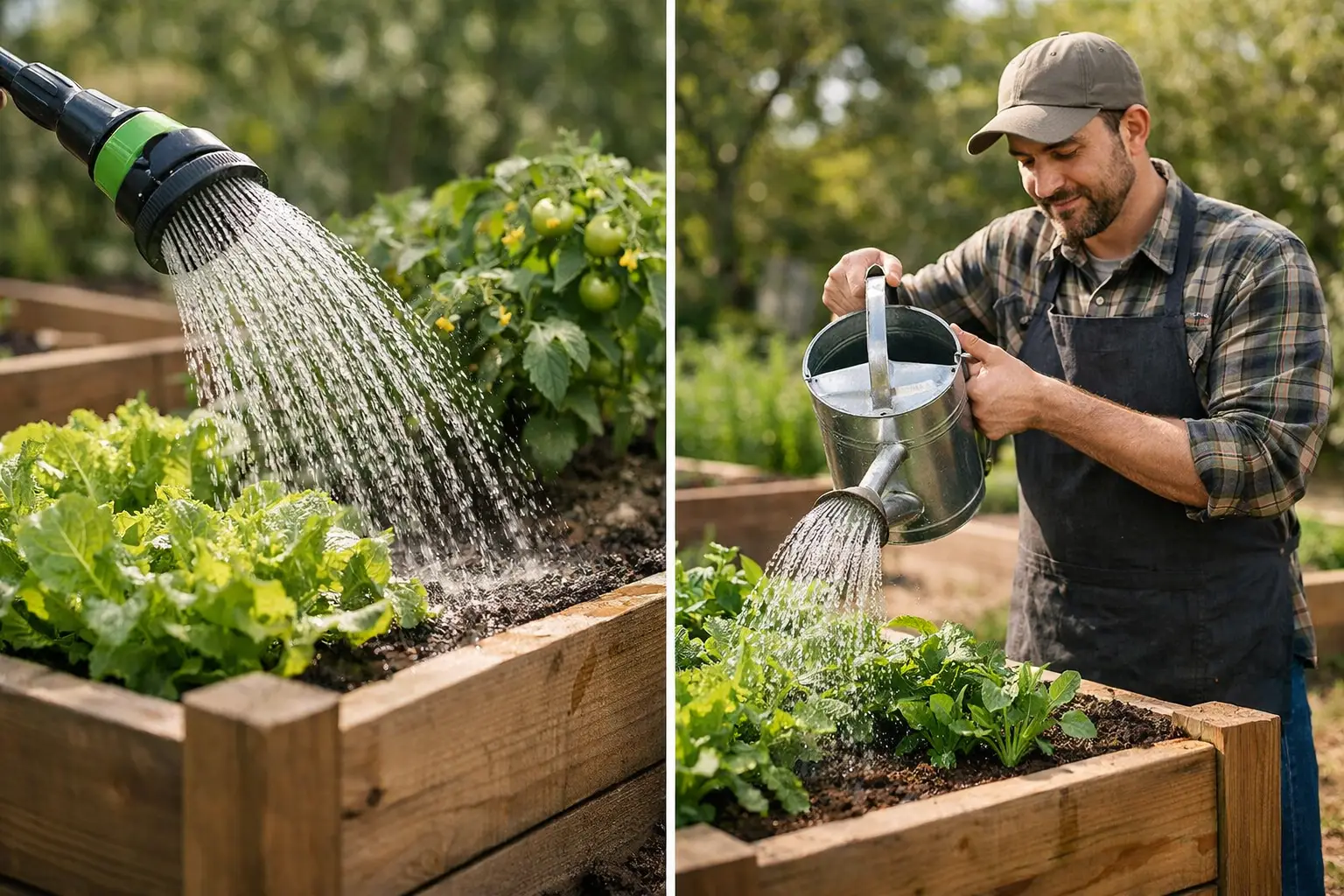
Hand watering with a hose wand or watering can still works well, especially for small gardens or new plantings that need a little extra attention. It just takes more consistency. If you water by hand, slow down enough that the water actually soaks in rather than running off the surface or spilling over the edge of the bed.
Sprinklers are usually the least efficient choice for raised beds. They wet paths, splash soil, and lose a lot to evaporation. They can be useful in a pinch, but for everyday watering, root-level methods are better.
If you use drip or soaker hoses
Let the system run long enough to moisten the full root zone, not just the top layer. The exact time will vary with your soil mix and emitter flow, so it is worth checking with your finger or a small trowel after watering. In sandy mixes, water moves through quickly and may need longer or more frequent runs. In beds with more compost and organic matter, moisture tends to hold more evenly.
If you water by hand
Water slowly in stages. Give one section a good soak, move on, then come back a minute later. That pause helps the soil absorb moisture instead of shedding it. This is especially helpful if your bed has become very dry, because bone-dry soil can repel water at first.
Soil matters more than most people think
When gardeners ask how to water raised beds, they are often really asking how to stop them from drying out so fast. In many cases, the answer starts with the soil mix.
A raised bed filled with lightweight bagged mix can drain beautifully but may need frequent watering in summer. A bed with enough compost, aged leaf mold, or other organic matter usually holds moisture better without becoming soggy. That balance matters. You want soil that drains well and also acts like a sponge.
Mulch helps just as much. A layer of straw, shredded leaves, or untreated grass clippings can slow evaporation, keep the soil cooler, and reduce how often you need to water. Even an inch or two makes a noticeable difference in hot weather. Mulch also softens the impact of heavy summer rain, which helps protect soil structure.
If your bed seems to go from soaked to dusty in a day, improve the soil gradually instead of chasing the problem only with more water. Repeated shallow watering trains roots to stay near the surface, which makes plants even more vulnerable when the weather turns hot.
How often should you water?
This is where gardening advice gets frustrating, because the real answer is: it depends. A newly planted bed in June may need water far more often than a well-mulched bed full of established peppers in May. Seedlings with small root systems dry out faster than mature plants. Fruiting crops usually need more consistent moisture than herbs like rosemary or thyme.
As a general pattern, raised beds often need water more frequently than in-ground gardens, especially during stretches of heat, wind, or low humidity. In midsummer, some beds may need checking daily. That does not always mean watering daily. It means paying attention daily.
Weather should guide you more than the calendar. A cool, cloudy week and a string of 95-degree days do not call for the same routine. Neither does a bed planted with lettuce and radishes compared with one planted mostly with okra and basil.
The healthiest habit is to observe before you water. Look at the plants, feel the soil, and think about recent weather. This sounds simple, but it is one of the biggest differences between gardening by routine and gardening with confidence.
Signs your raised beds are getting too much or too little water
Underwatered plants often wilt in the heat, grow slowly, and may produce bitter greens or tough roots. Fruit can stay small, and leafy crops can bolt faster under stress. The soil may pull away from the sides of the bed or feel dusty a couple inches down.
Overwatered beds can look surprisingly similar at first. Plants may wilt even when the soil is wet because roots are struggling for oxygen. Leaves may yellow, growth can stall, and fungus issues become more common. If the bed stays soggy, especially after rain, drainage or soil balance may need attention.
This is why checking the soil matters more than reacting to droopy leaves alone. Some plants wilt a bit in afternoon heat and recover by evening even when soil moisture is fine. That is not always a call to grab the hose.
A few crop-specific watering notes
Leafy greens like lettuce, spinach, and arugula prefer evenly moist soil. Letting them dry out too much can make them bolt or turn bitter fast. Root crops such as carrots and beets need steady moisture while seeds germinate and while roots are sizing up, or you may end up with patchy sprouts and woody harvests.
Tomatoes are where consistency really pays off. Big swings between dry and soaked conditions can contribute to splitting and blossom end rot. Peppers like steady moisture too, though they generally tolerate short dry spells better than tomatoes. Cucumbers and squash are thirsty once they start producing, and they are much happier when water reaches deep into the bed instead of just skimming the surface.
Herbs are more mixed. Basil likes regular moisture, but Mediterranean herbs such as oregano, thyme, sage, and rosemary prefer not to stay wet. If you grow herbs and vegetables together in one raised bed, that can be a reason to water more selectively by hand.
Make watering easier on yourself
The most sustainable garden routine is the one you can actually keep up with in July. If your current method leaves you dragging hoses every evening and still second-guessing whether you watered enough, simplify it.
Mulch heavily. Group plants with similar moisture needs together when possible. Use drip irrigation or soaker hoses if your garden is large enough that hand watering has become a chore. And do not underestimate the value of a quick daily walk through the garden. A two-minute check in the morning can help you catch dry soil, stressed seedlings, or clogged emitters before they turn into bigger problems.
There is also a trade-off worth mentioning. Raised beds give you better drainage, earlier spring planting, and easier soil control, but they ask for more attention to moisture. Once you accept that part of the bargain, watering becomes less of a mystery and more of a rhythm.
A good watering routine does not need to be fancy. Keep the moisture steady, feed the soil with organic matter, and let your plants teach you what they need. Before long, you will spend less time guessing and more time harvesting.