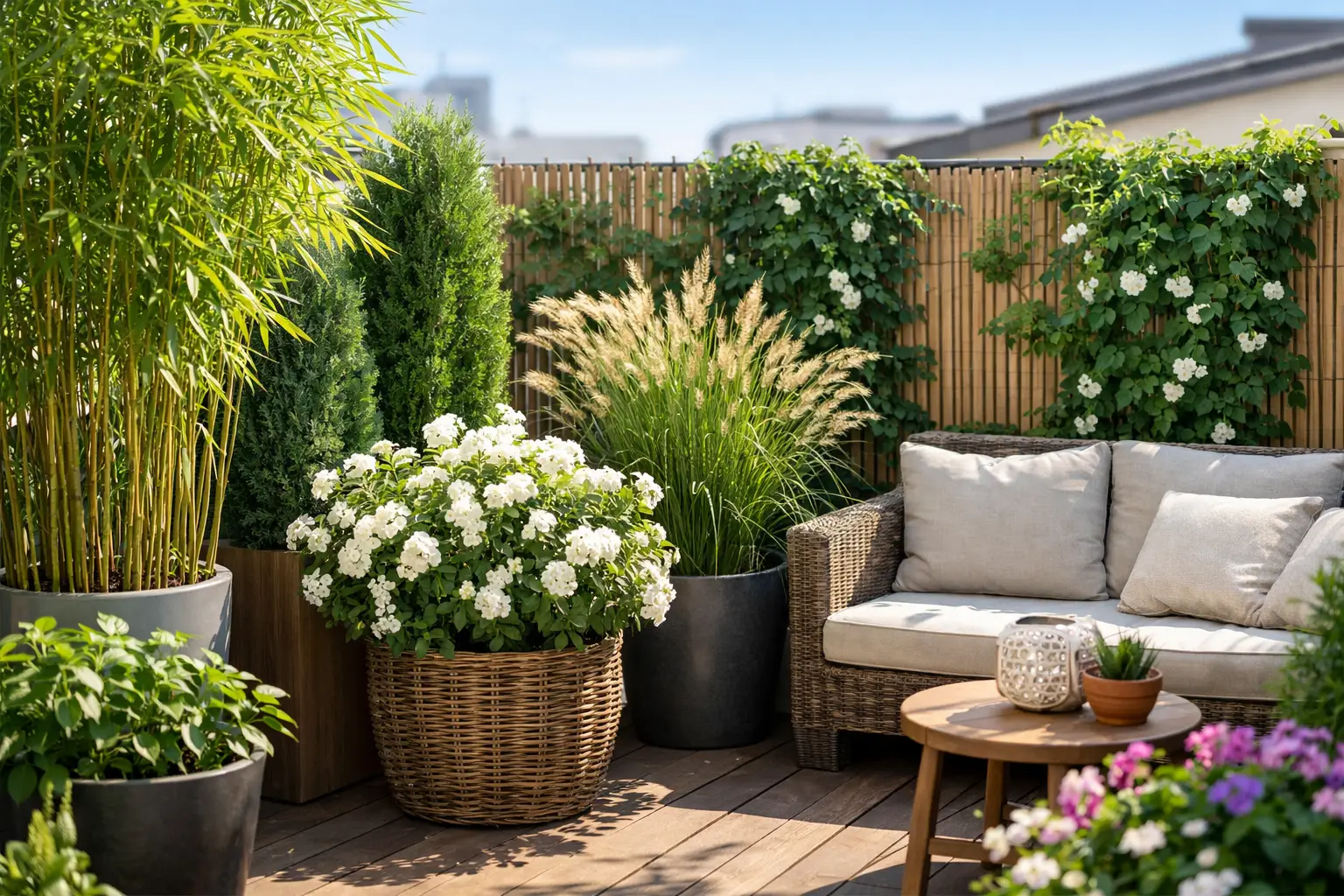
A balcony can feel wonderfully open until the neighbor across the way can see every morning coffee, every dinner, and every attempt to relax outside. The right balcony privacy plants change that without turning a small space into a dark, crowded jungle. A few well-chosen containers can create a living screen, soften noise and concrete, and make the balcony feel more like your own little garden room.
The trick is to choose plants for the conditions you actually have, not the lush photo you wish you could copy. Sun, wind, container size, winter temperatures, and building rules all matter. Start there, and your green screen has a much better chance of thriving.
Start with the balcony, not the plant
Before buying anything, spend a day noticing how the balcony behaves. Is it shaded by another building most of the day, or does it get six or more hours of direct sun? Is it protected, or does wind whip around the corners? High balconies can be surprisingly windy and dry, while covered balconies may receive very little rain.
Also look at where privacy is needed. A screen only has to block the sightline, not fill every inch from floor to ceiling. If a neighbor’s window sits at eye level when you are seated, plants around 3 to 5 feet tall may be plenty. Trying to grow an 8-foot hedge in tiny pots usually creates more maintenance than privacy.
Check the weight limit and rules for your building before bringing home large containers. Wet potting mix is heavy, especially in tall planters. Use lightweight resin, fiberglass, or fabric containers rather than ceramic if weight is a concern, and make sure every pot has drainage holes.
The best balcony privacy plants for containers
There is no single best choice for every balcony. Evergreen plants give more year-round coverage, but flowering vines and grasses may offer better growth, beauty, or pollinator value during the warmer months. These are reliable options to consider.
Clumping bamboo for a fast, leafy screen
Clumping bamboo creates the classic tall, fluttering privacy screen many people want. Look specifically for clumping types, such as Fargesia, rather than running bamboo. Running bamboo can spread aggressively when planted in the ground, and even in containers it is harder to manage as it outgrows its pot.
Fargesia is generally better for part shade and cooler climates, while some other clumping bamboos handle heat and sun. Bamboo needs a large container, regular water, and a sturdy pot that will not tip in wind. It is a good fit when you want a dense screen with a natural look, but it is not a low-water plant.
Arborvitae for a traditional evergreen look
Narrow arborvitae varieties can work well in large containers, especially where winter privacy matters. Their soft, scale-like foliage creates a tidy green wall without needing much pruning. Choose a compact or narrow variety and read the mature size carefully. A plant labeled “dwarf” can still become far too large for a balcony pot over time.
Arborvitae need sun to look their best, consistent moisture, and protection from drying winter winds. In cold parts of the country, the roots in containers are more exposed than roots in the ground. Wrapping the pot with insulating material or moving it against a sheltered wall can help it make it through winter.
Sky Pencil holly for slim spaces
For a narrow balcony, Sky Pencil holly offers an upright, column-shaped evergreen form that barely sprawls outward. It is useful when you need screening but still want room for a chair, a small table, or containers of herbs and flowers.
Give it a pot that is wider than it looks necessary, because tall plants need a stable root base. It prefers sun to part sun and evenly moist, well-draining soil. Like many evergreens, it does not love drying out, so check containers often during heat waves.
Ornamental grasses for movement and softer privacy
Tall grasses provide privacy without making a balcony feel boxed in. Switchgrass, feather reed grass, and some compact miscanthus varieties can make a lovely seasonal screen in sunny spots. Their upright blades catch the breeze, and their seed heads add texture late in the season.
Most ornamental grasses die back in winter in colder regions, so they will not offer year-round coverage. That is the trade-off. In return, they are often easier to grow than shrubs, support beneficial insects, and bring a relaxed, natural feel to a hard-edged space. Leave dried stems standing through winter if you enjoy the texture, then cut them back before new growth starts in spring.
Star jasmine for a fragrant trellis screen
Star jasmine is a favorite for warm climates because it is evergreen in mild winters, climbs readily, and fills the air with fragrance when it blooms. Train it onto a freestanding trellis or a support approved for your balcony. Avoid attaching anything permanently to the building unless your lease or association rules clearly allow it.
This vine needs sun or bright light and does best in USDA Zones 8 through 10. In colder areas, treat it as a seasonal plant or move the container to a protected indoor space before frost. Its fragrant flowers are a bonus, but the glossy foliage is what earns its place as a privacy plant.
Clematis for flowers and seasonal coverage
Clematis is a beautiful choice when your main goal is privacy from late spring through fall. Many varieties climb quickly on a trellis and cover it with foliage and blooms. Choose a type suited to your climate and the amount of sun you receive, since different clematis groups have different pruning needs.
Its roots like to stay cool while the top growth reaches for sunlight. A larger pot, mulch on the soil surface, and a low companion plant can help shade the root zone naturally. Clematis will not screen a balcony in winter in most regions, but it can make the growing season feel much more private.
Podocarpus for warm, sunny balconies
In warm parts of the United States, podocarpus is a handsome evergreen option with narrow, deep-green leaves. It can be clipped for a neater look or allowed to grow more naturally. It handles sun, containers, and pruning well once established.
Podocarpus is not frost hardy in colder climates, so it is best for warm regions or for gardeners with a bright, protected place to overwinter it. It is also a slower investment than a fast vine, but that slower growth often means less constant trimming.
Build a screen without stressing the plants
A trellis makes vines and some flexible shrubs much more effective. Choose one that is freestanding or securely anchored inside the planter, rather than relying on a flimsy decorative lattice. Wind puts real pressure on a planted trellis, so wider, heavier planters are safer than tall, narrow ones.
For a fuller screen, group three or more containers rather than placing one lonely plant in the middle of the balcony. You might use two narrow evergreens at the ends with a flowering vine on a trellis between them. Or line up several grasses in matching pots for a softer, more affordable approach. Repeating the same plant often looks calmer and provides better coverage than collecting many unrelated plants.
Use a quality organic potting mix, not garden soil. Garden soil becomes dense in containers and can suffocate roots. Add compost sparingly if your potting mix does not already include it, then feed container plants with a gentle organic fertilizer according to the label. Plants in pots rely on you for nutrients, but overfeeding can create weak, floppy growth that attracts pests.
Watering and care that keep a screen full
Most privacy plants fail on balconies for one reason: the container dries out faster than expected. Wind and reflected heat from walls, glass, and pavement can turn a manageable watering routine into a daily task in midsummer. Check the soil with your finger. If the top inch feels dry, water slowly until it runs from the drainage holes.
Mulch the soil surface with shredded bark, leaf mulch, or untreated wood chips to slow moisture loss. A saucer is usually not helpful outdoors because roots should not sit in standing water. Instead, raise pots slightly on feet or risers so water can drain freely and the balcony surface can dry beneath them.
Prune lightly and with purpose. Remove dead, damaged, or crossing stems, and trim vines to encourage branching where you need coverage. Avoid shearing every plant into a flat green rectangle. A little variation looks more natural and gives leaves better access to light.
A few mistakes worth avoiding
Do not buy a plant based only on its height at the nursery. A tall plant in a small pot may already be rootbound, and it can decline quickly after the initial “wow” factor fades. Look for healthy leaves, sturdy stems, and roots that are not circling tightly around the pot.
Avoid planting invasive running bamboo, especially if you might eventually move it into a yard. Skip plants known to be toxic if pets regularly chew foliage on the balcony. And resist overpacking containers. Plants need air movement to reduce mildew and fungal problems, particularly on shady balconies.
A privacy screen does not have to appear overnight to make a difference. Start with a few healthy plants, roomy containers, and the right support. By the time those first leaves fill in around your favorite chair, the balcony will feel less exposed and much more like a place you want to linger.