Those tiny sprouts can make a gardener feel oddly protective. You see a pale leaf or a stalled tomato seedling and want to give it a boost right away. But when should I fertilize seedlings? Usually, not as soon as they emerge. A little patience at this stage prevents the most common seed-starting problem: pushing tender roots harder than they can handle.
For most vegetables, wait until seedlings have developed their first set of true leaves before offering fertilizer. Then feed lightly, using a gentle organic liquid fertilizer diluted well below the label’s full-strength rate. Seedlings need steady support, not a big meal.
When Should I Fertilize Seedlings? Start With True Leaves
The first leaves that appear after germination are called cotyledons, or seed leaves. They are part of the seed’s built-in lunchbox. For a short while, a healthy sprout draws on the energy stored inside the seed, so fertilizer is unnecessary and can be harmful.
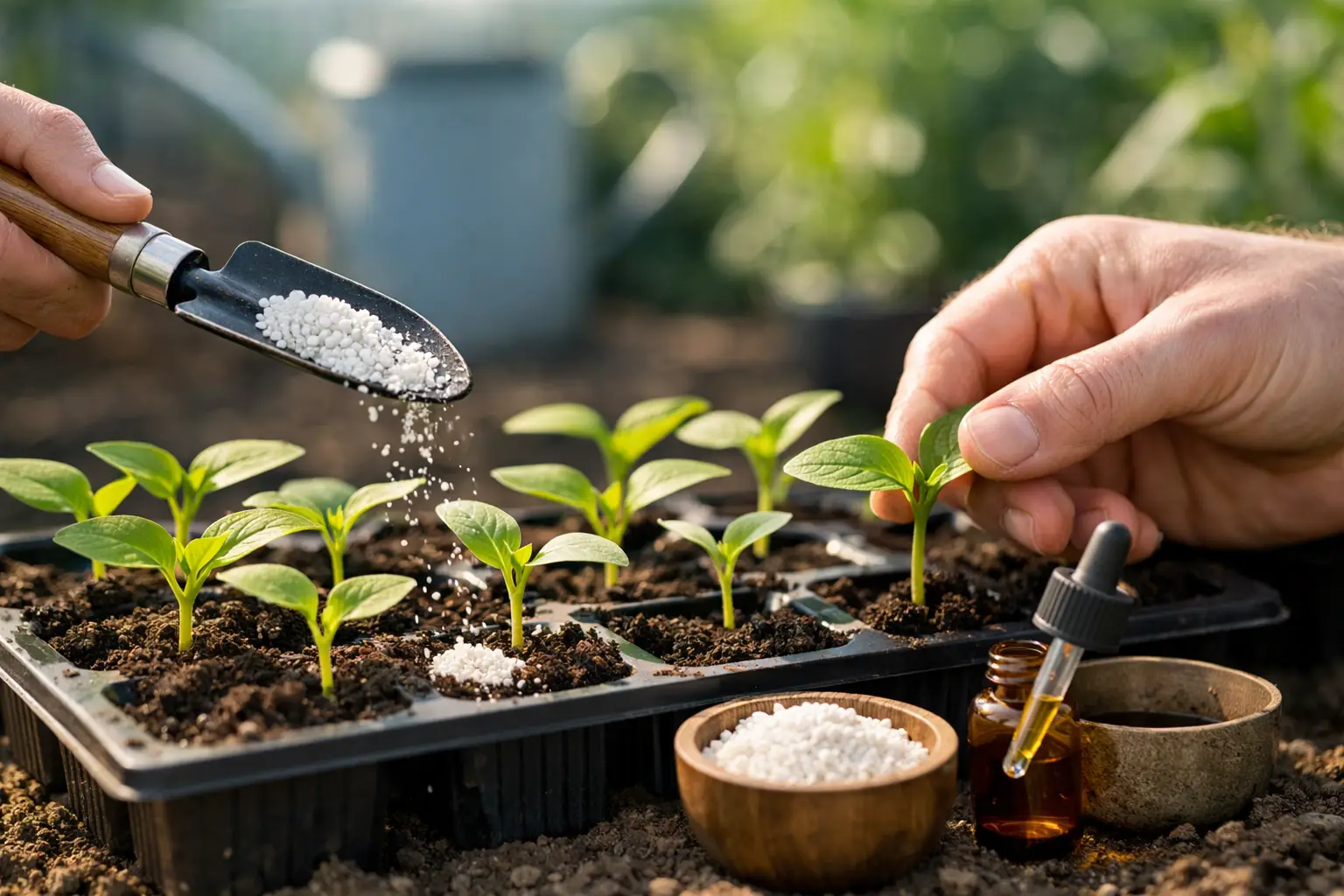
True leaves arrive next, and they look more like the mature plant’s foliage. A tomato’s first true leaves have their familiar jagged shape, while lettuce seedlings begin forming small versions of their soft, rounded leaves. Once a seedling has one to two sets of true leaves, it is actively growing and can usually use a small amount of nutrition.
This timing is especially helpful when you start seeds in a sterile seed-starting mix. These mixes are designed to be light, fine-textured, and low in nutrients so young roots can grow easily. That is exactly what you want for germination, but it also means seedlings eventually need feeding if they will remain in their cells for more than a couple of weeks.
Check What Your Seedlings Are Growing In
The calendar matters less than the growing medium. A seedling in a plain peat- or coir-based seed-starting mix will need a light feeding sooner than one growing in a quality organic potting mix or compost-rich soil block.
Many organic potting mixes include enough nutrition to carry seedlings for several weeks. If your mix contains compost, worm castings, or an organic fertilizer blend, hold off until the plants begin to use those resources. Feeding on top of an already enriched mix can lead to excess salts and soft, overly lush growth.
Seedlings in homemade mixes can be harder to judge. Compost is valuable, but its nutrient level varies widely. If the mix is very compost-heavy, it may be too rich for germinating seeds in the first place. For future batches, start seeds in a lighter mix and add nutrition gradually after true leaves appear.
How to Feed Without Burning Tender Roots
For seedlings, weak and regular is better than strong and occasional. Choose a liquid organic fertilizer labeled for vegetables, herbs, or houseplants, then dilute it to one-quarter to one-half of the recommended strength. Start at one-quarter strength if your seedlings are small, your growing conditions are cool, or you are unsure how rich the potting mix is.
Apply the diluted fertilizer to already-moist soil. Feeding a bone-dry cell can concentrate nutrients around the roots and cause fertilizer burn. I like to water seedlings normally first, then use the diluted fertilizer at the next watering if the mix still feels evenly damp.
A gentle feeding every 7 to 14 days is plenty for most seedlings kept indoors. Fast-growing, hungry plants such as tomatoes, peppers, eggplants, cabbage, and broccoli may appreciate weekly feeding once they are established. Lettuce, herbs, and many flowers are usually happy with less.
Organic liquid fertilizers come in several forms. Fish emulsion is effective and nitrogen-rich, though it can have a strong smell indoors. Seaweed or kelp products provide useful micronutrients and can support resilience, but they are often too low in major nutrients to serve as the only food for seedlings. Plant-based liquid fertilizers can be a pleasant lower-odor option. Read the label, because products vary a great deal in concentration.
Worm-casting tea and compost tea can be lovely additions to a garden routine, but do not assume they provide a predictable nutrient dose. For seedlings that need sustained growth, a labeled organic fertilizer is easier to use consistently. Save homemade brews for an occasional supplement rather than relying on them as a complete feeding plan.
Read the Plant Before Reaching for Fertilizer
Pale green leaves, slow growth, and a seedling that has been in the same small cell for several weeks can point to a need for food. The lower leaves may yellow first when a plant is short on nitrogen. If the roots are healthy and the potting mix has little built-in fertility, a gentle feeding is reasonable.
Still, fertilizer does not fix every sad-looking seedling. Leggy plants need brighter light or a closer grow light, not extra nutrients. Drooping seedlings may be too dry, too wet, or sitting in chilly soil. Purple-tinged leaves can happen with nutrient issues, but cool temperatures often cause them too, especially in tomatoes and peppers.
Before feeding, check three basics: light, moisture, and root space. Seedlings stretching toward a window or living under a weak light will not become sturdy from fertilizer. A plant whose roots are circling the bottom of its cell may need potting up. Give the actual problem your attention, and your seedlings will respond much better.
Fertilizing After Potting Up
Potting up is a natural reset point. When seedlings have several true leaves and roots filling their starter cells, move them into a slightly larger container with fresh organic potting mix. The new mix often supplies enough nutrition that you can pause fertilizer for a week or two.
Avoid moving a small seedling into an oversized pot. Extra wet soil around a tiny root system stays damp too long and can encourage root problems. Choose a container only one or two sizes larger, settle the plant in gently, and water it well.
Tomatoes are a special case because they can be planted deeper when potted up. Their fuzzy stems can form additional roots under the soil, which helps create a sturdier transplant. Peppers, lettuce, and most other seedlings should stay at the same soil level they were growing at before.
Once the plants resume active growth, return to light feedings. If you are growing seedlings for several more weeks before outdoor planting, this regular, restrained routine will provide more lasting results than a single heavy application.
Signs You Are Feeding Too Much
Overfertilized seedlings often look surprisingly green at first. Their leaves may become very dark, growth can turn soft and floppy, and the edges or tips may brown. You may also see a white crust on the soil surface, a sign that mineral salts are building up.
If that happens, stop fertilizing and flush the container with plain water. Let water run through the drainage holes, then allow the mix to drain completely. Do not try to correct the problem by adding another product. Most seedlings recover if the roots have not been badly damaged.
It is also wise to avoid granular fertilizers in small seedling cells. Even organic granular products can create concentrated pockets of nutrients near fragile roots. They work better mixed into garden beds or larger containers, where roots have room to spread and the material can break down gradually.
A Simple Schedule for Common Vegetable Seedlings
For a reliable starting point, let seedlings germinate and grow their cotyledons without fertilizer. When they have their first true leaves, begin a quarter-strength organic liquid feed. Continue every one to two weeks while they remain in low-nutrient seed-starting mix.
When you pot up into fresh, enriched potting mix, pause feeding briefly and watch the plants. Resume lightly after they settle in and begin growing again. About a week before transplanting outdoors, avoid trying to force extra growth. Focus instead on hardening seedlings off gradually so sun, wind, and changing temperatures do not shock them.
A well-fed seedling is not the biggest one on the shelf. It is compact, green, firmly rooted, and ready to adapt when it reaches the garden. Feed gently, watch closely, and let each small plant tell you what it needs next.