A cucumber vine sprawled across the garden bed can look wonderfully abundant right up until you try to find the fruit beneath it. That is where thoughtful vegetable trellis ideas earn their keep. A simple support lifts crops into better light and airflow, keeps fruit off damp soil, and makes harvesting feel much less like a scavenger hunt.
Trellising is not only for gardeners with big beds and long rows. It can make a small raised bed more productive, turn a sunny patio into a vertical growing space, and help natural gardeners avoid some common disease trouble without reaching for sprays. The best choice depends on the crop, your available space, and how permanent you want the structure to be.
Why a trellis can make vegetables easier to grow
Vining vegetables evolved to climb, trail, or scramble. When they are allowed to pile up on the ground, leaves stay wet longer after rain or watering, fruit can rot where it touches the soil, and pests have plenty of shaded hiding places. Lifting vines is not a cure-all, but it helps create the dry, open conditions that many garden plants prefer.
There is a practical benefit, too. A vertical cucumber, pole bean, or indeterminate tomato is easier to inspect. You will spot a hornworm, a powdery mildew patch, or an overripe fruit before it becomes a larger problem. Harvesting regularly also encourages many crops to keep producing.
Choose materials that are sturdy enough for the mature plant, not just the small seedling. A light bamboo teepee may hold peas beautifully but bow under a late-summer cucumber plant loaded with fruit. Reuse clean materials when you can, and avoid treated lumber or unknown painted materials where they may touch edible crops.
Vegetable trellis ideas that work in real gardens
1. A-frame trellis for cucumbers and squash
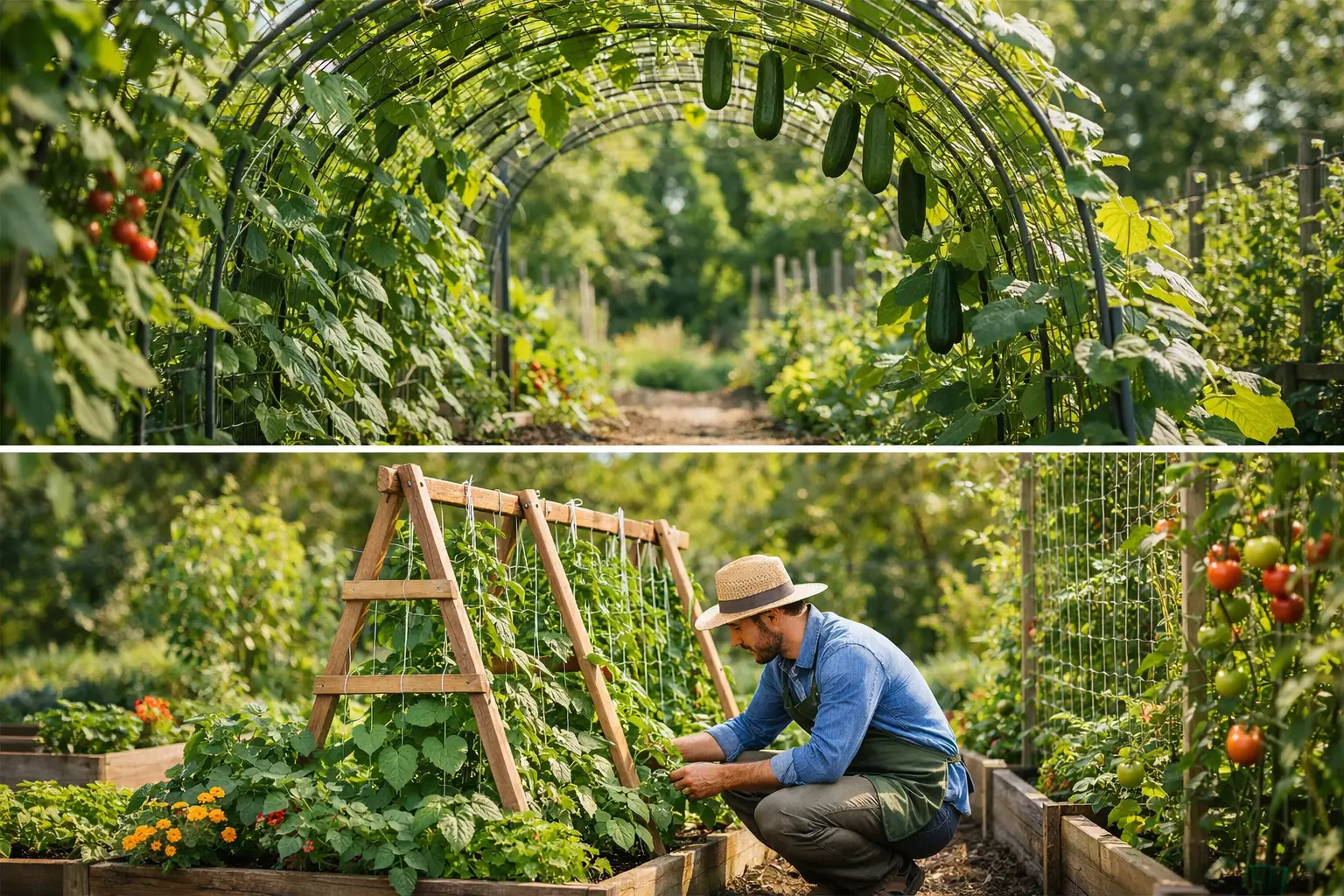
An A-frame is two panels leaning together at the top, forming a tent shape over a path or narrow bed. It is one of the most useful options for cucumbers because the vines can climb the outside while the fruit hangs down where you can see it.
Build one from wood, bamboo, or metal panels and add sturdy garden twine, wire fencing, or trellis netting. Leave enough room beneath the frame for airflow and easy picking. Smaller-fruited summer squash varieties can be trained up a strong A-frame, but heavy winter squash needs slings made from old T-shirts or soft fabric to support developing fruit.
2. Cattle panel arch for a productive walkway
A cattle panel arch creates a garden entrance that doubles as growing space. Secure each end of a rigid livestock panel to stakes, wooden posts, or raised-bed sides, then bend it into an arch over a path. Plant cucumbers, pole beans, small melons, or compact squash at the base.
This is a bigger commitment than string supports, but it can last for years. It also brings shade to the path beneath it by midsummer, which can be a welcome bonus in hot parts of the country. Keep the arch wide and tall enough that you can walk beneath it without brushing through damp foliage.
3. Simple bamboo teepees for beans
For pole beans, it is hard to beat a teepee made from several bamboo poles tied together at the top. Push the poles firmly into the soil in a circle, leaving a broad enough base for each plant. Add a few cross ties of twine if the poles feel wobbly.
Beans naturally twine upward, so they rarely need much training. This is a friendly beginner project because it is inexpensive, quick to build, and easy to take down at season’s end. Use untreated bamboo and natural-fiber twine if possible, then compost worn twine rather than leaving plastic ties in the garden.
4. Florida weave for a row of tomatoes
If you grow several indeterminate tomatoes in a row, the Florida weave is far less fussy than caging each plant. Set strong stakes at both ends of the row and between every two or three plants. As tomatoes grow, run tomato twine back and forth around the stakes, weaving the stems gently between the lines.
Add another level of twine every 8 to 12 inches. The system keeps stems upright and improves airflow, but it does require regular attention. Determinate tomatoes can work in this setup, though a sturdy cage is often simpler because they put on much of their growth at once.
5. A single-string trellis for greenhouse-style tomatoes
A single-string system works especially well in a sheltered bed, hoop house, or against a strong overhead frame. Tie one end of soft tomato twine to a secure top support and anchor the other near the base of each plant. As the tomato grows, clip or loosely wind the main stem around the string.
Prune indeterminate tomatoes to one or two leaders if you use this method. It gives a neat, easy-to-manage plant, but pruning is the trade-off. If you prefer a fuller, lower-maintenance tomato plant, choose a cage instead.
6. Fence-panel trellis for peas and beans
A section of wire fence or a rigid garden panel is one of the least complicated supports you can use. Fasten it between two solid posts and plant peas or beans along the base. Pea tendrils grab small openings easily, while beans may appreciate a little twine woven through larger panels.
For spring peas, place the panel where it will not shade smaller crops for the rest of the season. Once the pea crop is finished, the same panel can support a second planting of pole beans. That kind of seasonal reuse is especially helpful in a compact garden.
7. Obelisk trellis for containers
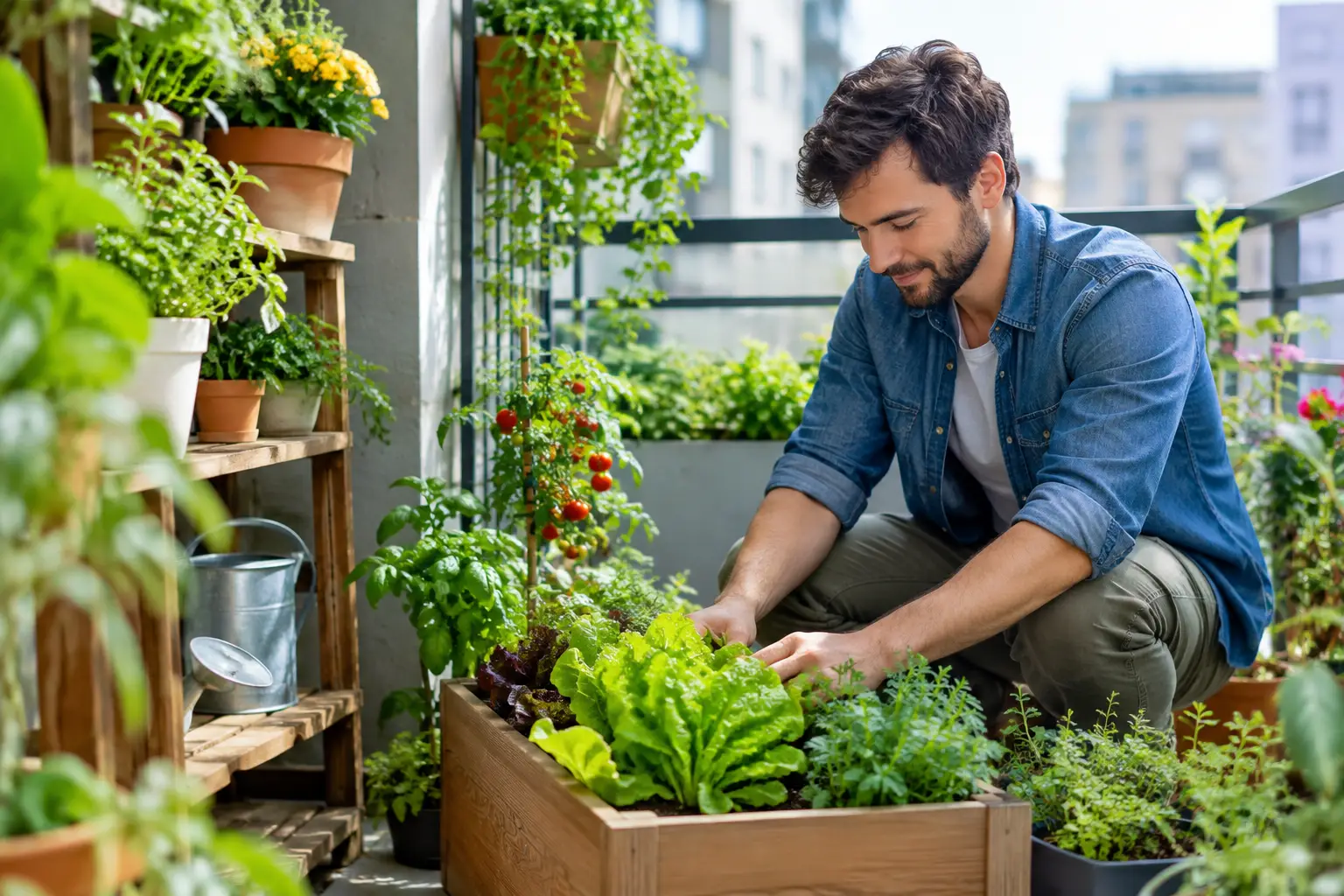
Patio gardeners do not need to give up on vertical crops. A wood or metal obelisk pushed deeply into a large container can support a compact cucumber, patio tomato, or small flowering bean. Use a container with drainage holes and enough soil volume to keep roots cool and evenly watered.
The trellis needs to go into the pot at planting time. Trying to force it beside an established plant usually damages roots and leaves the support unstable. In windy areas, a wide, heavy container matters as much as the trellis itself.
8. Fan trellis against a wall or fence
A fan-shaped trellis is useful where ground space is tight but you have a sunny fence. Set several supports that spread outward from the base, then train a cucumber, melon, or indeterminate tomato along the open fan. The shape gives each stem more light than bunching them onto one narrow stake.
Keep the trellis a few inches away from a solid wall when possible. Air trapped against siding or fencing dries slowly, and you want leaves to dry after rain. Avoid placing edible crops where runoff from fresh paint, roof treatments, or other questionable materials could reach them.
9. Twine netting for lightweight vines
Trellis netting is quick to install between two posts and works well for peas, beans, and lightweight cucumbers. It is a good answer when you need a broad climbing surface without building a permanent structure. Pull it tight before planting, because a loose net sags quickly under a mature crop.
Plastic netting lasts, but it can be difficult to remove from dried vines and may trap wildlife if left out carelessly. Natural jute netting is easier to compost with spent plants, though it usually lasts one season. Pick the option that fits your cleanup habits, not just your growing season.
10. Repurposed ladder or branch trellis
A weathered wooden ladder, pruned branches, or fallen straight sticks can become a charming support for peas and light bean vines. Lash branches together with twine to form a ladder or loose grid, then anchor the structure well. It will not suit heavy squash or full-size tomato plants, but it can be a practical use for materials already in your yard.
When using found branches, choose solid wood without signs of disease or rot. Keep the design simple. A trellis does not need to look perfect to guide a vine upward and do its job.
Set up supports before plants need them
The most common trellis mistake is waiting until vines have already flopped across the soil. Install supports at planting time, then guide young stems onto them while they are flexible. A loose tie made from cloth, soft plant tape, or jute can help at first. Never cinch ties tightly around a stem, since it will thicken as it grows.
Water at the soil level whenever possible, especially for tomatoes and cucumbers. Trellising improves airflow, but foliage that is regularly soaked late in the day can still invite disease. A layer of clean mulch beneath plants will help keep moisture steady and reduce soil splash onto lower leaves.
Start with the simplest structure that suits your crop. One well-anchored panel can change how a small vegetable bed grows, looks, and feels to care for – and the first crisp cucumber hanging within easy reach is usually all the proof you need.