A tomato leaf covered in tiny green aphids can make any gardener want a fast fix. But reaching for the strongest spray often creates a second problem: it can harm the ladybugs, lacewings, bees, and other helpful creatures that would have helped restore balance. The best organic garden pest control examples start with a calmer approach. Identify the pest, check how much real damage it is causing, then choose the lightest effective response.
A few holes in kale or a handful of aphids on a pepper plant are not always a garden emergency. Healthy plants can usually tolerate a little feeding, and a small number of pests can bring beneficial insects into your garden. The goal is not a perfectly bug-free yard. It is to grow food and flowers without letting one pest get ahead of you.
Start by matching the method to the pest
Organic pest control works best when it is specific. A caterpillar chewing cabbage needs a different solution than spider mites stippling bean leaves. Before treating anything, look under leaves in the early morning or evening, when many pests are easier to spot. Notice whether leaves are being chewed, curled, yellowed, or covered in a sticky residue.
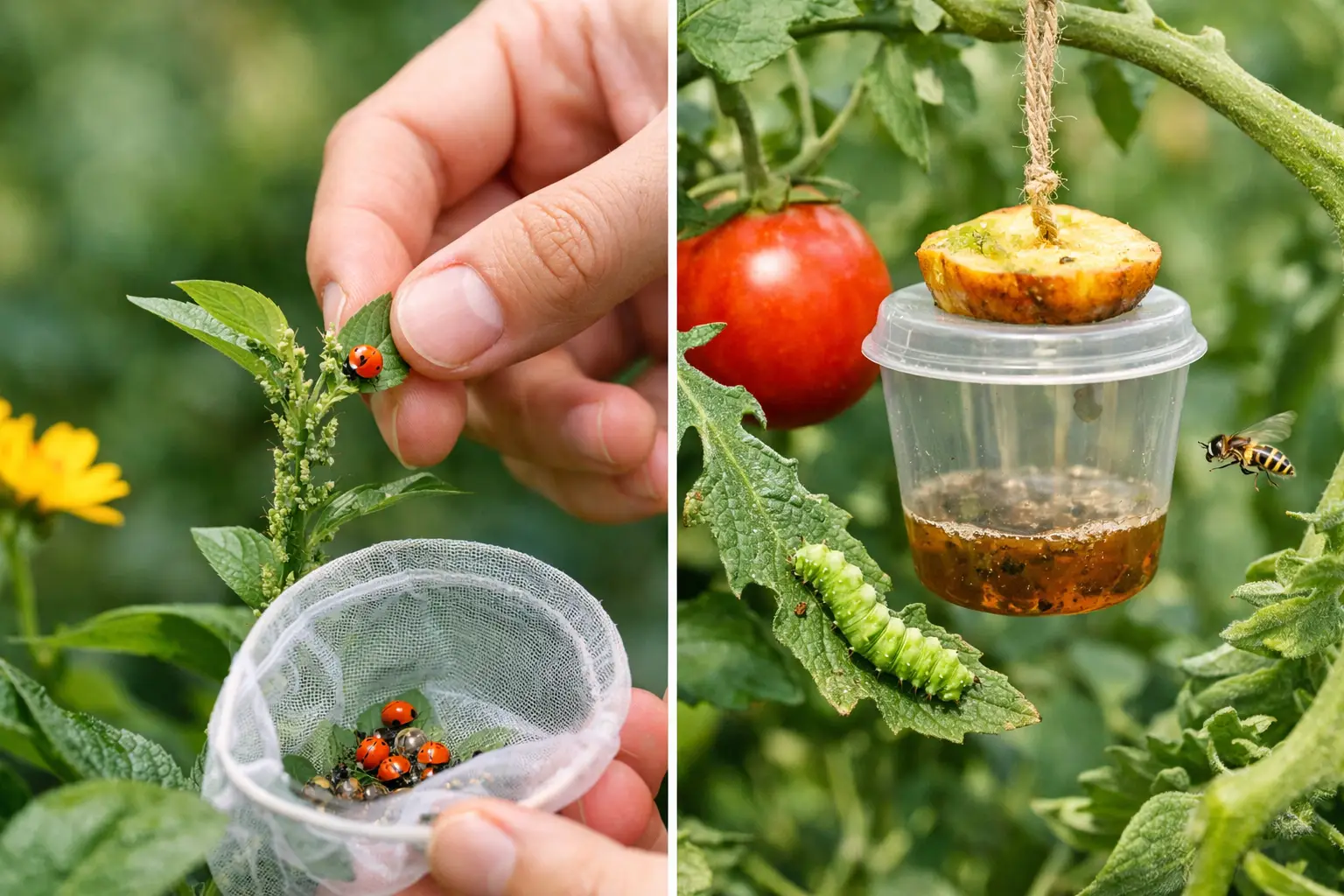
Also look for the good guys. Ladybug larvae look like tiny dark alligators with orange markings, and they eat a remarkable number of aphids. Small wasps, hoverflies, spiders, ground beetles, and lacewings are all part of a working garden ecosystem. If beneficial insects are already present, a gentle method such as rinsing pests off with water may be all you need while their numbers build.
Organic garden pest control examples for common problems
1. Blast aphids off with water
A strong stream of water is one of the simplest answers for aphids on roses, tomatoes, peppers, kale, and many other plants. Hold the stem gently and spray the undersides of leaves, where aphids gather. Repeat every few days for a week or two.
This works because aphids are soft-bodied and slow-moving. Once knocked off, many do not make it back to the plant. Water will not solve a severe infestation on its own, but it is a smart first move that does not leave residue on edible crops or hurt visiting pollinators.
2. Handpick hornworms, beetles, and caterpillars
Handpicking may not sound glamorous, but it is very effective in small vegetable gardens. Tomato hornworms, cabbage worms, Japanese beetles, squash bug adults, and large caterpillars are easy to remove once you know what you are looking for. Drop them into a bucket of soapy water, or relocate harmless caterpillars away from your food plants if that feels right for your garden.
Check tomatoes for hornworms at dusk, when their feeding damage is often easier to trace. Look for bare stems and dark droppings on leaves below the feeding area. For cabbage worms, inspect the centers and undersides of brassica leaves two or three times a week. Consistency matters more than doing one big inspection after damage has spread.
3. Use row covers before pests arrive
Lightweight insect netting or floating row cover creates a physical barrier between plants and pests. It is especially useful for cabbage moths on broccoli and kale, cucumber beetles on young cucumbers, and flea beetles on arugula, radishes, and eggplant.
The timing is the key. Put covers on right after planting or transplanting, before insects lay eggs. Secure the edges with soil, boards, or landscape pins so pests cannot crawl underneath. Remove covers from flowering crops that need bee pollination, such as squash, cucumbers, and melons, unless you are hand-pollinating. For leafy greens and brassicas, covers can stay on for much of the season.
4. Protect seedlings from slugs with habitat changes
Slugs and snails love damp hiding places. If seedlings disappear overnight, look beneath pots, boards, thick mulch, and low-growing leaves early in the morning. Handpicking after a rainy evening is surprisingly productive in a small space.
You can make the area less inviting by watering at the base of plants in the morning rather than late in the day, clearing heavy debris around vulnerable seedlings, and giving plants enough spacing for airflow. Copper tape around containers can help in certain setups, although it is less practical around large raised beds. Beer traps may catch slugs, but they also need frequent emptying and can attract more slugs from nearby areas, so they are not my first choice.
5. Apply insecticidal soap carefully for soft-bodied pests
Insecticidal soap can help with aphids, whiteflies, young scale insects, and spider mites when water alone is not enough. It works on contact, so thorough coverage matters, particularly on leaf undersides. Spray in the cool part of the day, never on heat-stressed plants or in bright direct sun.
Soap sprays can still harm insects they touch, including beneficial ones. That is why spot-treating a badly affected plant is better than spraying every plant in the garden. Test a small area first and wait a day, especially on tender herbs, ferns, or plants with fuzzy leaves that may be more sensitive.
6. Use Bt for leaf-eating caterpillars when needed
Bacillus thuringiensis var. kurstaki, often labeled Bt, is a naturally occurring soil bacterium used against certain caterpillars. It can be useful when cabbage worms are overwhelming broccoli, kale, cabbage, or cauliflower. Caterpillars must eat treated foliage for it to work, so cover the leaves they are feeding on and reapply after rain according to the label.
Bt is more targeted than broad-spectrum insecticides, but it is not for every chewing pest. It will not control beetles, aphids, slugs, or squash bugs. It can also affect butterfly and moth caterpillars if they eat treated leaves, so use it only on food crops that need help rather than spraying ornamental plants where you hope butterflies will reproduce.
7. Stop squash bugs early with eggs and traps
Squash bugs are much easier to manage before they become a large, fast-moving group of adults. Beginning in early summer, inspect the undersides of squash, pumpkin, and zucchini leaves for neat clusters of bronze-colored eggs. Scrape them into soapy water or crush them before they hatch.
Place a board or piece of cardboard near affected plants overnight. Squash bugs often hide beneath it, giving you a convenient place to collect them in the morning. Keep plants well watered and avoid overfertilizing with high-nitrogen products, which can produce soft growth that attracts more pest pressure.
Build a garden that is harder for pests to overwhelm
The most dependable organic solution is prevention. Pests are more likely to take over plants that are stressed, crowded, thirsty, or pushed into growth with too much fertilizer. Give vegetables appropriate spacing, water deeply at the soil line, and add compost to support steady growth rather than quick, weak growth.
Plant a mix of flowers and herbs near vegetable beds to provide nectar and shelter for beneficial insects. Sweet alyssum, calendula, dill, cilantro allowed to flower, zinnias, and sunflowers can all make a garden more welcoming to predators and pollinators. This is not a magic shield against pests, but over time it can make outbreaks shorter and less dramatic.
Crop rotation helps, too, especially with recurring soil-dwelling pests and diseases. If cabbage worms, flea beetles, or squash bugs were a major issue in one bed, avoid planting the same crop family in that exact place next year when possible. In containers, start each season with fresh potting mix or refresh it with compost, and remove dead plants promptly at the end of the season.
A few natural methods to use with care
Not every product labeled natural is gentle or appropriate for every situation. Neem-based products can affect beneficial insects if sprayed directly on them, and they should never be used on flowering plants when bees are active. Diatomaceous earth may injure soft-bodied insects, but it also harms beneficial insects that crawl through it and stops working when wet.
Even homemade sprays deserve caution. A stronger mixture is not necessarily better, and dish soap, vinegar, essential oils, and hot pepper concoctions can burn leaves or harm helpful insects. When a treatment is necessary, choose one meant for garden use, follow its label exactly, and apply only where the pest is active.
A good organic garden has room for a few nibbled leaves and the occasional bug you cannot name. Watch your plants regularly, act early when damage is building, and give the gentlest method time to work. That patient rhythm is often what turns pest control from a stressful battle into one more manageable part of growing a healthy garden.