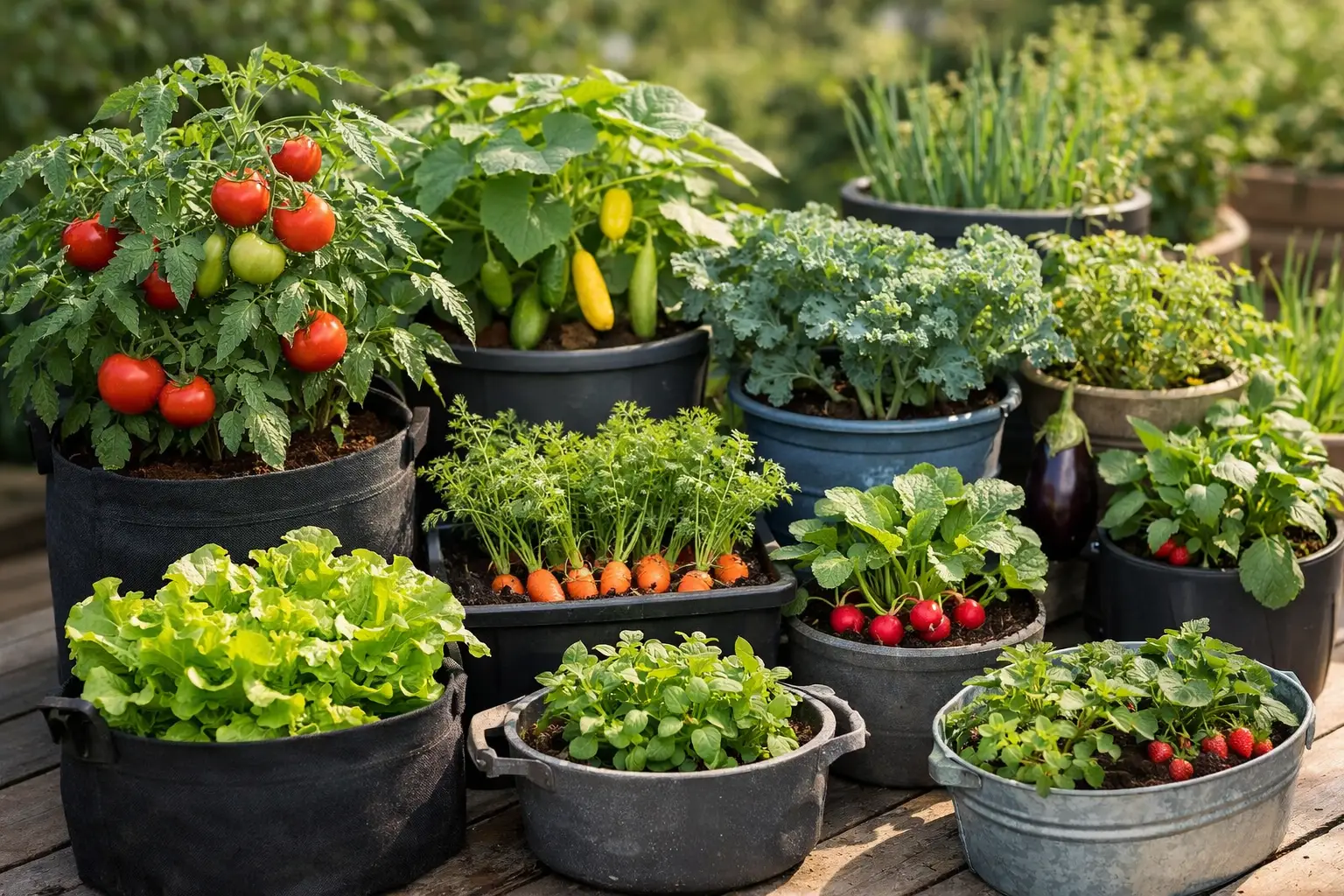
A sunny porch can produce more than a few herbs. With the right plants and a little attention to pot size and watering, the best vegetables for container gardening can keep a small household in salads, snacks, and fresh side dishes all season. The trick is not trying to squeeze every favorite crop into the same small pot. Choose vegetables that suit your light, give their roots enough room, and stay on top of moisture.
I learned this after trying to grow a full-sized tomato, two peppers, and a cucumber in a few undersized containers. They survived, but “survived” is not the goal. Once each plant had a properly sized pot and reliable water, the harvest changed completely.
What makes a vegetable good for containers?
Some vegetables are naturally better suited to pots than others. Compact plants, quick crops, and vegetables with shallow or contained root systems tend to be the easiest wins. That does not mean large crops are off limits. Tomatoes, potatoes, and cucumbers can all grow beautifully in containers, but they need bigger pots, regular feeding, and more consistent watering.
Before choosing plants, look honestly at your growing space. Most fruiting vegetables need at least six to eight hours of direct sun. Leafy greens and some root vegetables can manage with four to six hours, especially in warm summer climates where afternoon shade is a relief.
Use containers with drainage holes, and fill them with fresh, quality potting mix rather than garden soil. Garden soil becomes heavy and compacted in a pot, making it harder for roots to get air and water. A lightweight organic potting mix holds moisture while still draining well.
The best vegetables for container gardening
1. Leaf lettuce
Leaf lettuce is one of the most rewarding crops for beginners because it grows quickly and does not need a deep container. A pot or window box at least 6 to 8 inches deep is enough for a steady supply of baby leaves. Sow seeds every couple of weeks in spring or fall, then harvest the outer leaves while the center keeps growing.
Lettuce appreciates morning sun and a little afternoon shade once temperatures climb. In hot weather, keeping the pot cooler can delay bolting, which is when the plant sends up a flower stalk and the leaves turn bitter.
2. Spinach
Spinach is another cool-season favorite that works well in shallow, wide containers. Give it a pot at least 6 inches deep and keep the soil evenly moist. It grows best in early spring and fall in much of the US, when daytime temperatures are mild.
If your spinach seedlings disappear overnight, look for slugs hiding under pots or nearby boards. Hand-picking after dusk and keeping the area around containers tidy are simple, chemical-free first steps.
3. Radishes
Radishes are made for gardeners who want fast results. Many varieties are ready in about a month, and their small roots do well in a container 6 inches deep. They are especially useful for filling gaps while you wait for slower crops to mature.
Sow seeds directly, spacing them according to the packet once they sprout. Crowded radishes usually produce lots of leaves and disappointing little roots, so thinning is worth the effort.
4. Bush beans
Bush beans are productive, tidy plants for medium-sized containers. Choose a pot at least 12 inches deep and wide, with room for several plants. Unlike pole beans, bush varieties do not need a tall trellis, although a small support can keep heavy stems upright later in the season.
Beans like warmth, so wait until nights are reliably mild before planting. They do not need heavy fertilizer. Too much nitrogen can give you lush leaves and fewer beans.
5. Pole beans
If you are short on floor space but have a railing, wall, or sturdy trellis, pole beans are a smart choice. They grow upward and can produce for a long stretch of summer. Use a 5-gallon container for one or two plants and give them a trellis at planting time so you do not disturb roots later.
Pick beans often. Regular harvesting tells the plant to keep making more flowers and pods.
6. Cherry tomatoes
Cherry tomatoes are often more forgiving in containers than large slicing varieties. Look for determinate types if you want a compact plant with a concentrated harvest, or choose dwarf varieties bred for patio growing. A 5-gallon container is the minimum, and larger is even better in hot, dry areas.
Tomatoes need full sun, steady water, and support from a cage or stake. Water deeply when the top inch of potting mix feels dry, rather than giving the plant a quick daily splash. Uneven watering is a common cause of cracked fruit and blossom-end rot.
7. Peppers
Both sweet and hot peppers grow well in containers, and one healthy plant can be surprisingly generous. A 3- to 5-gallon pot works for most varieties. They prefer warm soil and full sun, so do not rush them outdoors during chilly spring weather.
Peppers tend to grow more slowly than tomatoes at first. Be patient. Once summer heat arrives, they usually begin to take off. A layer of untreated straw, shredded leaves, or fine bark on the soil surface can help conserve moisture.
8. Cucumbers
Cucumbers can thrive in containers when you choose a compact bush variety or train a vining type vertically. Use at least a 5-gallon pot per plant, ideally larger, and add a trellis from the start. Growing upward improves air circulation and makes the fruit easier to spot before it gets oversized.
Cucumbers are thirsty plants. On hot, windy days, a full-grown plant may need water every day. Check the soil with your finger instead of watering by habit, since container needs change quickly with the weather.
9. Zucchini
Zucchini has a reputation for taking over the garden, but compact patio varieties make it possible to grow in a container. Give one plant a 10-gallon pot or larger, plenty of sun, and rich potting mix. This is not a crop for a small decorative planter.
Watch flowers in the morning. If pollination seems poor and tiny fruits shrivel, gently transfer pollen from a male flower to a female flower with a small paintbrush. It is a simple fix for a common container-growing problem, especially on enclosed patios with few pollinators.
10. Carrots
Carrots need depth more than width. Choose a container at least 10 to 12 inches deep for short varieties, and deeper for standard carrots. Loose, stone-free potting mix helps roots grow straight instead of forked.
Direct sow the seeds and keep the surface consistently damp until seedlings emerge. Carrot seeds can be slow to germinate, so do not give up too early. Once they are established, thin them carefully to give each root space to size up.
11. Green onions
Green onions are a low-fuss choice for small containers and bright windowsills. They need only 6 inches of soil depth and can be planted closely together. Start from seed, sets, or the rooted ends of store-bought scallions.
Snip a few leaves as needed, or pull whole plants when the stems are pencil-thick. Their narrow shape makes them handy for tucking into the edges of larger containers, too.
12. Swiss chard
Swiss chard earns its space with colorful stems, large leaves, and a long harvest window. A container at least 8 to 10 inches deep is usually sufficient for a few plants. It handles warm weather better than spinach and keeps producing when you harvest outer leaves regularly.
Chard is also a good choice for gardeners who want edible plants that still look attractive near an entryway or patio seating area.
Give each container a simple care routine
Container vegetables rely on you more than in-ground plants do. Their roots cannot search beyond the pot for moisture or nutrients, so a quick daily check makes a real difference. In summer, check containers in the morning and again in late afternoon during heat waves.
Feed plants lightly but regularly. An organic vegetable fertilizer, compost-based amendment, or diluted liquid feed can replenish nutrients that wash out through drainage holes. Fruiting plants such as tomatoes, peppers, cucumbers, and zucchini generally need more feeding than lettuce or radishes. Follow the product directions, and resist the urge to add extra. More fertilizer is not always better.
Pay attention to air circulation as plants fill out. Prune only what is necessary, remove yellow or diseased leaves promptly, and avoid wetting foliage late in the day. For pest problems, start with the least disruptive solution: hand-pick larger insects, rinse aphids off with a firm stream of water, and encourage beneficial insects by avoiding broad-spectrum sprays.
A better way to start small
If you are building your first edible container garden, begin with three pots rather than twelve. Try one cherry tomato, one pepper, and a wide bowl of lettuce or chard. You will learn how quickly your space dries out, where the strongest sun falls, and how much harvest your household actually uses.
A container garden does not have to look perfect to be productive. Start with a pot you can carry, a vegetable you enjoy eating, and a routine you can keep. Fresh leaves, a handful of beans, or one sun-warmed tomato picked steps from your kitchen is a very good reason to keep growing.