A compost bin vs worm bin decision usually comes down to one very ordinary question: where will your banana peels go this week? Both systems turn kitchen scraps into garden goodness, but they do it in very different ways. The best choice is not necessarily the one that makes the most compost. It is the one you will happily maintain between work, watering tomatoes, and everything else life brings.
For many home gardeners, a compost bin makes sense when there is a yard and plenty of leaves, grass clippings, or plant trimmings to manage. A worm bin shines when space is tight, food scraps are the main material, or you want a small indoor-friendly system that works year-round. Here is how to choose without making composting feel like another chore.
Compost Bin vs Worm Bin: The Big Difference
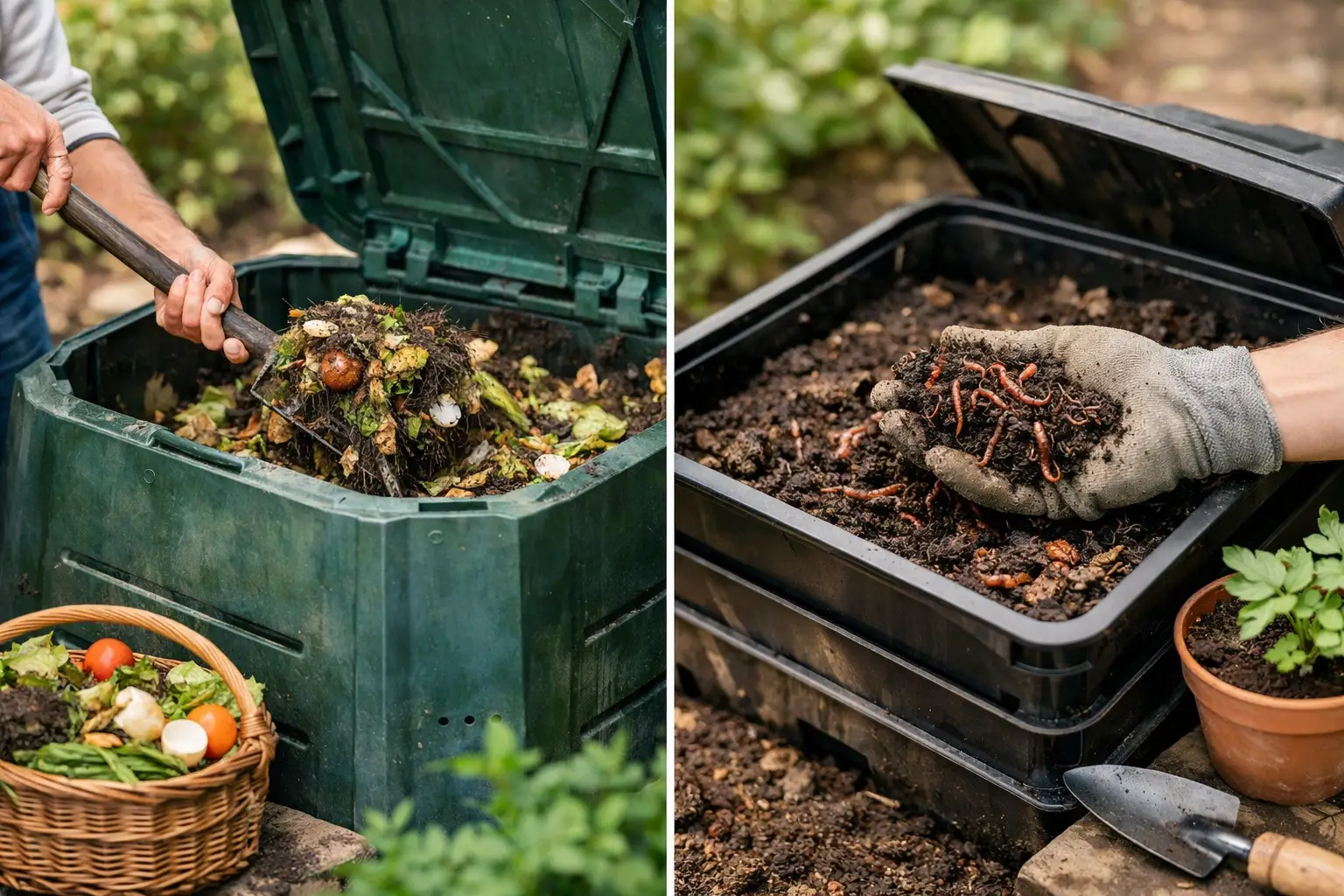
A compost bin relies on a whole community of decomposers: bacteria, fungi, insects, and other tiny organisms that break down organic matter. In an active pile, this process can generate heat. That heat helps materials decompose faster and can reduce weed seeds and some plant diseases when the pile is managed well.
A worm bin, often called vermicomposting, relies mostly on composting worms. Red wigglers are the usual choice because they live near the surface in rich, decaying material. They eat soft food scraps and bedding, then leave behind castings – a dark, crumbly material that is rich in beneficial microbes and useful nutrients.
Neither method is automatically better. A compost bin handles volume. A worm bin handles food scraps with remarkable efficiency. Many gardeners eventually use both, especially once they see how quickly fall leaves can fill a compost pile and how valuable a small bucket of worm castings can be around young plants.
Choose a Compost Bin If You Have Yard Waste
A compost bin is usually the easier fit for a backyard gardener with raised beds, flower borders, trees, or a lawn. It can take the bulky materials that would overwhelm a worm bin: dry leaves, straw, shredded paper, weeds that have not gone to seed, spent vegetable plants, and small amounts of grass clippings.
The basic recipe is simple. Add a generous amount of dry, carbon-rich “browns,” such as leaves and shredded cardboard, along with nitrogen-rich “greens,” such as vegetable scraps, fresh plant trimmings, and coffee grounds. Keep the pile about as damp as a wrung-out sponge, then turn it occasionally if you want faster results.
The biggest advantage is capacity. At the end of a busy growing season, you can add armfuls of tomato vines, bean plants, and fallen leaves. A worm bin cannot process that kind of volume. Compost bins also produce enough finished compost to spread through a vegetable bed, mix into container soil, or top-dress shrubs.
There are trade-offs. A pile needs outdoor space, and it may take several months to become finished compost. Cold-weather composting slows down in much of the US, particularly when the pile is small. You also need enough browns on hand to balance wet kitchen scraps. Without them, a compost bin can get slimy, compacted, or smelly.
A compost bin is a good match if you want to recycle garden waste, can give it a small corner of the yard, and do not mind waiting for a larger harvest of compost.
What a Compost Bin Can Handle Well
A backyard bin is forgiving with fruit and vegetable scraps, coffee grounds, crushed eggshells, leaves, untreated wood chips, and non-diseased garden clippings. It can also handle small amounts of bread, rice, or pasta in a well-managed pile, though these are better buried in the center to avoid attracting pests.
Avoid meat, dairy, grease, pet waste, and weeds carrying mature seeds. These materials can create odor, attract animals, or cause problems you do not want to spread through the garden. If raccoons or rodents are common in your area, use a bin with a secure lid and always cover food scraps with a layer of leaves or other browns.
Choose a Worm Bin If Space Is Limited
A worm bin is one of the most satisfying ways to compost if you garden on a patio, grow in containers, or simply do not produce much yard waste. A covered plastic tote or purpose-built bin can live in a basement, garage, laundry room, or shaded porch, as long as temperatures stay moderate. Worms are happiest roughly between 55 and 80 degrees F.
Instead of building a hot pile, you create a comfortable habitat. Start with moist shredded cardboard, plain paper, or coco coir as bedding. Add a small population of red wigglers, then feed them modest amounts of chopped fruit and vegetable scraps. Bury the scraps under the bedding so fruit flies do not discover the buffet first.
The finished castings are a wonderful garden amendment, but they are concentrated. Think of them as a booster, not as the main ingredient for filling a raised bed. Mix a handful into the planting hole for a tomato or pepper, blend some into potting mix, or sprinkle a thin layer around established plants and water it in.
A worm bin asks for more attention than an outdoor compost pile, especially at the beginning. Overfeeding is the classic mistake. When more scraps go in than the worms and microbes can process, the bin can turn sour and wet. Start slowly, check whether the previous food has mostly disappeared, and increase feeding only as the colony grows.
What Worms Like – and What They Do Not
Worms enjoy melon rinds, banana peels, leafy greens, squash scraps, tea leaves, coffee grounds, and crushed eggshells. Chopping scraps into smaller pieces helps them break down faster. Freezing and thawing scraps before adding them also softens the material, which can be handy if you collect scraps during the week.
Keep meat, dairy, oily foods, large amounts of citrus, spicy leftovers, and salty foods out of the bin. These can create unpleasant conditions or make the bedding too acidic. A little citrus is usually fine, but a worm bin full of orange peels is not a good experiment.
If the bin smells earthy, the bedding is fluffy, and the worms move away from light when you peek inside, things are generally on track. A foul smell means it needs less food, more dry bedding, or both.
Compare the Work, Cost, and Payoff
| Factor | Compost Bin | Worm Bin | | — | — | — | | Best for | Backyards and garden debris | Small spaces and kitchen scraps | | Space needed | A small outdoor corner | About the space of a storage tote | | Main output | Larger amounts of compost | Smaller amounts of nutrient-rich castings | | Daily attention | Low | Low to moderate | | Cold-weather performance | Slows outdoors | Can continue indoors | | Startup needs | Bin or simple pile, plus browns | Bin, bedding, and composting worms |
Cost can be modest either way. A basic compost pile can be made from a simple enclosed bin, and a worm bin can begin with a ventilated tote and shredded cardboard. The worms are the special purchase, although local gardening friends sometimes share extras once their bins are established.
The real cost is not money. It is matching the system to your habits. If you are unlikely to turn a pile, choose a low-maintenance bin and accept that compost will take longer. If you travel often or forget household routines, a worm bin may be less forgiving unless someone can check moisture and feeding. On the other hand, gardeners who enjoy a small weekly ritual often find worm bins surprisingly calming.
Can You Use Both Systems?
Absolutely. This is often the most practical setup for gardeners with even a modest yard. Send bulky leaves and spent plants to the compost bin. Keep a worm bin for everyday kitchen scraps, especially during winter when an outdoor pile is slow and less convenient.
You can also move excess worm bedding or unfinished material into the compost bin when it is time to refresh the worm habitat. The outdoor pile will finish the job, while you set up the worms with fresh bedding. Nothing needs to be wasted.
If you are brand new to composting, begin with the system that solves your immediate problem. Have bags of leaves and a garden full of trimmings? Start a compost bin. Have a small patio garden and a countertop scrap container that fills every few days? Start a worm bin. Success comes from keeping the first setup simple enough that you can learn its rhythm.
A Gentle Start for Better Soil
There is no prize for choosing the most elaborate composting system. A few vegetable scraps buried in a well-managed bin, or a small worm tote tended once a week, can gradually change how you feed your garden. Start with what fits your space, notice what your plants and routine ask for, and let your composting practice grow right alongside the garden.