A supermarket basil plant on the kitchen counter can make indoor growing look effortless. Then, a few weeks later, it is lanky, pale, or suddenly dropping leaves. That is not because basil is impossible indoors. It is because basil is a sun-loving garden plant, and most homes ask it to live with less light, less airflow, and more uneven watering than it would get outside.
So, can basil grow indoors? Absolutely. A healthy indoor plant can give you fragrant leaves for pasta, salads, sauces, and summer drinks for months. The key is to treat light as the main ingredient, then support it with a roomy pot, well-draining soil, careful watering, and regular harvesting.
Can basil grow indoors without a sunny window?
It can, but a sunny window or a grow light is not optional for long-term success. Basil needs more light than many common houseplants. A bright room is not necessarily bright enough, especially during a northern winter or when the plant sits several feet back from the glass.
A south-facing window is usually the best natural-light spot in a US home. West-facing windows can work well, too, particularly in summer. Aim for at least six hours of direct sun, though eight or more is even better. If the leaves are small, the stems stretch toward the window, or the spaces between leaves get long, your basil is asking for more light.
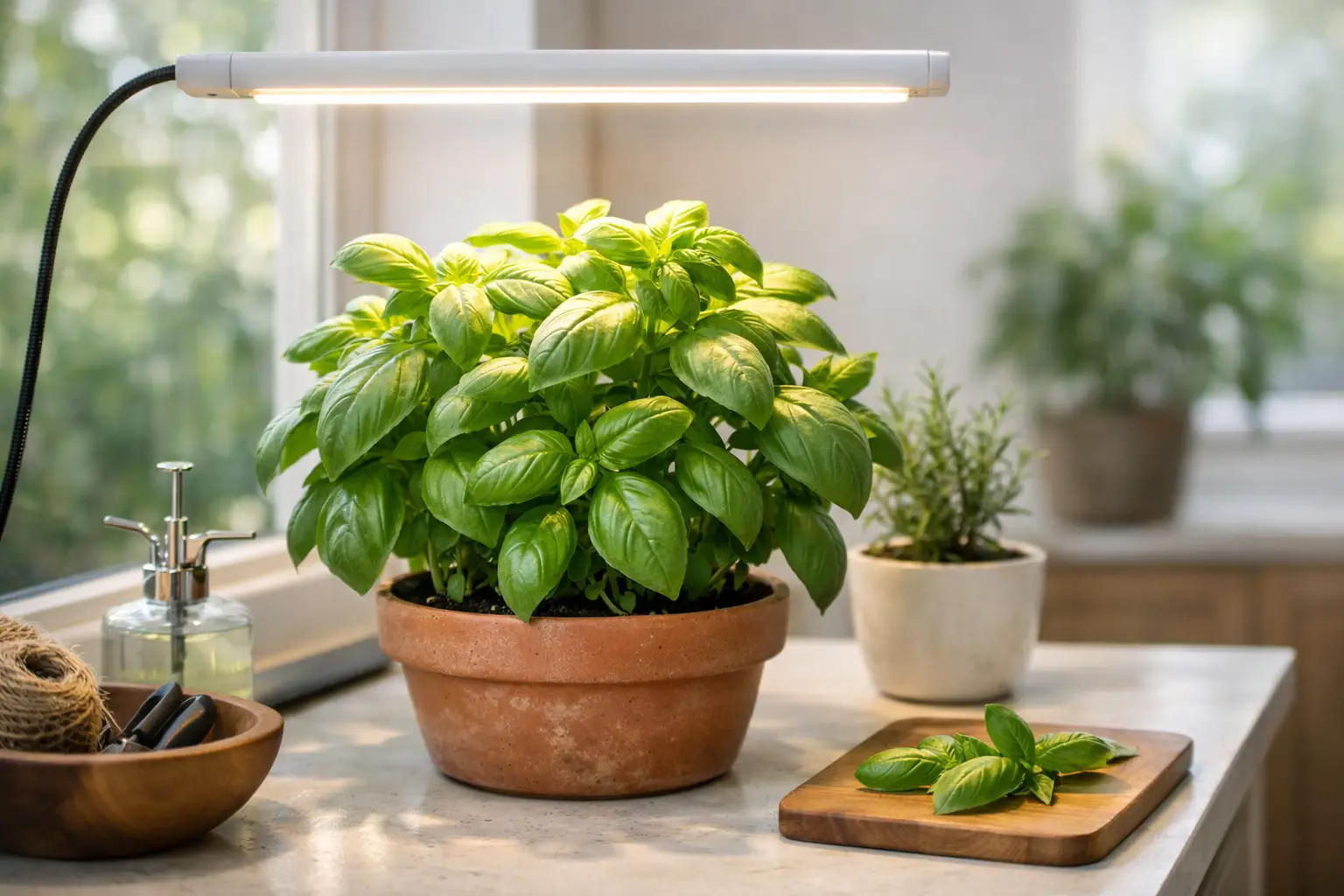
A simple full-spectrum grow light solves this problem nicely. Keep the light fairly close to the plant, following the fixture’s instructions, and run it for about 12 to 14 hours each day. Set it on a timer so the routine does not depend on remembering it every morning. Basil also needs darkness, so there is no need to keep the light on around the clock.
If your only available window gets gentle morning sun, try it. You may still grow enough basil for occasional cooking, especially from late spring through early fall. Just expect slower growth than you would see under strong light. Indoors, light levels are usually the deciding factor between a basil plant that survives and one that truly produces.
Start with the right basil and container
You can grow basil from seed, buy a young nursery plant, or divide a crowded grocery-store pot. For the easiest indoor start, look for compact varieties such as Greek basil, spicy globe basil, or dwarf Genovese basil. They stay bushier in a pot and are less likely to topple over than a large plant with one tall central stem.
If you bring home a grocery-store basil plant, know that it is often several seedlings packed tightly together. It may look full and generous, but the roots are competing for water and nutrients. Gently separate the healthiest clumps and give each one its own pot. This small bit of effort often turns a short-lived countertop plant into a much more durable herb.
Choose a pot with drainage holes. A 6- to 8-inch pot is a good starting size for one small plant or clump, while larger basil does better in a container closer to 10 inches wide. Skip the decorative pot with no drainage unless you use it as an outer cover pot. Basil roots can rot quickly when excess water has nowhere to go.
Use fresh, organic potting mix rather than soil from the yard. Garden soil becomes dense in containers and may bring in pests or weed seeds. A light potting mix holds enough moisture for roots while allowing air to move through the container. If it seems especially heavy, mix in a little perlite for extra drainage.
Water basil deeply, then let the soil guide you
Basil likes evenly moist soil, not constantly soggy soil. That distinction matters. A plant that dries out completely may wilt dramatically, while one kept too wet can develop yellow leaves, weak growth, or root problems.
Check the soil with your finger every couple of days. When the top inch feels dry, water slowly until a little moisture drains from the bottom of the pot. Empty the saucer after a few minutes so the roots are not sitting in water. The exact schedule will change with the season, pot size, indoor temperature, and amount of light, which is why checking the soil works better than watering every Saturday out of habit.
Morning watering is ideal when possible. It gives the plant time to use moisture during the day and keeps conditions less damp overnight. If your home has dry heated air in winter, basil may need more frequent attention, even though it is growing more slowly.
Avoid misting as a substitute for watering. It does little for the roots and can leave foliage damp, which is not especially helpful in a still indoor corner. Instead, keep the plant away from heating vents and cold window glass. Basil is happiest around 65 to 80 degrees Fahrenheit and dislikes chills below about 55 degrees.
Feed lightly for flavorful leaves
Container basil eventually uses up the nutrients in its potting mix. Once the plant is established and actively growing, feed it lightly every three to four weeks with a diluted organic liquid fertilizer. Fish emulsion, seaweed-based fertilizer, or another balanced organic option can work well.
More fertilizer is not better. Overfeeding can cause a buildup of salts in the soil and may encourage soft, fast growth that attracts pests. A modest feeding routine, paired with good light, gives you sturdier stems and better leaves. If you have recently repotted into fresh mix, wait a few weeks before fertilizing.
Harvesting is how indoor basil becomes bushy
The biggest indoor basil mistake is waiting too long to harvest. Many gardeners pluck a leaf here and there, then hesitate to cut the plant back. But basil responds beautifully to regular pinching. Each careful cut encourages branching, and more branches mean more leaves for the kitchen.
When a young plant has several sets of leaves, pinch or snip the stem just above a pair of leaves. Two new stems should grow from that point. Continue harvesting the tips as the plant grows, taking no more than about one-third of the plant at a time. Use clean scissors if the stems are thick, though fingers work fine for tender new growth.
Remove flower buds as soon as you spot them. Once basil starts flowering, it puts more energy into seed production and the leaves can become less tender or more bitter. Flowering is natural, not a failure, and basil flowers are edible. Still, if leaf production is your goal, pinch the buds early.
Common indoor basil problems and natural fixes
Yellow lower leaves usually point to overwatering, insufficient light, or roots that have become crowded. Start by checking the soil moisture and making sure the pot drains freely. If the plant is rootbound, move it up one pot size rather than jumping to a much larger container.
Long, floppy stems nearly always mean low light. Move the pot closer to a sunnier window or add a grow light. Turning the pot every few days helps it grow more evenly, but it will not replace the need for stronger light.
Tiny aphids or whiteflies can occasionally show up indoors, especially on plants that spent time outside. Isolate the basil, rinse the leaves gently with water, and check undersides of leaves every few days. For a heavier infestation, wipe pests away with a soft cloth dampened in water and a tiny drop of mild soap, then rinse the plant well. Since you plan to eat the leaves, keep any treatment simple and wash harvested basil before using it.
Brown, crisp edges often come from inconsistent watering, very dry air, or a plant pressed against hot glass. Adjust one condition at a time so you can see what helps. Basil is forgiving when its roots and light needs are met, but it does not enjoy sudden swings.
Give indoor basil a seasonal rhythm
Indoor basil may grow vigorously from late spring through summer, then slow down when daylight becomes shorter. That is normal. During darker months, reduce fertilizer, water a little less often, and rely on a grow light if you want a steady harvest.
You can also move basil outdoors once nights are reliably warm, gradually introducing it to direct sun over several days. Fresh air and summer sunshine can make it explode with growth. Before bringing it back inside, inspect carefully for pests and prune it lightly so it fits its indoor space again.
The most satisfying indoor basil plants are not the ones left untouched on a windowsill. They are the ones you use. Give yours strong light, clip a few fragrant tips for dinner, and let that regular harvest remind it to keep growing.