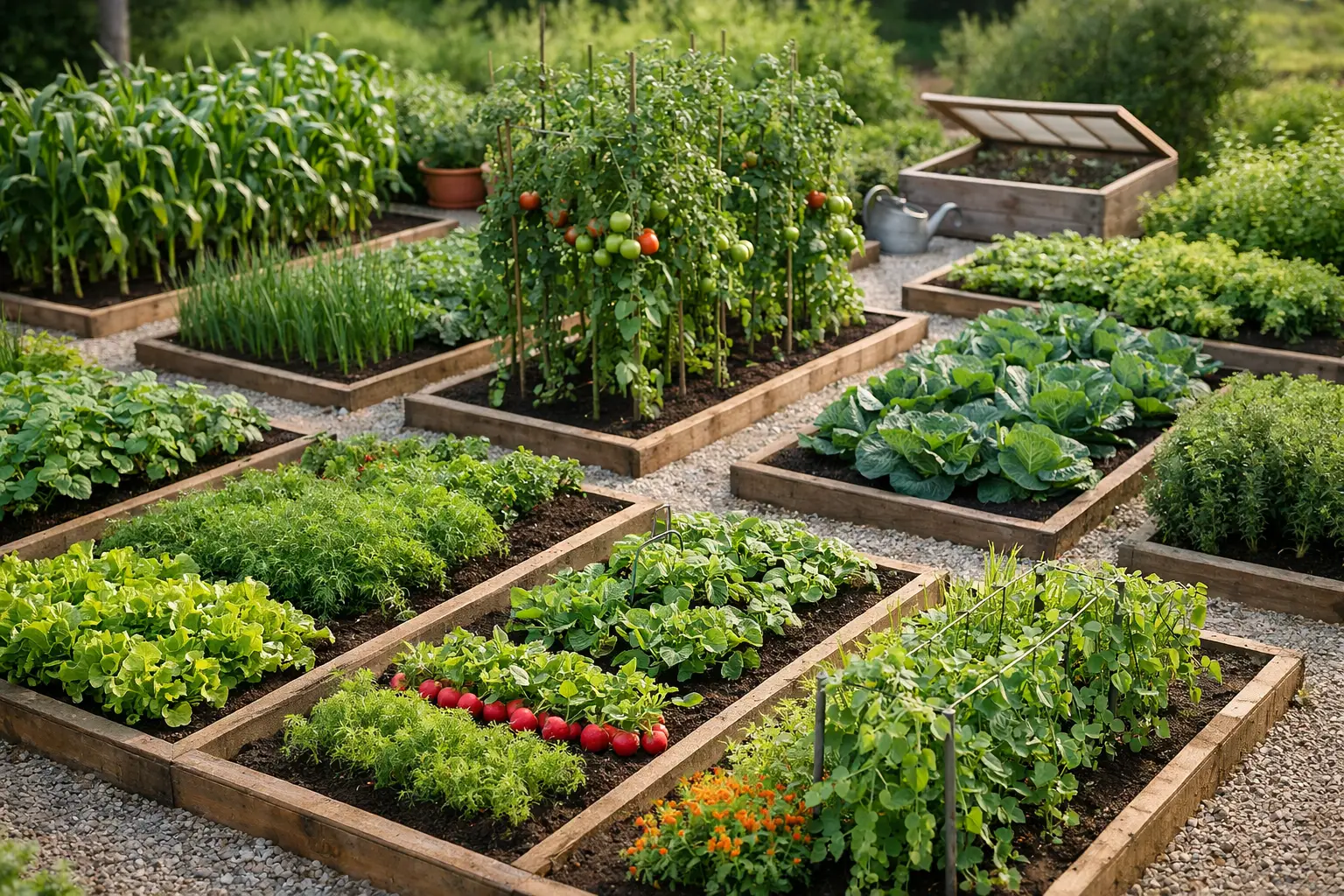
A new raised bed can look ready for tomatoes the moment the boards are in place. Then comes the less glamorous question: what do you actually fill it with? This guide to organic raised bed soil will help you build a mix that holds moisture, drains well, and feeds vegetables without relying on synthetic fertilizers.
The good news is that raised-bed soil does not need to be complicated. The best mix is usually made from a few dependable materials, chosen for what they do rather than for the biggest promise on the bag. Once you understand those jobs, you can adjust your soil for carrots, peppers, leafy greens, or whatever you love to grow.
What Organic Raised Bed Soil Needs to Do
A raised bed is not the same as a hole in the ground. Its soil warms earlier in spring, dries more quickly in summer, and has a limited amount of space to store water and nutrients. That means the soil needs to balance three things: structure, moisture retention, and fertility.
Structure gives plant roots room to move and allows excess water to drain away. Moisture retention keeps the bed from becoming bone-dry between waterings. Fertility supplies the slow, steady nutrition vegetables need to make leaves, flowers, and fruit.
Garden soil alone rarely handles all three jobs well in a raised bed. Heavy native soil can become dense and sticky, especially after a hard rain. On the other hand, filling a bed with compost alone sounds wonderfully rich but often creates problems later. Compost settles as it breaks down, can hold too much water, and may be too rich in certain nutrients for long-term use.
Think of organic raised-bed soil as a living pantry, not a one-time filling project. You are creating a place where roots, worms, microbes, air, water, and organic matter can work together.
A Simple Mix for Most Vegetable Beds
For a standard raised vegetable bed, start with roughly equal parts quality topsoil and finished compost, then add a smaller portion of an airy material. This is a practical starting point, not a rigid recipe. Materials vary widely by region and supplier, so let the texture guide you.
The topsoil provides mineral particles and lasting body. Choose screened topsoil that is free of construction debris and does not smell sour or look like hard clay clods. If a bag simply says “organic garden soil,” read the ingredients. Some products are mostly wood fines, which can be useful in moderation but should not be the entire foundation of a bed.
Finished compost provides nutrients and supports soil life. It should look dark and crumbly, with an earthy smell. You should not recognize fresh food scraps, manure, or large chunks of unfinished material. A blend of composts is often better than relying on one source. For example, plant-based compost, leaf compost, and well-aged manure compost each bring something a little different.
For the airy portion, coarse coconut coir, aged pine bark fines, rice hulls, or a small amount of perlite can help prevent compaction. Coconut coir holds water especially well, which is useful in hot, dry conditions. Pine bark fines improve air space and slowly break down over time. Perlite is light and effective, but it can float to the surface and is less appealing if you prefer to minimize mined inputs.
Avoid adding a thick bottom layer of rocks or gravel. It does not improve drainage in a raised bed and takes up valuable rooting space. If your bed sits on lawn or soil, a layer of plain cardboard can smother grass and weeds beneath it. Remove tape and labels first, wet the cardboard thoroughly, and fill the bed directly on top.
If You Are Filling a Deep Bed
Tall beds can take a surprising amount of soil, and premium compost is expensive. If your bed is deeper than about 18 inches, it is reasonable to use clean, untreated logs, branches, leaves, and other woody yard materials in the bottom section. Cover them with at least 10 to 12 inches of actual growing mix.
This approach saves soil and puts yard waste to use, but it has a trade-off. As the woody materials decompose, the soil level will settle and may temporarily use some nitrogen. Keep the top layer generously composted, and expect to top off the bed during the first couple of years. For shallow beds, skip the filler and use soil mix throughout.
How to Choose Organic Ingredients Wisely
“Organic” on a bag does not automatically mean every ingredient is ideal for a food garden. Look for clear ingredient lists and avoid blends with mystery fillers, synthetic slow-release fertilizer pellets, or moisture crystals if those do not fit your gardening goals.
Manure-based compost can be an excellent soil builder when it is fully composted. Fresh manure is different. It can burn plants, carry pathogens, and create food-safety concerns around edible crops. If you are not certain it has been properly composted, do not add it directly to a vegetable bed.
Peat moss has long been a common soil ingredient because it is light and moisture-retentive. It works, but peat harvesting raises environmental concerns. Coconut coir or leaf mold are good alternatives for gardeners who want a more renewable choice. Neither is magic, though. Coir is often transported long distances and may contain salts, so it is worth rinsing and buffering if the product instructions recommend it.
Bagged products are convenient for a small bed or a few containers. For several larger beds, buying soil and compost in bulk can be more economical. Before ordering, ask whether the compost is finished, what the topsoil contains, and whether the materials have been screened. A few questions up front can prevent a season of fighting weeds, poor drainage, or clumpy soil.
Building the Bed Without Overthinking It
Start by loosening the soil under an open-bottom bed with a garden fork if it is compacted. You do not need to turn it upside down. Simply opening a few holes helps vegetable roots move downward and improves drainage.
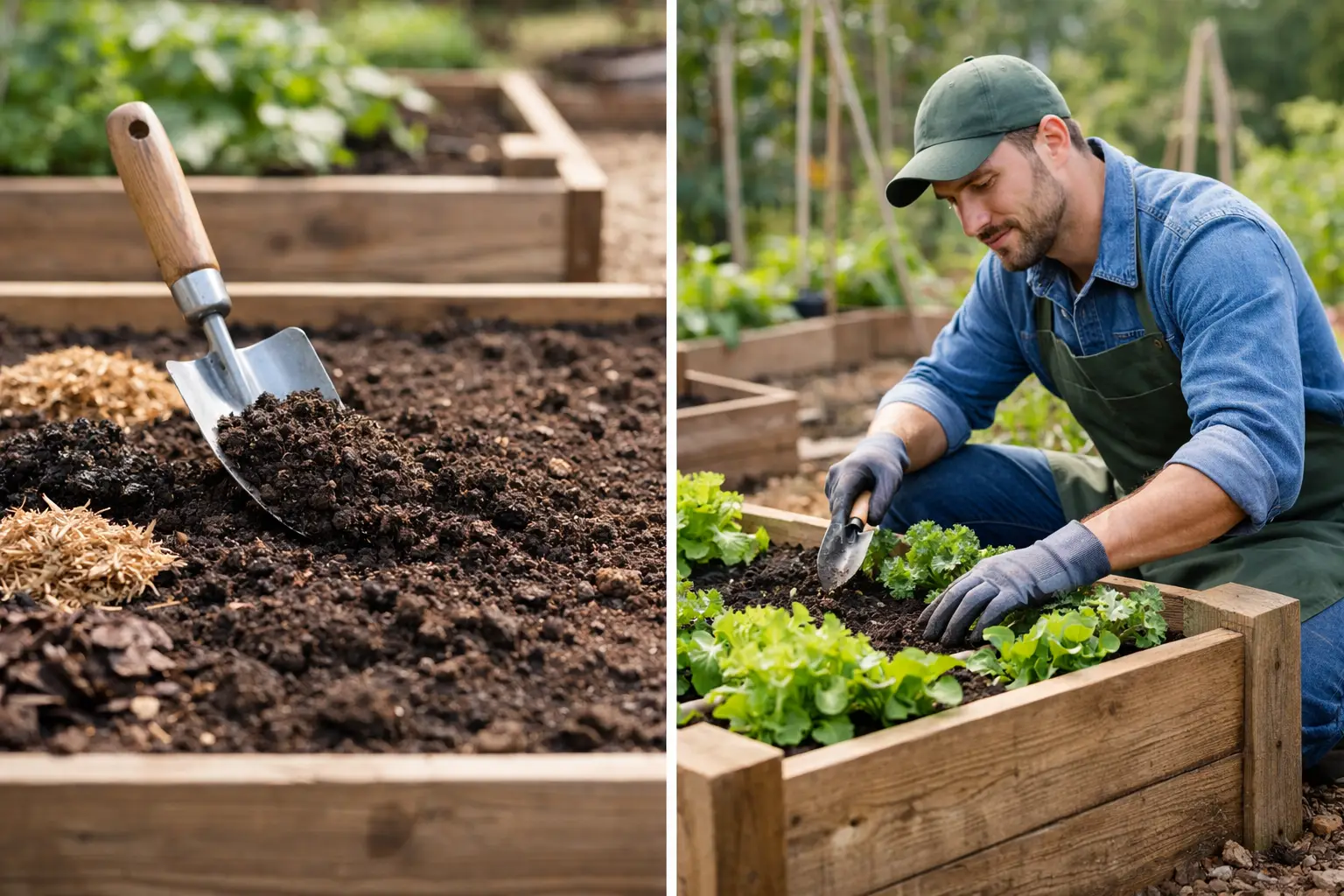
Add your materials in layers, then mix the top 10 to 12 inches with a shovel or garden fork. This is one place where mixing matters. A bed filled in distinct layers can develop awkward water movement and leave plant roots stuck in one type of material. Aim for a mix that feels fluffy but substantial when you squeeze it.
Water the bed thoroughly after filling it. Fresh soil mixes often shrink after their first deep watering, and that is normal. Add more mix until the level sits a couple of inches below the bed’s top edge. That small lip makes watering much easier and keeps mulch from spilling over the sides.
Do not worry if your first mix is not perfect. Soil improves through observation. If water pools for hours, add more coarse organic material and avoid walking on the bed. If the soil dries out almost immediately, add compost, leaf mold, or coir and cover the surface with mulch.
Feeding the Soil Through the Season
A well-made bed does not need constant fertilizer, but hungry vegetables will eventually use what is available. Tomatoes, squash, corn, and peppers tend to need more feeding than radishes, beans, or herbs.
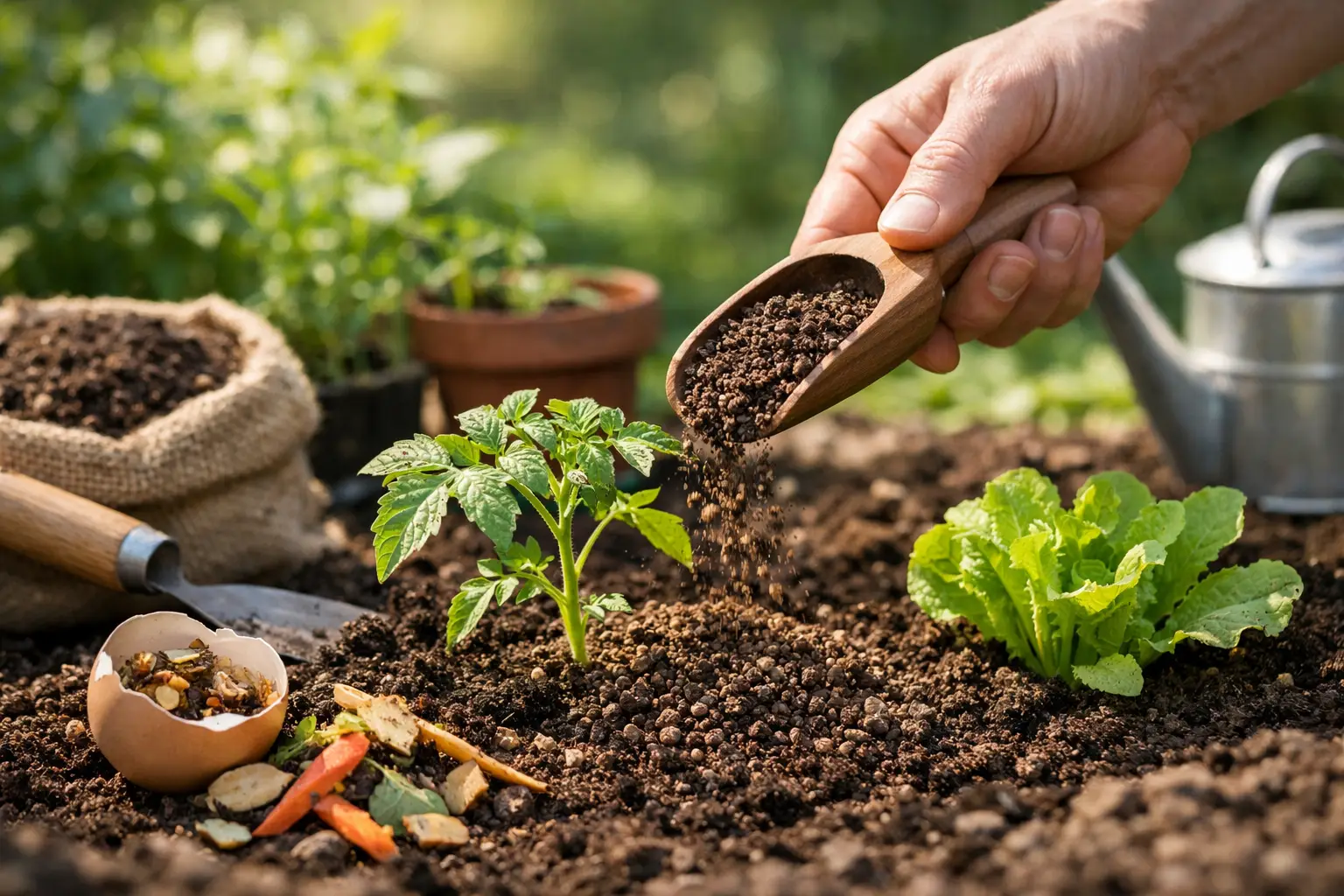
At planting time, add an inch or two of finished compost across the bed and gently work it into the surface. For heavy-feeding crops, an organic vegetable fertilizer can help, especially if your soil test shows low nutrients. Follow the package rate rather than assuming more fertilizer means more fruit. Too much nitrogen can give you enormous tomato plants with very few tomatoes.
Mulch is one of the simplest ways to make raised-bed soil work better. Spread two to three inches of shredded leaves, clean straw, untreated grass clippings, or similar organic mulch around established plants. It slows evaporation, buffers soil temperature, and gradually feeds the soil as it breaks down. Keep mulch a little away from stems to reduce rot and discourage slugs from hiding right against young plants.
Water deeply when the top inch or two feels dry, rather than giving the bed a quick daily sprinkle. Shallow watering encourages shallow roots. During a heat wave, a raised bed may need water more often, particularly when plants are flowering and fruiting. Check before watering, because weather, mulch, plant size, and soil mix all change the schedule.
Refreshing Your Organic Raised Bed Soil Each Year
You do not need to empty and replace raised-bed soil every spring. In fact, disturbing it too much can disrupt the soil life you have been building. Instead, pull out diseased plants, cut healthy annuals at the soil line when possible, and leave the roots to decompose.
Each spring or fall, spread one to two inches of finished compost over the bed. Add a fresh layer of mulch after planting. If the soil level has dropped, top it up with a blend of compost and quality topsoil rather than compost alone.
A soil test every few years is especially helpful if plants repeatedly struggle, leaves yellow despite regular care, or yields decline. It can reveal pH or nutrient issues that no amount of guesswork will solve. Most vegetables are happiest in slightly acidic to neutral soil, but the right correction depends on your actual results.
The best raised-bed soil is not the most expensive blend or the one with the longest ingredient list. It is the soil that stays loose, grows healthy plants, and gets a little better with each season. Start with a sensible mix, feed it with compost and mulch, and let your garden show you what it needs next.