A vegetable garden can look lush one week and strangely pale the next. That does not always mean you need a stronger fertilizer. In fact, choosing the best organic fertilizers for vegetables starts with noticing what your soil and plants actually need. A little well-timed nutrition can make tomatoes more productive, greens more tender, and root crops more reliable. Too much, especially nitrogen, can give you enormous leafy plants and very little harvest.
Organic fertilizers work differently from quick synthetic feeds. They depend on soil life to break nutrients down gradually, which is gentler on plants and helps build healthier soil over time. That slower pace is a good thing, but it also means matching the fertilizer to the crop and applying it before plants are desperate.
What Makes an Organic Fertilizer a Good Choice?
The best choice is not necessarily the bag with the biggest numbers on the label. Vegetable plants need the major nutrients nitrogen, phosphorus, and potassium, but they also benefit from calcium, micronutrients, and soil rich in organic matter. A good organic fertilizer supports that bigger picture.
Before adding anything, take a close look at your garden. If you have never tested your soil, a basic soil test is worth doing. It can save you from adding phosphorus when your soil already has plenty or liming a bed that does not need it. For a new raised bed or a garden with tired, compacted soil, compost is usually the most useful place to start.
Also consider the crop. Lettuce, kale, and corn appreciate more nitrogen. Tomatoes, peppers, cucumbers, and squash need steady feeding but can become overly leafy if nitrogen is pushed too hard. Carrots, beets, and other roots tend to make more foliage than roots in soil that is heavily fertilized.
Best Organic Fertilizers for Vegetables
Compost: the everyday foundation
Finished compost is not a complete fertilizer in the same way a packaged blend is, but it is hard to beat as a foundation for a home vegetable garden. It improves moisture retention in sandy soil, helps clay soil loosen up, and adds a gentle range of nutrients as it breaks down.
Spread one to two inches of finished compost over beds in spring and work it lightly into the top few inches of soil. You can also add a thin layer around established plants as a mulch. Compost made from yard waste and kitchen scraps is especially satisfying because it turns materials you already have into garden food.
The trade-off is that compost alone may not provide enough nutrients for hungry, long-season crops. If your tomatoes or corn struggled last year, pair compost with a balanced organic fertilizer rather than expecting compost to carry the whole season.
Balanced granular organic fertilizer: the dependable all-purpose option
For many gardeners, a balanced granular vegetable fertilizer is the simplest answer. Look for an organic product with a modest, fairly even N-P-K ratio, such as 4-4-4 or 5-5-5. These blends often combine ingredients like feather meal, bone meal, alfalfa meal, kelp meal, and natural minerals.
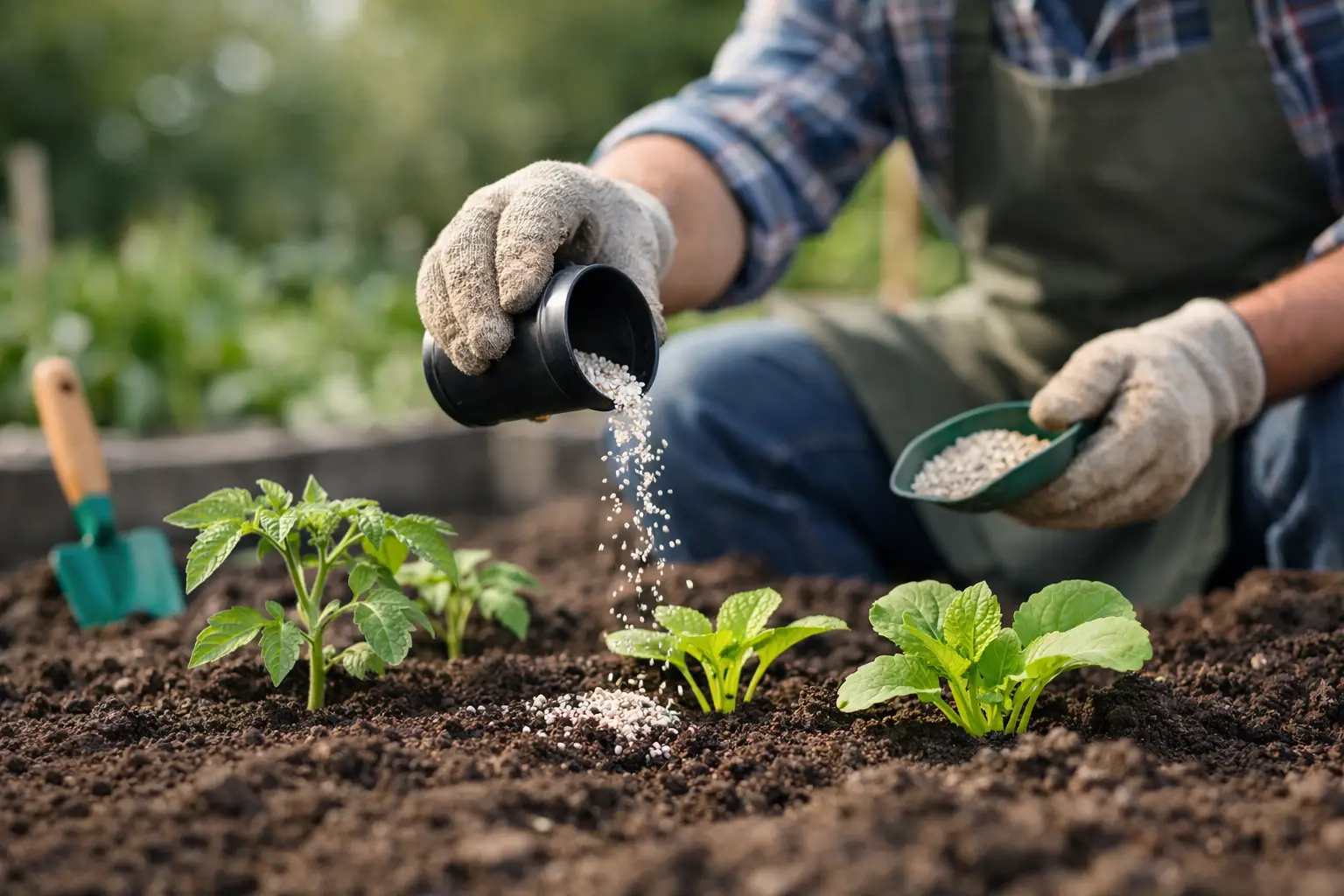
Apply it according to the package rate before planting, then scratch it into the soil and water the bed. For heavy feeders, a small side-dressing later in the season can help. This is a practical choice when you are growing several kinds of vegetables in one bed and do not want a separate product for every crop.
More is not better here. A common beginner mistake is adding a generous scoop every time plants look a little sad. Fertilizer will not solve poor drainage, inconsistent watering, cold soil, pest damage, or a plant that has simply reached the end of its season.
Worm castings: gentle help for transplants and containers
Worm castings are a mild, nutrient-rich material produced by composting worms. They are especially useful when planting seedlings because they are unlikely to burn tender roots. Mix a handful into each planting hole or blend them into potting mix for container vegetables.
They are not a high-powered fertilizer, so think of castings as a boost rather than a complete feeding plan. I like them for newly planted tomatoes, peppers, herbs, and lettuce starts that need a calm, steady transition into the garden. For patio containers, where nutrients wash out more quickly with watering, castings can be part of a regular feeding routine alongside a liquid or granular organic fertilizer.
Fish emulsion: a quick lift for leafy plants
Fish emulsion is one of the faster-acting organic fertilizers, and it is particularly useful when leafy vegetables need a little nitrogen. If lettuce, spinach, kale, or cabbage looks pale and growth has slowed during active growing weather, a diluted fish emulsion drench can help.
Use it exactly as directed and apply it to moist soil, not bone-dry ground. The smell is real, so it is best used outdoors and washed off hands and tools afterward. It can also attract curious pets or wildlife if spilled.
Because fish emulsion is usually nitrogen-forward, it is not the best main fertilizer for fruiting crops once they begin flowering. Tomatoes fed too much nitrogen may grow spectacular vines while taking their time setting fruit. Use it early, if needed, then switch your attention to steady watering and balanced nutrition.
Kelp meal or seaweed fertilizer: support, not a shortcut
Kelp meal and liquid seaweed products are valued for trace minerals and natural compounds that can support plant resilience. They are not usually strong enough to replace a primary fertilizer, but they are a helpful addition for stressed transplants, container plants, and gardens with less-than-ideal weather.
A liquid seaweed feed is easy to use as a soil drench after transplanting. Kelp meal can be mixed into the bed before planting. Think of these products as the side dish, not the main meal. They work best alongside compost and a balanced fertilizer program.
Alfalfa meal: useful for hungry beds, with a caveat
Alfalfa meal supplies nitrogen and organic matter while encouraging soil biology. It can be a nice addition for corn, brassicas, and beds that have been repeatedly cropped. Work it into the soil a couple of weeks before planting so it has time to begin breaking down.
Use a light hand. Fresh alfalfa meal can heat up as it decomposes, and its nitrogen content can be more than root vegetables need. If you are growing carrots, radishes, or beets, stick to compost and a low-nitrogen, balanced fertilizer unless a soil test points you in another direction.
How to Feed Vegetables Without Overfeeding Them
Start by preparing beds with compost and a balanced granular fertilizer before planting. After that, let the crop guide you. Fast-growing greens may appreciate one light nitrogen boost. Tomatoes and peppers often benefit from a small side-dressing when they begin setting fruit, especially in raised beds with frequent watering.
Side-dressing simply means placing fertilizer a few inches away from the stem, scratching it gently into the soil, and watering it in. Keeping fertilizer off stems and leaves helps prevent damage. For containers, use smaller, more frequent doses because every watering gradually carries nutrients away.
Pay attention to plant signals, but read them carefully. Pale lower leaves on a fast-growing plant can suggest low nitrogen. Purple-tinged leaves in cool spring soil may be a temperature issue, not a fertilizer problem. Blossom-end rot on tomatoes is usually tied to uneven watering and calcium uptake, so adding more general fertilizer rarely fixes it.
A Simple Plan for a Productive Organic Garden
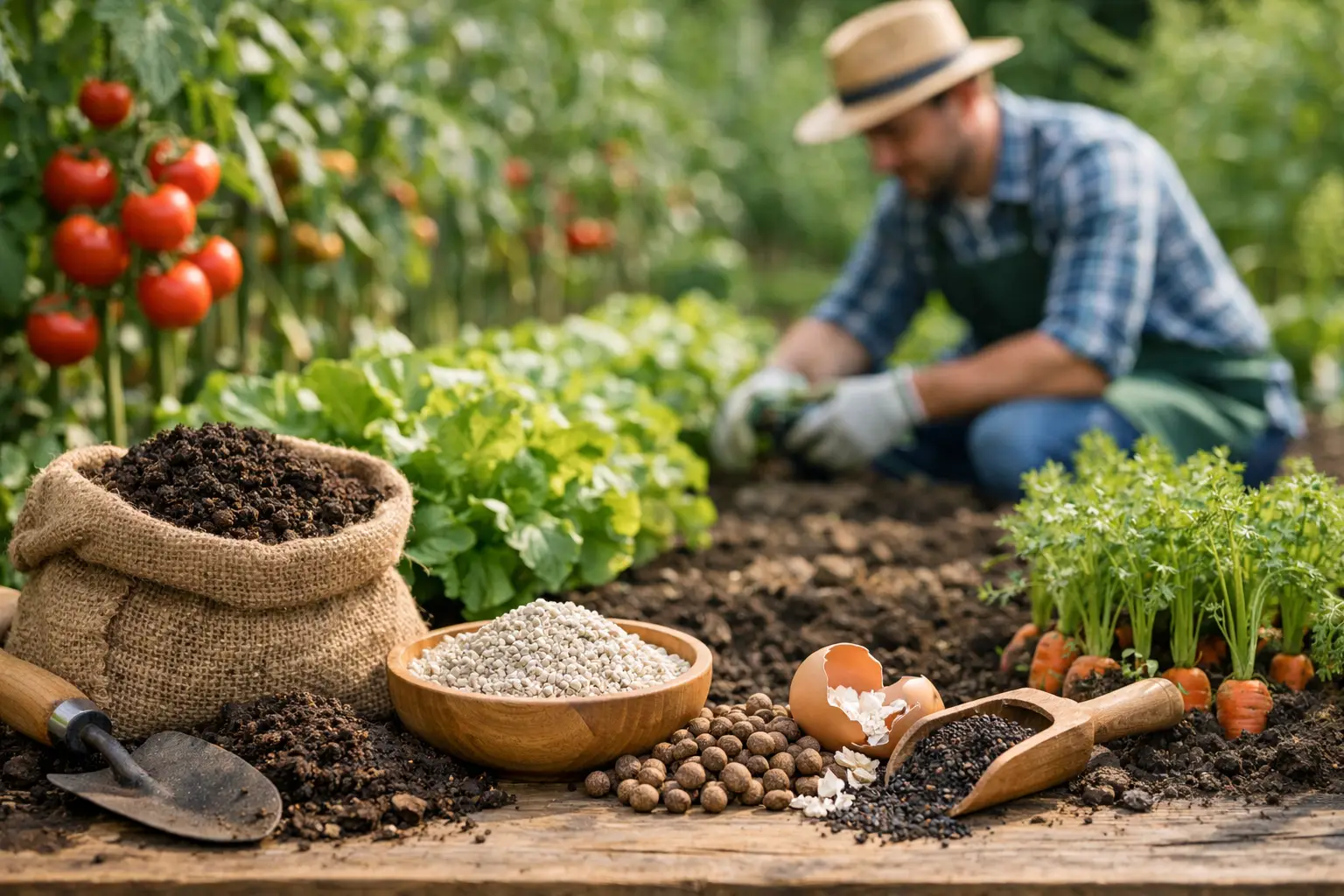
For most backyard beds, you do not need a shelf full of products. Begin with finished compost. Add a balanced organic fertilizer at planting time for demanding crops. Keep worm castings or a diluted fish emulsion on hand for seedlings, containers, or leafy vegetables that need a gentle boost.
That simple approach is easier to remember, kinder to the soil, and far less likely to create the feast-or-famine cycle that frustrates so many gardeners. Healthy vegetables are not built in one feeding. They come from soil that improves a little each season, regular watering, and the confidence to give plants enough without giving them everything at once.