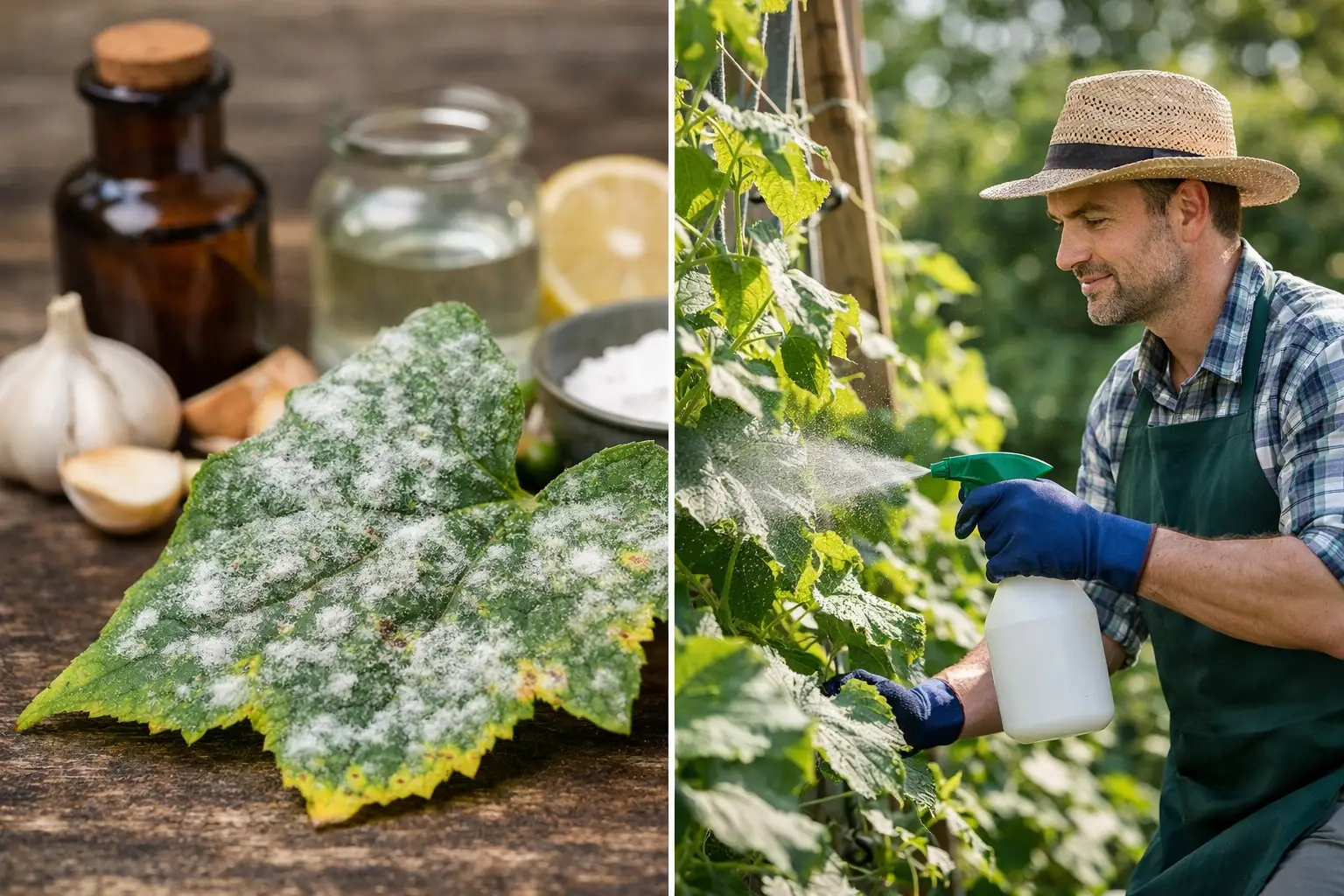
You go out to check the zucchini or bee balm, and there it is – that dusty white coating spreading over the leaves like someone shook flour across the plant overnight. If you’re wondering what kills powdery mildew naturally, the good news is that you usually do not need harsh chemicals to get it under control. The better news is that the most effective natural fixes are often simple, inexpensive, and easy to use once you know what actually helps.
Powdery mildew is one of those garden problems that looks dramatic fast. It can show up on cucumbers, squash, pumpkins, peas, roses, phlox, zinnias, tomatoes, and plenty of other plants. Sometimes it starts as a few pale spots. A few days later, whole leaves look ghostly and tired. The plant may still be alive, but it is under stress, and that can mean weaker growth, lower harvests, and a garden that feels like it’s slipping out of your hands.
The first thing to know is this: natural treatment works best when you catch powdery mildew early. Once a plant is heavily covered, no spray is going to make those damaged leaves look fresh again. What you’re really doing is stopping the spread, protecting newer growth, and making conditions less friendly for the fungus.
What kills powdery mildew naturally on plants?
A few natural options stand out because they are both widely used and reasonably effective. The best known are potassium bicarbonate, baking soda sprays, diluted milk sprays, neem oil, and careful pruning paired with better airflow. Not all of these work the same way, and not all are equally useful in every situation.
If you want the short version, potassium bicarbonate is one of the strongest natural-style options for active powdery mildew. It changes the surface conditions on the leaf and can knock back fungal growth quickly. Baking soda is more common in DIY advice, but it tends to work better as a preventive or for very early infections than as a cure for a bad outbreak. Milk sprays can help, especially in sunny conditions, though results can be inconsistent. Neem oil can suppress powdery mildew and may help with insect issues at the same time, but it has to be used carefully to avoid leaf damage in heat.
That is why the real answer to what kills powdery mildew naturally is not one miracle spray. It is the right treatment, used early, along with a few changes to how the plant is growing.
The natural remedies that actually help
Potassium bicarbonate
If you prefer a natural approach but still want something dependable, this is often the first option worth trying. Potassium bicarbonate is similar to baking soda in the sense that it changes the pH on the leaf surface, but it tends to be more effective against active mildew. It can stop spores from developing and can suppress what is already there.
Many organic gardeners use a ready-made potassium bicarbonate product because mixing is simpler and rates are clearer. If you go this route, follow the label exactly. More is not better, and overapplying any spray can stress the plant.
Baking soda spray
Baking soda gets recommended everywhere, and it can help, but it is not magic. A common homemade mix includes baking soda, water, and a small amount of mild liquid soap to help the spray stick. This can make the leaf surface less welcoming to mildew.
The catch is that baking soda is better at slowing powdery mildew than erasing a major infection. Used too often or mixed too strong, it can also burn leaves. That is especially true in hot weather or on tender plants. If you want to try it, test a small area first and spray in the cooler part of the day.
Milk spray
This one surprises a lot of people, but diluted milk has been used for powdery mildew for years. The usual idea is to mix milk with water and spray it on affected leaves. In sunlight, compounds in the milk may help suppress the fungus.
Milk spray tends to work best as an early treatment or preventive step, not a rescue plan for plants that are already overwhelmed. It can also leave a slight odor if overused, especially in humid weather. Still, for gardeners who like simple pantry solutions, it is one of the more interesting natural options.
Neem oil
Neem oil can help control powdery mildew by coating the leaf surface and interfering with fungal development. It is often useful when you are dealing with multiple garden problems at once, since it may also help with some soft-bodied pests.
But neem has trade-offs. It can damage plants if sprayed during high heat or direct intense sun. Some plants are also more sensitive than others. Use it in the early morning or evening, never on drought-stressed plants, and always test a few leaves first.
What does not work as well as people hope
A lot of home remedies get passed around because they sound simple. Vinegar is one example. It can kill fungal tissue on contact because it is acidic, but it can also burn plant leaves just as easily. That makes it a risky option for most home gardeners.
Hydrogen peroxide is another one people ask about. It may have some disinfecting effect, but it is easy to overdo and can injure foliage if the dilution is off. For edible gardens and everyday use, gentler options are usually the better choice.
Plain water does not kill powdery mildew, but rinsing a plant can sometimes reduce spore load a little. Still, since wet leaves can contribute to other diseases, it is not usually the best main strategy.
Why powdery mildew keeps coming back
One frustrating thing about powdery mildew is that it does not always show up because you did something wrong. It often appears when days are warm, nights are cooler, and air circulation is poor. Crowded plants, shaded growth, and stressed leaves make the problem worse.
Unlike many fungal diseases, powdery mildew does not need soaking wet leaves to spread. That catches a lot of gardeners off guard. A dry-looking garden can still end up covered in mildew if humidity is hanging in the air around tightly packed plants.
This is why spraying alone rarely solves the whole problem. If a squash patch is crammed together, the lower leaves are shaded, and air barely moves through the bed, mildew has the upper hand no matter what bottle you grab.
How to use natural treatments without harming your plants
Start by removing the worst infected leaves, especially if they are older and heavily covered. Do not strip the plant bare, but do thin enough to improve airflow. Clean pruners between plants if the outbreak is widespread.
Then spray thoroughly, covering both the tops and undersides of leaves when the product calls for it. Morning is usually the safest time. Avoid spraying during the hottest part of the day, and do not treat wilted or drought-stressed plants.
If you are using a homemade spray, keep the mixture mild and use it consistently rather than aggressively. Gardeners sometimes run into trouble because they assume a stronger mix will work faster. Most of the time, it just increases the chance of leaf burn.
Reapply as needed, especially after rain or overhead watering, if the product directions allow it. Watch the new growth more than the damaged leaves. That is where you will see whether the treatment is helping.
How to prevent powdery mildew naturally
Prevention is a lot less dramatic than treatment, but it is what makes the biggest difference over a season. Give plants enough space from the start, even if the bed looks a little empty in spring. By midsummer, that breathing room matters.
Prune dense growth where appropriate, especially on crops and ornamentals that tend to become a leafy tangle. Water at the base instead of wetting foliage when you can. Keep plants evenly watered, because stressed plants are more vulnerable.
It also helps to avoid overdoing nitrogen fertilizer. Fast, soft new growth is often more prone to powdery mildew. Healthy growth is good. Lush, crowded growth that never dries out or gets air movement is another story.
For plants that get mildew year after year, resistant varieties are worth considering. This is especially true for cucumbers, squash, bee balm, and zinnias. Choosing a variety with better resistance does not mean you will never see mildew, but it can turn a constant battle into a minor annoyance.
When it is time to let a plant go
Sometimes a plant is simply too far gone. Late in the season, if a squash plant is heavily infected and already slowing down, you may be better off removing it than trying to rescue every last leaf. That is not failure. It is good garden judgment.
Natural gardening is not about saving every plant at all costs. It is about using practical methods that protect the health of your garden as a whole. A badly infected plant can keep releasing spores and make life harder for everything around it.
If you remember one thing, let it be this: the best natural answer to powdery mildew is quick action, gentle but effective treatment, and better growing conditions around the plant. Once you start looking at it that way, mildew becomes a manageable problem instead of a season-ending one.