The first weed always seems easy to ignore. Then, after a warm week and one good rain, the little patch beside the tomatoes has turned into a thicket competing for water, nutrients, and your attention. This guide to organic weed control is built for that real-life moment: not a perfect garden, but a busy home garden that needs practical, chemical-free help.
Organic weed control is less about finding one miracle spray and more about making weeds less welcome in the first place. A few well-timed habits can save hours of pulling later, while keeping your vegetable beds, pollinator plants, pets, and family spaces free from harsh herbicides.
Start by Knowing What You’re Pulling
Not every unwanted plant deserves the same response. A tender annual weed, such as chickweed or lamb’s quarters, is usually easy to pull or smother before it sets seed. Perennial weeds with deep roots or spreading runners, such as dandelion, bindweed, and bermudagrass, need more patience. If you pull only the top growth, they often return from the root system below.
Before you start clearing a bed, take a closer look at what is growing. Is it flowering or developing seed heads? Does it have one central taproot, or does it creep along the soil? That quick observation tells you whether a hand pull will solve the problem or whether you need to repeat the process over several weeks.
The goal is not a garden with bare, perfectly weed-free soil. Bare soil is an open invitation for weed seeds. The better goal is a garden where your chosen plants have the advantage.
The Best Organic Weed Control Starts Before Weeds Sprout
Weed seeds are already waiting in most garden soil. Some can remain dormant for years, then sprout when light reaches the surface and moisture arrives. That is why prevention does so much of the work.
Cover exposed soil with mulch
Mulch is one of the simplest tools in an organic gardener’s toolkit. Around established vegetables, flowers, shrubs, and fruit plants, spread a 2- to 3-inch layer of clean straw, shredded leaves, untreated wood chips, or other suitable organic material. It blocks light from reaching many germinating weed seeds, holds moisture in the soil, and gradually improves soil texture as it breaks down.
Keep mulch a couple of inches away from plant stems. Piling it directly against tomatoes, peppers, or young perennials can trap moisture and encourage rot. In vegetable beds, straw or chopped leaves are often easier to move aside when it is time to plant or sow another crop. Wood chips are especially useful on paths and around established trees and shrubs.
Avoid using hay unless you know exactly where it came from. Hay may carry a generous supply of weed seeds, which is not the gift your garden needs.
Plant closely, but give crops enough airflow
A full garden shades the soil naturally. Leafy greens, bush beans, squash, and flowers can all help cover open spaces once they are established. This does not mean crowding plants until disease becomes a problem. Tomatoes still need room for air circulation, and zucchini still need enough space to spread.
Think of it as using your plants as living mulch. Follow sensible spacing, then mulch the remaining exposed soil. It is a much easier approach than trying to weed a wide strip of bare dirt all summer.
Disturb soil only when necessary
Turning soil can bring buried weed seeds to the surface, where they get the light they need to germinate. When preparing a bed, loosen only as deeply as your crop requires rather than repeatedly digging the whole area. In established beds, pull weeds and add compost or mulch from the top whenever possible.
This does not mean you can never dig. New beds, compacted soil, and root crops sometimes call for it. It simply means less unnecessary disruption usually means fewer surprise weeds.
A Guide to Organic Weed Control in Active Garden Beds
Once vegetables and flowers are growing, the best method depends on the weed’s size and the crop around it. Small weeds are far easier to manage than mature ones. Ten minutes after watering or a light rain can be more productive than an hour of wrestling dry, compacted soil.
For young weeds, use a hand hoe or stirrup hoe just below the soil surface on a dry, sunny day. The tool severs the tiny roots, and the sun dries the seedlings before they can recover. This works best when weeds are still threadlike or have only a few leaves. If they are already large, remove them fully rather than chopping and hoping.
For weeds tucked next to vegetable stems, hand pulling is usually safest. Hold the soil with one hand and pull slowly from the base with the other. A dandelion weeder or narrow trowel helps loosen taproots without uprooting nearby plants. With spreading perennials, keep returning to the patch and remove new growth promptly. Repeatedly denying the plant leaves eventually weakens the roots.
Try not to let weeds flower or set seed, even if you cannot remove every root that day. Cutting off flower heads is a worthwhile temporary win. One plant allowed to seed can create a much bigger job next season.
Use Barriers Where They Make Sense
Some garden areas need more than mulch. Paths, new beds, and spots overrun by tough weeds may benefit from a physical barrier.
For a new planting area, sheet mulching can work well. Mow or cut the existing vegetation low, lay overlapping plain cardboard over the area, wet it thoroughly, and cover it with compost and mulch. The cardboard blocks light while it breaks down over time. Remove tape, labels, and glossy printed pieces first. This method is especially helpful when you want to convert lawn or a weedy corner into a future flower or vegetable bed without reaching for herbicide.
Landscape fabric has a narrower role. It can be useful beneath gravel paths, but it is often frustrating in planting beds. Soil and weed seeds eventually collect on top, perennial roots can tangle through it, and replacing it later is no fun. For beds where you plan to grow and amend soil for years, cardboard and organic mulch are usually the kinder, more flexible choice.
Be Careful With “Natural” Weed Killers
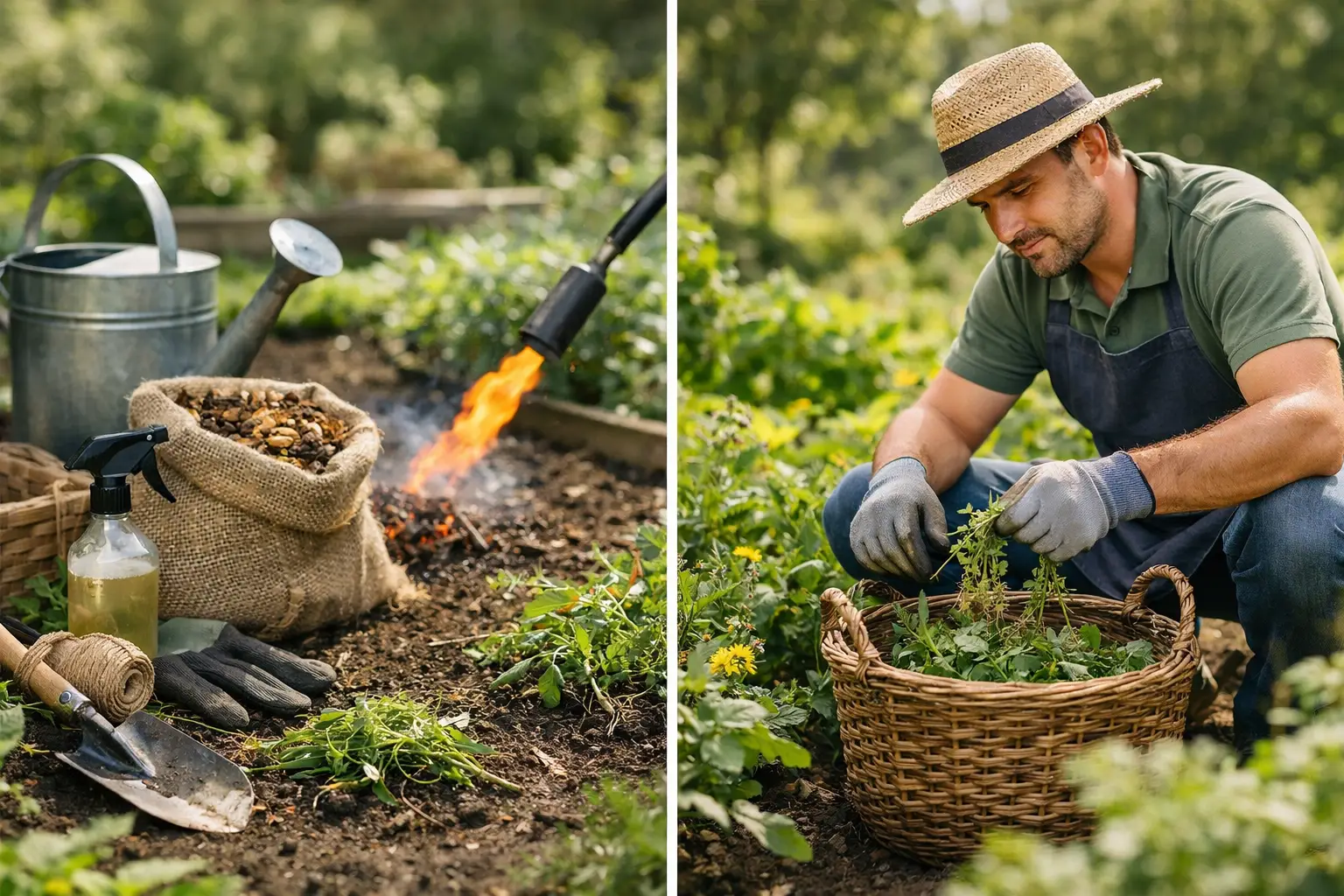
Natural does not automatically mean harmless. Vinegar-based weed killers, clove oil products, and other contact sprays can burn leaves, but they usually do not kill deep roots. They also cannot tell a weed from a basil plant, a bee-friendly flower, or a young vegetable seedling.
Household vinegar is generally inconsistent for established weeds, while stronger horticultural vinegar can irritate skin and eyes and damage any plant it touches. Salt is even less garden-friendly. It can linger in soil and make it difficult to grow anything in that spot afterward. Boiling water can be useful for a crack in a driveway, but it is too indiscriminate for a planted bed.
If you use an approved organic herbicide, reserve it for hardscape cracks or isolated areas where hand tools are not practical. Follow the label closely, protect your skin and eyes, and avoid spraying on windy days. In most food gardens, mulch and early hand weeding are more dependable long-term solutions.
Don’t Forget Containers and Lawns
Containers are wonderfully manageable, but weeds still arrive through potting mix, compost, windblown seed, or nursery plants. Pull them as soon as you see them. A thin layer of shredded leaves or fine bark on the pot surface can reduce germination, though keep it light so water can still soak in easily.
In lawns, thick grass is the best weed defense. Mow at the recommended height for your grass type, water deeply but not constantly, and avoid scalping the lawn short. Thin, stressed turf leaves room for clover, crabgrass, and other opportunistic plants. Also consider whether every lawn weed truly needs removal. Clover, for example, can feed pollinators and add nitrogen to soil, though it may not suit every household’s idea of a tidy lawn.
Build a Small Weekly Weed Routine
The gardeners who seem to have fewer weeds are rarely spending full weekends weeding. They are catching problems while they are small. Walk your garden once or twice a week with a bucket and a hand tool. Pull the obvious newcomers, check mulch depth, and remove any flower heads before seeds ripen.
A short routine also makes it easier to notice patterns. If one bed keeps producing the same weed, it may need thicker mulch, less soil disturbance, or a different planting plan. If weeds thrive in a path, it may be time for cardboard and wood chips rather than another round of pulling.
Give yourself permission to aim for progress rather than perfection. A few weeds do not mean you are failing as a gardener. Keep the soil covered, act early, and let each season teach you what your own garden needs.