A vegetable garden can look full of promise in May and strangely disappointing by July. I have learned that the difference is rarely a lack of effort. More often, it comes down to a few early choices: giving plants enough sun, building soil before planting, and growing crops your space can realistically support. Vegetable gardening gets much easier when you stop trying to grow everything and start helping a smaller group of plants thrive.
The good news is that an abundant food garden does not require synthetic chemicals, expensive gadgets, or a perfect backyard. A sunny strip beside the fence, one raised bed, or several large containers can produce a meaningful harvest. Start with what your garden can do well, then build on each successful season.
Begin Vegetable Gardening With the Right Expectations
It is tempting to judge a first garden by the number of crops planted. But a garden with six healthy plants will feed you more than a crowded bed of 20 struggling ones. Tomatoes, peppers, cucumbers, beans, salad greens, herbs, and zucchini are all productive choices, but they do not want the same conditions or the same amount of room.
Before buying seeds or transplants, watch your growing space for a day. Most fruiting vegetables need at least six to eight hours of direct sun. Tomatoes, peppers, squash, cucumbers, and beans are especially hungry for sunlight. Leafy greens can make do with less and often appreciate afternoon shade once summer heat arrives.
Also be honest about space. One zucchini plant can sprawl several feet, while a compact bush bean can tuck into a small bed. Indeterminate tomatoes can grow tall and wide all season, so they need sturdy support and room for airflow. For a first season, choose three to five crops your household actually enjoys eating. That is a more useful goal than growing a little of everything.
Choose crops for the season, not the seed rack
Cool-weather vegetables such as lettuce, kale, spinach, peas, radishes, and broccoli grow best in the cooler parts of spring and fall. Heat-loving crops, including tomatoes, peppers, basil, beans, cucumbers, and squash, should wait until the danger of frost has passed and the soil has started to warm.
This timing matters more than many new gardeners realize. A tomato planted into cold soil may sit still for weeks, while one planted a little later in warmer conditions can catch up quickly. In much of the US, local last-frost dates are a useful starting point, but weather changes from one yard to the next. A protected patio or south-facing wall may warm earlier than an open bed.
Build Soil That Holds Water and Life
Healthy soil is the quiet workhorse of vegetable gardening. It holds moisture without becoming soggy, gives roots air to grow, and feeds a web of beneficial organisms that helps plants use nutrients. You do not need to chase a complicated soil recipe. Start by improving what you have.
For an in-ground bed, spread one to two inches of finished compost over the surface before planting and gently work it into the top few inches, or let worms and weather draw it down over time. In a raised bed, use a quality garden soil blended with compost, rather than filling it with straight bagged compost. Compost is valuable, but too much can create nutrient imbalances and hold more moisture than some plants need.
If your soil is heavy clay, avoid working it when wet. Digging wet clay turns it into hard clods that are difficult to break apart later. Add compost regularly, mulch the surface, and let roots do some of the loosening work. If your soil is very sandy, compost helps it hold water and nutrients longer between watering.
A simple soil test is worth considering if plants have repeatedly struggled or if you are starting a larger garden. It can show whether your soil is unusually acidic, alkaline, or lacking a key nutrient. But do not fertilize on guesswork alone. More fertilizer is not automatically better, especially for tomatoes and peppers. Too much nitrogen can give you giant green plants with very little fruit.
Plant for Airflow, Access, and Easy Care
Crowding is one of the most common reasons vegetable plants become stressed. It is hard to thin seedlings when they are tiny, but that little bit of space prevents a lot of trouble later. Good spacing lets leaves dry after rain, allows air to move through the bed, and makes it easier to spot pests before they multiply.
Give climbing crops a place to climb from the start. A trellis for cucumbers, pole beans, and small-fruited squash keeps foliage off the ground and makes harvesting far simpler. Support tomatoes with cages, stakes, or a sturdy trellis while they are still young. Trying to wrestle a full-grown tomato into a cage is a reliable way to snap stems and lose fruit.
Keep paths and planting areas practical. You should be able to reach the center of a bed without stepping on the soil. Compacted soil makes it harder for roots, water, and beneficial soil life to move where they need to go. In containers, choose pots with drainage holes and enough volume for the crop. A five-gallon container is a reasonable minimum for one tomato or pepper plant, while leafy greens can grow in much shallower containers.
Water Deeply, Then Protect the Soil
Vegetables are not impressed by a quick daily sprinkle. Light watering encourages shallow roots, and shallow roots dry out quickly when the weather turns hot. Instead, water slowly enough that moisture reaches several inches into the soil, then allow the surface to begin drying before watering again.
How often that means watering depends on your weather, soil, containers, and plant size. A container tomato in a hot spell may need water every day, while an established in-ground bed may need a deep soak once or twice a week. Check with a finger rather than following a rigid schedule. If the soil is dry an inch or two below the surface, it is usually time to water.
Mulch makes this job easier. Once soil has warmed, add a two- to three-inch layer of untreated shredded leaves, straw, or other natural mulch around plants. Keep it a few inches away from stems. Mulch reduces evaporation, softens the impact of heavy rain, limits weeds, and gradually feeds the soil as it breaks down.
Water near the soil instead of spraying leaves whenever possible. Wet foliage does not always cause disease, but regular overhead watering can encourage fungal issues, especially in dense tomato patches. Morning watering gives any splashed leaves time to dry.
Handle Pests Without Reaching for Harsh Sprays
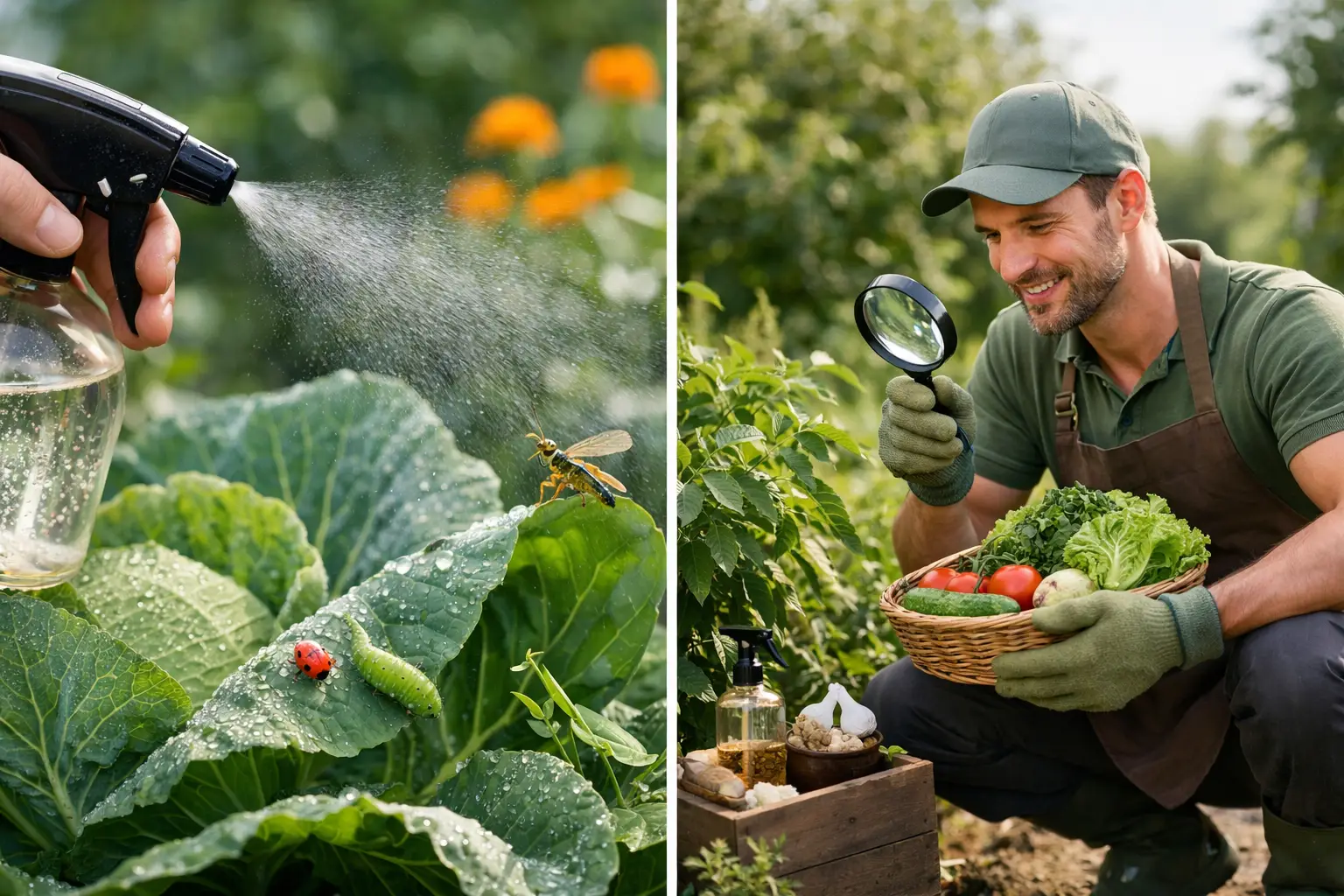
A few chewed leaves are not a garden emergency. In fact, a completely untouched garden can be a sign that pollinators and beneficial insects have little reason to visit. The goal is not to eliminate every bug. It is to prevent damage from becoming serious enough to weaken or destroy a crop.
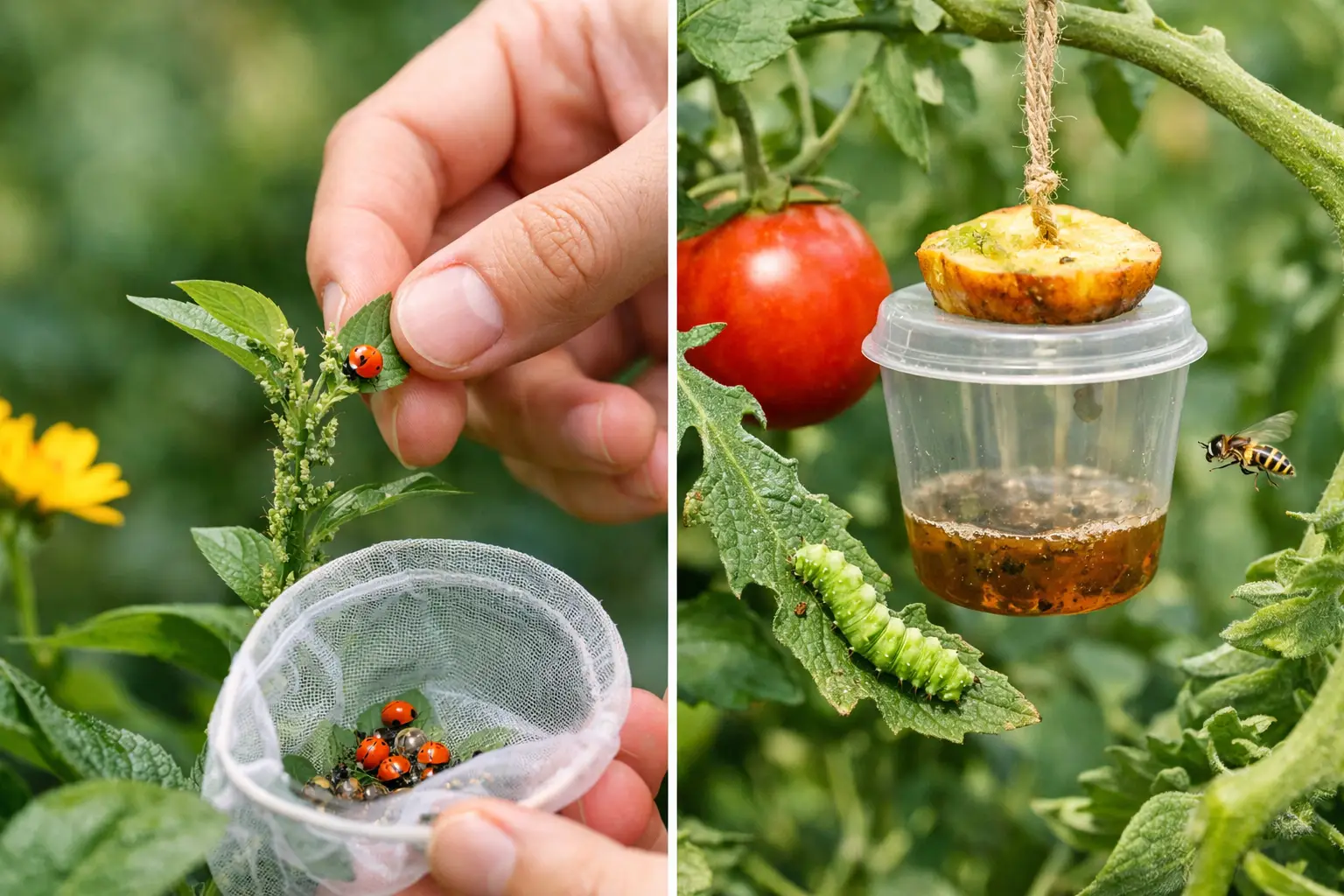
Check plants a few times each week, looking under leaves as well as on top. Handpick larger pests such as tomato hornworms, cabbage worms, Japanese beetles, and squash bug adults when you find them. A strong stream of water can knock aphids from sturdy plants, and insecticidal soap can help with soft-bodied pests when used carefully and according to the label.
Prevention is usually kinder and more effective than repeated spraying. Use row cover over young brassicas to keep cabbage moths from laying eggs. Rotate crop families when you can, especially if you have had recurring disease or pest problems in one bed. Plant flowers and herbs nearby to provide nectar and shelter for beneficial insects. And remove badly diseased leaves or spent plants rather than leaving them to become a problem next season.
Natural methods still require care. Even organic-approved sprays can harm bees or beneficial insects if used at the wrong time or on the wrong plant. Treat only the problem you can identify, apply products in the evening when pollinators are less active, and use the smallest effective amount.
Harvest Often and Let the Garden Teach You
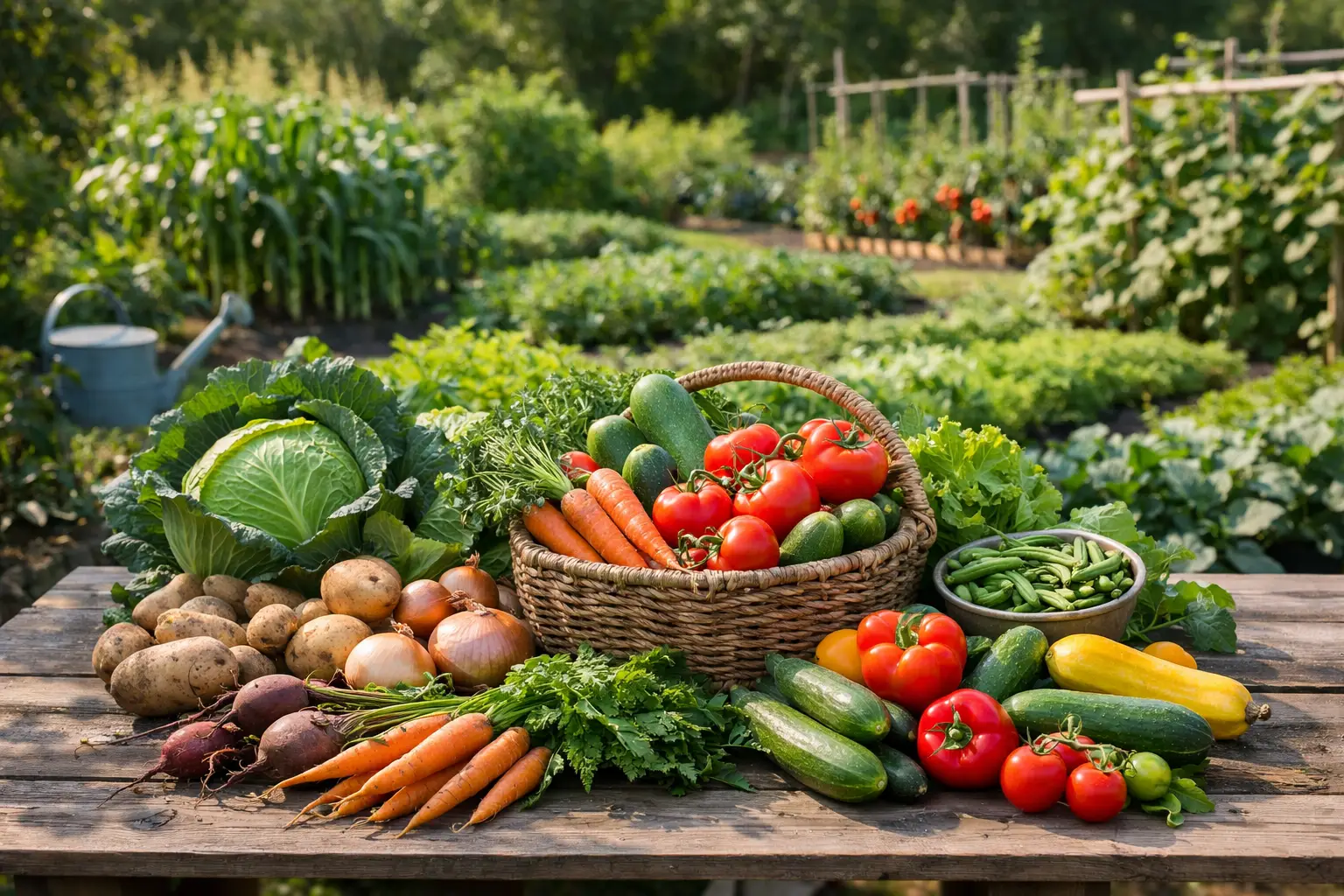
The most productive gardens are harvested regularly. Beans become tough if left too long, zucchini can hide under leaves until it reaches baseball-bat size, and many herbs grow bushier when you clip them often. Picking ripe vegetables tells the plant to keep producing in many cases.
Keep a few notes as the season goes on. Write down which tomato tasted best, when your cucumbers first produced, what pests showed up, and which corner of the yard stayed damp after rain. Those small observations are more valuable than trying to memorize every gardening rule. They turn each season into a plan for the next one.
If a crop fails, do not treat it as proof that you lack a green thumb. Maybe the lettuce was planted too late, the pepper needed more sun, or the container dried out while you were away for a weekend. Vegetable gardening is a conversation with a particular patch of earth. Give it steady attention, grow what suits it, and each harvest will make the next season feel a little more possible.