That half-full pot of old mix sitting by the garage does not need to go straight to the trash. In most cases, if you are wondering can you reuse potting soil, the answer is yes. The better question is when it is still healthy enough to use, and when reusing it will create more problems than it solves.
For home gardeners, reusing potting soil makes a lot of sense. It saves money, cuts down on waste, and keeps useful organic material in circulation. But potting soil is not like a cast-iron pan that gets better with age no matter what. After a season in containers, it can be depleted, compacted, salty, or carrying plant disease. A little honesty goes a long way here.
Can You Reuse Potting Soil Every Year?
You can reuse potting soil for another season if the old mix is reasonably clean, drains well, and did not grow plants with major disease problems. That is the short answer. The longer answer is that used potting soil almost always needs some refreshing before you plant into it again.
Potting soil is really a lightweight growing mix made to hold moisture, allow airflow, and support roots in a confined space. Over time, those ingredients break down. Peat moss or coco coir gets tired, bark fines decompose, perlite shifts around, and roots leave behind a dense web that changes how water moves through the pot. Nutrients also get used up or washed out.
So yes, you can reuse it, but not blindly. Think of it as a base material that needs inspection and repair.
When Reusing Potting Soil Is a Good Idea
If last season’s plants were healthy and the soil still feels loose rather than muddy or brick-like, you are probably in good shape. This is especially true for containers that held annual flowers, herbs, lettuce, bush beans, or other quick crops that finished the season without obvious trouble.
Used potting mix can also be fine if the only issue was that the plant outgrew the container or production slowed late in the season. That usually points to nutrient depletion, not a dangerous problem. In that case, you are not dealing with bad soil. You are dealing with tired soil.
Another good sign is smell. Healthy used potting mix smells earthy. Sour, swampy, or rotten smells usually mean poor drainage or too much decomposition, and that is a red flag.
When You Should Not Reuse Potting Soil
There are times when it is smarter to let it go.
If the old mix held plants with root rot, blight, wilt, mildew that kept coming back, or any other serious disease, reusing it in another container is risky. The same goes for pots that had heavy infestations of fungus gnats, root aphids, or other soil-related pests that never really cleared up. You may be able to sterilize soil, but for many home gardeners that effort is more hassle than the soil is worth.
You should also be cautious with potting soil that is badly compacted, full of undecomposed roots, or crusted with white mineral buildup. That white crust is often salt from fertilizer or hard water. A little can be corrected. A lot usually means the mix has had a rough life.
And if a pot sat outside all winter uncovered and is now packed with weed seeds, insect eggs, or mystery seedlings, it may still be reusable, but it needs more work than fresh mix would.
How to Check Old Potting Soil Before You Use It
Before you refresh anything, empty the container and look closely at the mix. Pull out old roots, stems, and any clumps that do not break apart easily. You want to know what you are working with, not just top it off and hope.
Squeeze a handful while it is slightly damp. If it forms a heavy lump and stays that way, it is too compacted. If it feels light and crumbly, that is better. Then pour a little water through it. Good potting mix should absorb moisture without turning soupy, and extra water should drain without pooling for long.
This quick check tells you whether the mix can be revived for containers, or whether it is better used elsewhere in the garden.
How to Refresh Reused Potting Soil Naturally
This is the part that makes the biggest difference. If you want to reuse potting soil successfully, do not just plant straight into exhausted mix.
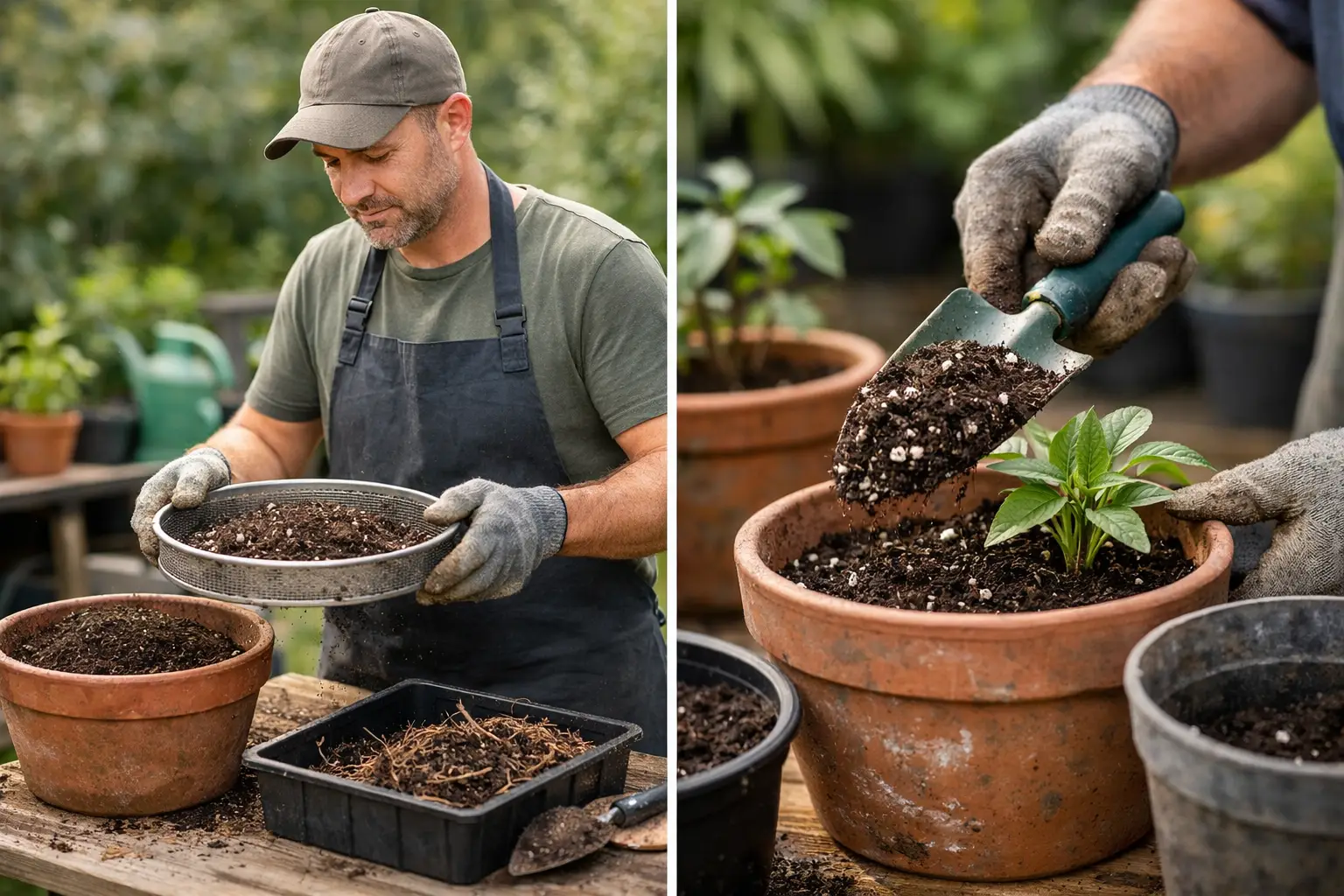
Start by removing as much old root material as possible. Then combine the used potting soil with fresh material to improve structure and restore fertility. A simple home-gardener approach is to mix about two parts old potting soil with one part fresh potting mix or compost. If the old mix is especially dense, add extra perlite or pine bark fines to loosen it.
Compost helps wake the mix back up by adding organic matter and a wider range of nutrients. Fresh potting mix improves texture. Perlite helps with drainage. Worm castings are another gentle addition if you have them, especially for vegetables and herbs.
After that, add a balanced organic fertilizer. Used potting soil rarely has enough nutrition left for hungry plants like tomatoes, peppers, cucumbers, or squash. Even if the texture seems fine, the fertility is usually not. A slow-release organic fertilizer gives plants a better start and reduces that pale, stalled look that often shows up in reused mix.
If salt buildup is mild, you can rinse the soil before amending it. Run water through the mix thoroughly and let it drain well. This helps flush out excess fertilizer salts, though it is not a cure-all for badly damaged soil.
Best Uses for Reused Potting Soil
Not every refreshed mix needs to go into your most precious tomato container. Matching the soil to the job is the smart move.
Reused potting soil is great for ornamental containers, fast-growing annuals, herbs, or seed-starting for larger transplants if the mix is screened and improved. It also works well as a component in raised bed blends or as a lightener for heavy garden soil, as long as it is disease-free.
For high-value crops that are prone to problems, like tomatoes and peppers in containers, I tend to be more selective. They can absolutely grow in refreshed mix, but only if that mix drains well and has been rebuilt with enough fresh material and fertilizer. If the old soil was marginal to begin with, those plants will show it fast.
Can You Reuse Potting Soil for Seedlings?
Sometimes, but this is one of those it-depends situations. Tiny seedlings are more sensitive than established plants. They need even moisture, good airflow, and relatively clean conditions.
If the old mix has been screened, refreshed, and feels fluffy again, it can work for sturdy seedlings. But if it is coarse, uneven, or has any disease history, use fresh seed-starting mix instead. Seedlings do not have much margin for error. Saving a few dollars is not worth damping-off or weak early growth.
What About Sterilizing Old Potting Soil?
Gardeners sometimes bake or solarize old potting soil to kill pests and disease organisms. It can work, but it is not always the best home solution.
Sterilizing soil can also wipe out helpful microbes, and it does not restore structure or nutrients. You still have to amend the mix afterward. For most home gardeners, it makes more sense to discard truly contaminated soil and refresh the rest. Organic gardening is not about saving every last scoop no matter what. It is about making practical choices that support healthy plants.
A Simple Rule for Deciding
If the old potting soil is clean and tired, refresh it.
If it is diseased or infested, discard it.
If it is somewhere in between, use it for less demanding plants or mix it into outdoor beds rather than relying on it for container vegetables. This keeps you from treating every batch the same when they clearly are not.
That kind of judgment gets easier with experience. After a season or two, you start to recognize the difference between soil that just needs a boost and soil that is asking to retire.
There is something satisfying about giving good potting mix another useful season instead of wasting it. A little screening, a little compost, and a realistic look at what happened in that container last year can save you money and lead to healthier plants too. The goal is not to reuse everything at all costs. The goal is to reuse wisely, so your garden gets the benefit without inheriting last season’s problems.