
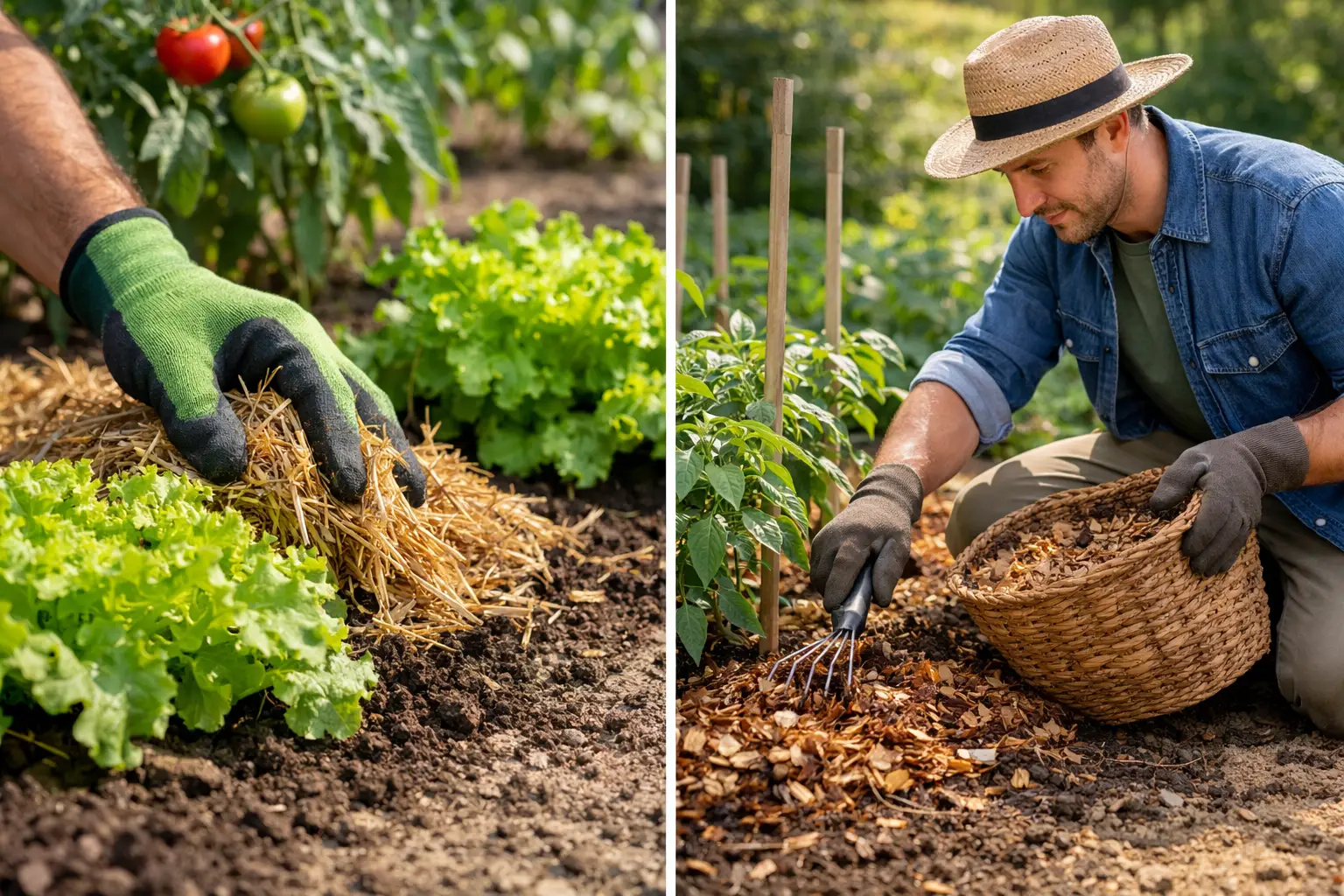
A vegetable bed can look perfectly fine after planting, then turn into a dry, weedy mess two weeks later. That is usually the moment gardeners start asking how to mulch vegetable gardens without causing rot, inviting pests, or making more work. The good news is that mulching is one of the simplest ways to keep a garden healthier with less watering, less weeding, and better soil over time.
Mulch is just a layer of material spread over the soil surface. In a vegetable garden, that layer does a few very useful jobs at once. It slows evaporation, protects the soil from baking in the sun, softens the impact of heavy rain, and makes it harder for weed seeds to sprout. Organic mulches also break down gradually and feed the soil, which is exactly what many home gardeners want from a natural growing system.
Still, mulch is not one-size-fits-all. The best choice depends on what you are growing, how warm your climate is, how wet your beds stay, and whether you are planting seeds or transplants.
Why mulching matters in a vegetable garden
Bare soil dries faster than most people realize. On hot summer days, the top layer can go from evenly moist to crusty in a hurry, especially in raised beds and containers. That stress shows up in vegetables as slow growth, bitter greens, blossom end rot made worse by uneven watering, and plants that never seem to quite get going.
Mulch helps smooth out those swings. The soil stays cooler in summer, moisture lasts longer, and roots get a more stable environment. That matters for tomatoes, peppers, cucumbers, squash, beans, lettuce, and just about everything else in the edible garden.
There is also a long-term payoff. Organic mulch slowly turns into organic matter, which improves soil texture and supports the worms and microbes that make nutrients more available. If you are trying to garden more naturally and rely less on constant inputs, mulch is one of the smartest habits to build.
How to mulch vegetable gardens without hurting plants
The biggest mistake is usually not the mulch itself. It is timing and placement. If you pile mulch onto cold spring soil too early, it can keep the ground cool longer than you want. Warm-season crops like tomatoes, peppers, eggplant, and squash prefer soil that has already warmed up.
A better approach is to wait until plants are established and the soil has had a chance to warm in spring. For direct-sown crops like carrots, beans, or lettuce, let seedlings get a few inches tall before mulching. Tiny sprouts can struggle if they are buried or shaded by thick material.
When you spread mulch, aim for a layer about 2 to 3 inches thick for most loose organic materials. Thin layers do not suppress weeds very well, but thick, packed layers can hold too much moisture against stems. Leave a little breathing room around the base of each plant. Think of it as covering the soil, not wrapping the plant.
If the bed is very dry, water first and mulch second. Mulch helps hold moisture in, but it will not magically rehydrate dusty soil underneath. Starting with damp soil makes the mulch much more effective right away.
Best mulch for vegetable gardens
The best mulch for one garden can be the wrong mulch for another, so it helps to know what each option does well.
Straw
Straw is one of the most reliable choices for vegetable beds. It is light, easy to spread, and good at keeping soil moisture steady. It works especially well around tomatoes, peppers, squash, cucumbers, and strawberries. Clean straw also tends to look tidy, which matters more than some gardeners admit.
The catch is quality. Straw should be mostly seed-free. If you use hay instead of straw, you may be planting a weed patch right along with your vegetables. Straw can also blow around until it settles, so water it lightly after spreading if your area gets wind.
Shredded leaves
Shredded fall leaves are one of the best low-cost mulches around. They are easy to find, feed the soil well, and fit beautifully into an eco-friendly garden. They work especially well in cooler seasons and around established plants.
Whole leaves are less useful because they can mat down and block water. Shredded leaves are much better. If you have a bag of saved leaves from fall, this is a great place to use them.
Grass clippings
Untreated grass clippings can be a good mulch when used carefully. They are high in nitrogen and break down quickly, which can help feed the soil. The key is to apply them in thin layers and let them dry a bit between applications.
If piled on thick and wet, grass clippings can turn slimy and smelly. Never use clippings from lawns treated with herbicides or other chemicals you would not want near food crops.
Compost
Compost is not always thought of as mulch, but it works very well as a thin protective layer around many vegetables. It looks neat, improves soil, and is gentle enough for most plants. It is especially useful in beds where you want both feeding and mulching in one step.
The downside is that compost alone usually will not stop weeds as well as straw or leaves unless you use a fairly generous layer. Many gardeners use compost first, then add a looser mulch on top.
Pine needles and wood chips
Pine needles can work around some crops if used lightly, but they are usually better for paths than for the main vegetable bed. Wood chips are also best kept to garden paths or around perennial plantings. In annual vegetable beds, they break down slowly and can be awkward around small crops and frequent replanting.
That does not mean they are bad. They are just usually not the most practical choice where you are sowing, harvesting, and shifting crops often.
Mulching around different kinds of vegetables
Some vegetables benefit more from mulch than others. Tomatoes, peppers, eggplant, cucumbers, squash, and melons usually love it. Their roots appreciate even moisture, and mulch helps keep soil from splashing onto leaves during rain, which can reduce some disease issues.
Leafy greens also benefit, especially as temperatures rise. A mulch layer can help keep lettuce and spinach from bolting quite as quickly by keeping roots cooler.
Root crops take a little more judgment. Carrots, beets, radishes, and onions can be mulched once they are established, but go lightly at first. You do not want to bury small tops or make harvesting harder than it needs to be.
For direct-seeded crops, patience matters. It is much easier to mulch after rows are visible than to guess where seeds are hiding under the soil.
Common mulch mistakes to avoid
A lot of mulch problems come from good intentions. Gardeners hear that mulch is helpful, so they add too much, add it too early, or use whatever material is nearby without checking its source.
If plants are struggling, pull the mulch back and check the soil. If it is soggy and cool, the bed may need more air and warmth. If slugs are a constant issue in your area, very damp mulch can give them a comfortable hiding place, especially around tender greens. In that case, use a thinner layer, increase spacing, and water earlier in the day so the surface dries faster.
Another mistake is mulching right up against stems. That can encourage rot, especially in humid weather. A small gap around each plant helps a lot.
Weed cloth under organic mulch is another mixed bag in vegetable gardens. It can work in some situations, but in beds that are replanted often, it tends to get in the way. A natural mulch layer on open soil is usually more flexible and better for soil life.
When to refresh mulch
Mulch is not a one-and-done job. Organic materials settle and break down, which is part of their value. Check beds every few weeks during the growing season. If the layer has thinned enough that sunlight is hitting bare soil, top it up lightly.
This is especially useful in midsummer, when heat and watering can speed breakdown. In fall, leftover mulch can often be turned into the bed or left to continue breaking down over winter, depending on your climate and planting plans.
If you garden in containers, use the same basic idea but go lighter. A thin layer of straw, shredded leaves, or compost can help pots dry out less quickly, but heavy mulch in small containers can hold too much moisture.
Mulching is one of those simple garden habits that pays you back almost immediately. The bed looks calmer, watering gets easier, and plants tend to grow with fewer ups and downs. Start with one bed if you want to test it, pay attention to how the soil responds, and adjust from there. Your garden will tell you pretty quickly what it likes.
One thought on “How to Mulch Vegetable Gardens the Right Way”