Few crops earn their keep in a small space like lettuce. You can tuck a pot by the back door, snip a handful for lunch, and keep harvesting for weeks without giving up a whole garden bed. If you are wondering how to grow lettuce containers can support well, the good news is that lettuce is one of the easiest vegetables to grow in pots – as long as you get a few basics right from the start.
The biggest mistake I see is treating lettuce like a tiny version of a tomato plant. It is not. Lettuce has shallow roots, grows quickly, and responds fast to stress. In a container, that means the right soil, steady moisture, and a little protection from heat matter more than fancy gear or complicated feeding schedules.
Why lettuce does so well in containers
Lettuce is naturally suited to pot growing because it does not need deep soil and it matures fast. A wide container gives you plenty of room for roots, and it also makes harvesting easier. If you are gardening on a patio, balcony, porch, or sunny step, containers let you place lettuce where it gets the best light in cool seasons and a bit more shade when temperatures rise.
Containers also give you more control. You can start with fresh potting mix, avoid compacted ground, and keep tender leaves cleaner than they might be in an open garden bed. For gardeners dealing with poor native soil, limited space, or hungry rabbits, that control makes a real difference.
How to grow lettuce in containers successfully
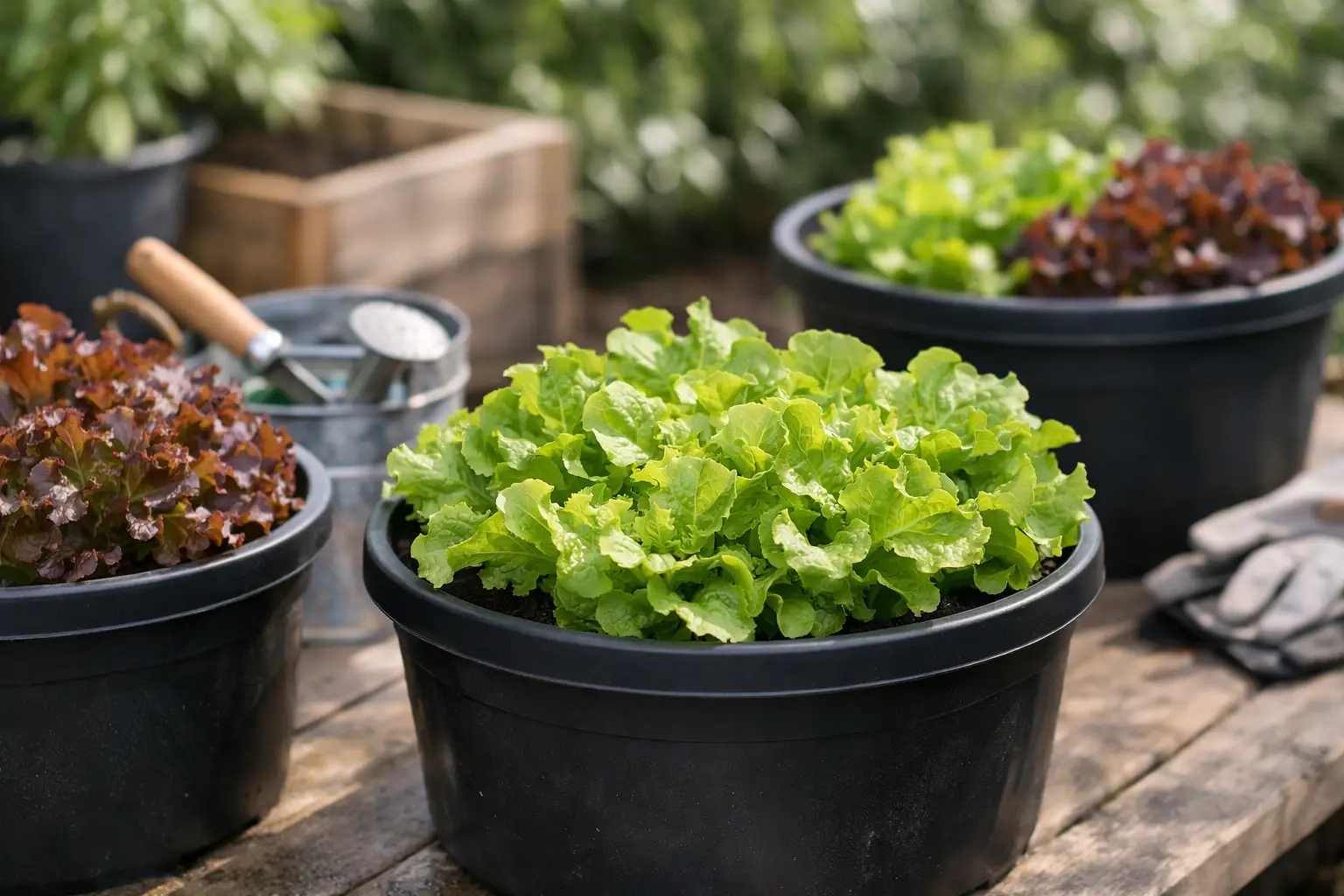
Start with the container itself. Lettuce does best in pots that are wider than they are deep. A container that is about 6 to 8 inches deep is usually enough for leaf lettuce, while romaine and butterhead appreciate a little more room. Width matters because lettuce is often grown as a group rather than a single plant.
Drainage is non-negotiable. If the pot does not have drainage holes, skip it. Lettuce likes consistent moisture, but soggy roots lead to rot quickly. Terra cotta looks nice, but it dries out faster than plastic or glazed pots, so it works best if you can check moisture often.
Potting mix is another place where people make life harder than it needs to be. Use a quality organic potting mix, not garden soil scooped from the yard. Garden soil compacts in containers and can stay too wet or too hard for good root growth. A light, moisture-retentive mix with compost blended in gives lettuce the balance it wants – enough air around the roots, but enough water-holding capacity to prevent constant stress.
If you like to build your own mix, aim for something loose and fertile. Compost helps, but too much can make a container mix heavy. Lettuce grows quickly, so it does not need extreme richness. It just needs steady access to moisture and gentle nutrients.
Choosing the best lettuce for pots
Not every lettuce behaves the same way in a container. Loose-leaf types are usually the easiest and most forgiving. They sprout quickly, fill in fast, and let you harvest outer leaves again and again. If you are a beginner, this is the best place to start.
Butterhead varieties also do well in containers because they stay fairly compact and tolerate close planting. Romaine can work beautifully too, especially in slightly deeper pots, but it needs more spacing. Crisphead types, including iceberg-style lettuce, are usually less practical for containers because they take longer and need more consistent conditions to form dense heads.
Mesclun mixes are a smart option if your goal is frequent salads rather than full heads. You can sow them thickly in a shallow, wide planter and cut baby greens several times.
Sowing seeds or planting starts
Lettuce grows so fast that seed is often the simplest choice. Scatter seed thinly across the surface of moist potting mix, cover lightly, and water gently. Lettuce seed does not want to be buried deeply. Keep the top layer evenly moist while seeds germinate, which usually happens quickly in cool weather.
If you want an even faster start, use nursery seedlings or your own transplants. Plant them at the same depth they were growing before, and avoid burying the crown. In containers, it is tempting to cram in too many plants, but crowding reduces airflow and can lead to smaller leaves and more mildew trouble.
For cut-and-come-again harvests, closer spacing is fine because you will be harvesting young. For full-size heads, give plants room based on the variety. This is one of those it-depends situations. The best spacing depends on whether you want baby greens in three weeks or mature heads later on.
Light, temperature, and seasonal timing
Lettuce loves cool weather. In most of the US, it grows best in spring and fall, and in mild winter regions it can keep going for a long stretch. Hot weather is what usually ends the party. Once temperatures climb, lettuce can turn bitter or bolt, sending up a flower stalk instead of making tender leaves.
That is why container placement matters so much. In early spring, full sun helps lettuce grow quickly. As the season warms, a spot with morning sun and afternoon shade often keeps it productive longer. One nice thing about growing lettuce in pots is that you can move containers when the weather shifts.
If you are trying to stretch the season, think practically. A little shade cloth, a position near taller plants, or even moving a pot to the east side of the house can buy you extra harvest time. It will not make lettuce love July heat, but it can slow stress.
Watering without overwatering
When people ask why container lettuce failed, watering is usually the answer. Lettuce needs soil that stays evenly moist, not bone dry and not swampy. Inconsistent watering leads to bitter flavor, limp growth, and early bolting.
Check the soil with your finger rather than watering by habit. If the top inch feels dry, it is time to water. In cool weather, that may not be every day. In warm, breezy conditions, containers can dry out surprisingly fast. Smaller pots dry faster than larger ones, and terra cotta dries faster than plastic or glazed ceramic.
Water deeply enough that moisture reaches the root zone, then let excess drain away. A thin daily sprinkle is not as helpful as a thorough soak when the soil actually needs it. Mulching the surface with a light layer of straw or shredded leaves can also help containers hold moisture a little longer.
Feeding lettuce the natural way
Lettuce is not a heavy feeder like corn or tomatoes, but fast growth does require some fertility. If your potting mix already contains compost, that may carry young plants a good way. For longer harvests, a gentle organic liquid fertilizer or fish-based feed diluted properly can help keep leaves growing steadily.
The key is moderation. Too much fertilizer can push soft, overly lush growth that attracts pests and loses flavor. A light feeding every couple of weeks is usually plenty for cut-and-come-again plantings. If leaves look healthy and growth is steady, do not feel pressured to add more.
Common problems with container lettuce
Slugs, aphids, and the occasional caterpillar are the usual troublemakers. The nice part about container growing is that problems are easier to catch early. A quick look at the undersides of leaves while you harvest often tells you what is going on.
Aphids can often be handled with a firm spray of water or by pinching off badly infested leaves. Slugs are more likely if containers stay in damp, shady spots. Good airflow and clean containers help reduce mildew and rot, especially when plants are packed closely.
If lettuce turns bitter, stretches, or starts forming a central stalk, heat is usually the issue rather than a disease. Once bolting starts, quality drops fast. At that point, it is better to compost the plant and sow another round when conditions improve.
Harvesting for the longest season
This is where container lettuce really shines. With loose-leaf types, you can harvest outer leaves first and leave the center growing. That gives you multiple pickings from the same planting. If you planted a mesclun mix, you can shear baby greens a couple of inches above the soil and often get another flush.
For head lettuce, harvest the full plant when it reaches usable size. Do not wait forever for perfection. Lettuce is best a little earlier rather than a little late, especially as the weather warms.
Succession planting helps more than anything else. Sow a small new pot or section every week or two instead of planting everything at once. That way you are not racing to eat all your lettuce in one week and then waiting a month for more.
A simple container lettuce setup that works
If you want the easiest path, use a wide container at least 6 inches deep, fill it with organic potting mix blended with compost, sow loose-leaf lettuce seed thinly, and place it where it gets sun in the morning. Water whenever the top inch dries, feed lightly if growth slows, and harvest young and often.
That simple setup works because it matches what lettuce actually wants. Not perfection. Just cool conditions, steady moisture, and enough room to grow without stress.
A pot of lettuce will not ask for much, but it gives back quickly. Once you grow your first container and start snipping fresh leaves a few steps from the kitchen, it becomes one of those garden habits that is hard to give up.