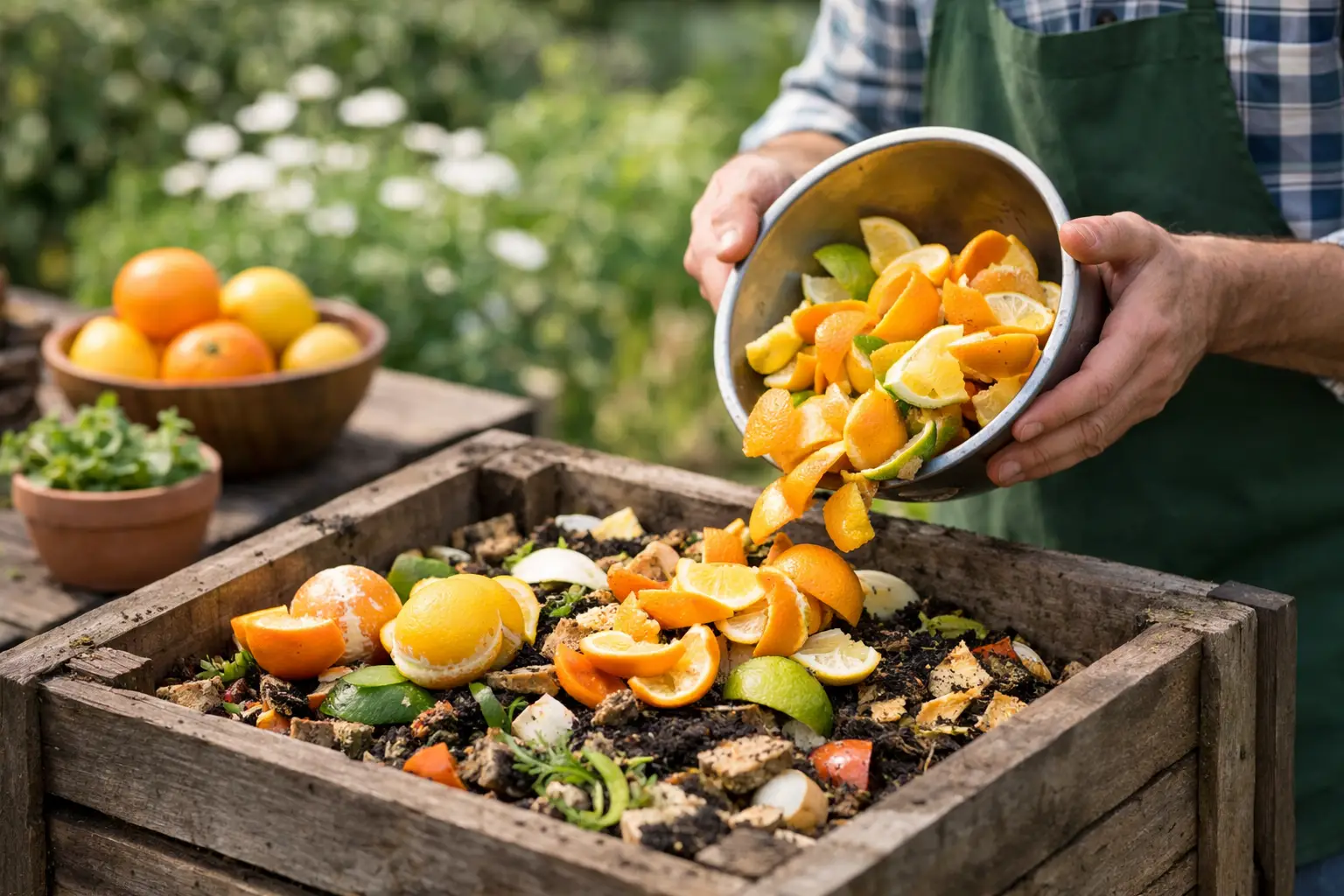
If you’ve ever stood over the compost bin after peeling an orange and wondered, can you compost citrus peels, the short answer is yes. The longer answer is that citrus works best when you treat it like one part of a balanced pile, not the whole show. A few peels from breakfast are no problem. A five-gallon bucket of lemons from a juicing spree needs a little more care.
Citrus gets a bad reputation in composting circles, usually because people hear that it is too acidic, too slow to break down, or harmful to worms. There’s a grain of truth in each concern, but not enough to make citrus peels off-limits for most home gardeners. In a backyard compost pile or tumbler, citrus is usually just another green material with a strong scent and a thicker skin.
Can you compost citrus peels in a home compost pile?
Yes, you can compost citrus peels in a home compost pile, tumbler, or enclosed bin. Orange, lemon, lime, grapefruit, and tangerine peels all break down over time. They are organic material, and once microbes get to work, they become part of the finished compost just like apple peels or squash scraps.
The catch is that citrus peels decompose more slowly than softer kitchen scraps. They have thick rinds, natural oils, and a waxy outer layer that can hang around longer, especially in cool or low-maintenance piles. That doesn’t mean they are a problem. It just means they need decent compost conditions to disappear.
If your compost pile already struggles with sogginess, poor airflow, or too many food scraps, a big load of citrus can add to the imbalance. But in a well-built pile with enough dry browns and occasional turning, citrus peels are completely workable.
Why citrus peels worry gardeners
Most concerns about citrus come down to three issues: acidity, worms, and pests.
Fresh citrus is acidic, but composting changes that. As the pile breaks down, the pH shifts and balances out. You are not going to ruin a whole compost pile by tossing in a few orange peels. Problems are more likely when one material dominates the pile, whether that is citrus, grass clippings, or coffee grounds.
Worm bins are a different story. Compost worms can handle small amounts of citrus, but they generally do not love a heavy load of it. Too much citrus in a vermicomposting setup can make the bin too acidic and irritating for the worms, especially because of the oils in the peel. So if you use a worm bin, go light. If you use a regular outdoor compost pile, this is much less of a concern.
Then there’s the pest question. Citrus scent can attract curious animals in some yards, though it may deter a few insects. In practice, any exposed food scrap can attract unwanted visitors if your compost is open and unmanaged. The better fix is not avoiding citrus altogether. It’s burying kitchen scraps in the pile and covering them with browns.
How to compost citrus peels without slowing things down
The easiest way to make citrus peels compost well is to help them break down faster from the start. A whole grapefruit rind will sit there much longer than chopped peels mixed through the pile.
Cut or tear citrus peels into small pieces before adding them. This gives microbes more surface area to work on and helps the peels mix evenly instead of matting together. If you have a lot of peels at once, spread them out over several compost additions rather than dumping them in one heavy layer.
It also helps to pair citrus with plenty of carbon-rich browns like dry leaves, shredded paper, pine straw, or small bits of cardboard. Kitchen scraps are nitrogen-rich and wet. Citrus is no exception. Browns soak up moisture, improve airflow, and keep the pile from turning into a dense, smelly mess.
If you maintain a hot compost pile, citrus peels will break down much more quickly. Heat, moisture, air, and a good mix of materials solve most compost problems before they start. If your pile is more of a slow, cool heap in the corner, that’s fine too. Just expect to spot a few peel fragments longer.
A simple rule for balance
A good rule of thumb is this: citrus should be an ingredient, not the main ingredient. If your compost bucket contains a mix of vegetable scraps, coffee grounds, wilted lettuce, and a few lemon peels, you’re in great shape. If it’s mostly orange rinds every week, balance it with extra browns and mix well.
This is especially helpful in smaller systems like countertop collectors emptied into a tumbler. In compact composters, any one material can take over faster than it would in a larger backyard pile.
Can you compost citrus peels if they are organic or treated?
You can compost both, but there is one practical difference to keep in mind. Some store-bought citrus is coated with food-grade wax to help it last longer in storage. That coating can slow breakdown a little, just like the peel itself already does. It is not usually a reason to throw the peels away, but it may mean they linger in the pile a bit longer.
If you buy organic citrus, you may feel more comfortable composting the peels, especially if you use the finished compost around edible plants. That said, a healthy compost pile breaks down many residues over time. For most home gardeners, the larger composting issue is still pile balance and airflow, not whether the orange came from a conventional or organic source.
When citrus peels are not the best fit
There are a few situations where you may want to be more selective.
If you are feeding a worm bin, use citrus sparingly and in small chopped amounts. If your worms start avoiding one corner of the bin, that’s your sign to back off.
If your compost pile is cold, compacted, and already overloaded with wet food scraps, adding pounds of citrus will not help. In that case, improve the system first. Add dry browns, fluff the pile, and fix drainage if needed.
And if you have a serious rodent issue, be more careful with all kitchen scraps, not just citrus. Use a closed bin, bury scraps in the center, and avoid leaving fresh peels exposed near the top.
What finished compost should look like
A good finished compost made with some citrus peels should smell earthy, feel crumbly, and no longer resemble the ingredients you started with. You might occasionally find a stubborn strip of orange peel that needs more time. That’s normal. Pick it out and toss it into the next batch, or let the pile cure longer.
Gardeners sometimes expect every scrap to vanish on the same timeline, but compost does not work that way. Avocado skins, corn cobs, and woody stems also take their time. Citrus peels just happen to be one of the more visible holdouts.
That doesn’t mean your compost is failing. It just means nature is working at its own pace.
The best use for citrus-heavy kitchen waste
If your household goes through a lot of citrus, especially in winter, think in smaller, steadier additions. A little at a time is easier on the pile and easier for you to manage. Freezing extra peels and adding them gradually can help if you suddenly have a large batch.
You can also dry peels first or blend them lightly with other scraps if you want them to break down faster. This is not required, but it can be useful in small compost systems where bulky peels tend to pile up.
For most gardeners, the simplest method is still the best one: chop, mix, cover, and let the compost do its job.
Citrus peels are not a composting mistake. They’re just one of those materials that ask for a little common sense. If your pile has the right balance of greens and browns, enough air, and reasonable moisture, those orange and lemon peels will turn into garden-ready organic matter right along with the rest. So the next time you finish a grapefruit, you can skip the second-guessing and feed the pile with confidence.