Tomatoes will tell you pretty quickly when they’re unhappy. Pale leaves, slow growth, blossoms that drop before fruit sets – it usually comes back to water, sunlight, or feeding. If you’re looking for the best organic fertilizers for tomatoes, the good news is you do not need a complicated shelf full of products. A few well-chosen organic options, used at the right time, can make a noticeable difference in plant health and harvest.
The trick is matching the fertilizer to the stage of growth. Tomatoes need nitrogen early for leafy growth, then more phosphorus and potassium as they begin flowering and setting fruit. Go too heavy on nitrogen all season, and you may get huge plants with surprisingly few tomatoes. Go too light overall, and plants struggle from the start.
What tomatoes really need from fertilizer
Tomatoes are hungry plants, but they are not all hungry for the same thing at the same time. Early on, they need enough nitrogen to build stems and leaves that can support later fruit. Once flowers appear, the balance matters more than the quantity. Too much quick nitrogen can push lots of greenery at the expense of blossoms and fruit.
Organic fertilizers are especially helpful here because many release nutrients more gradually than synthetic options. That slower feed can be gentler on roots and easier to manage in backyard gardens, raised beds, and containers. It also supports soil life, which is part of what keeps plants resilient through heat, uneven watering, and the normal stress of summer.
Before adding anything, it helps to know your soil. Rich garden beds with compost already mixed in need less fertilizer than a grow bag on a sunny patio. Containers usually need more frequent feeding because nutrients wash out faster with regular watering.
Best organic fertilizers for tomatoes by type
1. Compost
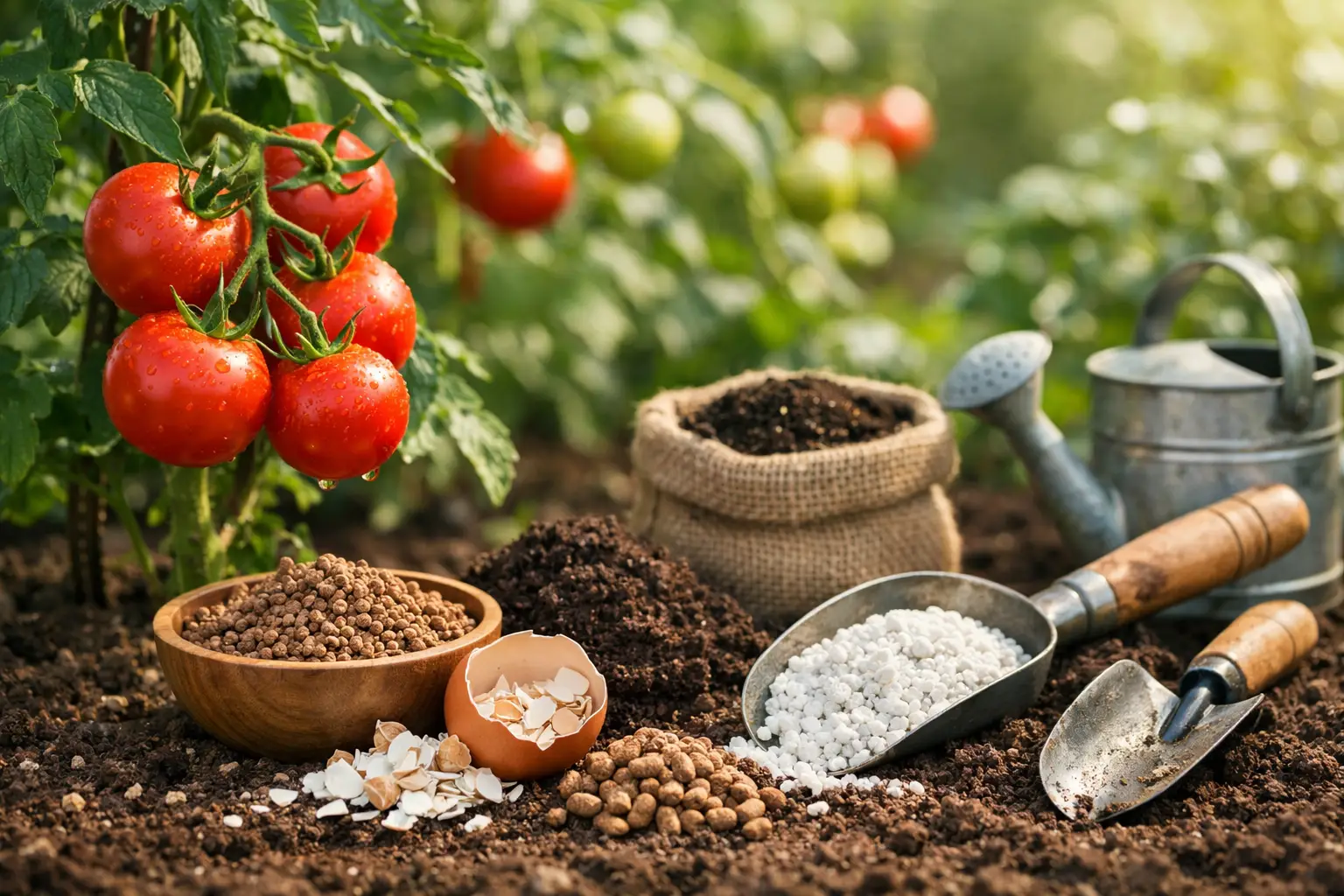
If I could only recommend one thing for tomatoes, it would be compost. It is not the most concentrated fertilizer, but it improves soil structure, water retention, drainage, and microbial life while adding a gentle range of nutrients. That matters just as much as the numbers on a bag.
Work compost into the bed before planting, and add a little around the base of plants as the season goes on. In containers, blend it into your potting mix rather than using it alone. Compost is a foundation, not a complete feeding plan for heavy producers, but it makes every other fertilizer work better.
2. Worm castings
Worm castings are one of the easiest organic tomato feeds for beginners because they are mild and hard to overdo. They add small amounts of nutrients, along with beneficial microbes that help support root health.
I like worm castings at planting time, especially for seedlings that need a gentle start. You can mix them into the planting hole, blend them into container soil, or use them as a top dressing. They are not enough by themselves for a full tomato season, but they are excellent support.
3. Fish emulsion
Fish emulsion is a fast-acting organic fertilizer that is especially useful when young tomato plants need a boost. If seedlings look pale or growth has stalled after transplanting, this can help them recover quickly.
The trade-off is that fish emulsion is usually higher in nitrogen, so it is best used early and with some restraint once flowering begins. It also has a smell. Some gardeners do not mind it, and some definitely do. In open garden beds it tends to be less of an issue than on a small patio.
4. Liquid seaweed or kelp
Seaweed fertilizer does not usually provide heavy feeding on its own, but it is a great supplement for tomatoes under stress. Heat, transplant shock, and inconsistent watering can all slow plants down. Kelp products often contain trace minerals and natural growth compounds that help plants bounce back.
Think of liquid seaweed as supportive rather than sufficient. It works well alongside compost, worm castings, or a balanced organic tomato fertilizer.
5. Bone meal
Bone meal is commonly used to add phosphorus, which supports root development and flowering. It can be useful at planting time, especially if your soil is low in phosphorus.
That said, bone meal is not something every garden needs. If your soil already has enough phosphorus, adding more will not magically create more tomatoes. In some soils, phosphorus also becomes less available depending on pH. This is one of those products that works well in the right situation and does very little in the wrong one.
6. Feather meal or blood meal
These are strong nitrogen sources, so they are best used with care. They can be helpful if your plants are clearly nitrogen deficient early in the season, with pale leaves and weak growth.
For most home gardeners, this is where overfeeding happens. A little too much and your tomato plants start acting like they are training for a leaf-growing competition. If you use either one, do it early, lightly, and not as your only fertilizer.
7. Alfalfa meal
Alfalfa meal is a nice middle-ground fertilizer. It adds some nitrogen, some potassium, and organic matter, and it breaks down steadily in the soil. Many gardeners like it for vegetables because it feeds the soil while feeding the plant.
It is a good option to mix into beds before planting. In containers, use smaller amounts since enclosed root zones can build up nutrients faster.
8. Organic tomato fertilizer blends
A good organic tomato blend is often the simplest choice. These products are made to offer a more balanced ratio for fruiting crops and may include ingredients like poultry manure, bone meal, sulfate of potash, kelp, or beneficial microbes.
This is often the most practical answer for gardeners who want less guesswork. Look for a formula that is not extremely high in nitrogen and is labeled for tomatoes or vegetables. You still need to follow the label, but a balanced blend can carry most of the season when paired with compost.
9. Composted poultry manure
This can be an excellent organic fertilizer for tomatoes because it provides a broader nutrient profile than some single-ingredient products. It tends to be richer than compost and can support steady growth.
The key word is composted. Fresh manure is too strong and can create problems with salts, burn, and food safety. Properly composted poultry manure is a different story and can be very effective in beds before planting.
10. Banana peels and other kitchen scraps
These get talked about a lot, usually as a miracle tomato trick. They are not. Banana peels do contain potassium, but they break down slowly and do not offer a balanced nutrient supply on demand.
If you compost kitchen scraps first, they become genuinely useful. If you bury random scraps next to your tomatoes and hope for the best, results are usually underwhelming. This is a good example of a gardening idea that sounds natural but works much better with a little patience.
How to choose the best organic fertilizers for tomatoes
The best choice depends on where your tomatoes are growing and what your soil is already doing well. In a rich in-ground bed, compost plus a balanced organic tomato fertilizer is often enough. In raised beds, the same approach works well, but you may need an extra midseason feeding if plants are loaded with fruit.
Containers are different. Tomatoes in pots need regular feeding because nutrients leach out with frequent watering. A slow-release organic fertilizer mixed into the potting soil, followed by liquid feeding every couple of weeks, is often the easiest routine.
If your plants already look deep green and vigorous, hold back on nitrogen-heavy products. If leaves are yellowing from the bottom up and growth is slow early in the season, a quicker nitrogen source may help. If plants are healthy but fruiting is weak, the answer may be pollination, heat stress, or watering inconsistency rather than more fertilizer.
When and how to feed tomatoes
Start before planting by enriching the soil with compost and, if needed, a balanced organic fertilizer. At transplanting, you can add worm castings or a small amount of a tomato-friendly granular fertilizer to help roots settle in.
Once plants begin active growth, feed lightly and consistently rather than in big doses. That steady rhythm usually works better than waiting until plants look worn out. When flowers and fruit appear, shift away from heavy nitrogen feeding and stay with a balanced product or one geared toward blooming and fruiting.
For container tomatoes, liquid feeding often makes life easier because nutrients become available quickly and can be applied in smaller, more controlled amounts. For bed-grown tomatoes, side-dressing with compost or granular organic fertilizer every few weeks can be enough.
Common feeding mistakes to avoid
The biggest mistake is assuming more fertilizer means more tomatoes. It often means more leaves. Another common problem is choosing one product based on a single nutrient and ignoring the bigger picture of soil health, watering, and timing.
It also helps to watch the plant before blaming the fertilizer. Curled leaves in extreme heat, blossom drop during hot nights, and cracked fruit after uneven watering are not usually fertilizer problems. Healthy tomatoes come from a whole system working together.
If you want a simple starting point, use compost as your base, add a balanced organic tomato fertilizer, and adjust only if your plants show a clear need. That approach is practical, forgiving, and usually more successful than chasing every garden tip that pops up online.
Tomatoes do best when feeding feels steady, not frantic. Keep it simple, pay attention to what the plant is telling you, and your garden will usually meet you halfway.