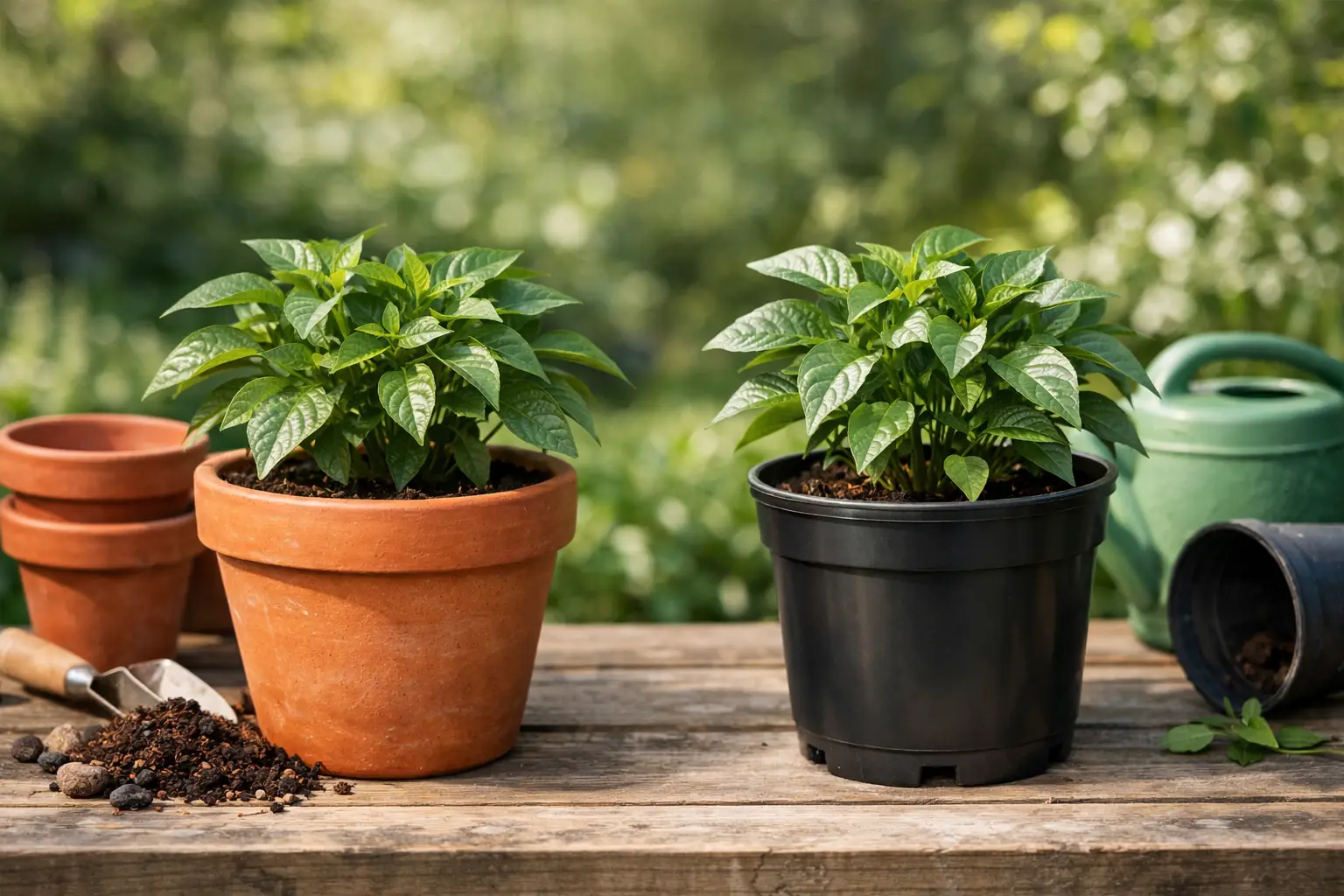
A wilted basil plant on a sunny patio can make you blame your soil, fertilizer, or gardening skills. Sometimes, though, the real issue is the container. In the terra cotta vs plastic pots debate, neither material wins every time. The better choice depends on how thirsty your plant is, how hot your summer gets, and how often you can realistically water.
I have grown tomatoes that loved the steady moisture of a roomy plastic pot and Mediterranean herbs that stayed much happier in breathable terra cotta. Choosing the right pot is not about following a strict rule. It is about giving roots the conditions they need with the least amount of fuss.
How Terra Cotta Pots Behave in the Garden
Traditional terra cotta is made from fired clay, and its natural orange-brown color fits beautifully into almost any garden. More importantly, unglazed terra cotta is porous. Water and air can move through the pot walls, not only through the drainage hole.
That breathability can be a real benefit for plants that dislike sitting in wet soil. The potting mix dries more quickly, which brings oxygen to the root zone and lowers the chance of soggy, rotting roots. If you have ever overwatered a rosemary, lavender, sage, or succulent, terra cotta can give you a little more room for error.
The trade-off is simple: terra cotta needs more frequent watering. On a hot, dry, or windy day, a small clay pot may dry out surprisingly fast. This is especially true for patio containers that receive afternoon sun. A thirsty tomato or pepper can go from fine to floppy in a short stretch of summer heat.
Terra cotta is also heavier than plastic. That makes it a good choice for tall plants that might topple in the wind, but it is less convenient if you regularly rearrange containers or garden on a balcony with weight limits.
Best plants for terra cotta
Terra cotta is a natural fit for drought-tolerant plants and plants that want excellent drainage. Consider using it for herbs such as thyme, oregano, rosemary, and sage, along with succulents, cacti, and many houseplants that prefer drying slightly between waterings.
It can also work well for plants you tend to overwater. The pot will not solve chronic overwatering, but it does help soil dry more evenly than it would in a nonporous container.
Why Plastic Pots Make Gardening Easier
Plastic pots are lightweight, affordable, and widely available in every size from a small herb container to a large tomato planter. Because plastic is nonporous, it holds moisture in the potting mix longer than terra cotta does. For busy gardeners, that can be a major advantage.
Vegetables with large leaves and fast growth, including tomatoes, cucumbers, squash, and leafy greens, often appreciate more consistent moisture. A plastic pot does not replace regular watering, but it slows down moisture loss. That can mean fewer wilted plants during a heat wave and less time spent with a hose in hand.
Plastic is also useful for gardeners who need to move pots to chase the sun, protect plants from a cold night, or bring tender herbs indoors. A large terra cotta container filled with moist soil can be very heavy. A plastic one is far more manageable.
The downside is that plastic containers can stay wet too long, especially if the pot is oversized, the soil is dense, or drainage holes are poor. Roots need air as much as they need water. A plant in a plastic pot may look thirsty on top while the lower root zone is still soaked.
Dark plastic can also heat up in full sun. In warm parts of the US, black nursery pots may become hot enough to stress roots, particularly when they sit on concrete or a sunny deck. Choose lighter-colored plastic when possible, tuck pots into a larger decorative container, or shade the sides of the pot while keeping the foliage in the sun.
Best plants for plastic pots
Plastic is often the practical choice for moisture-loving annuals, vegetables, and patio plants. Tomatoes, peppers, lettuce, basil, parsley, and flowering annuals usually benefit from the steadier moisture it provides.
For a beginner growing food in containers, plastic can also be more forgiving. It gives you a little longer between waterings while you learn how quickly your particular plants and potting mix dry out.
Terra Cotta vs Plastic Pots: The Factors That Matter Most
Rather than choosing based on appearance alone, think through the conditions in your garden.
Your climate and sun exposure
In a humid climate or a shaded growing area, terra cotta can help prevent soil from staying overly wet. In a dry climate, or on an exposed sunny patio, plastic may save you from watering twice a day during the hottest part of summer.
If your containers receive intense afternoon sun, pot color matters nearly as much as material. A light-colored plastic pot will usually keep roots cooler than a black one. Terra cotta can also warm up, but its thick clay walls tend to moderate temperature changes better than thin plastic.
Your watering routine
Be honest about your habits. If you enjoy checking plants every morning and are quick to notice dry soil, terra cotta may suit you well. If you travel, have a packed schedule, or simply want containers that hold moisture longer, plastic is often the kinder choice.
A good watering routine still starts with the soil, not the calendar. Push a finger about an inch into the potting mix. Water when it feels dry at that depth for most herbs and vegetables, then water deeply until it runs from the drainage holes. Succulents and other drought-loving plants should dry more thoroughly before their next drink.
Pot size and drainage
Material cannot make up for a pot that is too small. A tomato in a tiny terra cotta pot will dry out constantly, while a rosemary plant in an oversized plastic pot may stay damp for too long. Match the container size to the mature plant, not the small transplant you brought home.
Every container needs drainage holes. If you are reusing a decorative pot without them, drill several holes before planting. Skip the old advice to put rocks in the bottom of the pot. Rocks do not improve drainage and can create a wetter zone around the roots. Use a quality organic potting mix instead, and keep the drainage holes clear.
Which Option Is More Eco-Friendly?
The answer is not as tidy as clay equals good and plastic equals bad. Terra cotta is made from a natural material and can last for many years when handled carefully. But clay must be mined, shaped, and fired at high temperatures, which requires energy. It can also crack if left outdoors through freeze-thaw cycles.
Plastic is made from fossil fuel-based materials, but a sturdy pot that gets reused for years can be a practical, lower-waste choice than repeatedly replacing broken containers. The most sustainable pot is often the one you will use for a long time.
If you choose plastic, look for thick, durable pots rather than flimsy ones that split after one season. Reuse nursery pots for seedlings, storage, or sharing plant divisions with friends. When a pot finally fails, check whether your local recycling program accepts that type of plastic, since curbside rules vary.
If you choose terra cotta in a cold-winter area, empty it or move it into a protected shed or garage before hard freezes. Moist soil expands as it freezes, and that pressure is what often cracks clay pots. A little seasonal care can keep a favorite pot in service for years.
A Simple Choice for Common Container Plants
For thirsty vegetables and annual flowers, start with plastic or another nonporous container, especially if your patio gets hot. For herbs that prefer dry roots, succulents, and gardeners who tend to water too often, choose unglazed terra cotta.
There is also no reason to commit to one material throughout your garden. Use plastic for a large tomato container that needs reliable moisture, then place rosemary and thyme in terra cotta nearby. The mix can look charming and, more importantly, it lets each plant grow in conditions that match its nature.
Before buying another pot, take a minute to watch your space for a day. Notice where the sun lingers, where wind dries the soil, and how often you are truly able to water. That small bit of observation will guide you to a container choice your plants can live happily with.