A handful of basil leaves picked for pasta can make a tiny patio feel surprisingly productive. That is the charm of growing herbs: you do not need a big backyard, raised beds, or a complicated setup to harvest something useful. The best herbs for small spaces are the ones that stay manageable, suit the light you actually have, and reward you for picking them often.
Herbs are also a friendly place to start if you are new to growing food organically. Most need modest care, smell wonderful, and can be grown without synthetic fertilizers or pest sprays. Give them the right container, decent potting mix, and a little attention to watering, and they will do a lot with very little room.
What makes an herb a good small-space grower?
The best container herbs are not always the smallest plants. What matters more is whether they can be harvested regularly, whether their roots tolerate a pot, and whether their mature size matches your available space. A sprawling rosemary shrub may be beautiful, for example, but it can outgrow a narrow windowsill quickly. Basil, on the other hand, stays productive when pinched back and fits happily into a medium pot.
Before choosing plants, take an honest look at your light. Most culinary herbs grow best with six or more hours of direct sun. A south- or west-facing patio, balcony, stoop, or window is ideal. If your space gets only bright indirect light or a few hours of sun, focus on herbs that accept partial shade rather than trying to force sun lovers to make do.
Containers matter, too. Use pots with drainage holes, and avoid filling them with dense yard soil. A quality organic potting mix holds moisture without becoming waterlogged, which is especially helpful when containers dry out quickly in summer.
The best herbs for small spaces
Basil for sunny pots and frequent harvests
Basil earns its place in almost every small garden because it grows fast, tastes far better fresh, and responds well to regular picking. Compact varieties, including bush basil and smaller-leaved types, are especially useful when room is tight. Even standard Genovese basil can thrive in an 8- to 12-inch pot if you keep pinching stems just above a set of leaves.
Basil wants warmth, sun, and consistently moist soil. It is not a plant that enjoys cold nights, so wait until temperatures are reliably mild before putting it outside. Pick flower buds as soon as you see them. Once basil starts flowering, its leaf production slows and the flavor can become sharper.
Chives for a tidy, reliable clump
Chives are one of the easiest herbs for beginners because they stay contained in a neat clump and come back year after year in many climates. Their slender leaves take up very little visual or physical space, yet you can snip a surprising amount for baked potatoes, eggs, salads, and dressings.
They grow well in full sun but are more forgiving of partial shade than basil. A 6- to 8-inch pot is usually enough for one plant. In spring, you may get round purple blooms that are edible and loved by pollinators. Let a few flowers open, then cut the rest if you want the plant to put more energy into fresh leaves.
Parsley for bright spots with less intense sun
Parsley is often treated as a garnish, but it deserves better. Flat-leaf parsley adds fresh flavor to soups, sauces, grain bowls, and roasted vegetables, while curly parsley brings texture to a container planting. It handles cool weather nicely and can grow in bright light with some afternoon shade, making it useful where full-sun herbs struggle.
Its one request is root room. Choose a container at least 8 inches deep, since parsley develops a long taproot. Keep the soil evenly moist, especially during hot spells. Parsley is usually grown as a biennial, but many gardeners replace it each year once it begins to flower in its second season.
Thyme for hot, sunny edges
Thyme is a small-space favorite for gardeners who tend to overwater. Its woody stems and tiny leaves prefer soil that dries a bit between waterings, which makes it well suited to sunny pots and dry container edges. Common thyme stays compact, while creeping thyme can spill gently over the side of a planter.
The trade-off is that thyme dislikes soggy roots. Pair it with other drought-tolerant herbs, such as oregano, rather than moisture-loving basil. Use a potting mix that drains freely and water deeply only when the top inch or two of soil feels dry.
Oregano for flavor that keeps coming
Oregano is generous, tough, and ideal for cooks who love Italian and Greek dishes. It can spread, but that is much easier to manage in a pot than in a garden bed. Give it its own container or let it trail from the edge of a larger planter with thyme.
Like thyme, oregano prefers full sun and lighter watering. Trim it often to keep it leafy instead of lanky. The stems can become woody over time, so cutting back a third of the plant in late spring or after a big harvest encourages softer new growth.
Mint, but only in its own pot
Mint is one of the most useful herbs for a small space and one of the least suitable for sharing a container. It spreads through underground runners and will crowd out nearly anything planted beside it. Keeping mint in its own pot is not fussy gardening. It is simple prevention.
Place it where it receives morning sun and some afternoon protection if your summers are very hot. Mint likes more moisture than Mediterranean herbs, so check it often during warm weather. Spearmint, peppermint, and chocolate mint all work well for tea, cold drinks, fruit salads, and sauces.
Cilantro for cool seasons
Cilantro is a great small-space crop because it grows quickly from seed and does not need a large pot. The challenge is timing. It bolts, or sends up flowers, when weather turns hot, so it is best grown in spring and fall across much of the United States.
Sow a small pinch of seeds every two or three weeks instead of planting a large amount once. That simple succession planting gives you a steadier supply of leaves. When plants flower, do not pull them out right away if you enjoy coriander seed or want beneficial insects to visit your containers.
Rosemary for a long-term sunny container
Rosemary has a wonderful fragrance, handsome evergreen leaves, and a flavor that holds up beautifully in roasted meals. It is a smart choice if you have a sunny location and want an herb that can live in the same pot for years. Choose an upright but compact variety if space is limited.
Rosemary is less forgiving than chives or mint. It needs strong light, excellent drainage, and restraint with watering. In cold-winter areas, bring the pot into a bright, protected place before a hard freeze, or treat it as a seasonal plant. A small rosemary plant is much easier to move than a large, established shrub.
Lemon balm for a gentle, citrusy harvest
Lemon balm brings a bright lemon scent to teas, fruit, and summer drinks. It tolerates partial shade better than many culinary herbs and grows well in containers, especially when you cut it back regularly. Like mint, it can spread enthusiastically in the ground, so a pot keeps it civilized.
Use a container at least 8 inches wide and keep the soil lightly moist. Harvest young leaves before flowers appear for the best flavor. If it starts looking scraggly in midsummer, cut it back by about one-third and give it a drink. It usually responds with a fresh flush of growth.
Dill for narrow spaces and quick crops
Dill has feathery foliage, a fresh tangy flavor, and a tall but narrow habit. It is useful when you have more vertical room than horizontal room. A deep pot is more important than a wide one because dill develops a taproot and does not love being transplanted.
Grow it from seed in a container at least 10 inches deep. It prefers full sun and cool-to-mild weather. Dill can become floppy in wind, so tuck its pot against a railing or wall for support. Let a few flower heads mature if you want dill seed for pickling.
How to arrange herbs in a small container garden
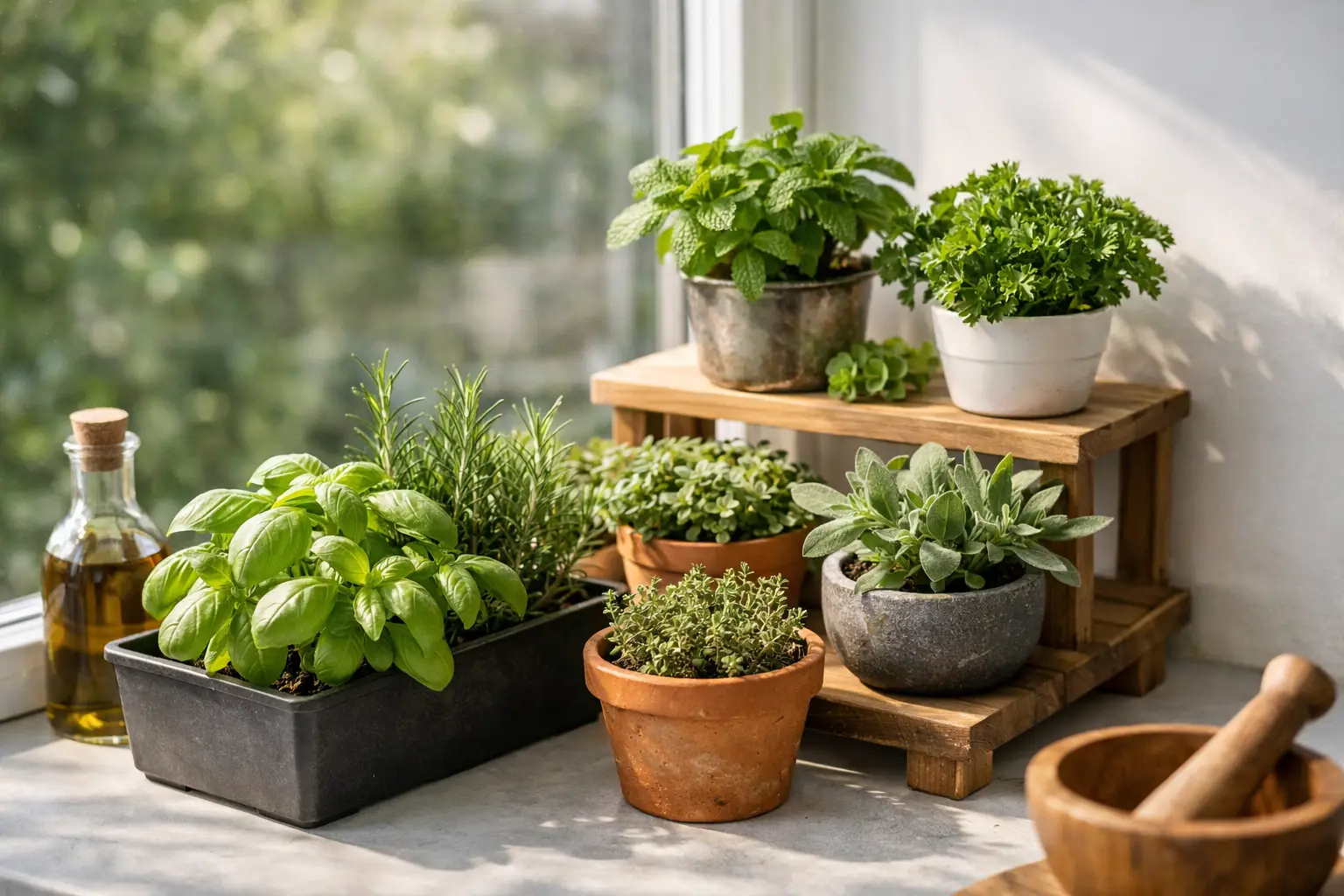
The simplest approach is to group herbs by water needs, not just by appearance. Basil, parsley, chives, cilantro, and lemon balm prefer more consistent moisture. Thyme, oregano, and rosemary want drier soil and should share a separate pot or planter. Mint gets its own container, always.
For a sunny railing planter, try thyme and oregano together, with a trailing oregano placed near the edge. For a larger patio pot, basil and chives can coexist if there is enough room around each plant. If you only have a bright kitchen window, grow one or two herbs per pot rather than crowding six seedlings into a single container.
Crowding is a common reason small herb gardens disappoint. Plants may look sparse at first, but leaves need airflow and roots need room to absorb water and nutrients. A few healthy plants will outproduce a jammed planter that is constantly stressed.
Simple organic care that keeps herbs productive
Check containers every day or two in hot weather. The best time to water is when the soil feels dry just below the surface, not simply because the calendar says it is watering day. Water the soil slowly until excess drains from the bottom, then empty saucers so roots are not sitting in water.
Herbs are generally light feeders. Refreshing potting mix each season and adding a small amount of compost is often enough. If growth is pale or slow in midsummer, use a diluted organic liquid fertilizer, but do not overdo it. Too much nitrogen can create lots of soft growth with less concentrated flavor.
Finally, harvest often. Snipping herbs is not taking away from the plant. For many varieties, it is the pruning that keeps them compact, branching, and useful. Start with the herb you cook with most, place it where you will pass it daily, and let a few fresh leaves become part of your routine.