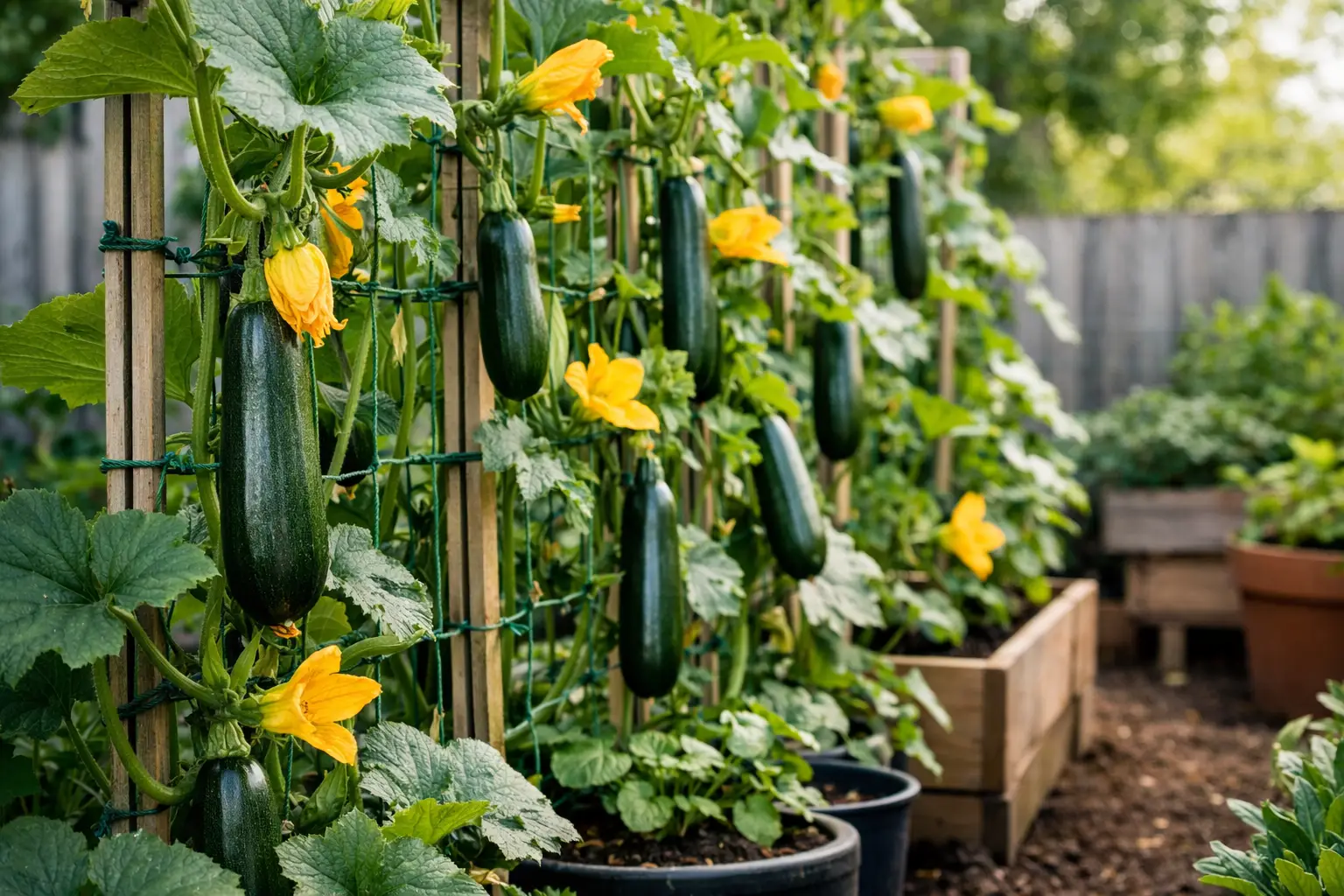
A zucchini plant can look modest in June and then, almost overnight, claim three feet of garden bed with prickly leaves and long, wandering stems. Learning how to grow zucchini vertically helps keep that enthusiasm in check. You get more usable space, better airflow, cleaner fruit, and a much easier time spotting squash bugs before they become a problem.
Vertical growing will not turn every zucchini into a tidy vine. Most common zucchini varieties are bush types, so they need gentle training and reliable support rather than a trellis they will climb on their own. But with a few simple adjustments, even a bush zucchini can grow upward beautifully.
Why grow zucchini upward?
The biggest benefit is space. A zucchini plant grown on the ground can spread two to four feet wide, which is a lot to surrender in a raised bed or patio garden. Training the main stem upward narrows its footprint and leaves room for herbs, lettuce, marigolds, or another vegetable nearby.
Lifting foliage off the soil also improves air movement around the plant. That matters because zucchini is prone to powdery mildew, especially during humid stretches or when leaves stay damp after watering. Vertical growing does not make mildew impossible, but it can reduce the crowded, moist conditions that encourage it.
There is a practical harvest benefit, too. Fruit is easier to see before it grows from tender and delicious to the size of a baseball bat. Keeping zucchini off bare soil also helps prevent rot, slug damage, and those pale spots that develop where fruit rests on the ground.
Choose the right zucchini and support
If you are starting from seed, look for compact, open-growing, or climbing varieties. A true vining type, sometimes sold as climbing zucchini, is naturally easiest to grow on a trellis. Traditional bush zucchini varieties such as Black Beauty can still be trained vertically, but they need a sturdier support system and more regular tying.
For one plant, a tomato cage reinforced with a stake often works well. For several plants, use a cattle panel, strong garden trellis, or a simple wooden frame with heavy twine. The support should stand at least four to five feet tall and be anchored before planting. Zucchini gets surprisingly heavy once leaves and fruit fill out, and a flimsy trellis can lean or collapse after a summer storm.
Avoid lightweight decorative trellises meant for sweet peas or small flowers. They may look charming in spring, but zucchini stems and fruit put real weight on a structure by midsummer.
A simple setup for raised beds and containers
Place a sturdy stake or trellis at the back of the planting spot, then set your zucchini seedling about 6 to 10 inches in front of it. This gives the roots room to settle without being crowded by the support.
In a container, use at least a 5-gallon pot, though 10 gallons is more forgiving in hot weather. Choose a pot with drainage holes and add the trellis or cage at planting time. Trying to push a stake into a pot later can damage the roots just when the plant is beginning to produce.
How to grow zucchini vertically, step by step
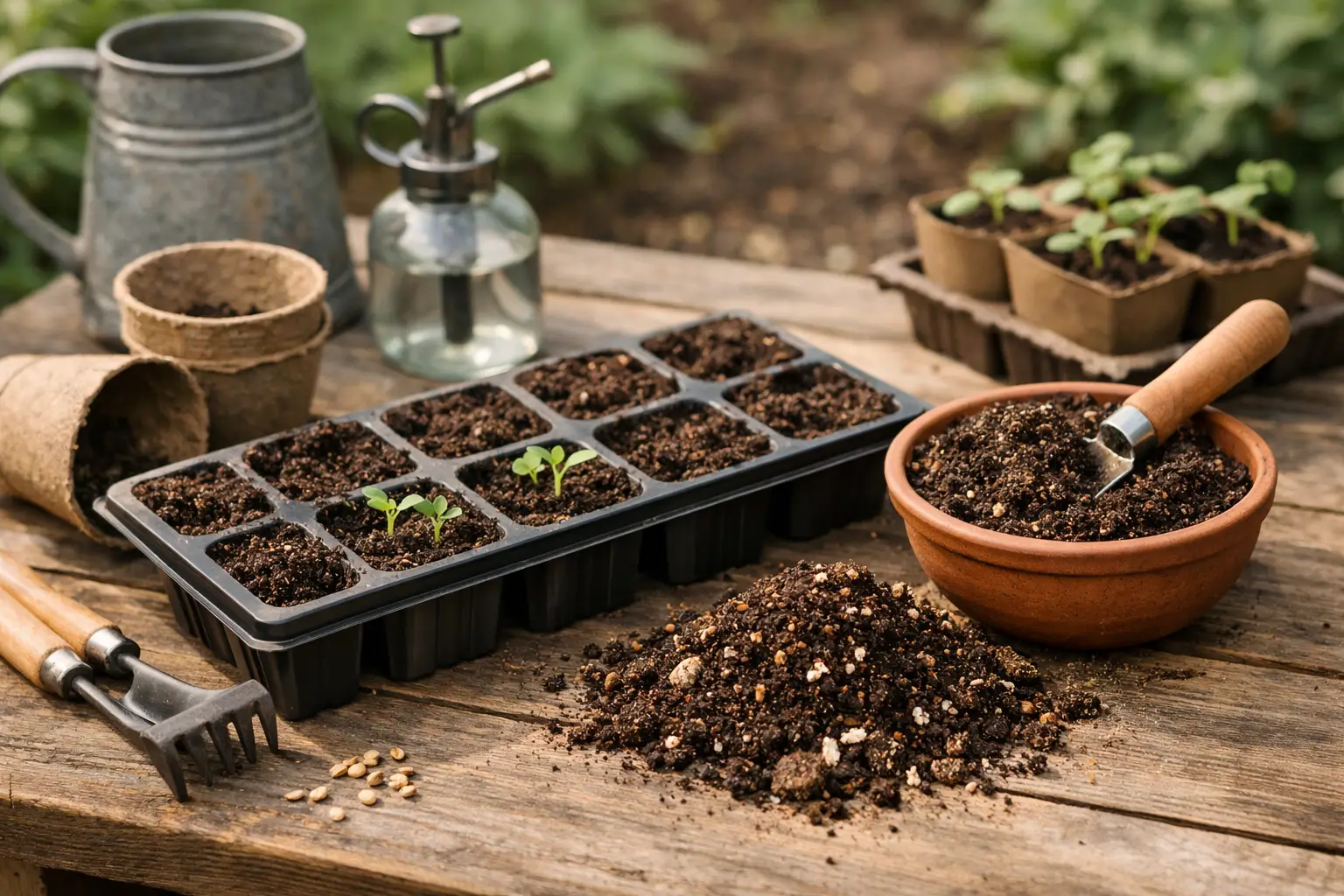
Start with healthy soil. Zucchini is a hungry plant and grows best in loose, compost-rich soil with full sun, ideally at least six to eight hours daily. Mix in finished compost before planting, then water deeply after seeds germinate or transplants go into the ground.
As the main stem lengthens, guide it toward the support. Do not force a stiff stem sharply upward. Instead, ease it into position over a few days and secure it loosely with soft plant ties, strips of old cotton T-shirt, or reusable fabric ties. Tie the stem every 8 to 12 inches as it grows.
The key word is loosely. Zucchini stems expand quickly, and a tight tie can pinch the plant. A figure-eight tie, with one loop around the stake and one around the stem, prevents rubbing while leaving breathing room.
Bush zucchini usually forms a central stem with large leaves radiating around it. As it gets taller, remove only the oldest leaves near the bottom when they are yellowing, damaged, touching the soil, or heavily mildewed. This opens the base of the plant and makes it easier to inspect for pests. Do not strip away healthy leaves just to make the plant look neat. Those broad leaves are what feed the fruit.
If your plant produces a long, sprawling stem, continue tying it up the trellis. Support large developing zucchini with a cloth sling if the stem begins to bend under the weight. An old piece of pantyhose, soft mesh, or a strip of fabric tied to the trellis works well. This is more useful for long-fruited varieties than for smaller zucchini picked young.
Water and feed without encouraging disease
Vertical zucchini still needs consistent moisture. Check the soil a few inches below the surface and water deeply when it feels dry. In containers, this may mean watering daily during hot, dry periods. In garden beds, a slow, deep watering one or two times a week is usually better than frequent shallow sprinkling.
Water at the base in the morning whenever possible. Wet leaves overnight are an open invitation to fungal trouble. A layer of untreated straw, shredded leaves, or other clean organic mulch helps hold soil moisture and reduces splashing onto lower leaves.
For feeding, compost is a good foundation. Once the plant begins flowering, a light application of an organic vegetable fertilizer can help if growth is pale or fruit production slows. Go easy on high-nitrogen fertilizers. Too much nitrogen can give you a huge, impressive-looking plant with plenty of leaves and not many zucchini.
Help pollination and watch for early problems
A zucchini plant makes separate male and female flowers. Female flowers have a tiny zucchini-shaped swelling behind the petals, while male flowers sit on a thinner stem. Bees usually handle the work, but cool, rainy weather or a lack of pollinators can lead to little fruits that yellow and rot before growing.
If that happens repeatedly, hand-pollinate in the morning. Pick a freshly opened male flower, peel back the petals, and gently brush the pollen-covered center against the center of an open female flower. It takes less than a minute and can make a real difference in a small backyard garden.
Vertical growing makes pest checks much less frustrating. Look under leaves and along stems every few days for bronze squash bug eggs, gray-brown adult bugs, or orange-red nymphs. Remove eggs by hand and drop them into soapy water. For young squash bug nymphs, insecticidal soap can help when sprayed directly on them, following the label directions. Neem is sometimes suggested for every garden pest, but it is not a cure-all and can affect beneficial insects when used carelessly. Start with hand removal, healthy soil, and regular inspection.
Powdery mildew looks like patches of white flour on the leaves. Remove badly affected leaves, improve airflow, and keep water off foliage. A milk-and-water spray is a gentle option some gardeners use early in the season, but it works best as prevention or at the first small signs, not as a rescue for a heavily infected plant.
Harvest often for a longer season
Pick standard zucchini when they are about 6 to 8 inches long, or according to the variety’s best eating size. Smaller fruit is more tender, has fewer large seeds, and encourages the plant to keep producing. Check daily during peak season because zucchini has a talent for hiding beneath leaves and doubling in size when no one is looking.
Use clean pruners or a sharp knife to cut the fruit, leaving a short bit of stem attached. Twisting can damage the plant, especially when it is tied to a support.
A vertical zucchini plant may look a little unconventional at first, particularly if you are training a bush variety. Give it a sturdy frame, tie it gently, and let the plant keep its healthy leaves. Before long, your small growing space will feel less crowded, your harvest will be easier to reach, and you may find yourself looking forward to that daily zucchini check.