A tiny tomato seedling can look hungry long before it actually needs food. I learned this after feeding a tray of peppers too early and watching the leaf edges turn brown. Knowing how to fertilize vegetable seedlings is less about giving them the strongest plant food you can find and more about offering a small, well-timed boost.
Seedlings are still building their roots, stems, and first true leaves. Treat them gently now, and they will be much better prepared for life in the garden, a raised bed, or a patio container.
Start With the Soil Mix You Used
Whether seedlings need fertilizer right away depends largely on what they are growing in. Most seed-starting mixes are designed to be light, fluffy, and sterile so seeds can sprout easily. They often contain few or no nutrients. That is not a problem at first because a seed comes with its own stored energy.
Potting mixes are different. Many contain compost, worm castings, or a small amount of slow-release organic fertilizer. If your seedlings are in a nutrient-enriched potting mix, wait longer before feeding them. Adding more fertilizer too soon can create a buildup of salts around tender roots.
Check the bag if you still have it. A mix labeled for seed starting usually needs fertilizer after seedlings establish themselves. A mix labeled as enriched or containing plant food may carry seedlings for several weeks.
When to Fertilize Vegetable Seedlings
Wait until seedlings have developed their first set of true leaves. These are the leaves that appear after the smooth, simple seed leaves, called cotyledons. True leaves look more like the mature plant’s foliage. Tomato seedlings develop their familiar jagged leaves, while squash seedlings produce broader, rougher leaves.
At this stage, the stored energy in the seed is running low and the roots are beginning to explore the potting mix. That is the right moment for a light feeding.
There are a few exceptions. If you transplanted seedlings into a rich homemade mix containing finished compost, or if they are only a week from being planted outdoors, they may not need additional fertilizer. On the other hand, seedlings growing indoors for several extra weeks often benefit from regular, diluted feeding.
The goal is steady growth, not fast growth. A seedling that is pushed too hard can become soft, stretched, and harder to transplant successfully.
How to Fertilize Vegetable Seedlings Without Burn
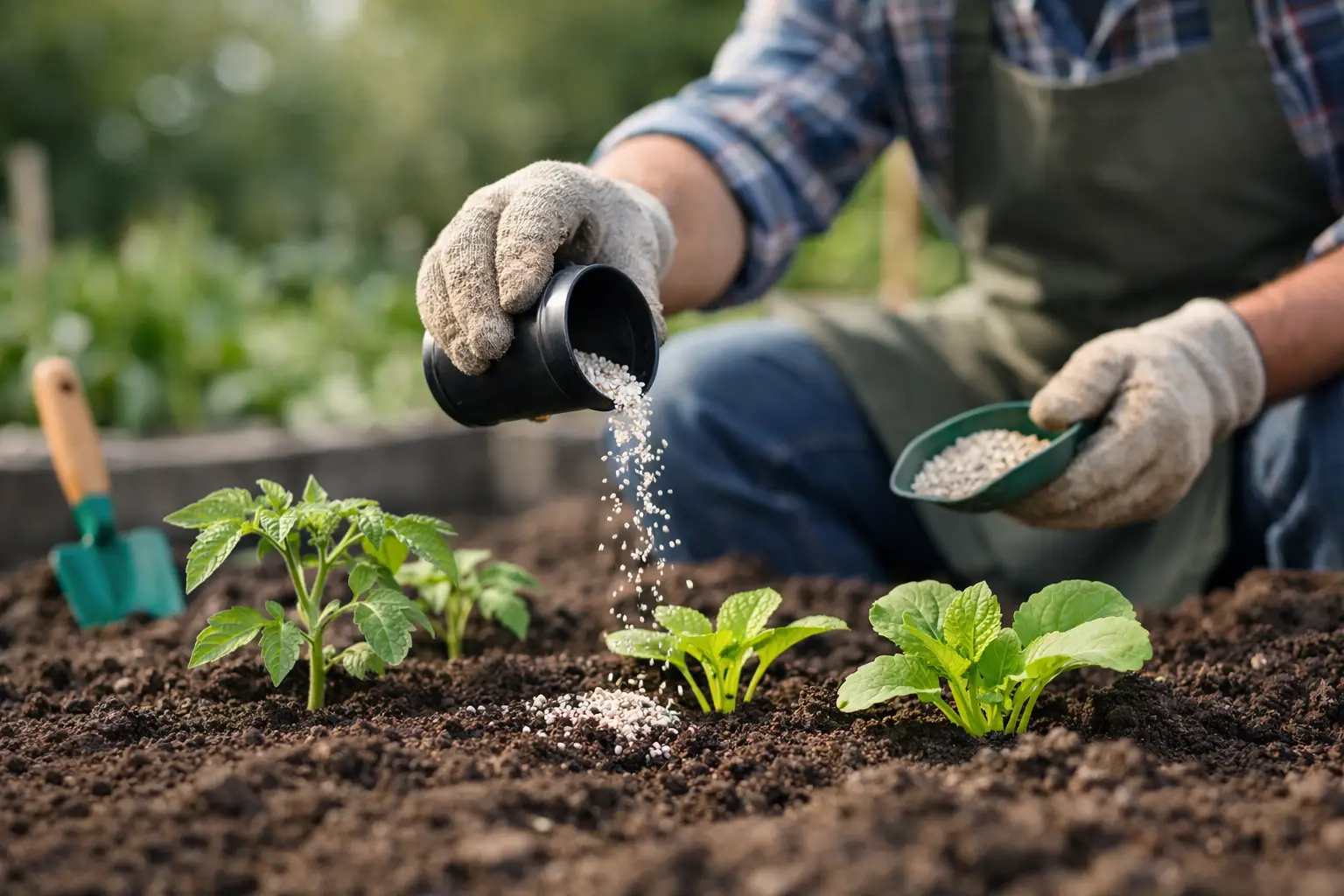
Use a liquid organic fertilizer diluted more than the label recommends for established plants. For most products, start at one-quarter to one-half strength. If the label says to mix one tablespoon per gallon of water, use one teaspoon to one-and-a-half teaspoons per gallon for young seedlings.
Water the potting mix lightly first if it is very dry. Then apply the diluted fertilizer to the soil, not directly over the leaves. The roots are where you want the nutrition to go, and wet foliage can encourage fungal problems when seedlings are crowded indoors.
For most vegetables, feed every one to two weeks. Weekly feeding at quarter strength works well for seedlings that will remain in cell packs for a while. Feeding every other week at half strength is a simpler routine for gardeners who are short on time. Either approach can work, as long as the plants look healthy and are not receiving more fertilizer than they can use.
Use plain water between feedings. This helps prevent excess fertilizer salts from collecting in the mix. If you notice a pale crust on the soil surface or around drainage holes, flush the cells with plain water until it runs freely from the bottom, then let them drain well.
Gentle organic choices for young plants
Look for a fertilizer that is water-soluble and labeled for vegetables, herbs, or seedlings. The best choice is often the one you can mix accurately and use consistently. These are all reasonable natural options:
- Liquid fish fertilizer provides a quick, balanced feeding, though its smell is not everyone’s favorite indoors.
- Kelp or seaweed fertilizer supplies trace minerals and is especially gentle, but it may not contain enough nitrogen by itself for long-term feeding.
- Liquid fertilizers made from worm castings are mild and easy to use, particularly for seedlings growing in containers.
- A balanced organic vegetable fertilizer, mixed as a weak liquid, offers more complete nutrition for hungry crops such as tomatoes, peppers, broccoli, and cabbage.
Compost tea can be useful when made carefully, but it is not necessary for healthy seedlings. Finished compost is wonderful in garden beds, yet it is usually too coarse and unpredictable to be the main fertilizer in tiny seedling cells. A simple diluted liquid fertilizer gives more reliable results.
Let the Plant Tell You What It Needs
Seedlings do not always need more food when they look unhappy. Light, temperature, watering, and root space all affect their appearance. Before reaching for fertilizer, take a close look.
Pale new growth on seedlings that have true leaves and are growing in a nutrient-free mix can point to a need for fertilizer. Slow growth, despite good light and proper watering, may also be a clue. Start with one light feeding and watch for improvement over the next week.
Dark green leaves, curled tips, brown edges, or limp plants after fertilizing are signs to pause. These can indicate fertilizer burn or overly wet roots. Flush the potting mix with plain water, allow it to drain, and hold off on feeding until new growth looks normal.
Leggy seedlings are another common concern, but fertilizer is rarely the fix. If stems are long and thin, move the grow light closer, increase light duration, or give plants more room for air circulation. Fertilizer cannot make up for weak light.
Adjust Feeding for Different Vegetables
Leafy greens such as lettuce, kale, and cabbage appreciate a modest, balanced feeding while they are in pots. They tend to respond quickly, so do not overdo it. Too much nitrogen can make foliage lush but tender.
Tomatoes, peppers, eggplants, and broccoli are often indoors longer and may need two or three light feedings before transplanting. They are heavier feeders later in the season, but even these crops should begin with a mild solution.
Fast-growing squash, cucumbers, melons, and beans can outgrow their containers quickly. Rather than trying to keep them going with more fertilizer, transplant them on time. These vegetables generally prefer to be started close to their outdoor planting date, especially because their roots dislike being disturbed.
Root crops such as carrots, radishes, and beets are usually best direct-sown outdoors, so seedling fertilizing is rarely part of the picture. If you do start them in containers, use only a very light feeding and transplant carefully.
Do Not Forget the Transition Outdoors
Fertilizer helps, but it cannot prepare seedlings for wind, sun, and temperature swings. About a week before planting, begin hardening seedlings off by gradually exposing them to protected outdoor conditions. During this period, reduce feeding rather than trying to spur a final burst of growth.
Once seedlings are planted in a bed or container, give them a few days to settle before applying fertilizer again. If you prepared the planting area with finished compost, many vegetables will have enough nutrition to get established. Tomatoes, peppers, and other long-season crops can receive a gentle organic feeding later, once they are actively growing.
A healthy seedling does not need to be huge, intensely green, or loaded with leaves. It needs a sturdy stem, a comfortable root system, and just enough nourishment to keep growing at an even pace. Feed lightly, pay attention to what the plant is telling you, and let the garden do the rest.