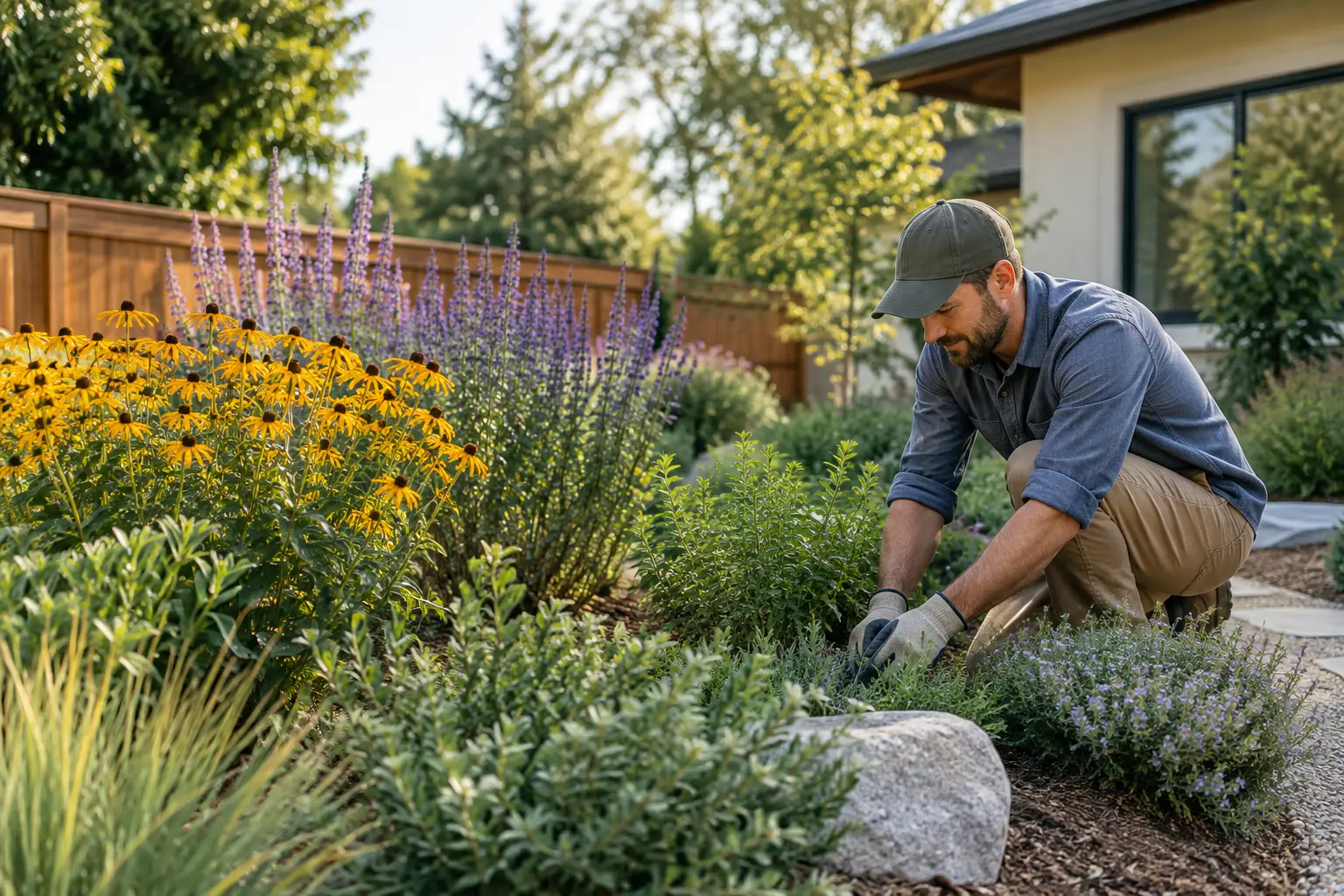
A patch of bare mulch may look tidy, but it does very little for the birds, bees, and beneficial insects sharing your yard. Native landscaping gives that space a job to do. With the right plants, an ordinary bed can hold soil in place, feed pollinators, handle local weather, and still look welcoming from the kitchen window.
That does not mean pulling out every plant you love and replacing it with a wild-looking thicket. The best native gardens are thoughtful, personal, and suited to the way your family actually uses the yard. A small border by the porch, a sunny strip along a fence, or a damp corner that never grows good grass can all be great places to start.
What Native Landscaping Really Means
Native landscaping uses plants that grew in your region before widespread development and introduced ornamental plants changed the landscape. Because these plants evolved alongside local soils, rainfall patterns, and wildlife, they often need less extra watering and fertilizer once established than plants chosen only for their looks.
The word “native” is regional, not national. A plant native to the Southeast may not be native, or well suited, to a dry Colorado yard. That is why plant tags that simply say “native” are not enough. Look for plants native to your state or, even better, your local ecoregion. A nearby independent nursery, native plant society, or county extension office can help you narrow the choices.
It also helps to keep expectations realistic. Native plants are not maintenance-free, especially in their first year. They need watering while roots settle in, weed control while beds fill out, and occasional dividing or trimming. The payoff is a garden that becomes more self-reliant over time instead of demanding constant correction.
Start With the Problem Spot, Not a Plant List
It is tempting to begin with photos of coneflowers, milkweed, or colorful grasses. Before buying anything, spend a few days noticing the site. How many hours of direct sun does it receive? Does rain puddle there or drain away quickly? Is the soil sandy, heavy clay, or somewhere in between? And can you easily reach the bed with a hose during the first growing season?
These answers matter more than choosing the trendiest native species. A sun-loving plant placed in shade will struggle, even if it is native nearby. Likewise, a plant adapted to moist woodland soil will not thrive beside a hot, reflective driveway.
For a first project, choose an area that is visible and manageable, perhaps 50 to 100 square feet. You will learn faster from one well-tended bed than from converting the entire lawn in a single weekend. Starting small also gives you time to see how plants behave through a full year before repeating your favorites elsewhere.
Match plants to light and moisture
In much of the United States, sunny, average-to-dry sites can support plants such as purple coneflower, black-eyed Susan, bee balm, little bluestem, butterfly weed, and mountain mint. For shadier areas, wild columbine, foamflower, woodland phlox, and sedges may be better options. In consistently moist ground, cardinal flower, blue flag iris, swamp milkweed, and certain native ferns can be beautiful choices.
Those examples are starting points, not a universal shopping list. Many have regional variations, and some are native only in certain parts of the country. The goal is to match a plant to its natural conditions rather than trying to force it to live somewhere it does not belong.
Design a Native Garden So It Looks Intentional
One reason people hesitate over native landscaping is the fear that it will look messy. A native garden can look relaxed without looking neglected. Design choices make the difference.
Plant in groups of three, five, or more of the same species rather than scattering single plants across the bed. Repeated groups create visual rhythm and make it easier for pollinators to find flowers. Include a mix of heights, with taller plants toward a fence or the middle of an island bed, medium plants in front, and lower growers along the edge.
A clear border is one of the simplest ways to make a looser planting feel cared for. Use a mowed edge, stone, untreated wood, or a narrow path. Keeping a small area of lawn or open space beside the bed can also create contrast. You are not trying to copy a meadow exactly. You are building a garden that works with your home.
Plan for more than one season of interest. Early spring flowers support emerging pollinators, summer blooms bring activity when the garden is most visible, and seed heads provide texture and food later in the year. Grasses and sturdy stems often look especially lovely with frost on them, so resist cutting everything down in fall.
How to Prepare a Bed Without Harsh Chemicals
Removing lawn is usually the hardest part of the project. For a small space, smothering grass is a patient, low-effort option. Mow the area short, lay plain cardboard over the grass with edges overlapping, wet it thoroughly, then cover it with a few inches of compost and mulch. Leave planting holes where needed, or let the layers break down before planting.
You can also remove sod by hand if you want to plant right away, though it is more physical work. Avoid simply rototilling existing turf. Tilling can chop up persistent weeds, bring dormant weed seeds to the surface, and leave you with more work later.
Do not feel pressured to heavily amend the soil. Many native plants are adapted to ordinary soil and can flop or grow weakly in beds loaded with rich fertilizer. Compost is useful for improving very poor soil and helping new plants get started, but a light touch is usually best. Skip synthetic weed killers and fertilizers around a young planting, particularly where children, pets, and pollinators spend time.
Planting and First-Year Care Matter Most
Spring and fall are usually the easiest planting windows because temperatures are gentler and rain is often more reliable. Set plants at the same depth they were growing in their pots, water deeply after planting, and add a two- to three-inch layer of shredded leaves, pine needles, or untreated wood mulch. Keep mulch a few inches away from plant stems.
For the first season, water slowly and deeply when the top few inches of soil are dry. Frequent light sprinkling encourages shallow roots, while deeper watering helps plants establish where they belong. The exact schedule depends on heat, rainfall, soil type, and the species you chose, so check the soil rather than watering by the calendar.
Weeds will appear before many perennials fill in. Pull them while they are small, especially aggressive invaders that can crowd out young plants. Label new plants if you are likely to forget what comes up where. More than once, a gardener has pulled a promising native seedling because it looked suspiciously like a weed in April.
Let the Garden Support Wildlife Year-Round
Flowers are only part of the picture. Many native bees nest in bare patches of soil or hollow stems. Caterpillars need leaves to eat, and birds need insects to feed their young. If every fallen leaf is removed and every stem is cut down in autumn, much of that habitat disappears.
A balanced approach works well in a home garden. Leave seed heads and stems standing through winter, then cut back portions of the garden in late winter or early spring before new growth gets tall. Rake leaves off crowded plant crowns if needed, but let a light layer remain beneath shrubs and around the edges of beds. That leaf litter is not garden failure. It is shelter and future soil.
Native landscaping is not about getting every choice perfect on day one. It is about paying closer attention to what grows well where you live, then making room for life beyond the plants themselves. Start with one bed, watch what visits, and let each season teach you what your yard is ready for.