If you have ever watched a tray of tomato seedlings stretch toward a dim window and turn leggy in a matter of days, you already know why a good grow light review matters. Indoor seed starting sounds simple until weak light sets everything back. The right light can give you sturdy starts, healthier herbs, and a lot less frustration, but the wrong one can waste money and still leave you with pale, unhappy plants.
What makes this tricky is that many grow lights are marketed with big claims and very little useful context. A light can be bright, expensive, and still not be the best fit for your shelf, your seedlings, or your power bill. For most home gardeners, the goal is not to build a high-tech indoor farm. It is to grow strong young plants naturally and reliably until the weather is ready.
What a grow light review should actually tell you
A useful grow light review should answer one practical question first: will this light grow healthy plants in a normal home setup? That matters more than flashy packaging or lab-style specs most gardeners will never use.
For seedlings, leafy greens, and herbs, the biggest factors are light intensity, coverage area, heat output, energy use, and ease of setup. If a light has to hang at an awkward height, overheats your starts, or only covers half the tray evenly, it is not really doing the job. I have seen gardeners blame their seed mix or watering routine when the real problem was simply uneven light.
The best reviews also separate plant goals. A light that works beautifully for basil on a kitchen shelf may not be strong enough for stocky pepper seedlings. And a compact clip-on light may help a houseplant limp through winter, but that does not make it a serious seed-starting tool.
Grow light review: the types worth considering
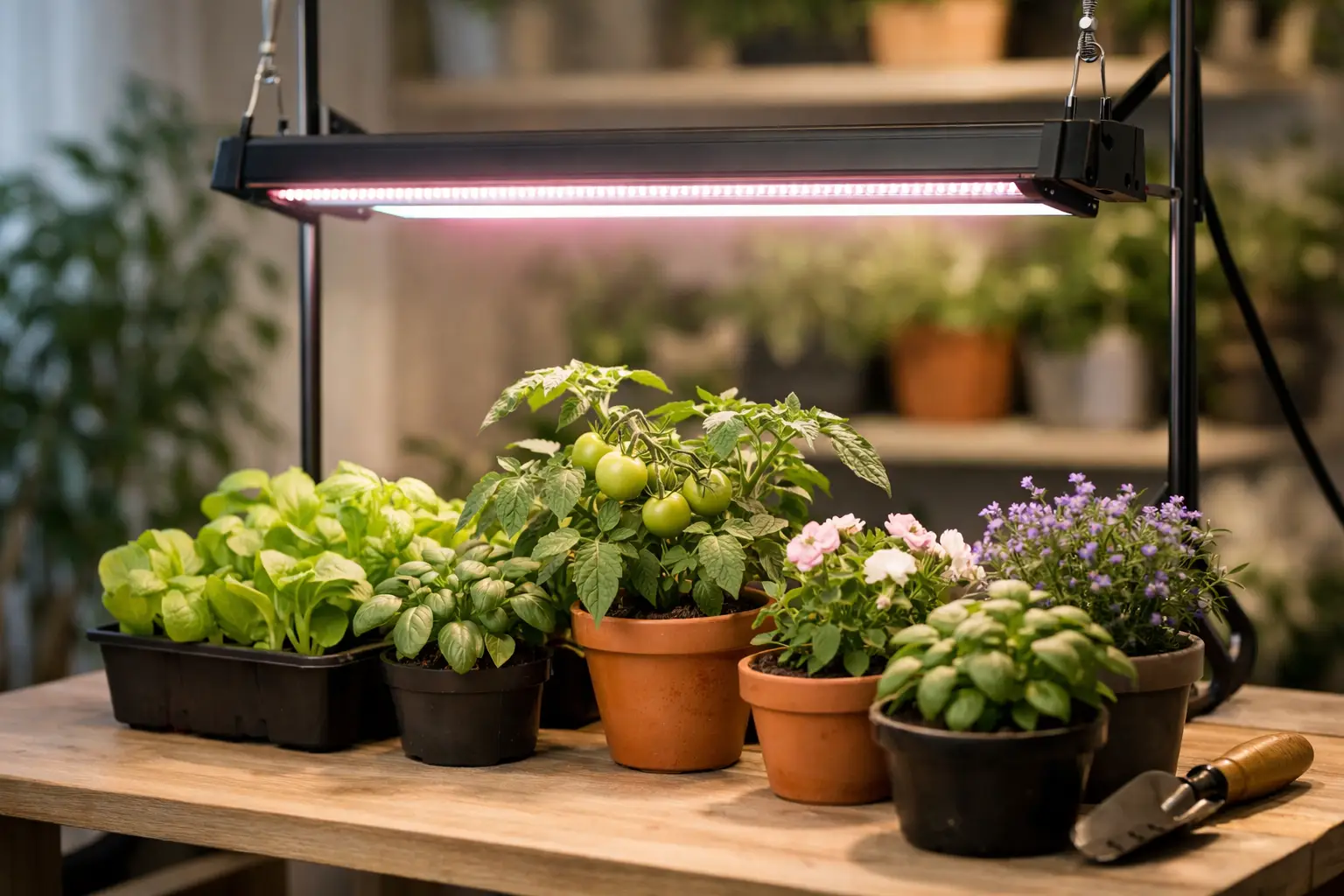
For most home gardeners, LED shop-style bars and full-spectrum LED panels are the strongest options. They are efficient, run cooler than older bulbs, and are usually simple to mount over shelves or seed-starting racks. Good LEDs also make it easier to keep lights close to young plants without scorching them.
Fluorescent T5 fixtures used to be the standard recommendation, and they can still work. They are often effective for seedlings and greens, especially if you already own them. The downside is that they use more energy, generate more heat, and are slowly being edged out by better LED choices.
Small clip-on or gooseneck lights are where many gardeners get disappointed. They look convenient, and for one or two small pots they can be fine. But for a standard seed tray, they usually do not provide even coverage or enough intensity. If your plan is to start tomatoes, peppers, zinnias, or other sun-loving plants, these are rarely the best buy.
What matters more than the marketing
Many packages lean hard on words like full spectrum, sunlike, or high output. Those terms are not useless, but they can be vague. In real life, your plants care less about marketing language and more about whether enough usable light reaches the leaves for long enough each day.
Coverage is one of the easiest things to underestimate. A light may say it covers a two-by-two area, but that does not always mean the edges receive enough light for even growth. In a home seed-starting setup, this often shows up as sturdy seedlings in the middle and lanky ones around the perimeter. That is why fixture shape matters. Long bar lights often make more sense over trays than a single central bulb.
Adjustability is another feature that pays off quickly. Seedlings need lights kept fairly close, often just a few inches above the tops. As plants grow, you need to raise the fixture easily. If the light is awkward to move, you are less likely to keep it at the right height, and plant quality slips fast.
Heat is a trade-off too. A little warmth can help in chilly spaces, but too much heat dries trays quickly and stresses tender seedlings. Cooler-running LEDs usually make management easier, especially for beginners.
A note on color
Purple or pink lights still show up often, but they are no longer the obvious choice for most home gardeners. Full-spectrum white LEDs are easier on the eyes and make it much simpler to spot problems like yellowing, damping off, or pest damage. If you are checking seedlings every day, comfort matters.
Don’t chase huge watt numbers
One of the more confusing parts of any grow light review is wattage. Some brands list actual power draw, while others use inflated equivalent numbers. For home growers, the better question is not who has the biggest number. It is whether the light is proven to grow the kinds of plants you want across the space you actually have.
The best grow lights for different home uses
If you are starting seeds for a spring garden, a simple LED bar fixture is usually the sweet spot. It gives even coverage over standard trays, uses modest electricity, and works well on wire shelving or a basic rack. This is the setup I would recommend to most gardeners before anything fancier.
For herbs and salad greens grown indoors longer term, a stronger full-spectrum LED panel or bar system can be a very good fit. Greens do not usually need the same intensity as fruiting crops, but they still respond to steady, bright light. If you want cut-and-come-again lettuce or cilantro indoors, choose something a step above the cheapest seedling light.
For a few houseplants overwintering near a dark corner, a smaller bulb or clip-on style may be enough. That said, expectations matter. These lights support plants better than they transform a dim room into prime growing space.
For fruiting plants indoors, like tomatoes or peppers grown to harvest, the equation changes. You need stronger light, more electricity, and more commitment. It can be done, but for most home gardeners, grow lights are most practical for seed starting and keeping herbs or greens productive, not replacing outdoor summer sun.
Common mistakes that make a decent light seem bad
The most common mistake is hanging the light too high. Even a solid fixture loses effectiveness quickly when it is too far from the plants. Seedlings grown under lights should be compact and sturdy, not stretching.
The next issue is leaving lights on at random hours. Plants do best with a consistent schedule, usually around 14 to 16 hours a day for seedlings. More is not always better. They need a dark period too.
Another problem is trying to cover too much space with one light. When gardeners spread trays beyond the strongest part of the fixture, growth becomes uneven. It is usually better to grow fewer plants well than too many poorly.
Finally, some gardeners expect a light to fix every other issue. Good lighting helps, but it will not correct soggy soil, poor airflow, low-quality seed starting mix, or missed watering.
How to choose the right one for your setup
Start with your goal, not the product. If you want to raise spring vegetables from seed, buy a light designed for trays and shelves. If you want to keep a pot of parsley producing in winter, you can choose smaller and simpler.
Next, measure your space before you shop. Shelf width, tray size, and hanging height matter more than you might think. A light that technically works but does not fit your setup neatly often becomes a hassle, and gardening tools that are a hassle tend to get abandoned.
Then think about how long the light will be on each season. A slightly better LED often costs less over time if it is efficient and durable. Cheap lights can work, but they are not all bargains.
If you garden organically, this part may resonate: healthy growth prevents a lot of trouble. Strong seedlings are better able to handle transplanting, temperature swings, and minor pest pressure. In that sense, a good grow light supports the same goal as compost, mulch, and careful watering. It sets plants up to thrive instead of asking them to recover later.
So, what should most gardeners buy?
If a friend asked me for a straight answer, I would say this: choose a full-spectrum LED bar or panel from a brand with clear coverage information, low heat, and simple height adjustment. Skip novelty lights, oversized claims, and anything that looks easier to market than to use.
You do not need the most expensive fixture to grow excellent seedlings. You do need enough light, spread evenly, close to the plants, on a consistent schedule. That humble setup will outperform a lot of flashy gadgets.
And if you are still deciding, keep your first purchase practical. A dependable light that helps you raise sturdy basil, lettuce, tomatoes, and peppers is worth far more than a complicated system that stays in the box. The best gardening tools are the ones that quietly make success feel easier.