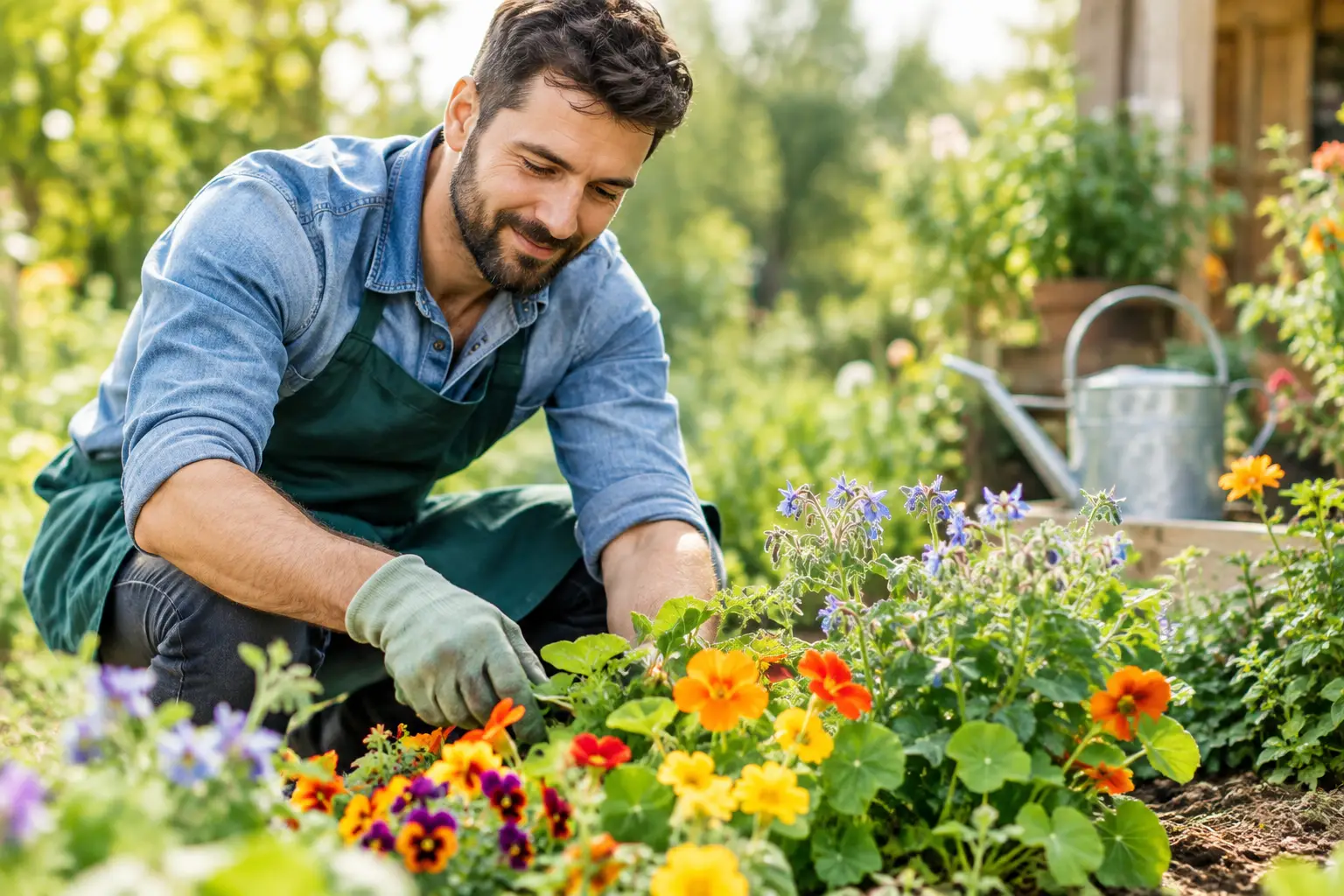
A handful of flower petals can turn an ordinary backyard salad into something that feels special, but growing them should not become another fussy garden chore. The best low maintenance edible flowers earn their space twice: they bring color and pollinators to the garden, then offer a safe, fresh harvest for the kitchen. Choose the right plants for your light and give them a simple start, and most will do far more with less than you might expect.
📋 Table of Contents
What makes an edible flower low maintenance?
Low maintenance does not mean no care at all. Even tough flowers need decent soil, regular watering while they establish roots, and enough sun to grow well. It means choosing plants that are forgiving of imperfect timing, do not demand constant fertilizer, and usually shrug off minor pest damage.
For an easy edible-flower patch, start with flowers that grow readily from seed or return year after year in the right climate. Tuck them along the edge of a vegetable bed, into a raised bed corner, or into containers near the kitchen. That makes harvesting convenient and keeps the garden feeling useful rather than ornamental for ornament’s sake.
One important rule comes first: only eat flowers you have positively identified and grown without synthetic pesticides or herbicides. Florist flowers, nursery plants labeled only as ornamental, and flowers picked beside roads are not reliable choices for the plate. If pests show up, use hand-picking, a strong spray of water, row cover when practical, and other food-garden-safe methods instead of reaching for a quick chemical fix.
10 low maintenance edible flowers worth growing
1. Nasturtiums
Nasturtiums are often the first flower I suggest to new edible-flower gardeners because they are cheerful, useful, and remarkably willing to grow. The round leaves and bright flowers have a peppery flavor similar to watercress, making them especially good in salads, sandwiches, and compound butter.
Plant seeds directly after frost in spring. In many gardens, nasturtiums actually bloom better in average or lean soil. Rich soil and heavy feeding can produce lots of leaves with fewer flowers. Give them sun in cooler regions and a little afternoon shade where summers are hot, then let the soil dry slightly between deep waterings.
2. Calendula
Calendula, sometimes called pot marigold, brings sunny yellow and orange petals to salads, rice dishes, soups, and baked goods. Its flavor is mild to lightly peppery, and the petals are easier to use than the whole flower head.
This is a wonderful cool-season flower. Sow it in spring, and plant another round in late summer for fall bloom where the weather allows. Deadheading will keep it flowering longer, but calendula is forgiving if you miss a week. Leave a few fading flowers in place at the end of the season if you would like volunteer seedlings next year.
3. Violas and pansies
Violas and pansies look delicate, but they are surprisingly sturdy during cool weather. Their flavor is mild and slightly sweet, which makes them one of the easiest flowers to use whole on cakes, fruit plates, cookies, and spring salads.
They prefer spring and fall in much of the United States, especially in containers where they can sit close to the door. Water when the top inch of soil feels dry and pinch off spent blooms when you remember. They will slow down in serious summer heat, so think of them as a lovely shoulder-season crop rather than a flower that must perform all year.
4. Chive blossoms
If you already grow chives, you may be overlooking one of the simplest edible flowers in the garden. The purple pom-pom blossoms taste gently oniony and are excellent scattered over eggs, potatoes, soups, soft cheese, or savory biscuits.
Chives are perennial in many areas and need very little beyond sun, occasional water, and a trim after flowering. Separate the tiny florets before using them for a softer texture and more even flavor. Harvest a few blossoms, but leave some for bees and other beneficial insects.
5. Borage
Borage is a generous plant for gardeners who like a little happy self-seeding. Its blue, star-shaped flowers taste faintly like cucumber and look beautiful floating in cold drinks or frozen into ice cubes. Bees love it, too.
Direct-sow borage after frost and give it room. Mature plants can become broad and slightly floppy, especially in rich soil, so place them toward the back of a bed or beside a support. The leaves are prickly, but the flowers are easy to pinch off. If seedlings appear next spring, keep the ones you want and pull the rest while they are small.
6. Bee balm
Bee balm has colorful, shaggy flowers with a minty, citrusy flavor that works well in tea, fruit salads, and summer drinks. It is a perennial favorite for pollinators and can fill a sunny border with very little fuss once established.
Its main trade-off is air circulation. Bee balm can get powdery mildew in humid conditions, particularly when plants are crowded. Give it space, water at the base of the plant, and choose a mildew-resistant variety if that has been a recurring problem in your garden. The leaves and petals both have culinary value.
7. Lavender
Lavender is a low-water choice for sunny, well-drained spots. The buds and flowers add a floral, lightly sweet flavor to shortbread, lemonade, honey, and herbal sugar. A little goes a long way, so use it with a light hand until you know how strong your variety tastes.
The secret to easy lavender is drainage, not fertilizer. Avoid soggy clay and overwatering. In a container, use a pot with a drainage hole and a gritty, well-draining mix. English lavender is generally the best choice for cooking, while strongly camphor-scented types can taste medicinal.
8. Roses
Not every rose is low maintenance, but hardy shrub roses can be a practical edible option if you choose disease-resistant varieties suited to your area. The petals are fragrant and versatile in teas, syrups, desserts, and fresh salads. Rose hips can also be harvested later, though they take more preparation.
Grow roses only if you can commit to pesticide-free care. Japanese beetles and aphids may leave some cosmetic damage, but a few imperfect petals are not a reason to spray. Choose a sunny site, mulch the soil, water deeply, and prune for airflow. For cooking, use fragrant petals from fully open flowers.
9. Marigolds
Edible marigolds from the Tagetes group bring gold, orange, and deep red petals to the garden. Their flavor varies by variety, from citrusy to spicy, so taste a petal before adding a whole handful to food. The petals are particularly pretty stirred into grain salads or used as a natural garnish.
Marigolds are easy from seed after frost and handle heat better than many edible flowers. They are not a magic pest repellent, despite what many garden myths suggest, but their flowers do attract beneficial insects. Remove spent blooms for a tidier plant and more flowers, or let a few dry for seed saving.
10. Chamomile
Chamomile is less showy than the others, but its small daisy-like flowers make one of the most comforting garden teas. German chamomile is an annual that often reseeds, while Roman chamomile is a low-growing perennial in suitable conditions.
Grow it in sun to partial shade and avoid overly rich soil. Harvest flowers on a dry morning when they are fully open, then use them fresh or dry them in a single layer out of direct sunlight. If you have ragweed allergies, try a small amount cautiously or choose another flower, since chamomile can bother sensitive people.
A simple way to grow and harvest edible flowers
Keep your first season small. Pick three or four flowers that suit your space instead of trying every option at once. A sunny container with nasturtiums and chives, plus a patch of calendula near your vegetables, is enough to provide a steady trickle of blooms without adding much work.
Use an organic mulch around in-ground plants to hold soil moisture and reduce weeds. Water deeply early in the day, especially during dry spells, rather than giving plants frequent shallow drinks. Once flowers are established, skip routine feeding unless they are growing in a container or clearly struggling. Too much nitrogen often gives you lush leaves and fewer blooms.
Harvest in the cool morning after dew has dried. Choose newly opened flowers that look clean and healthy, shake out any insects, and rinse gently only if needed. Pat them dry and use them soon, since most petals do not store well. Remove bitter bases, stamens, or green sepals when a recipe calls for petals alone.
The most satisfying edible flowers are not the ones that require a perfect garden. They are the ones you notice while watering tomatoes, pick on the way inside, and sprinkle over dinner because they are already growing happily nearby.
🌿 Recommended Gardening Products
As an Amazon Associate, The Natural Gardener earns from qualifying purchases at no extra cost to you.
Raised Bed Galvanized Garden Bed Kit
Durable metal raised bed — easy assembly, no rot, lasts 10+ years.
~$45–$80
Companion Planting Guide Laminated Chart
Quick-reference chart for companion planting combinations in any garden.
~$8–$15
Organic Vegetable Gardening — Rodale Press
The definitive organic gardening reference — covers soil, pests, seeds and seasons.
~$20–$30