If you’ve ever stood in the yard with a hose, trying to water tomatoes at the roots without splashing the leaves, you already know why a good drip irrigation comparison matters. Not every system fits every garden, and the wrong choice can leave you with dry containers, soggy beds, or a setup that feels more annoying than helpful.
The good news is that drip irrigation does not have to be complicated. For most home gardeners, the real question is not whether drip is worth using. It is which kind of drip setup makes sense for your space, your plants, and how much tinkering you are willing to do.
Why a drip irrigation comparison is worth doing
Drip irrigation has a lot going for it, especially in vegetable gardens, raised beds, and container setups. It delivers water slowly and close to the root zone, which usually means less waste, fewer fungal problems on leaves, and more consistent moisture. That consistency matters more than many gardeners realize. Tomatoes that swing from bone dry to soaked are more likely to crack. Lettuce turns bitter faster under water stress. Containers can go from fine to wilted in a single hot afternoon.
Still, drip systems are not all built the same. Some are better for straight rows of crops. Others work best in mixed beds where plants are spaced unevenly. Some are budget-friendly but short-lived. Others cost more upfront and save frustration over time. That is where a side-by-side look helps.
The main types in this drip irrigation comparison
For most home gardens, you will run into three common options: drip tape, drip line with built-in emitters, and solid tubing with individual emitters. Many gardeners also compare soaker hoses, even though they work a little differently.
Drip tape
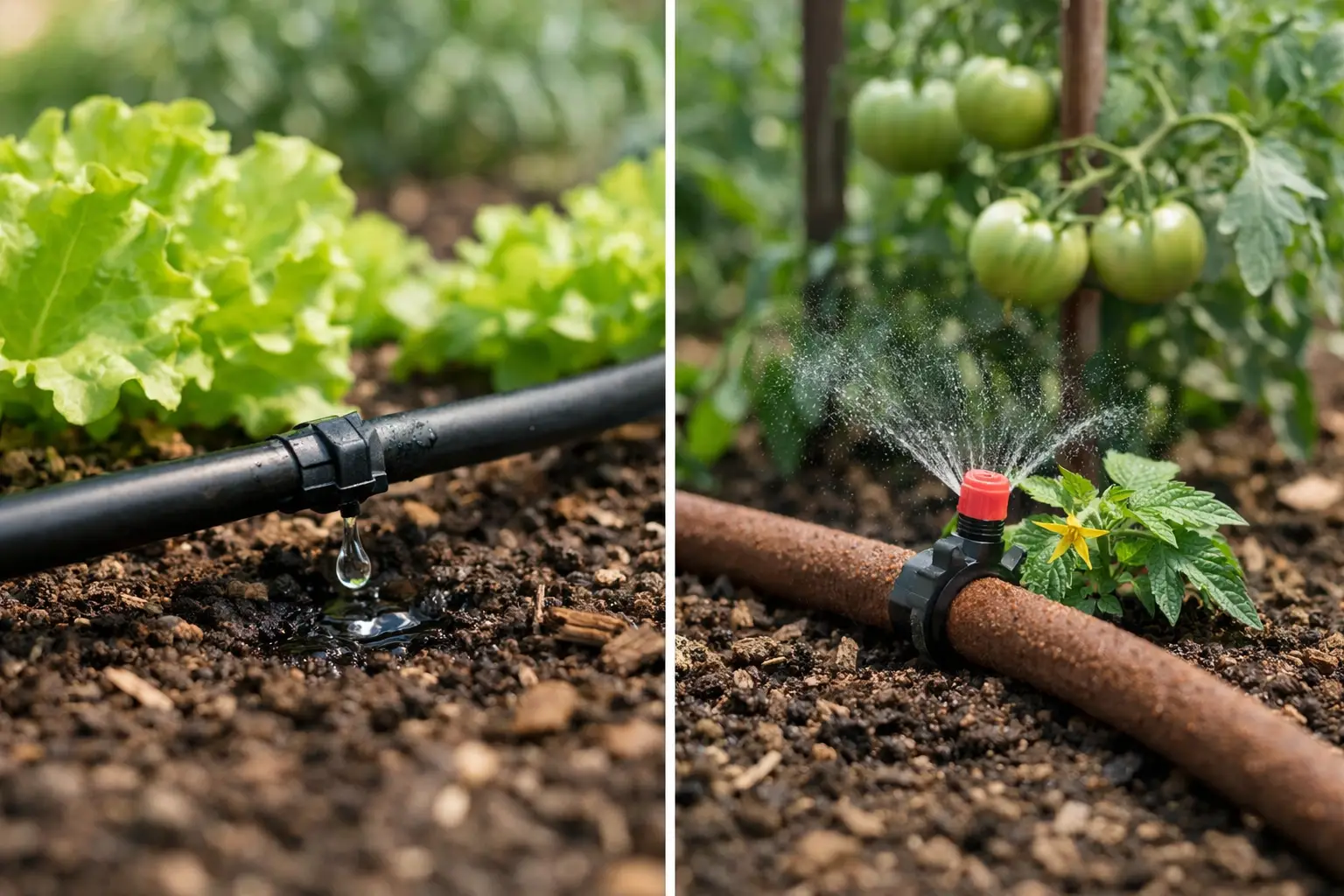
Drip tape is the lightweight option you often see in vegetable rows. It is thin, flexible, and designed to lay flat or nearly flat along the soil. Water exits through built-in outlets at regular intervals.
This is usually the most affordable choice for larger planting areas, especially if you grow crops in neat rows like beans, onions, carrots, or lettuce. It covers a lot of ground without costing much, and it can be very efficient when your spacing is predictable.
The trade-off is durability. Drip tape is easier to nick with tools, easier to damage in strong sun over time, and not ideal if you are constantly reworking the bed. For a tidy seasonal vegetable patch, it can be great. For a mixed perennial bed with stepping stones, mulch shifts, and frequent changes, it is less forgiving.
Drip line with built-in emitters
Drip line looks more like regular irrigation tubing, but it has emitters spaced along the line. Compared with drip tape, it is heavier-duty and generally easier for home gardeners to manage long term.
This option works especially well in raised beds and in-ground beds where you want even moisture across a planting area. If you snake the line back and forth through a bed, you can water a lot of vegetables at once without needing to place an emitter at every single plant.
Its biggest strength is balance. It is more durable than drip tape, simpler than building a full custom emitter system, and reliable for gardens with fairly consistent plant spacing. The downside is that the emitter spacing is fixed. If your basil is six inches from one line and your pepper is eighteen inches away, you may not get perfectly targeted watering.
Solid tubing with individual emitters
This is the most customizable setup. You run solid tubing where you need it, then punch in emitters exactly where each plant sits. For containers, widely spaced shrubs, or mixed beds with odd layouts, this can be the cleanest solution.
It is also the system that lets you tailor watering more precisely. A thirsty tomato in a large container can get a different flow rate than a small pot of thyme. That kind of control is hard to beat.
But customization comes with a little more setup time. You need to plan the layout, install emitters carefully, and check now and then for clogs or popped fittings. If you enjoy organizing the garden and want a system that fits like a glove, this is a strong choice. If you want fast and simple, it may feel like too much fuss.
Soaker hoses
Soaker hoses often show up in any drip irrigation comparison because they promise easy watering with less setup. They release water through porous material along the hose length rather than through distinct emitters.
For some gardeners, they are an easy starting point. You lay them out, turn on the water, and let them seep. They can work reasonably well in simple beds and are widely available.
Still, they tend to be less precise and less consistent than true drip irrigation. Water output can vary from one end to the other, especially on long runs. They are also more affected by water pressure and wear. For beginners on a tight budget, they can be useful. For long-term efficiency and consistency, most gardeners eventually prefer drip line or emitters.
Which system works best in different garden spaces?
If you grow in raised beds, drip line with built-in emitters is often the easiest sweet spot. It is durable, straightforward to lay in loops across the bed, and good for vegetables planted fairly close together.
If your garden is made up of long, straight rows, drip tape usually gives you the most coverage for the lowest cost. That is one reason row gardeners like it.
If you garden in containers, solid tubing with individual emitters usually wins. Containers dry out faster than in-ground beds, and they rarely match one another in size, sun exposure, or plant needs. A custom setup gives you better control.
If you have a mixed landscape bed with herbs, flowers, and a few vegetables tucked in, it depends on how formal the planting is. A drip line can work if the spacing is fairly even. If plants are scattered, individual emitters make more sense.
Cost, maintenance, and the trade-offs that matter
Most gardeners start by looking at price, but upfront cost is only part of the story. Drip tape is cheap to buy, though you may replace it sooner. Drip line costs more but usually lasts longer. Individual emitter systems can cost more in parts and time, but they waste less water when designed well.
Maintenance matters too. Any drip setup can clog if your water has sediment or mineral buildup, so a filter is a smart addition. Pressure regulation also helps, because drip systems do best when water flow stays steady instead of blasting through the lines.
The more custom your system, the more parts you will have to check. That is not always a bad thing. A simple repairable system is often better than a cheap one you end up replacing every season. It just depends on how hands-on you want to be.
A simple drip irrigation comparison by gardener type
If you are a beginner with one or two raised beds, start with drip line. It gives you good results without asking you to engineer the whole garden.
If you grow lots of vegetables in rows and want the lowest cost per bed, drip tape is usually the practical choice.
If your garden is mostly containers or mixed plantings, individual emitters are worth the extra setup because they match real-life garden layouts better.
If you only want a quick temporary solution and do not mind less precision, a soaker hose can work, though it is usually not the option people stick with long term.
What I’d choose for most home gardens
For the average backyard food garden, drip line is often the best middle ground. It is efficient, durable enough for repeated use, and simple enough that you are more likely to keep using it. That last part matters. The best watering system is the one you actually maintain and trust.
For containers, I would not force a drip line system to do a custom emitter job. Pots dry unevenly, and one-size-fits-all watering rarely works for long. A few well-placed emitters can save a lot of guesswork.
And if your budget is tight, there is nothing wrong with starting small. One raised bed on drip is better than waiting until you can afford a perfect whole-yard setup. Many gardeners build these systems in stages, learn what their plants need, and adjust from there.
A good garden watering setup should make life easier, not turn into another chore. If you choose the system that matches your space instead of the one that sounds the most advanced, you will usually get healthier plants and a lot less daily stress.