Tomatoes will tell you pretty quickly when they are unhappy. Pale leaves, lots of stems but no fruit, blossom end rot that makes your heart sink – most of us have been there. If you are searching for an organic fertilizer review for tomatoes, the real question is usually simpler: what actually helps tomato plants grow well without making the whole process complicated?
The short answer is that no single organic fertilizer is best for every garden. Tomatoes are heavy feeders, but they do not need the same thing at every stage. Soil that is rich in compost behaves differently from tired raised-bed mix. A tomato in a five-gallon container needs more regular feeding than one rooted in healthy ground. That is why a useful review is less about chasing one magic product and more about knowing which type fits your setup.
Organic fertilizer review for tomatoes: what matters most
When gardeners compare tomato fertilizers, the label can get confusing fast. You will see numbers for nitrogen, phosphorus, and potassium, plus ingredients like feather meal, bone meal, kelp, fish, composted poultry manure, worm castings, and sulfate of potash. Organic products often work more gently than synthetic fertilizers, which is a big reason many home gardeners prefer them. They feed the soil as well as the plant, and they are less likely to push a tomato into fast, weak growth.
That said, gentle does not mean foolproof. Some organic fertilizers release slowly and may not help quickly if a plant is already struggling. Others smell strong enough to get comments from the neighbors. Some are excellent in beds but less convenient in containers, where frequent watering flushes nutrients out faster.
For tomatoes, I look for a fertilizer that supports steady growth, flowering, and fruiting without overloading the plant with nitrogen. Too much nitrogen is one of the most common mistakes. You get a tall, lush plant that looks impressive from six feet away, then wonder why the fruit count is disappointing.
The main types of organic tomato fertilizers
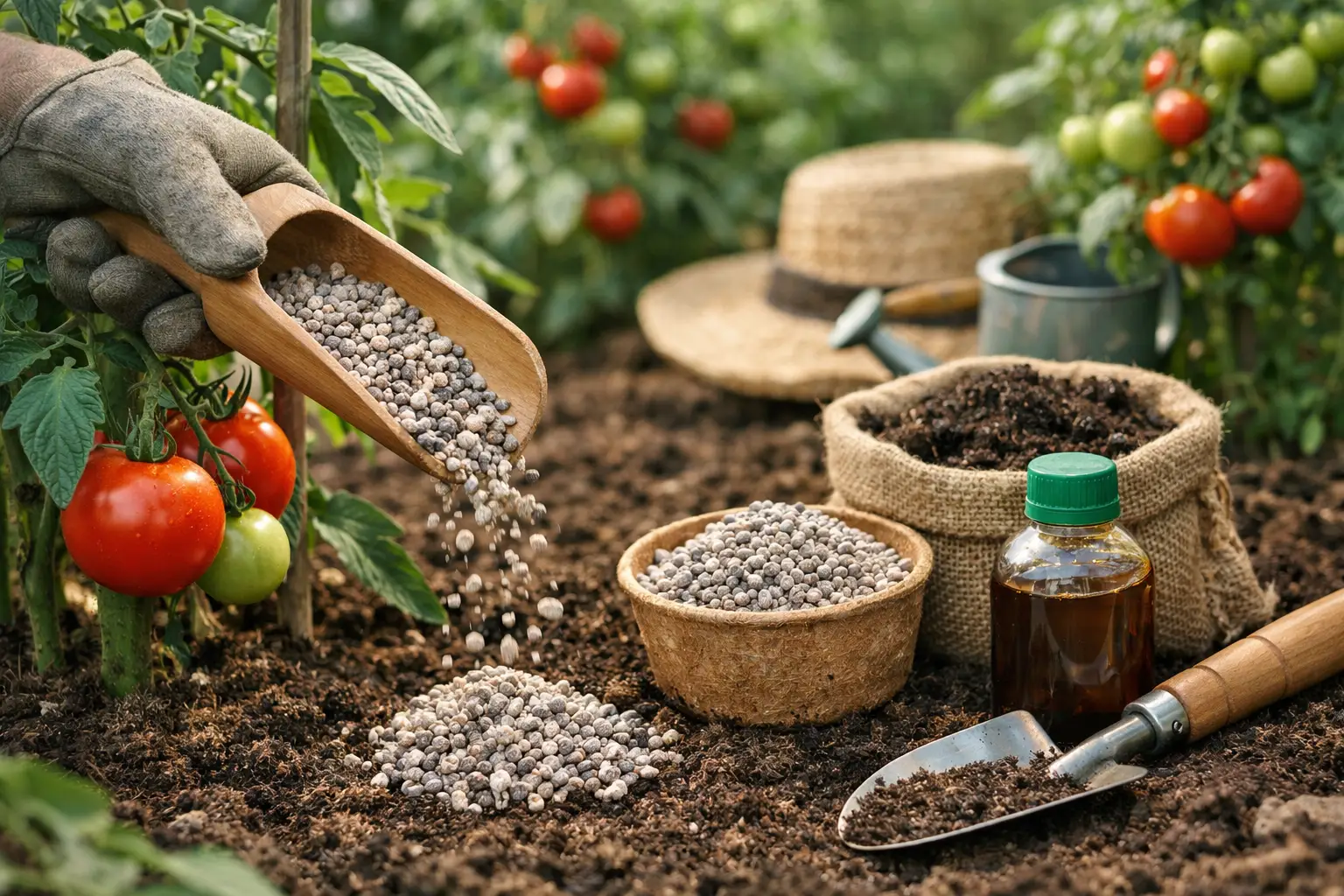
Granular organic fertilizers are the easiest place to start. These are the dry blends you sprinkle around the plant or mix into the soil. They are convenient, usually balanced, and often include a mix of meals and mineral sources that feed over time. For most backyard gardeners, this is the most practical choice. A good granular fertilizer is easy to apply when planting and simple to refresh later in the season.
Liquid organic fertilizers work faster and are especially helpful in containers or for plants that need a boost. Fish emulsion, seaweed extract, and liquid blends made for vegetables fall into this group. The trade-off is that liquids do not last as long, so they need to be applied more often. They are also easier to overdo if you use them too frequently just because the plant looks hungry.
Compost and worm castings are not complete fertilizers in the same way a packaged blend is, but they deserve a place in any review. They improve soil texture, support microbial life, and give tomatoes a steady baseline of nutrition. If your soil is healthy and rich in organic matter, your fertilizer job gets much easier.
Then there are single-ingredient amendments like bone meal, kelp meal, alfalfa meal, or bat guano. These can be useful, but they are not the easiest path for beginners. They work best when you already know your soil and want to fine-tune a feeding plan.
Which products tend to work best
If you want the simplest answer, a balanced granular organic vegetable fertilizer is usually the best all-around pick for tomatoes. Something in the range of a mild to moderate NPK, especially with slightly lower nitrogen and solid phosphorus and potassium support, tends to perform well. These products are beginner-friendly, easy to measure, and forgiving.
For gardeners growing in containers, a combination approach often works better than relying on one product alone. Mixing a granular organic fertilizer into the potting mix at planting time, then following up with a diluted liquid feed every couple of weeks once flowering starts, usually gives steadier results. Container tomatoes burn through nutrients faster than people expect.
If your plants are already in rich garden soil with compost added, you may need less fertilizer than the package suggests. This is where organic gardening gets more intuitive. More is not always better. Tomatoes with dark green leaves and strong growth may only need a light side-dressing once fruit begins forming.
One product category I use more carefully is high-nitrogen organic fertilizer. It can be helpful early in the season for weak plants or poor soil, but once tomatoes are actively growing, too much nitrogen can delay flowers and fruit. That is why lawn-type fertilizers, even organic ones, are usually the wrong fit.
Organic fertilizer review for tomatoes in beds vs containers
Tomatoes in the ground have a bigger buffer. Their roots can spread, soil holds nutrients longer, and a good compost base goes a long way. In beds, slow-release granular fertilizers shine. You can work them in at planting, water deeply, and top-dress again later without much fuss.
Containers are less forgiving. Watering is more frequent, nutrients leach faster, and roots have nowhere else to go. A tomato in a pot can look healthy one week and tired the next if feeding is inconsistent. In this situation, organic liquids become much more useful. Not because they are better overall, but because they match the pace of container growing.
If you only use compost in containers, your plants may do fine for a while, then stall once they start setting heavy fruit. That is a common frustration. Compost is excellent, but container tomatoes usually need a more complete feeding plan.
What to watch for on the label
The ingredient list matters more than flashy front-label claims. A solid tomato fertilizer often includes several organic sources rather than one single ingredient. That blended approach gives a more rounded nutrient supply.
It also helps to look for calcium support, especially if you have struggled with blossom end rot. Fertilizer alone does not fully prevent it – inconsistent watering is usually the bigger issue – but calcium can still be part of the picture. Just remember that adding more calcium will not solve a watering problem.
I would also pay attention to whether a product is intended for vegetables broadly or for tomatoes specifically. A tomato-specific label can be useful, but it is not automatically better. Many excellent general organic vegetable fertilizers perform just as well.
The trade-offs no label tells you
Some of the best organic fertilizers smell pretty awful. Fish-based products are famous for it. They work, but they are not always ideal for a small patio or apartment balcony. Granular poultry-based blends can also have an odor right after watering.
Price is another factor. Organic fertilizers often cost more upfront than synthetic options. The flip side is that they usually support better soil health over time, which can reduce problems later. For many home gardeners, that trade-off is worth it.
And then there is patience. Organic fertilizers generally do not produce instant dramatic changes. If you are used to quick green-up from synthetic feed, organic products can feel slower. But slower, steadier growth is often exactly what tomatoes need for better flowering and stronger fruit set.
A simple feeding approach that works for most gardeners
If I were advising a neighbor who wanted fewer tomato problems and a straightforward routine, I would keep it simple. Start with compost mixed into the planting area or container mix. Add a balanced granular organic fertilizer at planting time. Once the first flowers appear, watch the plant rather than feeding on autopilot.
If growth is steady and leaf color looks good, continue with a light side-dressing every few weeks in the ground. For containers, use a diluted liquid organic fertilizer regularly during flowering and fruiting. Back off if the plant is all leaves and very little fruit.
This is where a lot of gardeners save themselves trouble. Tomatoes do not need constant tinkering. They need consistency – steady moisture, enough sun, decent soil, and feeding that matches their stage of growth.
So what is the best choice?
For most home gardeners, the best organic fertilizer for tomatoes is a balanced granular vegetable fertilizer supported by compost, with liquid feeding added for containers or heavy fruiting plants. That may not be the most exciting answer, but it is the one that works in the widest range of real gardens.
If your soil is poor, you may need a little more support. If your beds are already rich and dark and full of life, you may need less. If you grow only in pots, your best fertilizer is often the one you will remember to apply consistently. Practical beats perfect every time.
A healthy tomato plant is not built by one product. It comes from a handful of good decisions that work together. Choose an organic fertilizer that fits your space, use it with a light hand, and let the plant show you what it needs next. That is usually when tomato growing starts to feel a lot less confusing and a lot more rewarding.