You usually notice fungus gnats right when you lean in to water a plant. A little cloud of tiny black flies lifts out of the pot, and suddenly every houseplant in the room feels suspect. If you’re wondering how to get rid of fungus gnats without reaching for harsh chemicals, the good news is that they’re beatable. The trick is not just killing the adults you can see, but breaking the life cycle in the soil where the real problem starts.
Fungus gnats are common around houseplants, seed trays, and containers that stay damp for too long. The adults are mostly a nuisance, but their larvae live in the top layer of moist soil and feed on fungi, decaying organic matter, and sometimes tender roots. On established plants, that often means annoyance more than serious damage. On seedlings, cuttings, or stressed plants, they can be much more of a setback.
Why fungus gnats show up in the first place
Fungus gnats are attracted to moisture. If potting mix stays wet for days at a time, it creates the exact conditions they like for laying eggs. That’s why they often appear in winter, when indoor plants dry more slowly, or after a well-meaning stretch of frequent watering.
Poor drainage can make things worse, but even pots with drainage holes can become gnat magnets if the soil is dense or the plant is in more pot than it really needs. Seed-starting trays are another favorite spot because the surface stays evenly moist, which is great for germination and just as great for gnats.
Bagged potting mix can also be part of the story. Sometimes gnats hitch a ride in damp soil stored in a garage, shed, or greenhouse. That doesn’t mean the soil is bad. It just means the conditions were right for them.
How to get rid of fungus gnats naturally
The fastest way to make progress is to use a few methods at the same time. One step targets the flying adults, another targets the larvae in the soil, and a third changes the conditions that allowed them to settle in.
Let the soil dry more between waterings
This is the biggest fix, and it’s the one people most often resist because it feels like doing less. But fungus gnats need moist topsoil to reproduce. If you allow the top inch or two of potting mix to dry before watering again, you make the surface much less inviting for egg-laying and larval survival.
That does not mean letting every plant go bone dry. It depends on the plant. Tropical houseplants may still want consistent moisture deeper in the pot, while succulents can handle a much longer dry stretch. The goal is to stop keeping the surface constantly damp.
If you tend to water on a schedule, switch to checking the soil first. A finger test works fine. For larger pots, a moisture meter can help, especially if you’ve been burned by overwatering before.
Catch the adults with yellow sticky traps
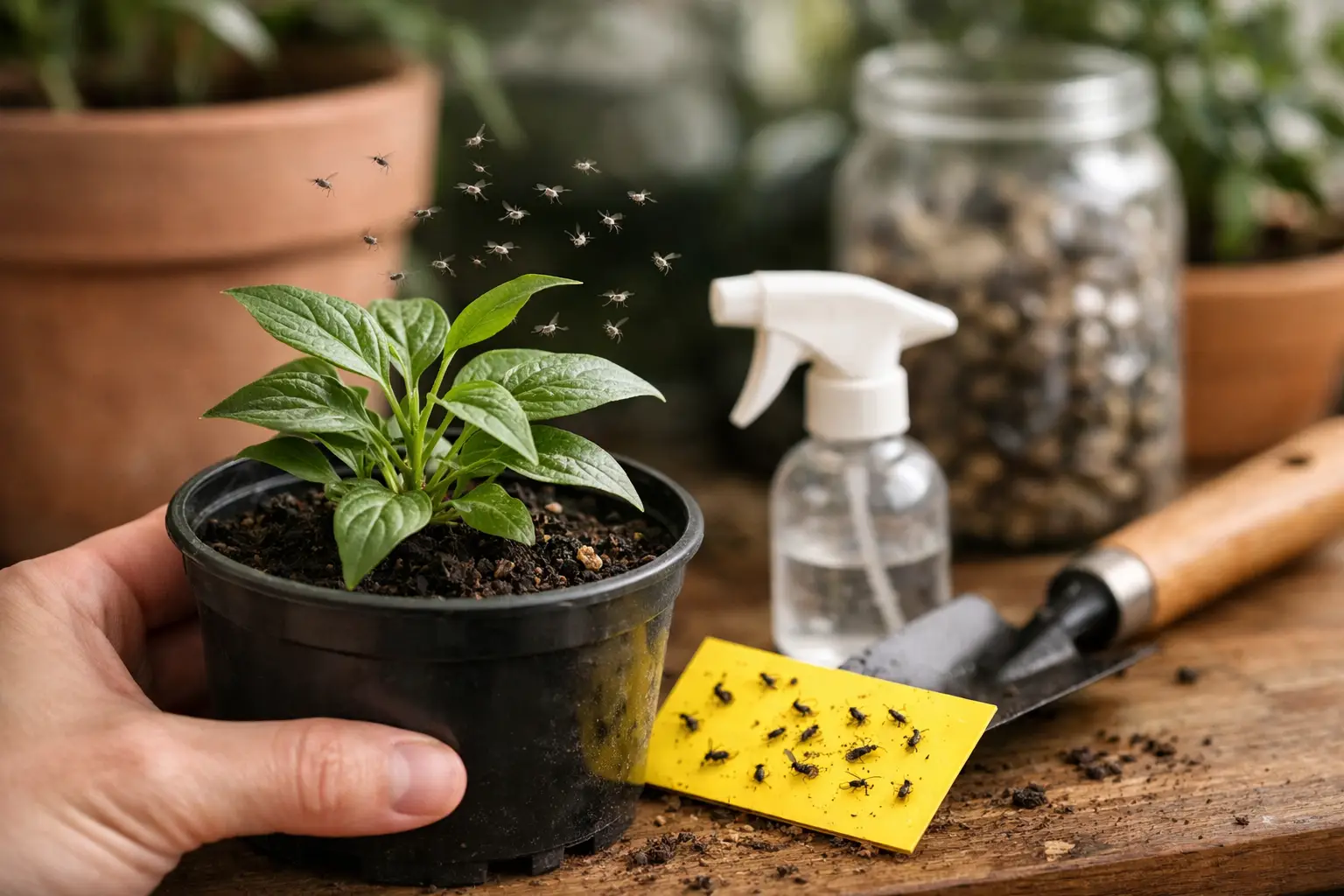
Yellow sticky traps are simple, low-effort, and surprisingly useful. Adult fungus gnats are attracted to the color and get stuck, which cuts down the number of eggs being laid. Traps alone will not solve the problem, but they give you a quick dent in the population and a good way to tell whether things are improving.
Place the traps just above the soil surface or attach them near the rim of the pot. If you have a cluster of plants, treat all of them, not just the one with the most visible gnats. These pests travel easily from pot to pot.
Treat the larvae in the soil
If you only deal with the flying adults, new ones will keep appearing. To really get ahead of fungus gnats, you need to target the larvae.
One of the best natural options is beneficial bacteria sold as BTI, often found in products made for mosquito control. When used properly in water, BTI targets larvae without drenching your home or garden in broad-spectrum insecticides. It’s especially helpful for repeated infestations or large plant collections.
Another solid option is beneficial nematodes, which are microscopic organisms that move through the soil and attack certain pests, including fungus gnat larvae. They can work very well, but timing, moisture, and storage matter. If you want the simpler route, BTI is often easier for beginners.
Replace the top layer of soil if needed
If one or two pots are especially bad, scrape off the top inch of soil and replace it with fresh, dry potting mix. Since fungus gnats spend so much time in that upper layer, this can remove a lot of eggs and larvae at once.
You can also top-dress with a thin layer of coarse sand or fine gravel. This doesn’t fix an overwatering issue by itself, but it can make the soil surface less friendly for egg-laying. Think of it as a supporting step, not the main cure.
What not to do when dealing with fungus gnats
It’s easy to throw every remedy at the problem, but a few common moves either don’t help much or create new issues.
One is spraying the flying gnats and calling it done. Contact sprays may knock down adults you happen to hit, but they usually miss the larvae, and that’s why the gnats return. Another is repotting every plant immediately. Repotting can help in severe cases, but it also stresses plants and spreads messy soil through the house. Most infestations can be handled without that level of disruption.
Be careful with homemade drenches too. Some gardeners use diluted hydrogen peroxide, and it can kill larvae on contact, but it’s not always the gentlest long-term approach if used repeatedly. Natural gardening works best when the solution is effective and sustainable, not just dramatic.
When repotting actually makes sense
Sometimes a plant needs a reset. If the potting mix has broken down into a heavy, soggy mass, or if the roots smell sour and the plant is clearly declining, repotting may be worth it. Use a fresh, well-draining potting mix and a container that fits the root ball instead of one that leaves lots of extra wet soil around it.
Clean the pot before reusing it. If you move a plant into fresh mix but keep the same dirty container and saucer, you can end up carrying part of the problem with you.
How to prevent fungus gnats from coming back
Once you’ve had them, prevention starts to sound very appealing. Luckily, it’s mostly about a few steady habits rather than a complicated routine.
Water based on the plant’s needs, not on the calendar. Empty saucers so roots are not sitting in trapped water. Use pots with drainage holes whenever possible. If you’re starting seeds indoors, give them airflow and avoid keeping the surface wetter than necessary once they’ve sprouted.
It also helps to store potting soil properly. Keep bags sealed and as dry as you reasonably can. If you open a bag and notice gnats already hanging around, let the soil dry out before bringing it near your plant area, or use it outdoors where a minor hitchhiker issue matters less.
New plants deserve a quick check too. A healthy-looking nursery plant can still come home with damp soil full of eggs. Isolate it for a week or two if you can, especially if you already keep a lot of plants indoors.
How long it takes to get rid of fungus gnats
This is the part that tests your patience. Adult fungus gnats live for about a week, but eggs and larvae in the soil keep the cycle going. If you combine better watering habits, sticky traps, and a larval treatment, you’ll often see a clear improvement within one to two weeks. A heavier infestation may take closer to three or four.
That timeline is normal. It doesn’t mean your approach failed. It usually means you’re catching the population in stages, which is exactly how fungus gnat control works.
A simple plan that works
If you want the least complicated answer for how to get rid of fungus gnats, start here: let the top of the soil dry more between waterings, place yellow sticky traps in every affected pot, and use a natural larval treatment like BTI. If one pot is especially bad, replace the top inch of soil or repot it into a better-draining mix.
That combination solves most cases without turning plant care into a science project. And once you adjust your watering habits, you may find the gnats were pointing to a bigger issue all along. Sometimes the pest problem is really a plant-care clue, and fixing that clue leaves your plants healthier than they were before.